


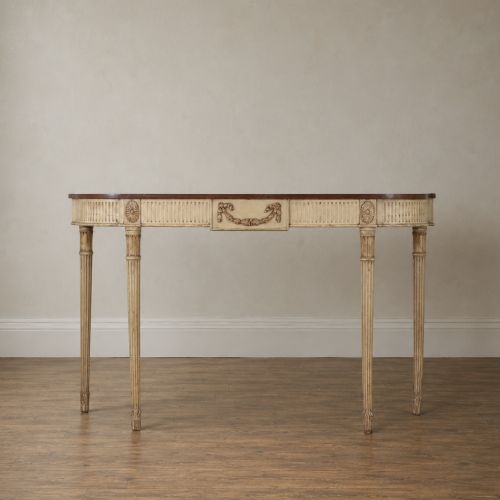
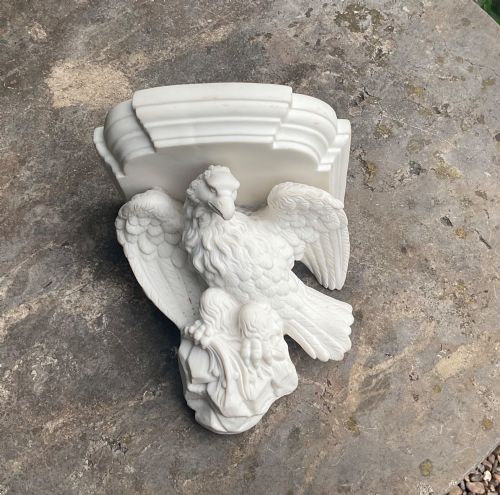
Antique Carved Wall Console
An antique carved wall console brings architectural presence and surface display to a room, mounted directly to the wall or supported on front legs.
Antique Carved Wall Console
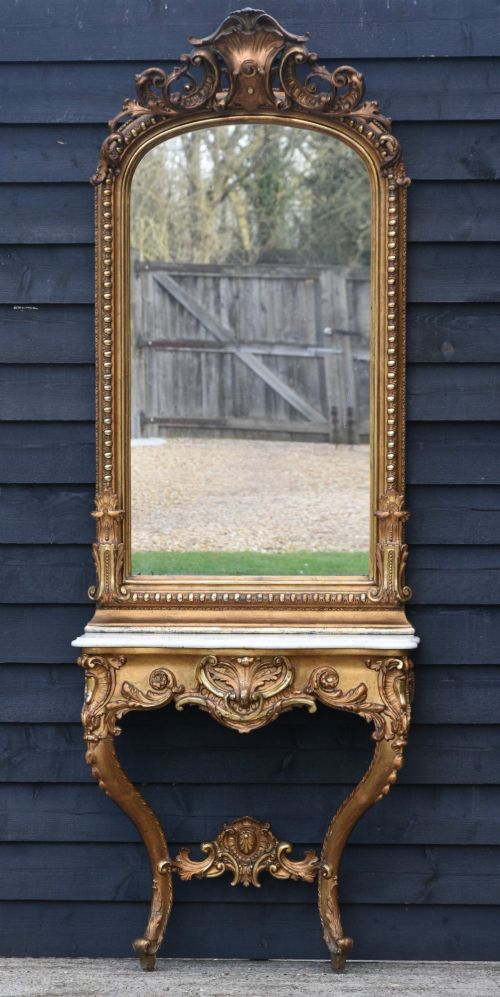
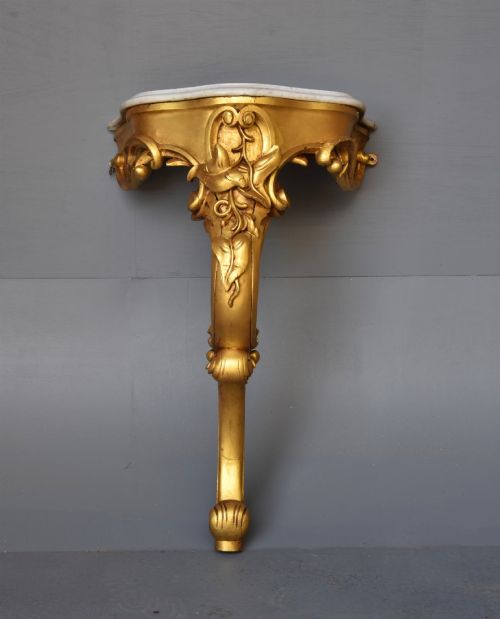
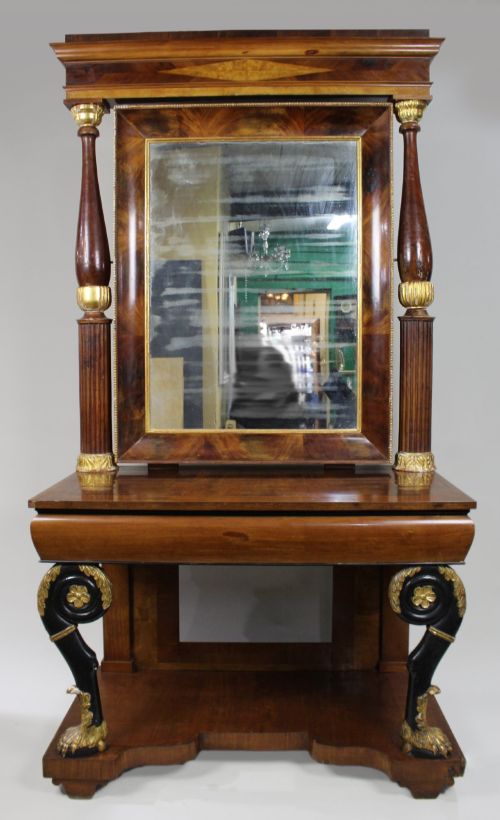
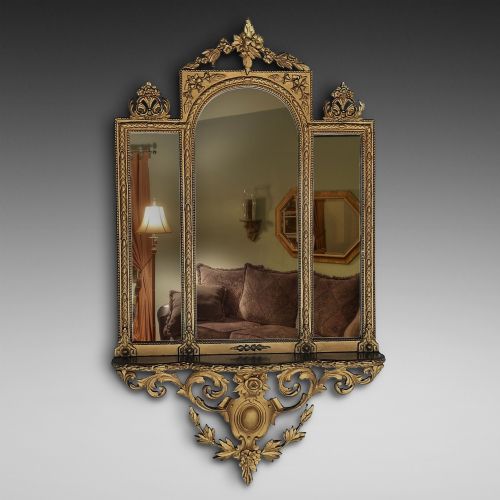
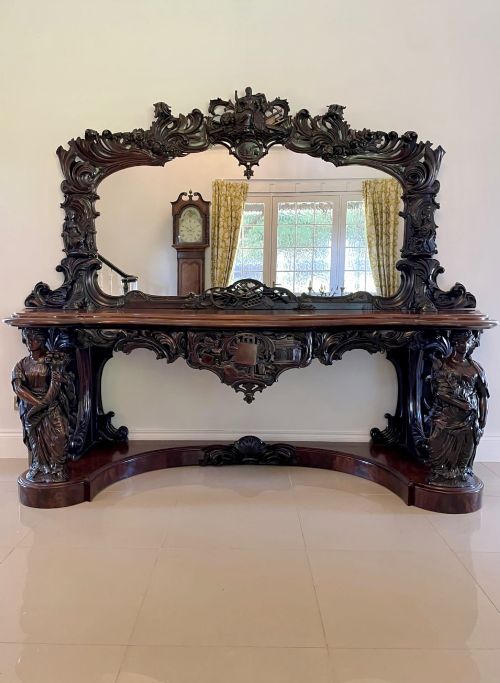
An antique carved wall console sits firmly within a lineage of wall-mounted and front-supported tables designed to anchor a formal interior. When searching for an antique carved wall console, collectors encounter pieces ranging from compact wall brackets to grand console tables paired with pier mirrors.
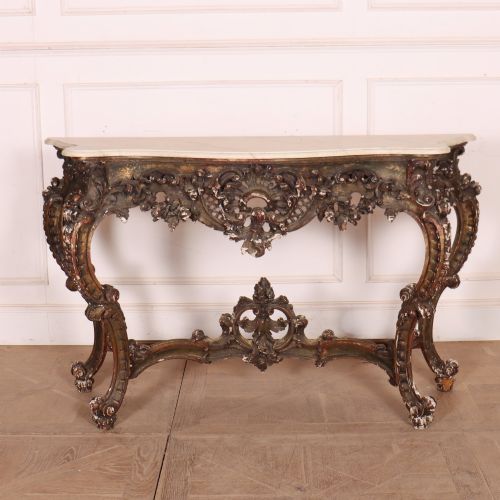
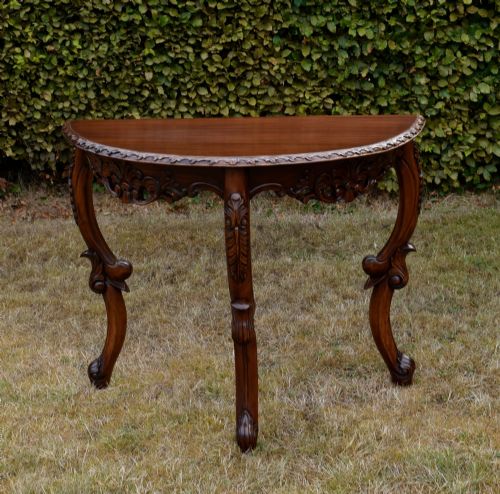
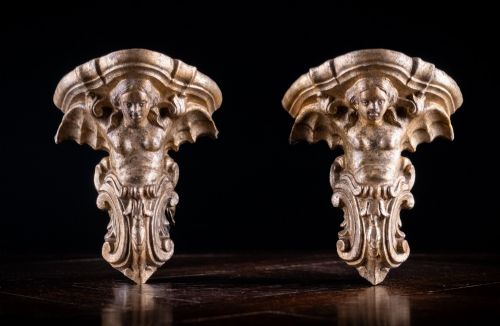
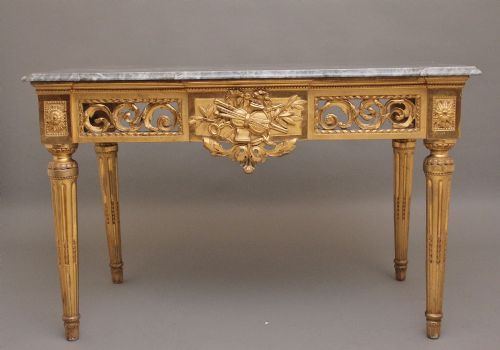
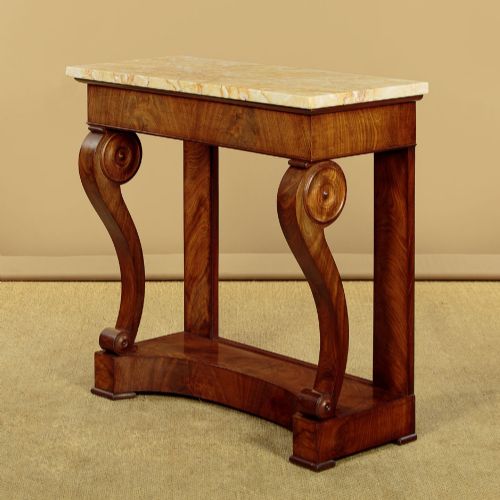
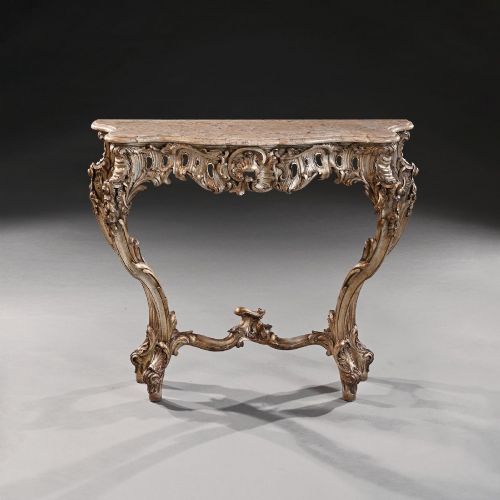
The selection spans periods from the 18th century through to the 1930s, drawing upon Italian Neoclassical, French Rococo, Regency, and Victorian design vocabularies. Forms vary from demilune side tables and serpentine fronts to smaller display brackets shaped as cherubs, sirens, or eagles.
How they were made
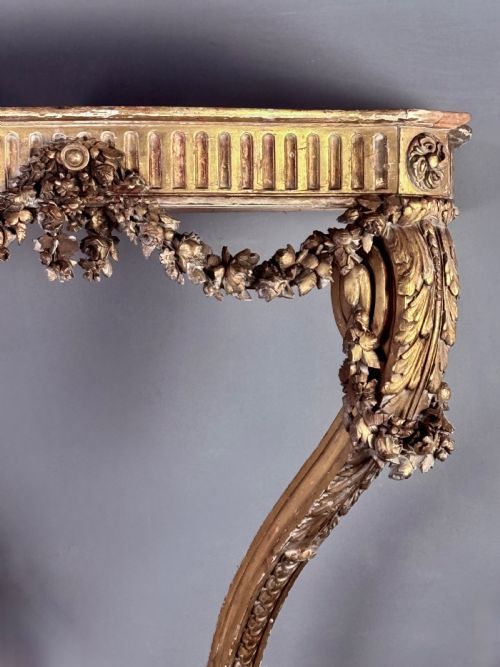
Carved wood provides the primary structural framework, utilising mahogany, oak, and softer timbers shaped by hand. Giltwood and gesso finishes receive applications of gold leaf or silver gilt to catch the light, while other pieces feature painted and parcel gilt surfaces or antique white finishes.
Heavy marble tops, including figured varieties like breche d'alep, rest upon the timber bases of larger console tables to provide durable display surfaces. Smaller wall brackets incorporate materials such as terracotta and parian porcelain alongside carved wooden supports.
Terracotta sirens and wooden cherubs keep a watchful eye from the walls.
What varies in quality
The crispness and depth of the hand carving distinguish finer examples from simpler production, particularly across acanthus scrolls, cherubs, and figurative elements. The quality of the gilding and the preparation of the underlying gesso layers dictate how richly the surface reflects light over time.
Structural integrity relies upon the joinery where the console meets the wall or secures its marble top. Selection of timber, from finely figured mahogany to dense Italian giltwood, underpins the lasting weight and balance of each piece.
Felix Alfred Ternisien
The Antique Carved Wall Console Glossary
- Console table
- A table designed to be fixed against a wall, traditionally supported by front legs with the rear secured to the architecture. These pieces often feature shaped marble tops and elaborate carved aprons.
- Wall bracket
- A projecting support fixture fastened to a wall for displaying decorative objects. They take forms ranging from carved wooden cherubs to terracotta winged sirens.
- Giltwood
- Timber coated with gold leaf over a prepared gesso ground. This technique creates a luminous, reflective surface characteristic of formal 18th and 19th-century furniture.
- Demilune
- A half-moon shape used frequently for the tops and frames of console tables. This geometry allows the furniture to sit flush against a wall while projecting into the room.
- Pier mirror
- A large looking glass designed to hang on the pier wall between windows, frequently paired directly above a matching console table.
Antique Carved Wall Console: Frequently Asked Questions
How do I secure an antique carved wall console?
Most antique carved wall consoles require direct attachment to wall studs or masonry using appropriate brackets to bear the weight of the frame and marble top.
Because many consoles rely on front legs for partial support, anchoring the upper back frame ensures stability and prevents tipping.
Were these tables used for dining?
These tables served primarily for display and decorative arrangement in reception rooms, halls, and parlours rather than dining.
Their shallow depth and wall-mounted construction made them ideal for holding candelabra, clocks, and porcelain without blocking walkways.
How do I distinguish 18th-century from 19th-century pieces?
Eighteenth-century examples often exhibit hand-carved details with deep organic relief and specific regional characteristics, such as Gustavian or Venetian styling.
Nineteenth-century revival pieces frequently adopt heavier proportions and machine-assisted preparation beneath the hand-finished giltwood or mahogany surfaces.
Can I place a heavy lamp on a marble top?
The thick marble slabs fitted to these tables easily support standard lamps, decorative bronzes, and heavy ceramic vessels.
Ensure the weight sits evenly across the stone and that the underlying wooden console frame maintains firm contact with the floor and wall.