

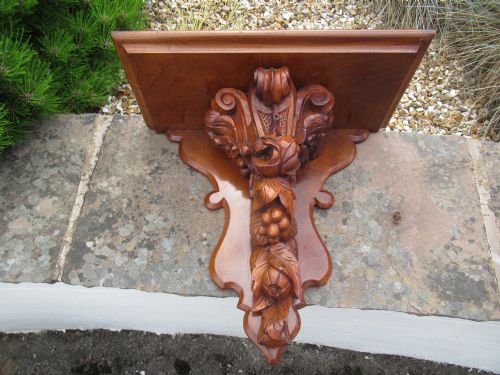
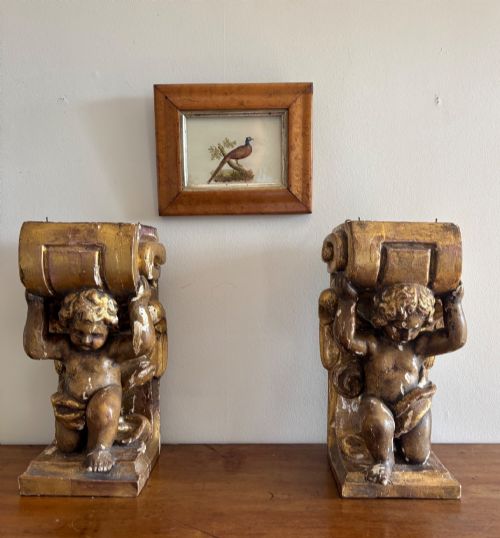
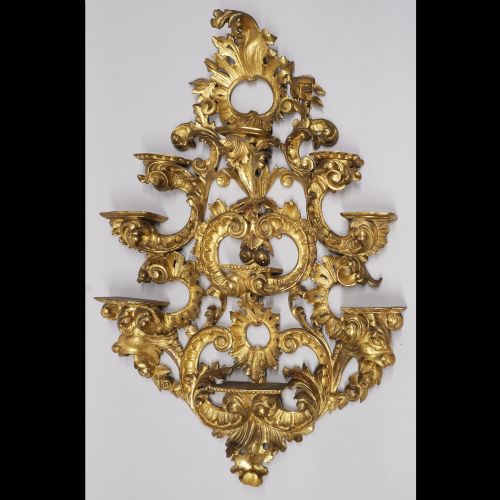


Carved Wood Wall Sconce Shelf
These carved wood wall sconce shelf designs bring sculptural presence and functional display to a room, ranging from small brackets to console shelves.
Carved Wood Wall Sconce Shelf
When you search for a carved wood wall sconce shelf, you are looking at architectural wall brackets, display shelves, and console mirrors designed to mount directly onto interior walls. These items combine timber carving with functional surfaces meant to hold candles, small ornaments, or clocks.
The versions you are most likely to meet on this page span from the eighteenth century through to the early twentieth century. They include Victorian walnut and giltwood brackets alongside pieces executed in the Baroque Revival and Rococo Revival styles.
Makers produced these fittings in various forms, including pairs of cherub brackets, Italian gilded examples, and Anglo-Indian or Burmese carvings. Regional interpretations introduce distinct timber choices like teak and oak alongside traditional European hardwoods.
How they were made
Carvers shaped these wall brackets from solid timbers such as walnut, oak, and assorted hardwoods, often applying a layer of gesso to prepare intricate details before gilding. Gold leaf and paint finishes were then applied to highlight the deep relief work and sculptural elements.
Craftsmen utilised hand-carving techniques to achieve the scrolling foliage, architectural mouldings, and figurative elements characteristic of the period styles. Construction frequently involved mounting brackets with integrated backplates or hanging mechanisms designed to secure the weight of the timber and display objects.
Carved Wood Wall Sconce Shelf Retail Price Guide 2026
Typical asking prices for carved wood wall sconce shelf among the pieces listed under this phrase on Sellingantiques today, from the lower quarter to the upper quarter. They describe what is for sale here now, not the wider market.
Some brackets feature carved cherubs peering out from beneath the shelf, watching over whatever little treasures you choose to set upon them.
What varies in quality
The depth and crispness of the hand-carving define the artistic merit of each piece, distinguishing sharp, spirited execution from soft or mechanical detailing. Superior examples exhibit confident undercutting and balanced proportions that draw the eye naturally.
The integrity of the original surface finish, whether giltwood, paint, or polished walnut, dictates much of the visual character. Retaining an authentic layered surface without excessive modern intervention preserves the historical depth of the carving.
The Carved Wood Wall Sconce Shelf Glossary
- Giltwood
- Wood that has been coated with gold leaf or gold paint. This technique was widely utilised on decorative brackets to catch candlelight and add richness to interiors.
- Gesso
- A plaster-like mixture applied to wood surfaces as a base for gilding or painting. It allows carvers to achieve smooth contours and sharp decorative relief before applying leaf.
- Baroque Revival
- A nineteenth-century stylistic movement that emulated the ornate, dramatic forms of the seventeenth century. Pieces in this style feature bold curves and dynamic ornamentation.
- Rococo Revival
- A design style popular during the Victorian era characterised by asymmetry, C-scrolls, and naturalistic shell motifs. It draws directly upon the French eighteenth-century Rococo aesthetic.
- Wall Bracket
- A structural or decorative projection from a wall designed to support a figure, vase, or shelf. These items combine utility with ornamental woodcarving.
Carved Wood Wall Sconce Shelf: Frequently Asked Questions
How were these wall brackets originally used?
These pieces served to hold candles, small lighting devices, or decorative items such as clocks and porcelain figures.
Positioned on walls throughout principal rooms, they provided both functional surface area and ornamental focal points.
Where should I mount a wall shelf?
Mount these brackets at eye level or slightly above to showcase their carved details and any objects placed upon them.
Ensure the wall construction can safely support the combined weight of the timber bracket and its displayed items.
How do I identify a Victorian bracket?
Victorian examples often employ walnut, oak, or heavily gilt surfaces shaped into revivalist styles like Baroque and Rococo.
Construction methods and timber patination from the nineteenth century help distinguish these from later reproductions.
What maintenance do antique wood brackets need?
Dust the carvings gently with a soft brush to prevent accumulation in the recesses of the relief work.
Avoid liquid cleaners and keep the timber away from direct heat sources to protect fragile gilt and paint finishes.