



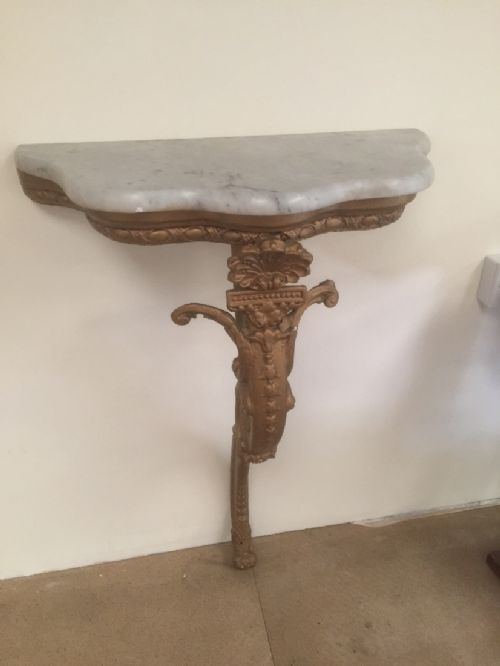


19th Century Giltwood Bracket
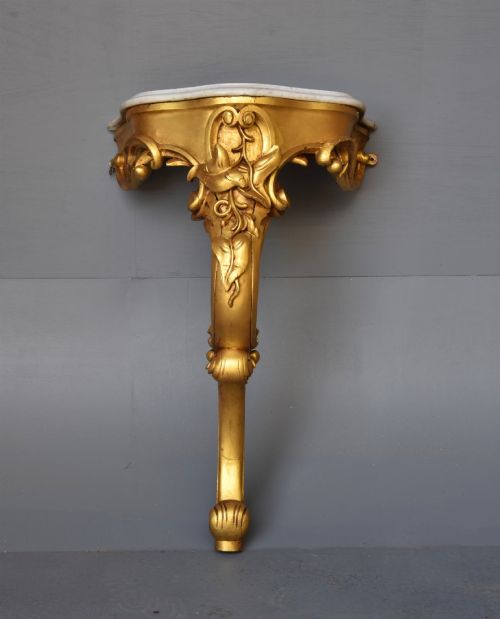
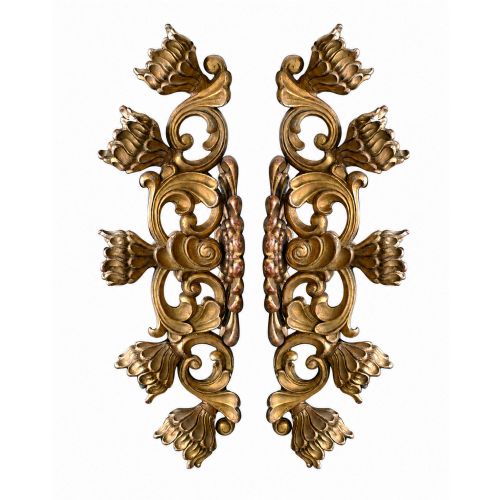
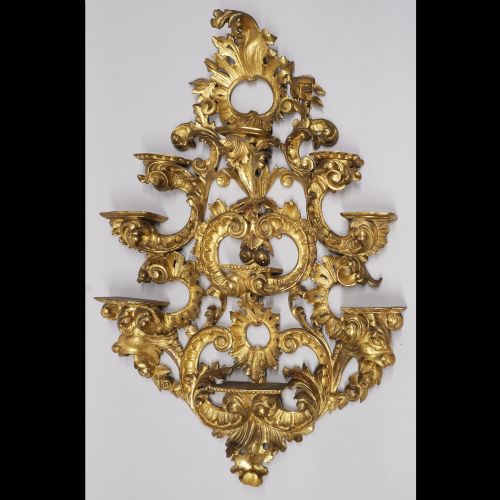
These 19th century giltwood bracket pieces bring carved ornamentation and gilded surfaces to walls, offering traditional display shelves and lights.
19th Century Giltwood Bracket
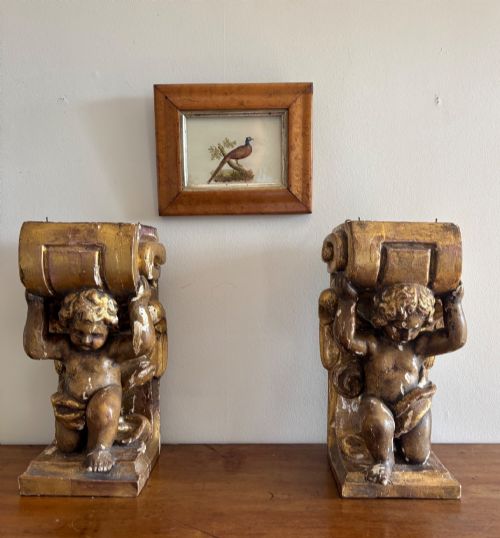
A 19th century giltwood bracket provides a decorative wall-mounted shelf or support, frequently seen in pairs across the inventory. These architectural supports often emerge in styles such as Rococo Revival, Victorian, and Italian Baroque, showcasing the ornate tastes of the period.
The selection includes carved wood wall brackets, console tables, pier tables, and wall sconces featuring gilded finishes. Many examples incorporate gesso, marble tops, and mirrored backplates to enhance their visual impact in an interior space.
How they were made
Makers utilised pine and other woods as a base for intricate carving before applying layers of gesso to smooth the surface for gilding. Gold leaf was then carefully laid over the prepared ground to achieve a brilliant metallic sheen.
Additional elements such as marble tops and mirrored glass were integrated into console tables and bracket mirrors, combining structural carpentry with decorative finishing techniques.
19th Century Giltwood Bracket Retail Price Guide 2026
Typical asking prices for 19th century giltwood bracket among the pieces listed under this phrase on Sellingantiques today, from the lower quarter to the upper quarter. They describe what is for sale here now, not the wider market.
Listings feature 19th century giltwood brackets alongside console tables, pier tables, and wall sconces in Rococo Revival, Victorian, and Baroque styles.
What varies in quality
The crispness of the hand-carved ornamentation distinguishes finer pieces, where floral motifs, scrolls, and figural elements like cherubs or eagles display deep undercut detail rather than soft moulding. The preservation of the original gold leaf and gesso ground also dictates the character of the surface.
Structural integrity in the timber supports and the quality of fitted marble tops or mirrored glass separate standard production from exceptional examples originating from British, Irish, and continental workshops.
Strahan of Dublin
The 19th Century Giltwood Bracket Glossary
- Giltwood
- Wood that has been coated with gold leaf or gold paint. This technique creates a rich, reflective surface characteristic of formal period furniture.
- Gesso
- A plaster-like mixture applied to wood as a base for gilding or painting. It provides a smooth ground that can be heavily carved and detailed before the gold leaf is laid.
- Console table
- A table fixed to a wall and supported by front legs or brackets. In 19th century interiors, these often featured marble tops and matching wall brackets.
- Pier table
- A table designed to stand against the wall between windows, frequently placed beneath a mirror. These pieces often utilised serpentine marble tops and giltwood frames.
- Rococo Revival
- A decorative style popular in the 19th century mimicking the 18th century French Rococo. It is defined by asymmetrical scrolls, C-scrolls, and naturalistic plant motifs.
19th Century Giltwood Bracket: Frequently Asked Questions
How do I hang a heavy giltwood bracket?
Wall brackets require secure fixing into solid masonry or direct wall studs due to the weight of carved wood and gesso. Utilising appropriate heavy-duty wall anchors ensures the piece is supported safely.
Professional installation is recommended for larger console tables and mirrored brackets to distribute the load evenly across the wall surface.
What rooms suit a giltwood wall bracket?
These pieces function well in entrance halls, formal living rooms, and dining areas where they provide a surface for small decorative objects or lighting. Pairs of wall lights or mirrored brackets frame doorways and fireplaces effectively.
Placing them at eye level allows the detailed carving and gilded surfaces to be appreciated fully within the room's scheme.
How do I clean antique giltwood?
Giltwood surfaces require gentle dusting with a soft, dry brush to prevent damage to the delicate gold leaf and underlying gesso. Moisture and chemical cleaners should be avoided entirely.
Professional conservators should handle any significant restoration or cleaning of damaged gilded areas to preserve the historic finish.
How do I identify Rococo Revival pieces?
Rococo Revival pieces from the 19th century display characteristic asymmetry, C-scrolls, and shell motifs executed in carved wood and gesso. These designs echo earlier 18th century forms but utilise 19th century construction methods and timbers.
Comparing the carving depth and the composition of the gesso helps distinguish these revival works from earlier originals.