


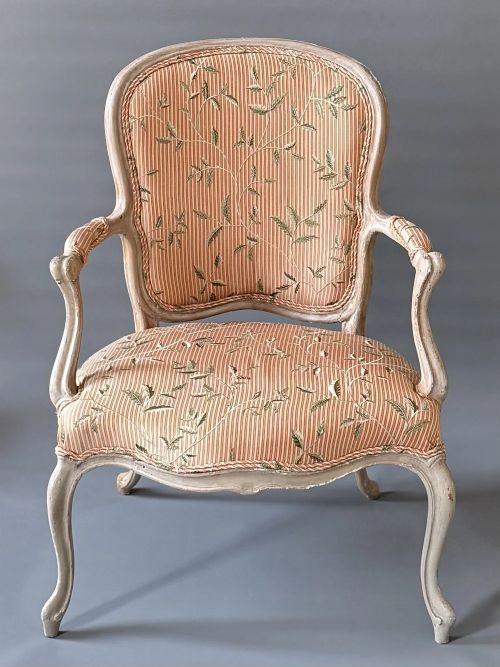
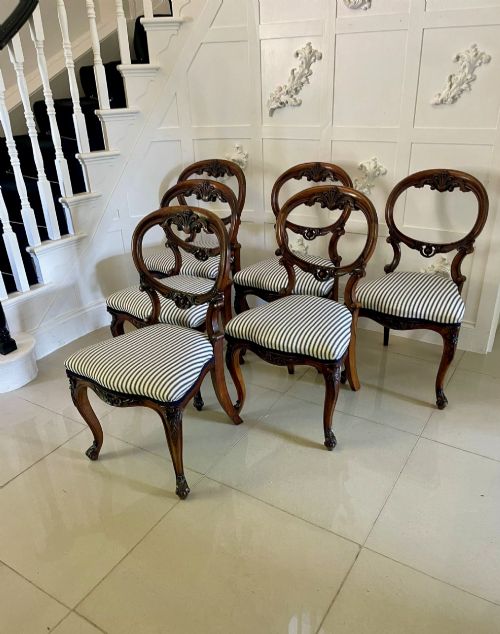
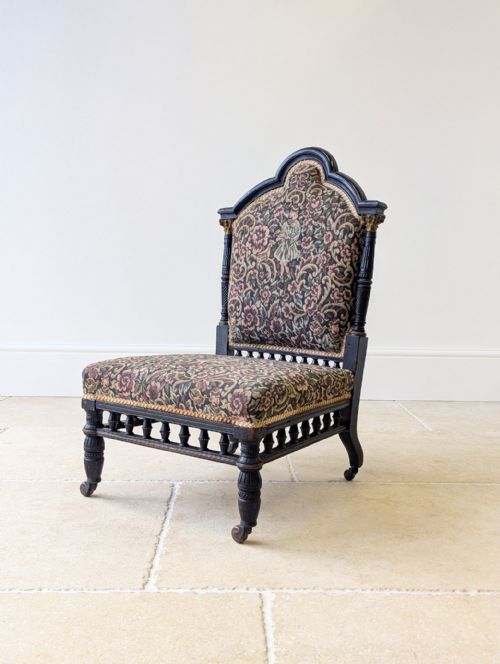
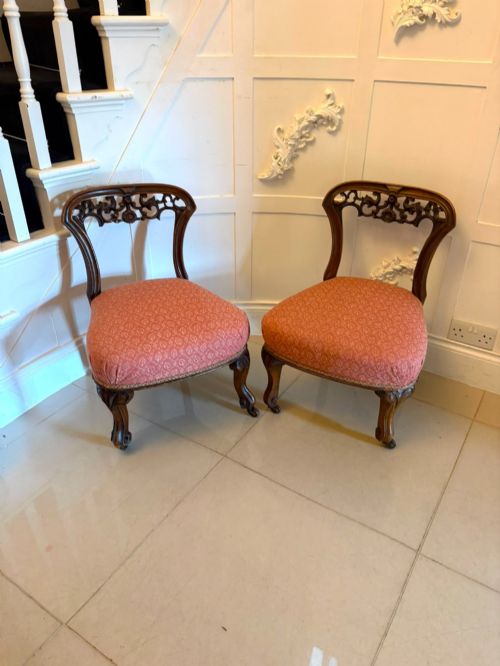
Antique Carved Salon Chairs
These antique carved salon chairs bring nineteenth-century reception rooms to life with walnut frames, giltwood details, and traditional upholstery.
Antique Carved Salon Chairs
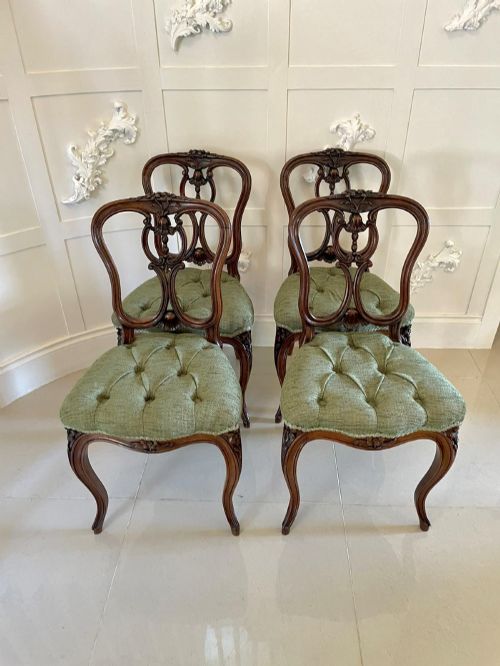
Antique carved salon chairs represent formal seating designed for nineteenth-century reception rooms, drawing rooms, and parlour spaces. These pieces encompass individual armchairs, side chairs, and matching suites created across the Victorian period and the wider nineteenth century.
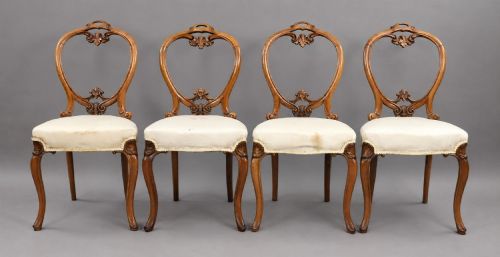
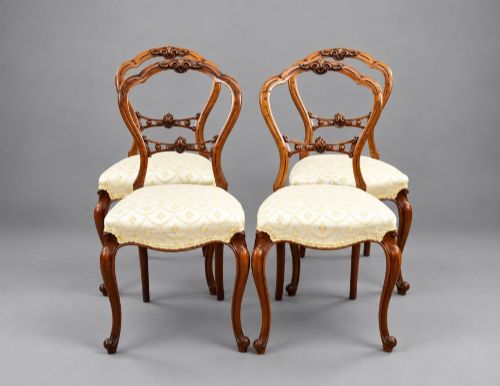
The walnut and mahogany examples reflect British and continental cabinet-making traditions, alongside French influences ranging from Louis styles to Rococo Revival forms. Buyers frequently encounter walnut armchairs and side chairs featuring carved wooden frames and upholstered seats.
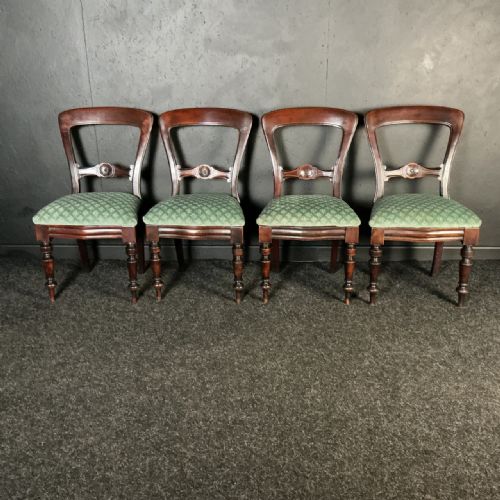
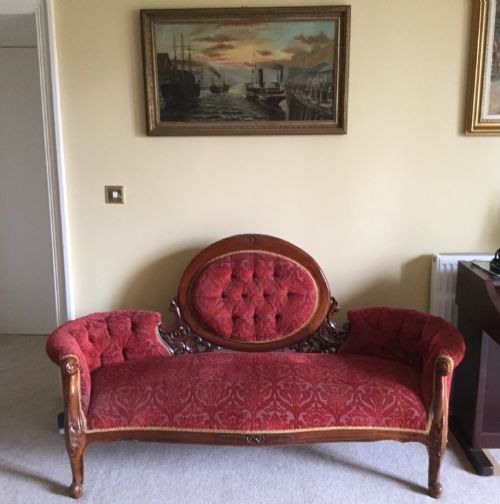
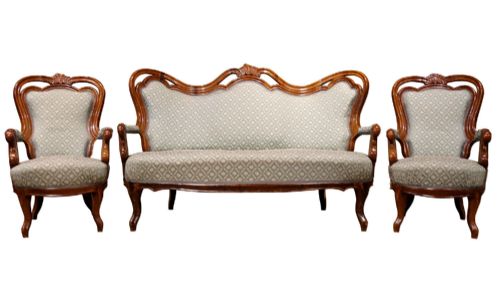
The selection also includes matched pairs and larger suites incorporating settees alongside individual chairs. These seating options span from mid-Victorian balloon-back designs to ornate continental giltwood pieces.
Materials and construction
Makers utilised dense hardwoods including walnut, mahogany, and occasional rosewood to construct the structural frames of these seats. These timbers provided the strength needed for deep hand-carved ornamentation along the crest rails, arms, and cabriole legs.
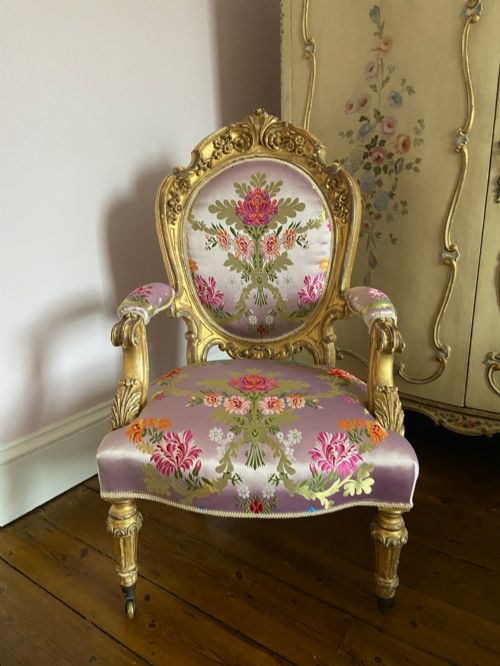
Giltwood and painted finishes appear frequently on continental pieces, often applied over carved wooden bases. Upholstery materials such as silk, velvet, brocade, and tapestry were secured over traditional sprung or stuffed bases.
The inventory includes single armchairs, pairs, and complete three-piece salon suites with matching settees.
Craftsmanship and preservation
The distinction between tiers rests upon the crispness of the hand-carving and the integrity of the underlying timber frame. Superior examples display deeply undercut wooden details and tight joinery that remains stable through decades of use.
Condition is tied to the survival of original decorative surfaces, whether the gilt layer on a walnut frame or the retention of period textile coverings. Pieces that retain their structural rigidity without extensive timber replacement stand at the upper end.
Jacob Desmalter·Thomas Chippendale
The Antique Carved Salon Chairs Glossary
- Giltwood
- Timber coated with a thin layer of gold leaf or gilt preparation. This finish appears on ornamental frames designed to reflect candlelight in formal reception spaces.
- Rococo Revival
- A nineteenth-century design movement emulating the curving, asymmetrical motifs of the eighteenth-century French Rococo style. It is characterised by C-scrolls, floral carvings, and flowing contours.
- Fauteuil
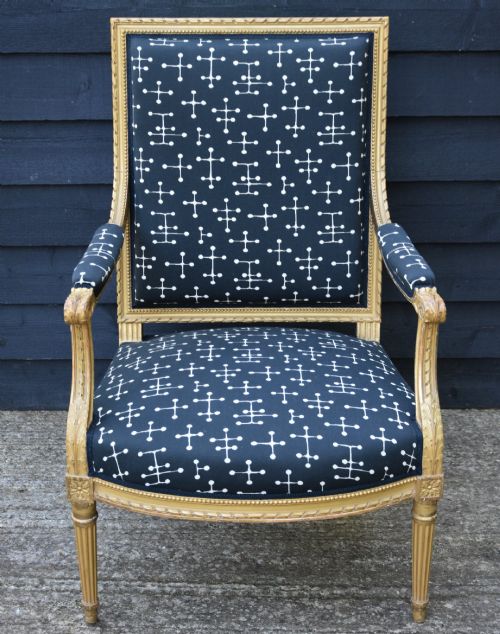
- An open-framed upholstered armchair originating in France. The design leaves the wooden arms exposed while padding the back and seat.
- Balloon Back
- A rounded, oval chair back shaped like a balloon, popular during the Victorian era. This wooden profile provides ergonomic support while allowing elaborate crest rail carvings.
Antique Carved Salon Chairs: Frequently Asked Questions
What distinguishes salon chairs from dining chairs?
Salon chairs were built for light entertaining and decorative placement in drawing rooms rather than heavy daily dining use. They often feature lower seats, more ornate carved frames, and decorative upholstered backs.
Dining chairs prioritise upright posture and sturdy frames for regular meal times. Salon pieces focus on elegant profiles, exposed polished wood, and comfortable padding for conversation.
How do I identify French salon chairs?
French chairs usually exhibit lighter wood tones, parcel gilt finishes, or painted surfaces combined with cabriole legs. The carved motifs often follow Louis XV or Louis XVI style vocabularies.
British equivalents tend to utilise darker walnut or mahogany with distinct regional Victorian proportions. Continental pieces also frequently employ beech or walnut covered in Aubusson tapestry or silk.
Were these chairs originally sold in sets?
Makers produced many salon chairs as pairs or larger suites that included matching settees and armchairs. These matched groups furnished grand nineteenth-century reception rooms in a unified decorative style.
Individual side chairs also survived independently, having served as occasional seating around the perimeter of a drawing room. Pairs remain common for placement beside fireplaces or cabinets.
How should I care for antique upholstery fabrics?
Historic textiles require gentle maintenance, avoiding direct sunlight to prevent silk and velvet fibres from fading or weakening. Vacuuming should be performed using low suction through a protective mesh screen.
If re-upholstery is necessary to preserve the chair frame, selecting period-appropriate brocade or damask helps maintain historical context. Professional conservation keeps fragile needlepoint and tapestry stable.