
Antique Carved Desk Box
An antique carved desk box is a sturdy lidded receptacle for documents and writing implements, prized for its tactile timber surface and enduring utility.
How they were made
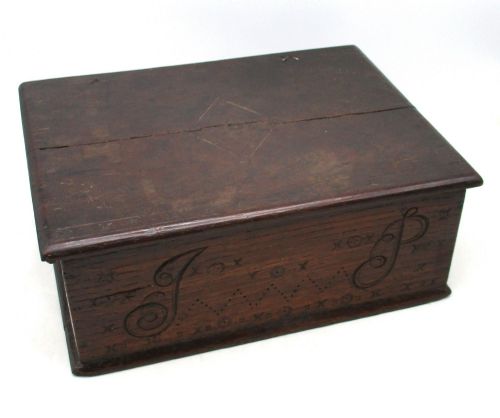
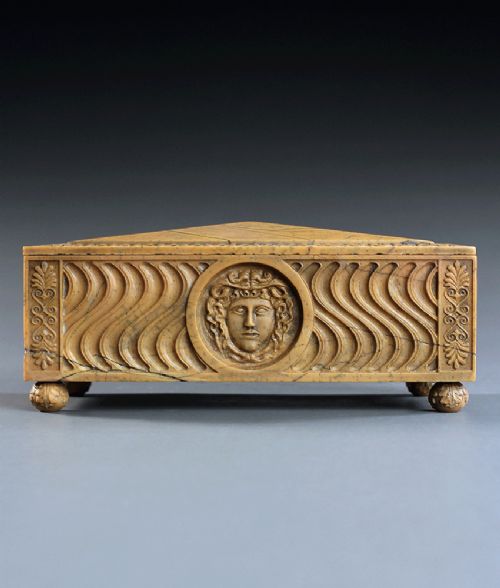
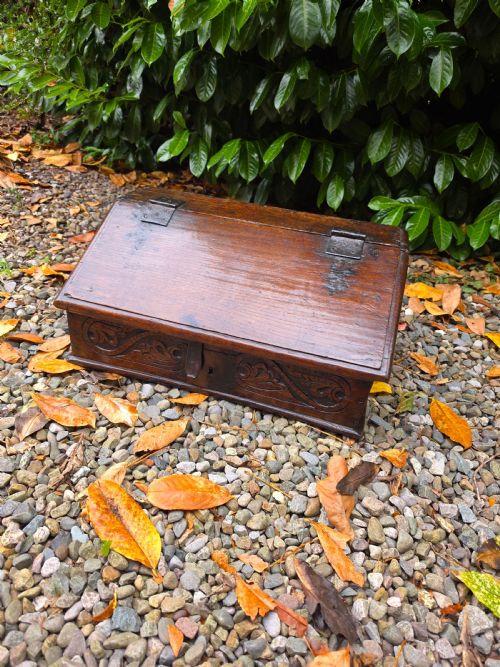
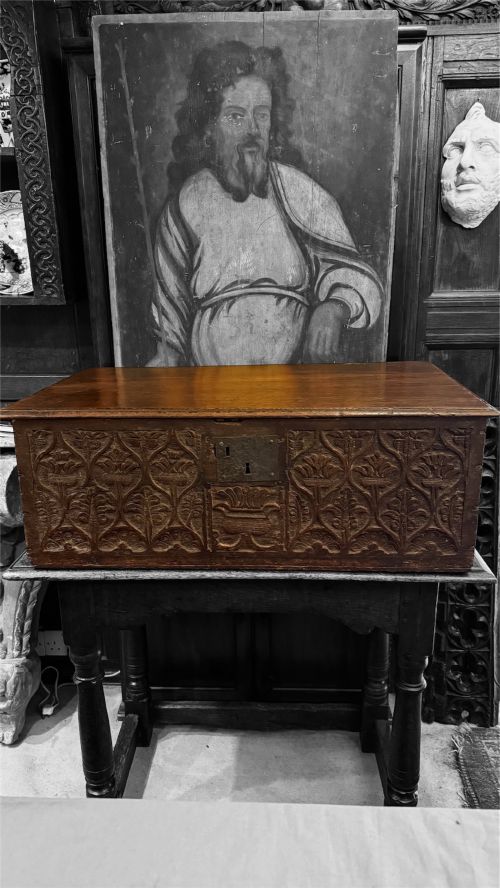
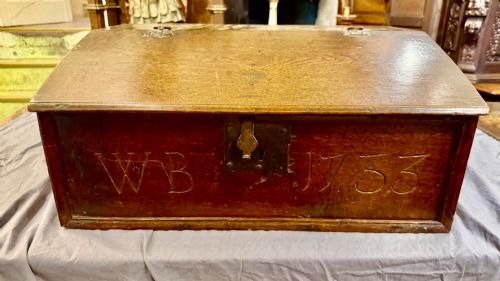
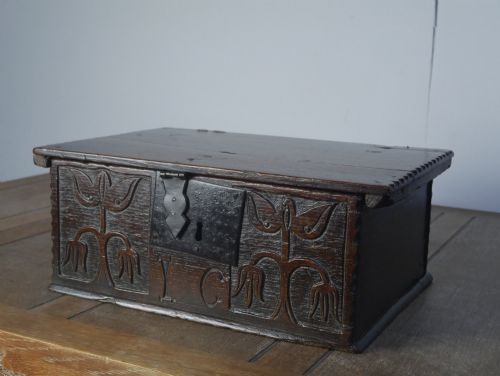
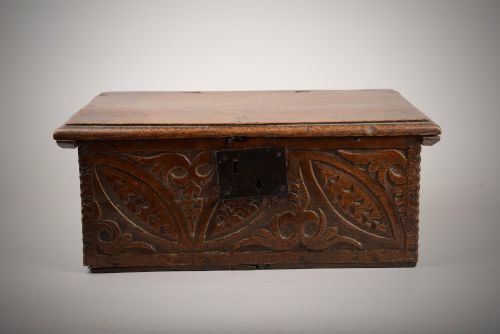
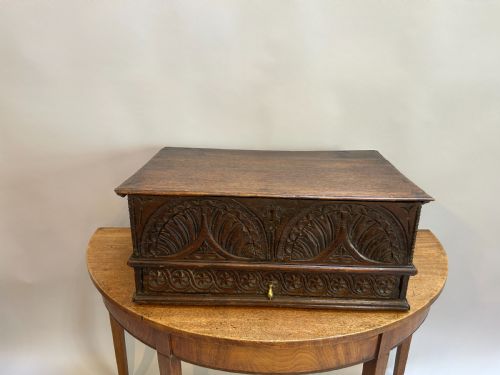
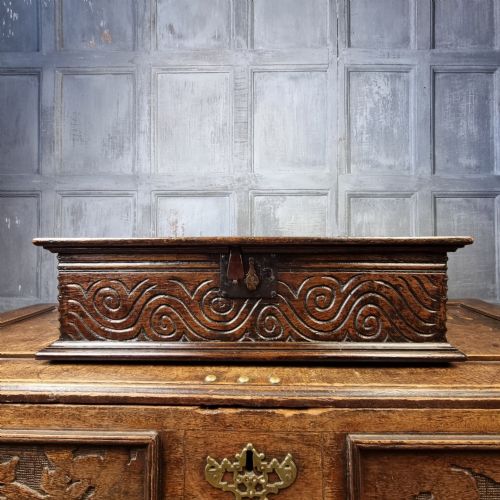
Carpenters constructed seventeenth and eighteenth-century examples primarily from solid English oak, joining thick panels with traditional pegged mortise and tenon joints. Carving was typically applied directly to the front facade or lid using handheld gouges and chisels, producing low-relief geometric or floral patterns.
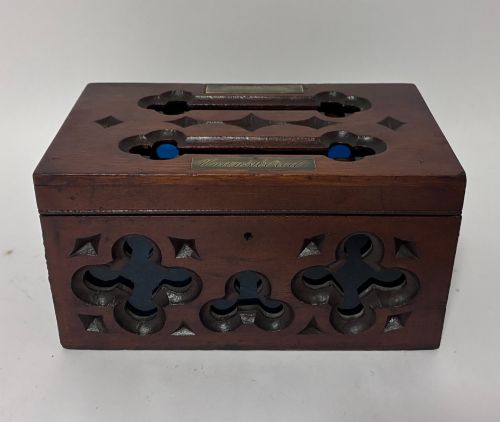
Nineteenth-century boxes utilise dense imported timbers such as mahogany, burr walnut, and solid ebony, often shaped with applied mouldings and complex surface carving. Workshops employed brass hinges, locks, and escutcheons to secure the lids, occasionally incorporating bone or light-wood inlays to accentuate the dark grain of the primary wood.
What varies in quality
The standard of an antique carved desk box depends largely on the crispness and depth of the timber carving and the integrity of the original construction. Pieces exhibiting confident, deep hand-chiselled relief work stand apart from later mechanical imitations or heavily restored surfaces.
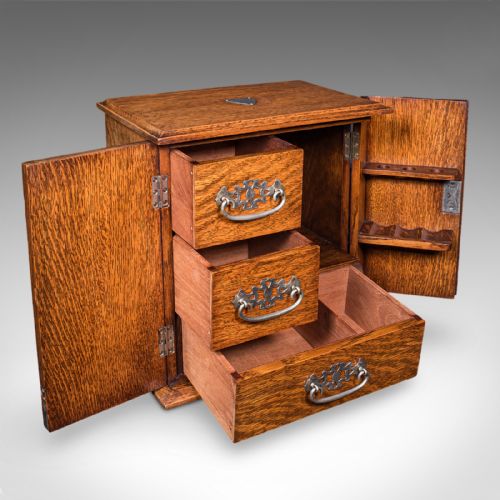
Internal arrangement and hardware also dictate worth, with surviving original brass locks, working keys, and fitted interior dividers or small drawers indicating superior original manufacture. The choice of timber, from plain domestic oak to figured burr walnut and dense solid ebony, marks the distinction between utilitarian storage and high-status desk furniture.
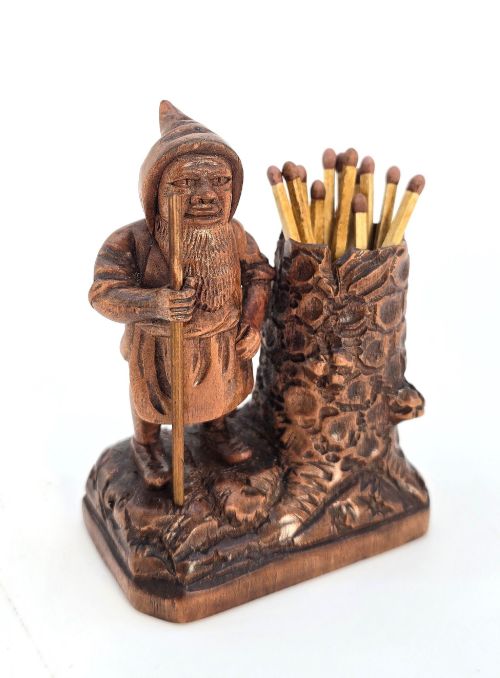
The selection includes a carved limewood match striker shaped as a gnome and a hardwood box modelled precisely as a soccer football.
The Antique Carved Desk Box Glossary
- Bible box
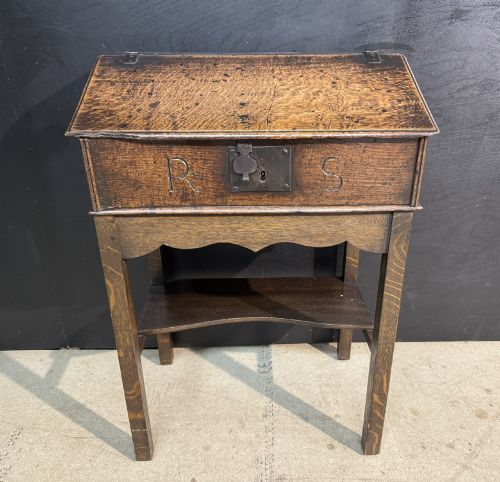
- A small, sloping-lidded wooden chest originally utilised to house family Bibles and religious tracts safely in the home. These receptacles frequently double as portable writing surfaces.
- Writing slope
- A desktop box featuring an angled lid that folds down to create a slanted writing surface, typically fitted with internal compartments for inkwells and nibs. They emerge frequently in nineteenth-century mahogany and ebony.
- Document box
- A rectangular lidded container designed to hold legal papers, deeds, and letters flat. They rely on sturdy timber construction to protect contents from environmental damage.
- Escutcheon
- A protective metal plate surrounding a keyhole, usually fashioned from brass on better-quality boxes. It prevents the timber around the lock from splitting through repeated use.
Antique Carved Desk Box: Frequently Asked Questions
What is an antique desk box used for?
These lidded receptacles served historically to hold loose correspondence, legal documents, and writing materials securely on a table or desk. Today, they function well for storing modern stationery, photographs, or personal trinkets.
Their compact size allows them to sit neatly on modern side tables or desks while keeping clutter out of sight beneath a carved wooden lid.
How do I tell a 17th-century box from a 19th-century one?
Seventeenth-century examples are almost exclusively built from solid English oak with hand-carved geometric panels and pegged joints. They possess a heavy, unpretentious utility.
Nineteenth-century pieces often utilise exotic imported woods like ebony or burr walnut, featuring finer decorative carving, brass hardware, and intricate stationery compartments inside.
Are these boxes suitable for everyday use?
Most antique desk boxes remain structurally robust enough for daily desktop organisation and light storage. The solid timber and historical joinery handle normal handling easily.
Care should be taken with delicate internal dividers and original locks, as antique mechanisms can jam or wear out with heavy modern usage.