

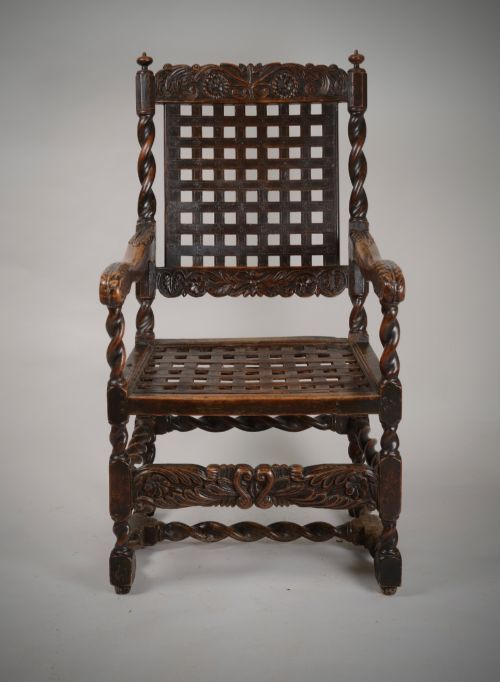
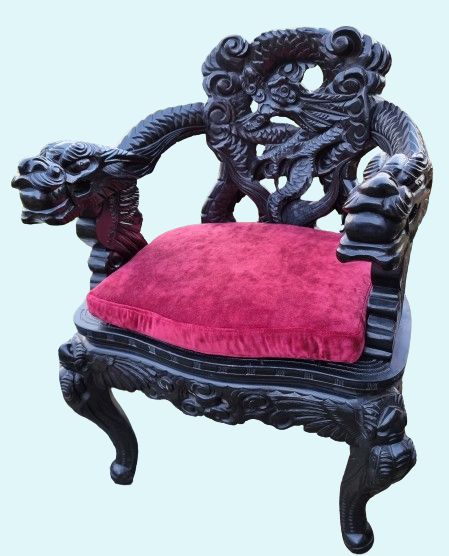
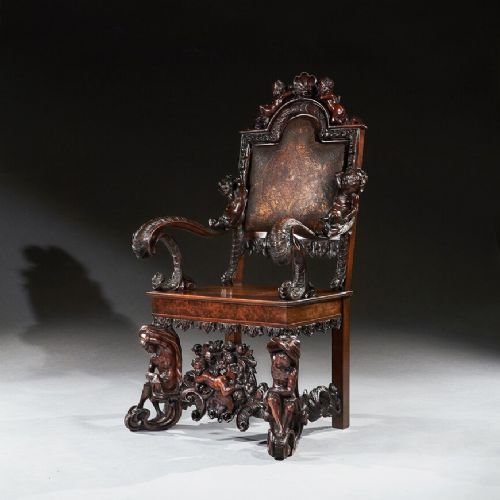
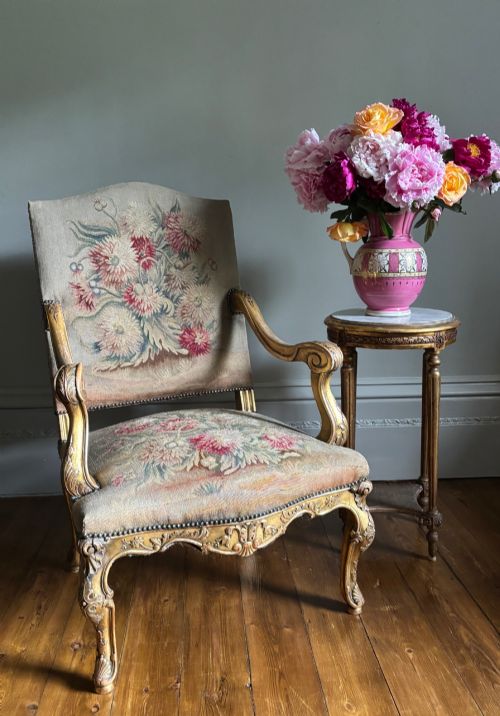
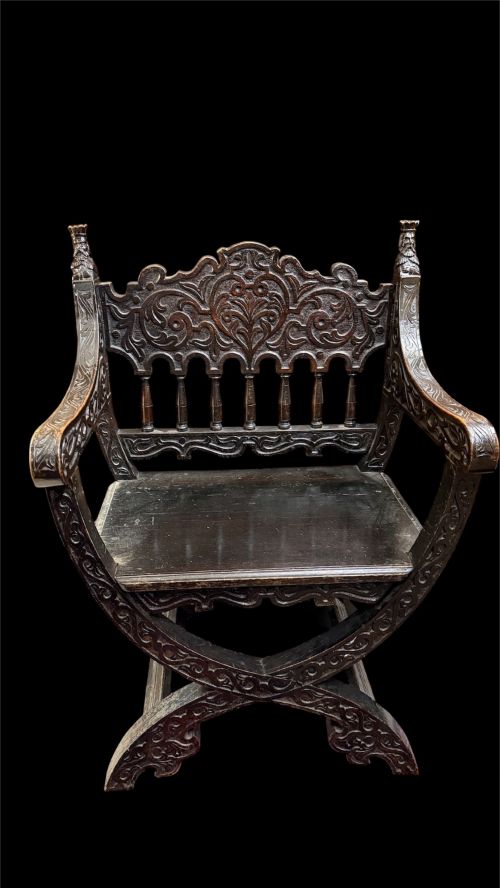
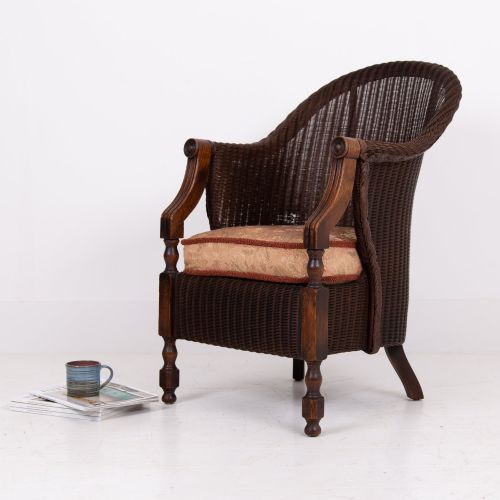
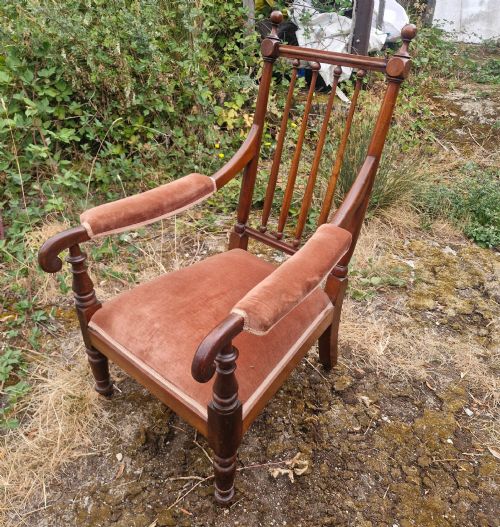
Antique Carved Arm Chair
When you handle an antique carved arm chair, you touch centuries of timber-turning and joinery shaped entirely for the human body.
Antique Carved Arm Chair
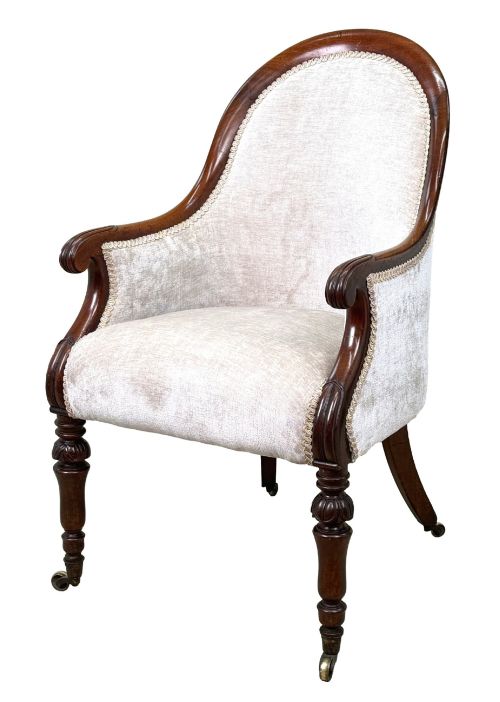
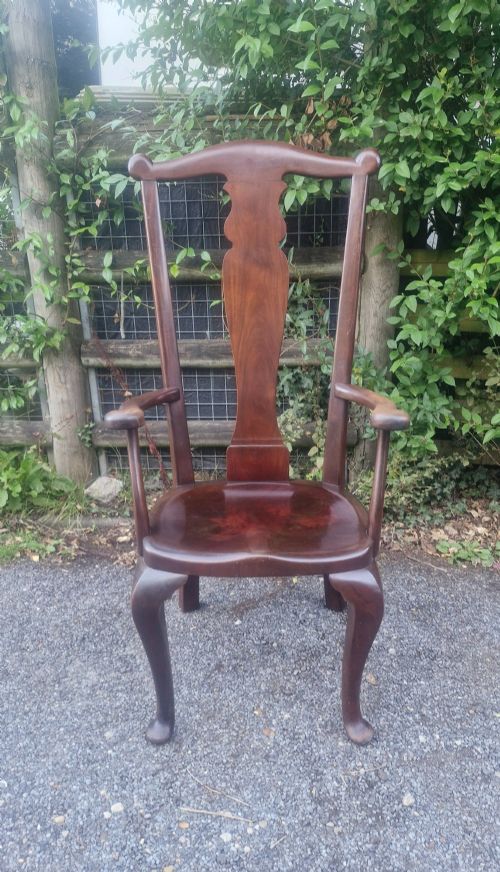
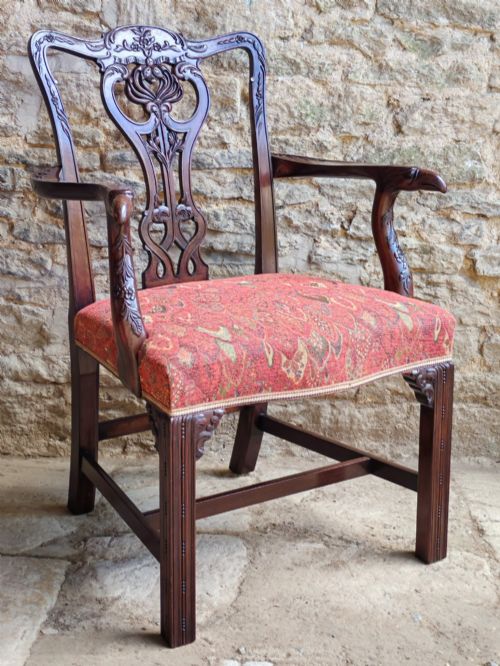
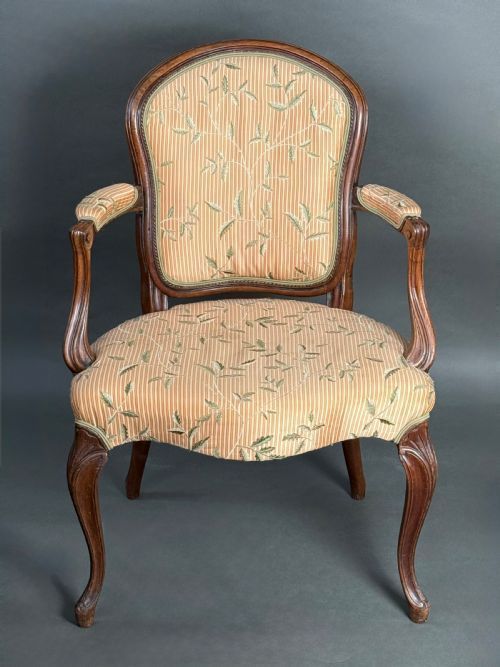
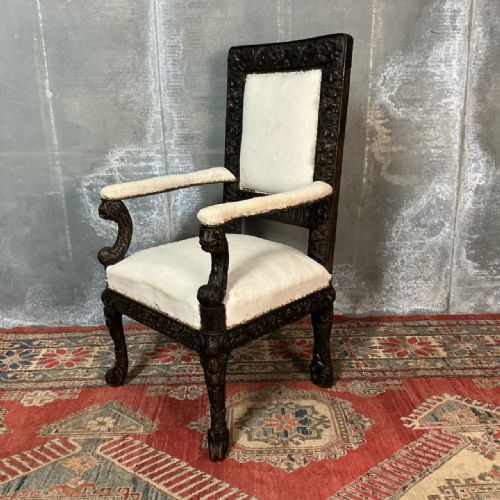
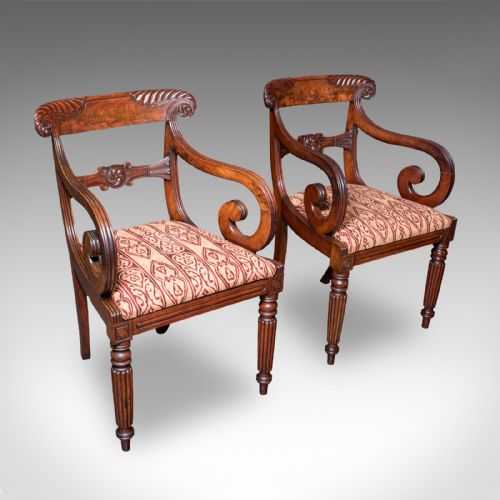
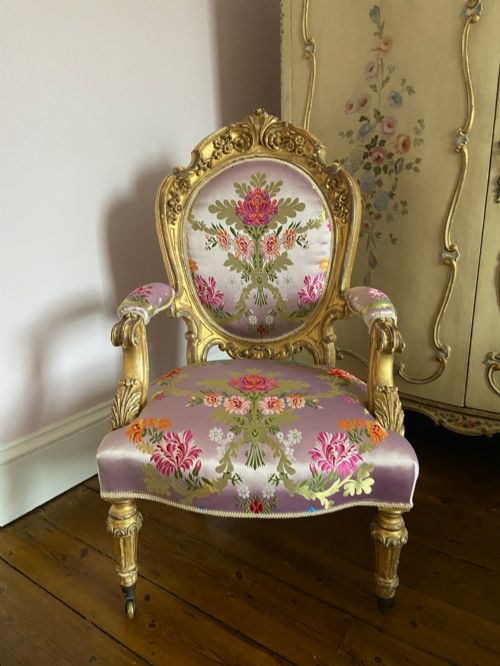
An antique carved arm chair brings structural timber and upholstered seating together across domestic and formal interiors. Buyers searching for an antique carved arm chair encounter forms ranging from heavy oak wainscot seats to polished mahogany library designs and giltwood salon chairs.
The material record spans the 17th century through the Victorian era, drawing on regional styles from English country houses to French salons. Walnut, oak, and mahogany dominate the offerings, matched with leather, silk, velvet, and needlework textiles.
Survival depends on the integrity of the joints and the crispness of the original timber framing. Most examples emerge from English and French workshops, reflecting shifts from early baroque heaviness to refined Georgian and Regency lines.
Materials and construction
Makers relied on dense hardwoods such as oak, walnut, and mahogany to support deep relief carving and structural stress. Frames were assembled using mortise and tenon joinery, secured by wooden pins rather than modern metal fasteners.
Giltwood and painted finishes added surface brilliance over underlying timbers, while upholstery utilised webbing, horsehair, and stuffing held by brass tacks or textile borders.
Antique Carved Arm Chair Retail Price Guide 2026
Typical asking prices for carved arm chair among the pieces listed under this phrase on Sellingantiques today, from the lower quarter to the upper quarter. They describe what is for sale here now, not the wider market.
Listings feature solid oak, mahogany, and walnut across centuries of craftsmanship.
Judging quality and execution
The depth and sharpness of the hand-carving separate standard workshop output from exhibition pieces. Crisp undercutting in foliage or scrollwork indicates a confident carver who worked directly into the seasoned timber.
Proportion and stance dictate the visual balance of the frame, particularly where arms meet the vertical supports and cabriole legs transition into feet. Original surface patination and uncompromised timber joints elevate a piece far above heavily restored equivalents.
Howard and Sons·Thomas Chippendale·Andrea Brustolon
The Antique Carved Arm Chair Glossary
- Giltwood
- Timber coated with a thin layer of gold leaf over a prepared gesso ground. It appears frequently on formal French and English salon seating from the 18th and 19th centuries.
- Wainscot
- An early form of heavy oak armchair constructed largely from panelled timber. These sturdy seats date primarily to the 17th and 18th centuries.
- Bergère
- An enclosed upholstered armchair with wooden framing exposed around the sides and back. Many versions incorporate cane panels or loose squab cushions.
- Cabriole
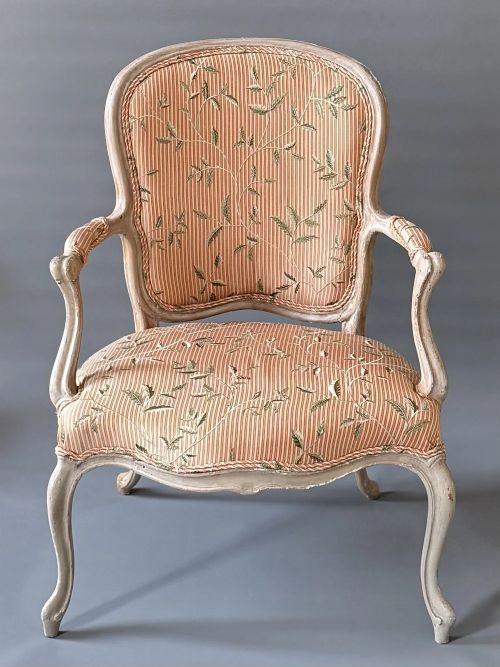
- A furniture leg that curves out in a convex arc and tapers inward in a concave arc, terminating in a pad, claw, or scroll foot. This form derives from animal limbs and defines much Georgian seating.
Antique Carved Arm Chair: Frequently Asked Questions
How do I identify an 18th-century chair?
Study the timber grain and the tool marks left on the underside of the seat rails by hand-chisels. Eighteenth-century pieces generally show patination built up through decades of handling and wax.
Examine the joinery for pegged mortises and hand-cut screws or nails where repairs or original construction intersect. Period proportions also differ from later revival pieces, possessing a lighter stance relative to their height.
Can I use these chairs daily?
Solid hardwood frames tolerate everyday domestic use provided the internal webbing and joints remain secure. Periodic checks by a specialist conservator ensure the frame does not take strain during sitting.
Leather and durable textiles handle active use well, while fragile silks or antique needlework require careful placement away from direct sunlight. Modern weight distribution matches historic tolerances closely.
What is a library chair?
Library chairs were built for prolonged reading and study, often featuring upholstered armrests and supportive high backs. Mahogany and walnut versions frequently incorporated leather writing surfaces or reading slopes.
These pieces populated the studies and private libraries of large country houses, balancing formal aesthetics with deep physical comfort. Their substantial frames accommodated heavier upholstery layers than standard dining seats.
How do I spot a revival piece?
Revival furniture often borrows decorative motifs from earlier centuries, such as 17th-century barley twist turnings or Rococo scrollwork applied to Victorian carcases. Machine-cut timber components and uniform factory sanding distinguish these later interpretations from genuine period work.
Compare the secondary woods beneath the seat with the primary show wood to confirm the manufacturing era. Stylistic overlaps provide clear clues when historical revivals gain popularity during the 19th century.