



Antique Canted Side Table
An antique canted side table offers a practical surface with angled corners that soften the profile in a traditional room.
Antique Canted Side Table
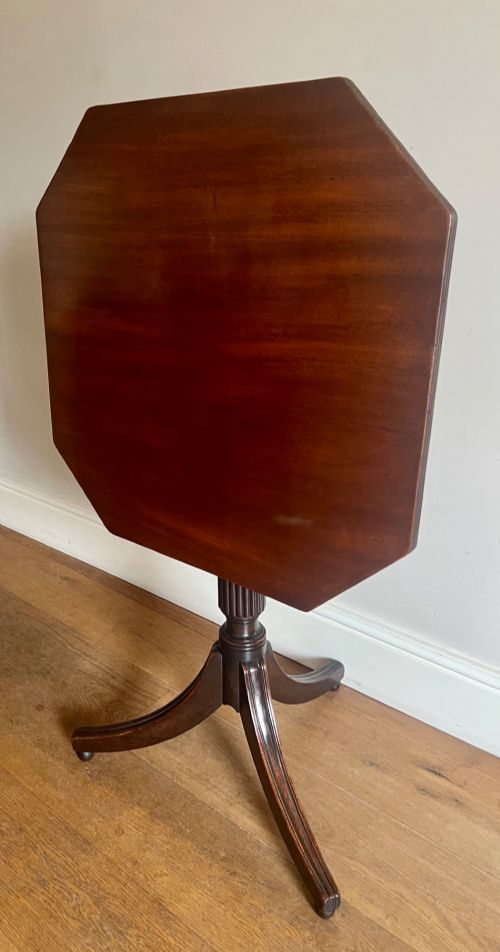
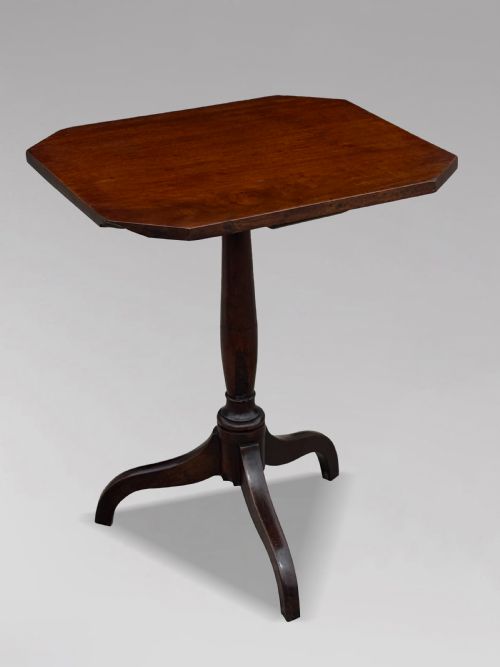
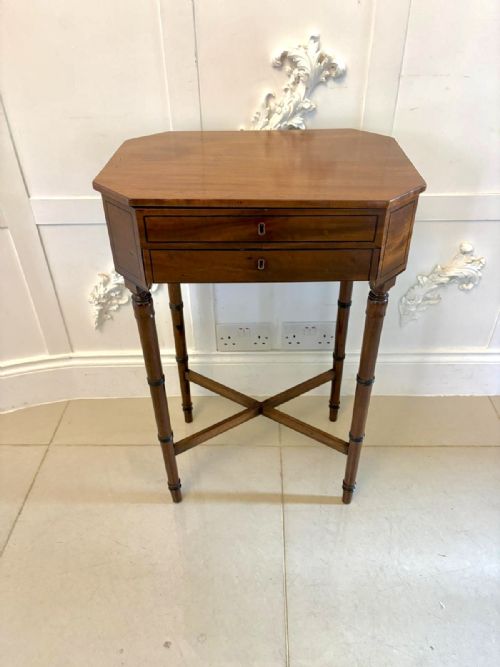
An antique canted side table brings compact utility to a room through forms such as occasional tables, tripod tables, and sutherland tables. These pieces feature the characteristic cut corners that define the search phrase, often appearing in Edwardian walnut and mahogany variations.
The selection ranges across several periods, drawing on Georgian, Regency, and Victorian designs alongside later Edwardian and 1920s interpretations. Buyers encounter diverse formats, from tea tables and work tables to simple side pieces.
Makers adapted the canted edge across various object types, utilising the geometry to ease movement around the table in tighter spaces. The resulting furniture combines straightforward utility with period character.
Assessing quality and execution
Quality rests in the precision of the timber selection, particularly where crossbanding and inlaid details meet the canted corners. Finer examples display harmonious grain patterns and crisp execution in carved or turned elements.
The integrity of the construction and the subtlety of proportion separate standard utility items from more refined parlor furniture. Superior pieces maintain structural stability while retaining delicate proportions in legs and supports.
Several tables include hidden compartments for sewing wool, proving that eighteenth-century domestic life involved serious crafting.
The Antique Canted Side Table Glossary
- Canted corner
- A corner that has been cut off at an angle, usually forty-five degrees, rather than left square. This shaping softens the silhouette of the furniture.
- Crossbanding
- A strip of veneer applied to the border of a surface so that the grain runs perpendicular to the main panel. It creates a neat framing effect on table tops.
- Tripod table
- A small freestanding table supported by a central pillar resting on three legs. These often feature tilt tops for easy storage.
- Sutherland table
- A narrow drop-leaf table with hinged leaves that fold down deeply on either side. They characteristically feature slender gateleg supports.
- Work table
- A small table fitted with drawers or a fabric bag for sewing implements. These items served functional domestic roles in period sitting rooms.
Antique Canted Side Table: Frequently Asked Questions
What is a canted corner?
A canted corner is an angled edge where a sharp ninety-degree corner is cut flat at an angle. This design detail reduces sharp points on furniture placed in busy walkways.
In period pieces, canted corners frequently appear on table tops and cabinet cornices to create a more refined silhouette.
How were side tables used?
Side tables served varied domestic functions, holding lamps, tea equipment, or sewing materials in sitting rooms and parlors. Their portable nature allowed servants or residents to move them as needed.
They provided accessible surfaces without dominating the floor space of smaller period interiors.
How do I identify a Georgian table?
Georgian pieces typically display timbers like mahogany or oak with restrained classical proportions and minimal ornamentation. Construction details often include hand-cut dovetails and traditional wax finishes.
Looking underneath reveals the older construction methods characteristic of the eighteenth century.
Where should I place an occasional table?
Occasional tables fit well beside armchairs or sofas to hold books, drinks, or small lamps. Their compact footprints suit awkward corners or narrow gaps between furniture.
They offer functional surfaces that can be shifted easily around a room.