


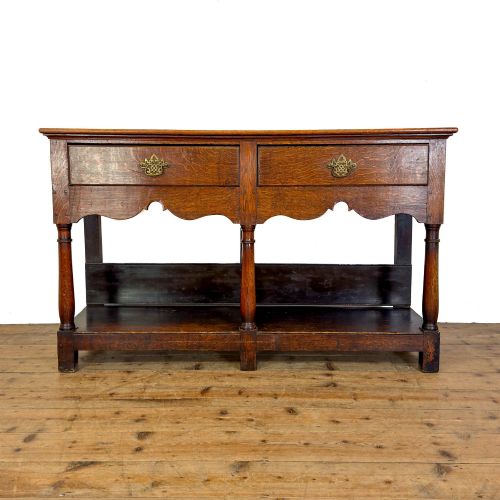
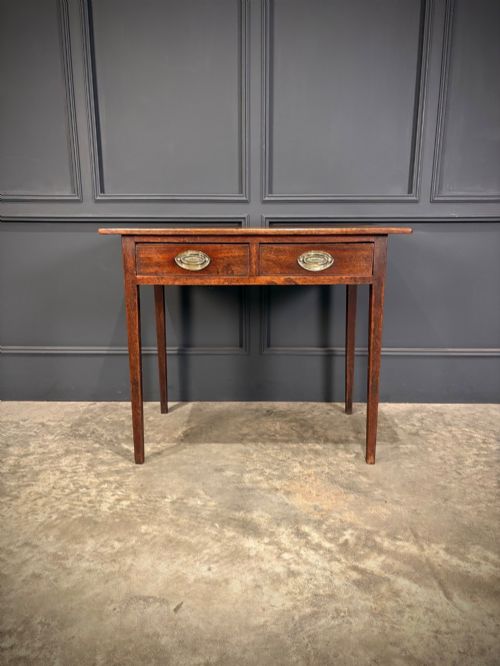
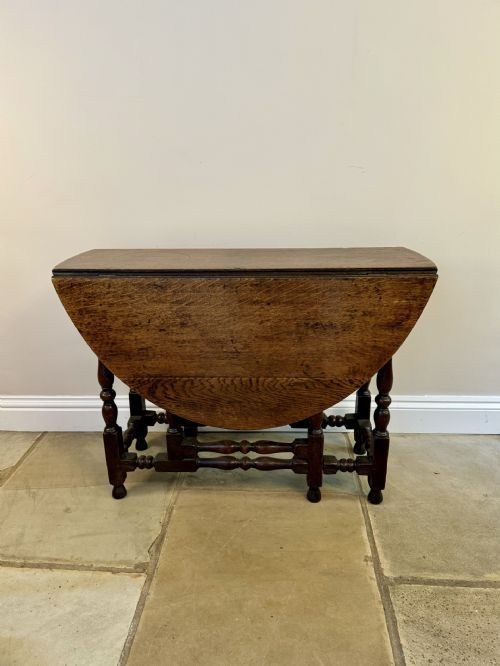


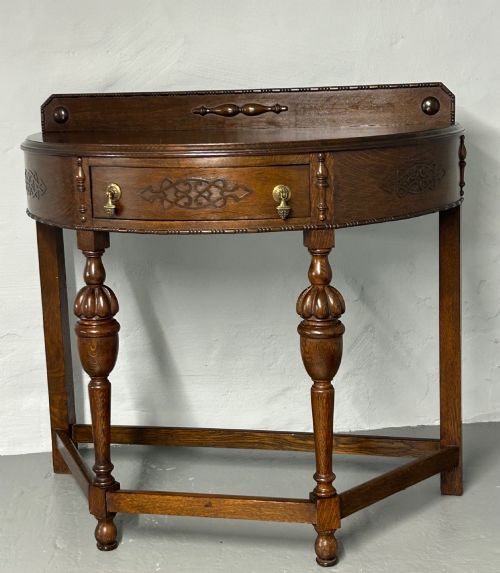
Small Oak Console Table
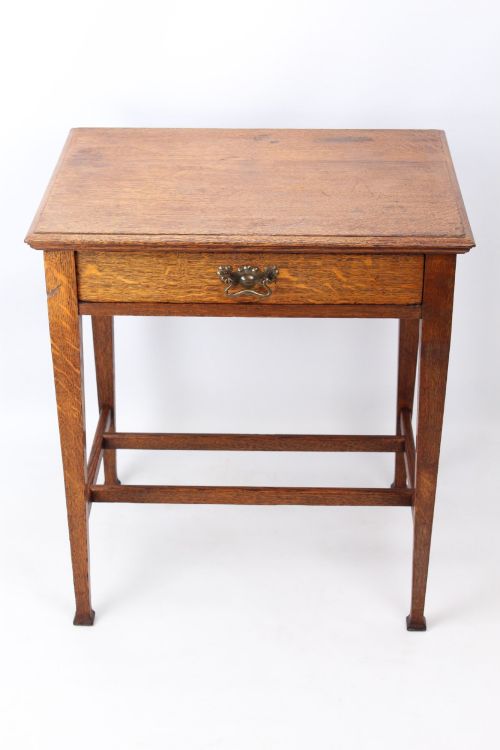
A small oak console table offers compact utility with rich grain, appearing frequently in Edwardian, Victorian and earlier vernacular forms.
Small Oak Console Table
A small oak console table brings compact proportions and sturdy timber to hallways and narrow rooms, serving as a surface for lamps or correspondence. When you search for this phrase, you meet a range of related domestic forms including narrow side tables, writing desks, and small dresser bases.
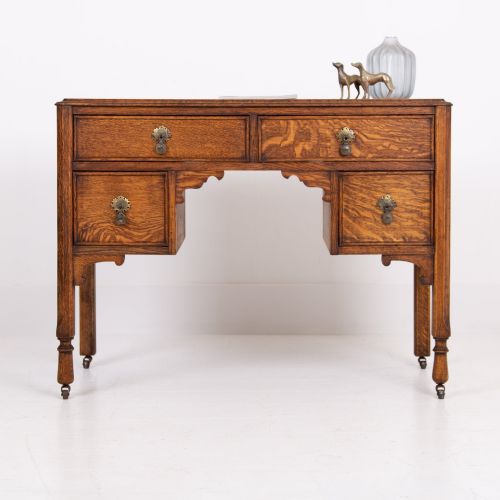
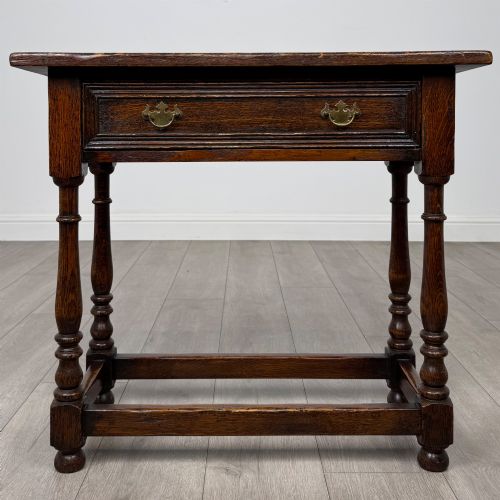
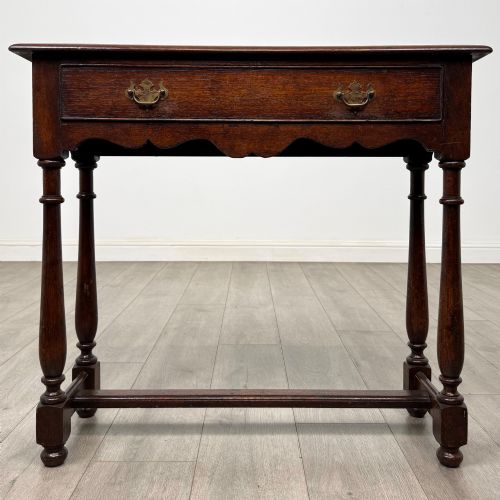
The pieces listed span multiple centuries and design movements, from seventeenth-century vernacular examples to Edwardian reinterpretations and Jacobean revival pieces. Vernacular tables with simple turned legs sit alongside Arts and Crafts writing desks fitted with leather tops and brass hardware.
Edwardian and early twentieth-century examples appear most frequently on this page, often showing narrow depths suited to contemporary hallways. Alongside these, eighteenth-century oak drop-leaf tables and Victorian Gothic revival pieces offer heavier timber and deeper patination.
Judging Quality
The distinction between ordinary and exceptional pieces lies in timber selection, proportion, and the integrity of the original construction. Tables featuring quartersawn oak with prominent medullary rays command attention for their visual depth and stability.
Proportion dictates utility in smaller rooms, where narrow depths and well-balanced leg heights create a lighter presence. Original hardware, such as brass drop handles and working locks on desk drawers, elevates an example above those altered or re-fitted later.
Several tables retain original ink stains inside their drawers, reminding us of hurried Victorian correspondence.
James Shoolbred·Jenners
The Small Oak Console Table Glossary
- Console table
- A table designed to stand against a wall, traditionally fixed with brackets or supported by front legs. These pieces provide surface space in narrow circulation areas.
- Dresser base
- A low sideboard or table featuring drawers and sometimes an open pot board beneath. They originate from vernacular kitchens and dining rooms.
- Jacobean Revival
- A nineteenth-century design style emulating the heavy turned supports and geometric mouldings of the seventeenth century. It often uses dark-finished oak.
- Pollard oak
- Timber taken from trees that have been pollarded, producing a dense, highly figured burl grain. Cabinet makers used it for decorative veneers.
- Medullary rays
- Radial cellular sheets in oak timber that create a shimmering silver flake pattern when quarter-sawn. This figure signals quality timber selection.
Small Oak Console Table: Frequently Asked Questions
Where should I put a small oak console table?
These narrow tables suit hallways, landings, and tight spaces behind sofas where standard furniture projects too far into the room.
They provide a stable surface for keys, small lamps, and post while anchoring an empty wall with natural timber texture.
How do I care for antique oak furniture?
Maintain the finish by applying natural beeswax sparingly and buffing with a soft cloth to nourish the dry timber.
Keep tables away from direct heat sources and strong sunlight to prevent the oak from splitting or fading over time.
Can I use an antique oak writing table for daily work?
Many of these pieces feature single drawers and flat surfaces suited to laptops and notebooks, provided the writing height matches your chair.
Check the internal clearance beneath the drawer rails to ensure your legs fit comfortably when sitting at the desk.
How can I tell an Edwardian oak table from an eighteenth-century one?
Earlier tables often show irregular hand-tooled surfaces, pegged joinery, and deep patination accumulated over centuries of use.
Edwardian revival pieces display more uniform machine-sawn timber dimensions and cleaner internal framing behind the drawers.