


Antique Canine Painting
When you search for an antique canine painting, you enter a tradition of portraiture that captures breeds and individual dogs with remarkable fidelity.
Antique Canine Painting
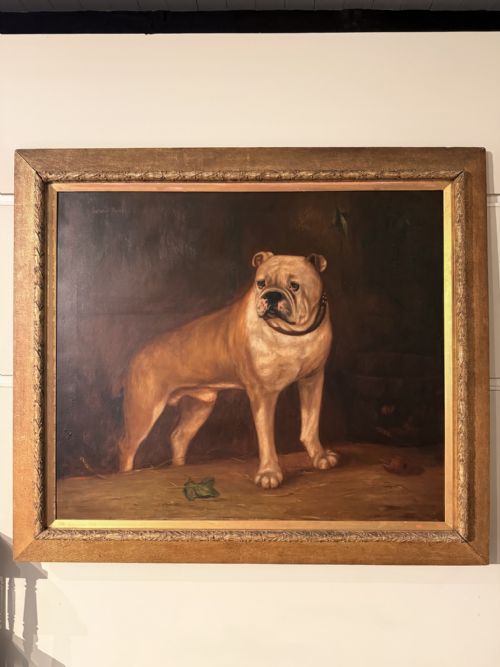
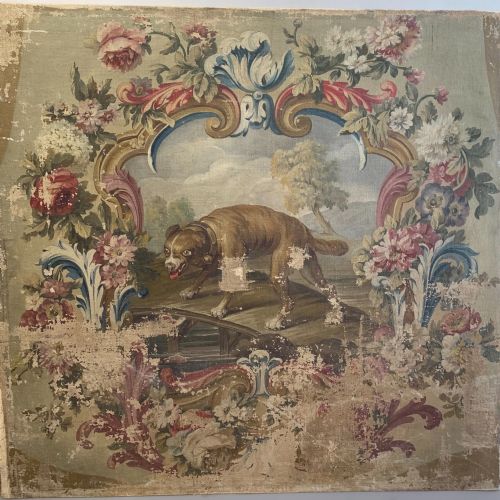
An antique canine painting represents a distinct branch of animal portraiture, spanning from the nineteenth century into the mid twentieth century. These works depict working dogs, sporting hounds and household pets, often rendered in oil on canvas or board.
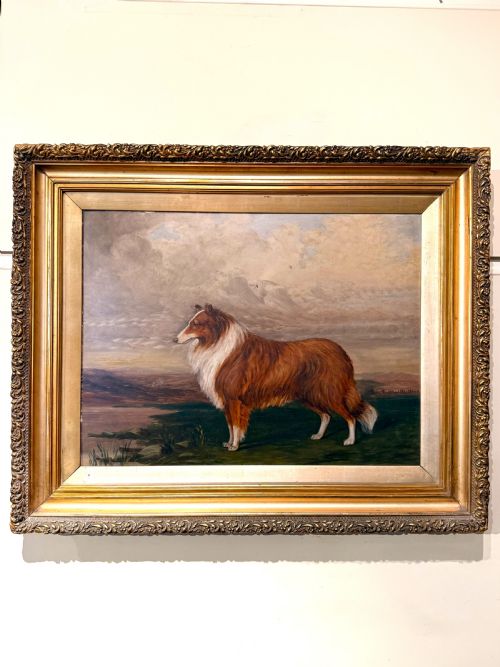
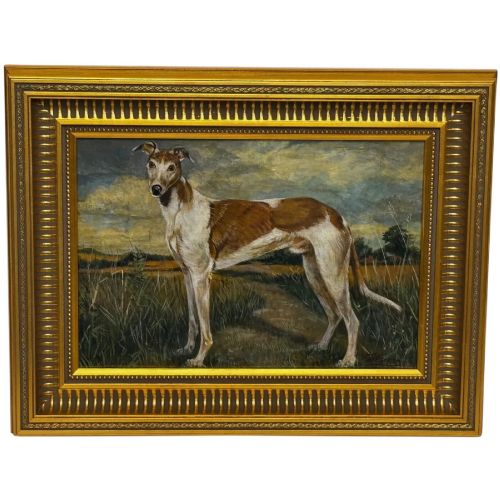
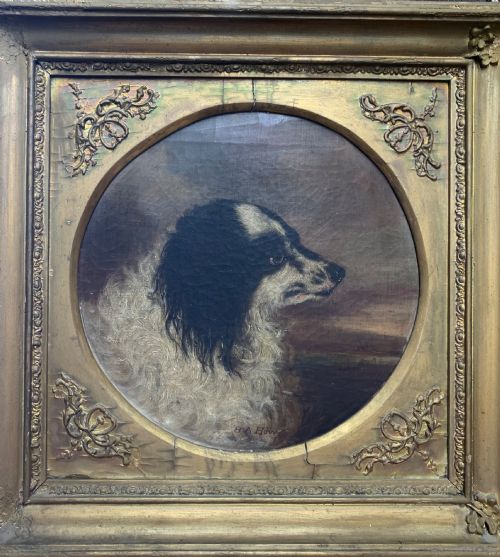
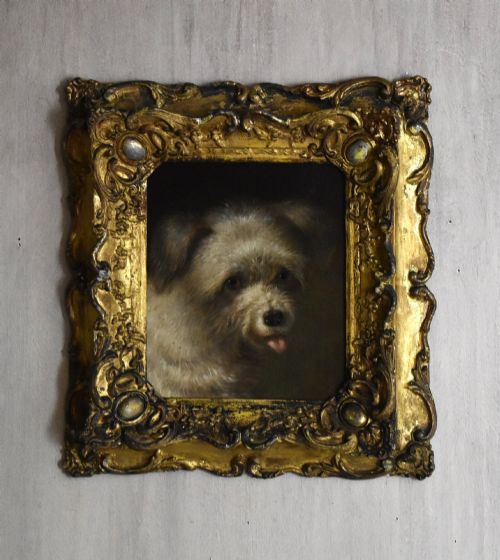
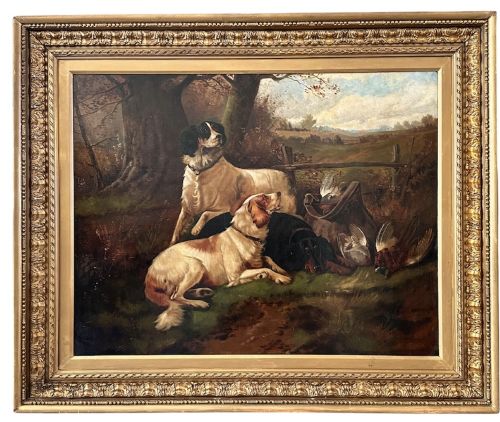
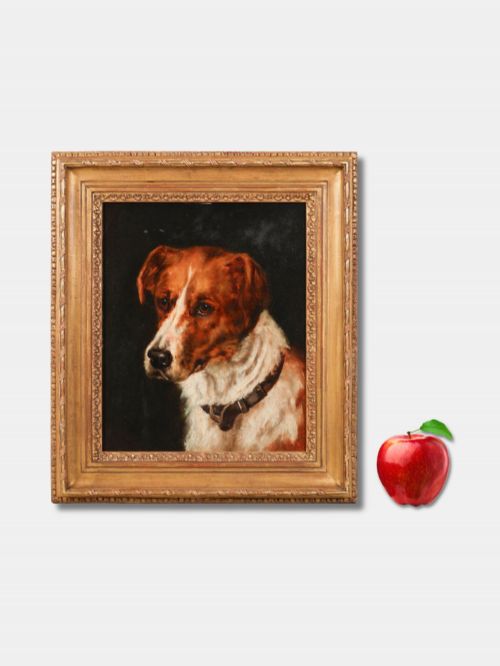
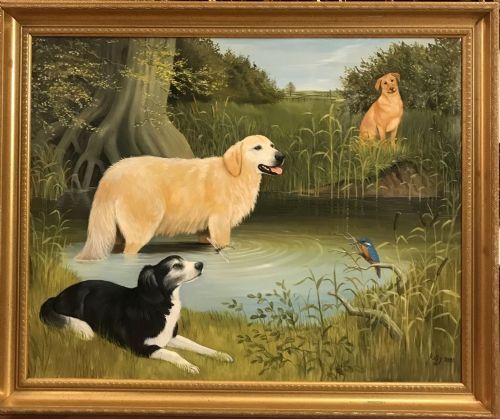
The pieces on this page lean heavily towards nineteenth century Victorian compositions and early twentieth century sporting art. You will encounter intimate studies of terriers, spaniels and collies, alongside larger scale canvases depicting hunting packs and gun dogs.
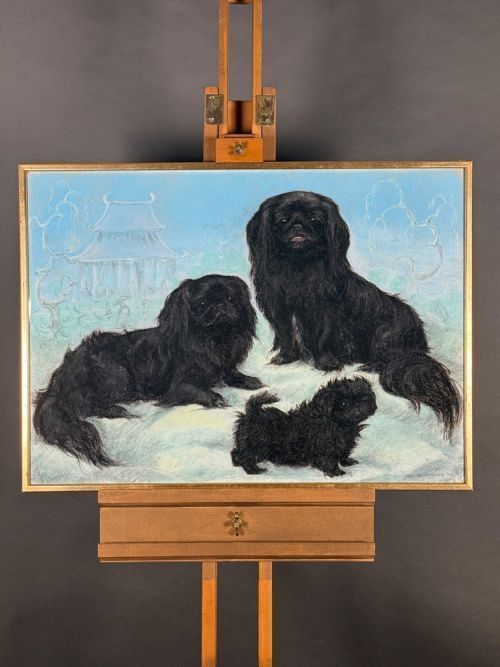
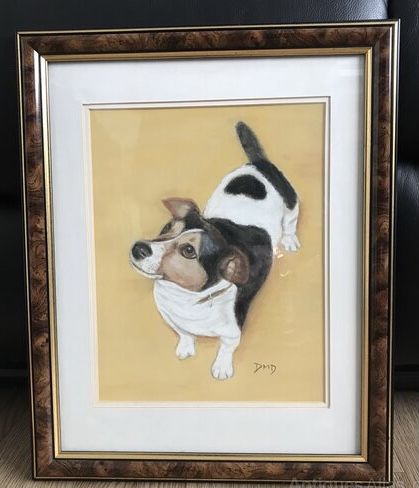
Beyond traditional paintings, the selection extends to watercolours, pastels and charcoal drawings, reflecting how different artists chose to record their subjects. Each piece provides a window into the historical relationship between humans and their dogs.
How they were made
Artists typically applied oil paint to stretched canvas or prepared wooden boards, building up layers to render the texture of fur and the depth of a landscape setting. Canvas preparation involved sizing and priming to ensure the stability of the paint layer over decades.
Frames play an integral role in the construction of these works, frequently utilising carved wood finished with gold leaf or gilt. These traditional frames protect the edges of the canvas and provide a visual boundary that complements the tonal palette of the painting.
Several paintings capture dogs so lifelike you might instinctively reach out to scratch behind their painted ears.
What varies in quality
Anatomical accuracy and the depiction of light distinguish the finest works from standard decorative pieces. Master painters capture the intelligent expression in a dog's eye and the realistic fall of coat, rather than simply recording a silhouette.
The handling of the background environment further separates individual works. Superior artists integrate the animal into a coherent landscape or interior, whereas lesser pieces treat the subject and the setting as entirely separate elements.
Valentine T. Garland·Martin Theodore Ward·John Sargent Noble·John Emms·John Frederick Herring Senior·LM Webb·Arthur Wardle·William Barraud·Sir Edwin Landseer·Samuel Raven·Colin Graeme Roe·John Trivett Nettleship
The Antique Canine Painting Glossary
- Oil on Canvas
- A traditional painting medium where pigments bound in drying oil are applied to woven fabric stretched across a wooden frame. This combination allows for rich blending of colours and lasting durability.
- Sporting Art
- A genre of painting dedicated to rural pursuits, including hunting, shooting and the animals associated with them. Canine subjects in this category often feature hounds and gun dogs in working environments.
- Giltwood
- Wood that has been coated with a thin layer of gold leaf or gold powder. It is commonly found on the antique frames enclosing these portraits.
- Provenance
- The documented history of ownership of a work of art. Establishing provenance helps confirm the attribution and age of a painting.
Antique Canine Painting: Frequently Asked Questions
Where should I hang a canine painting at home?
These traditional portraits suit spaces where you want to introduce warmth and character, such as a study, hallway, or living room. Their subject matter pairs well with wood paneling, traditional furniture, and neutral wall colours.
Avoid placing oil paintings in areas subject to direct sunlight or high humidity, as these conditions can damage both the canvas and the gilt frame over time.
How can I tell the age of the painting?
Dating relies on examining the physical materials, such as the weave of the canvas, the type of stretcher frame, and the composition of the wood panel. The style of clothing in any human figures, along with the artist's signature, provides further chronological clues.
Frame construction and framing styles often correspond to the period of the artwork, though many pieces were reframed later in their history.
What is the difference between oil on canvas and oil on board?
Oil on canvas involves paint applied to a flexible woven fabric stretched over a wooden frame, which gives a slight bounce under gentle pressure. Oil on board uses a rigid wooden or composition panel as the firm support for the paint.
Board paintings are generally smaller and were often used for rapid studies or outdoor sketches, whereas large exhibition portraits were traditionally executed on canvas.