
Antique Caned Seat
An antique caned seat brings woven texture and lightness into a room, offering practical seating shaped by centuries of craftsmanship.
Antique Caned Seat
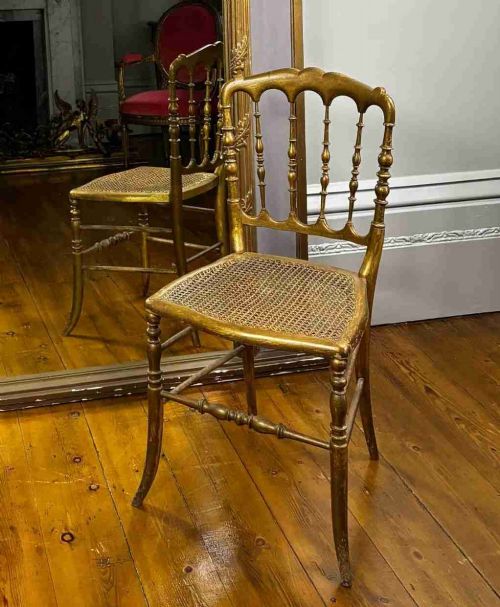
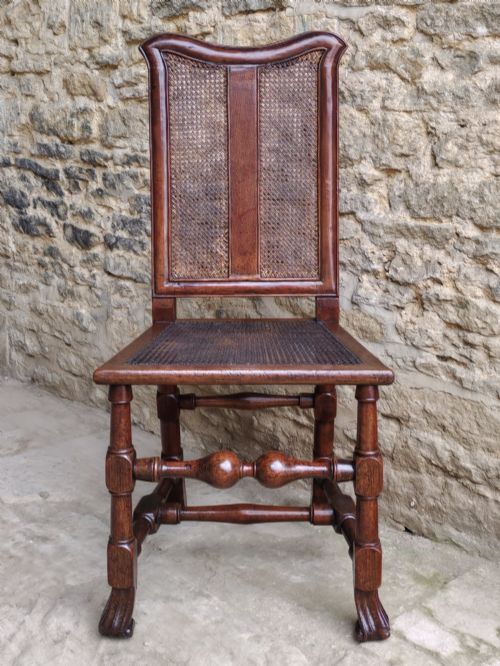
An antique caned seat encompasses a wide variety of domestic furniture designed with woven rattan or cane panels set into wooden frames. Buyers searching for an antique caned seat encounter dining chairs, armchairs, bergères, stools, and day beds spanning from the eighteenth century through to the twentieth century.
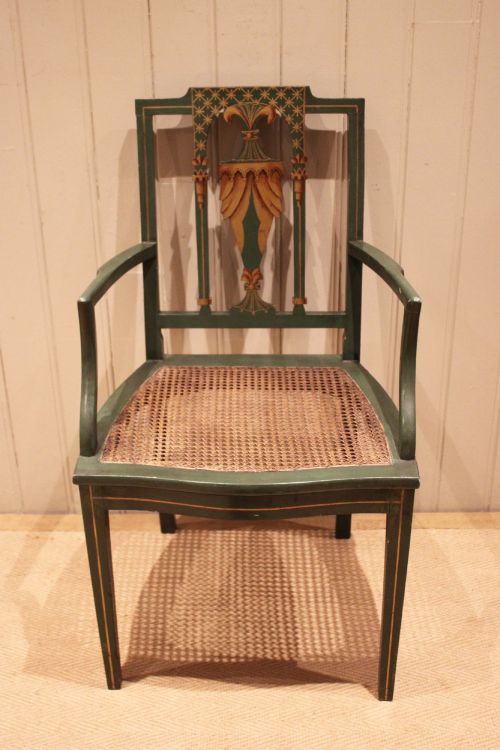
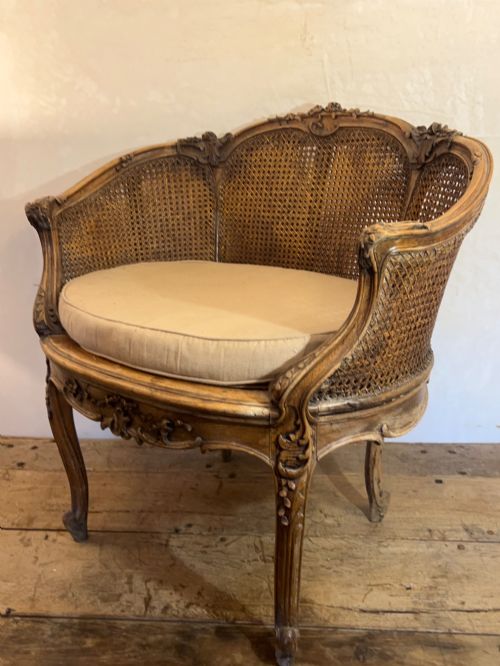
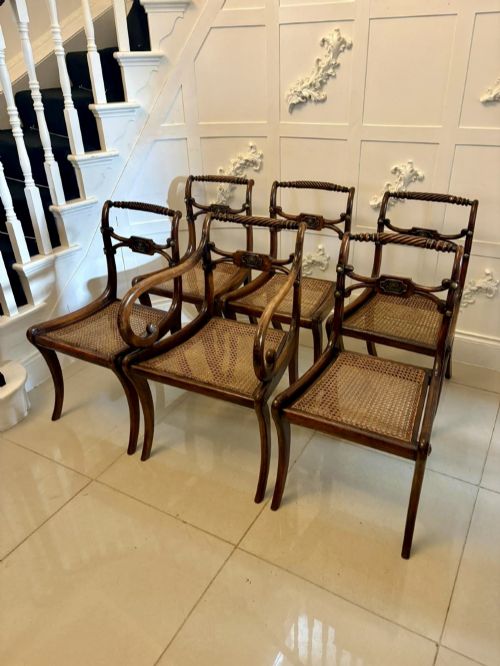
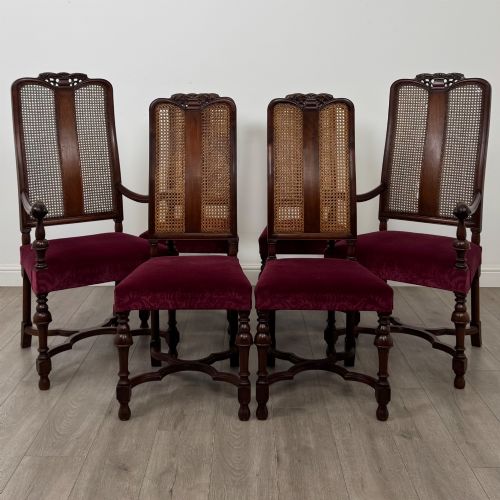
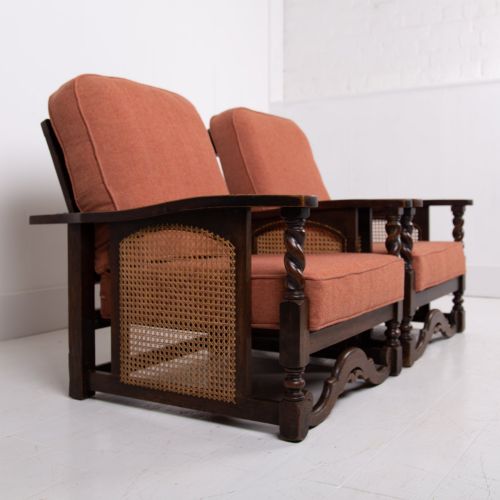
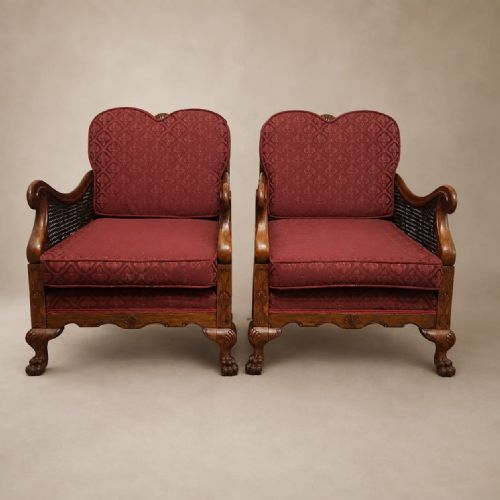
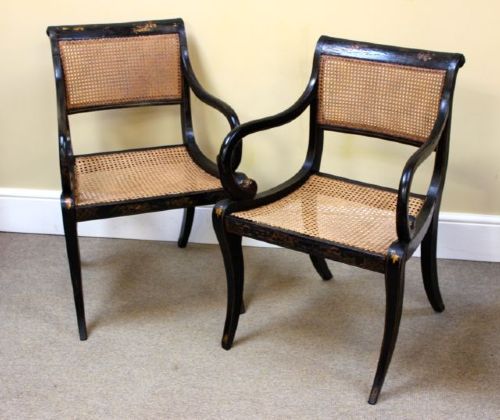
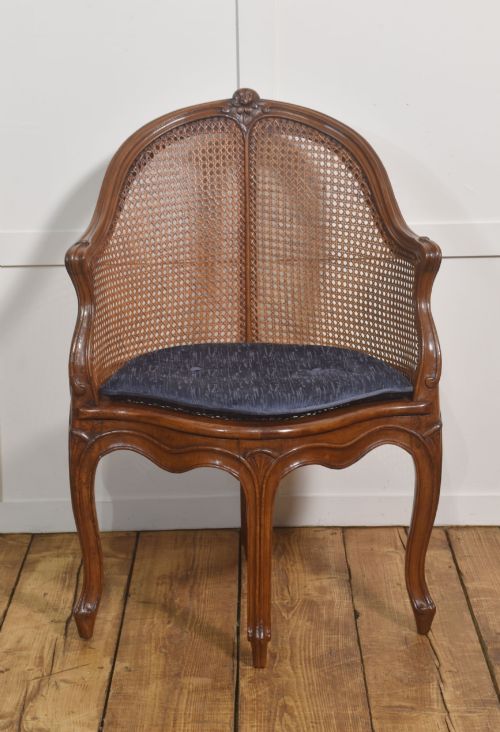
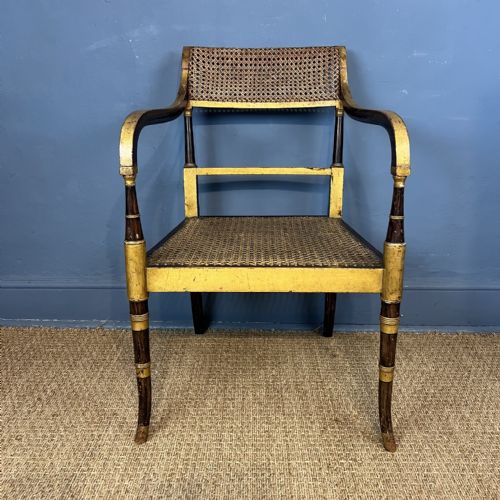
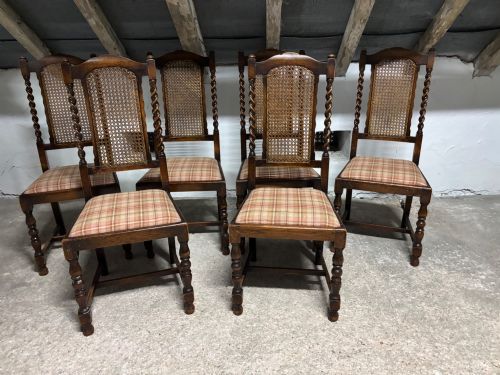
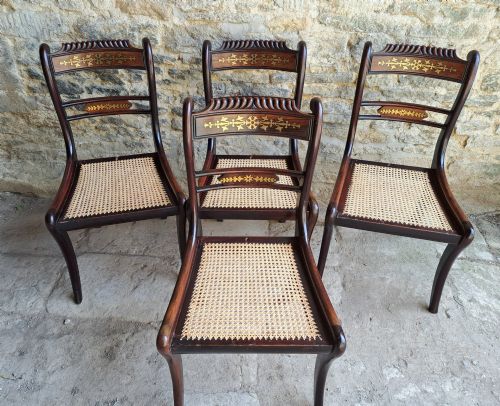
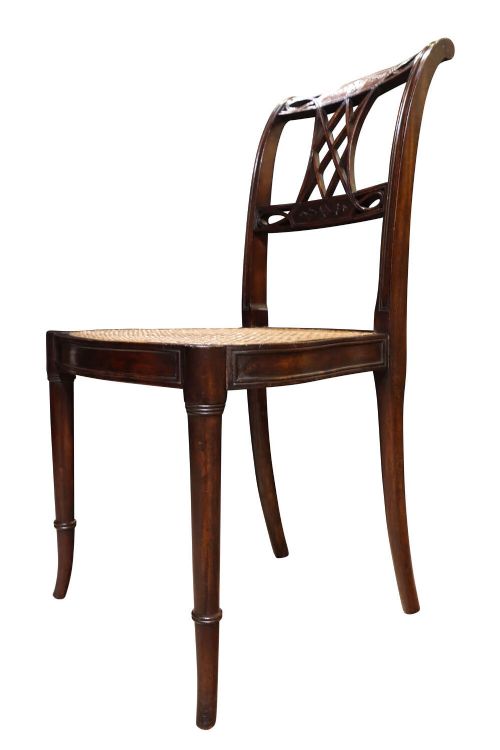
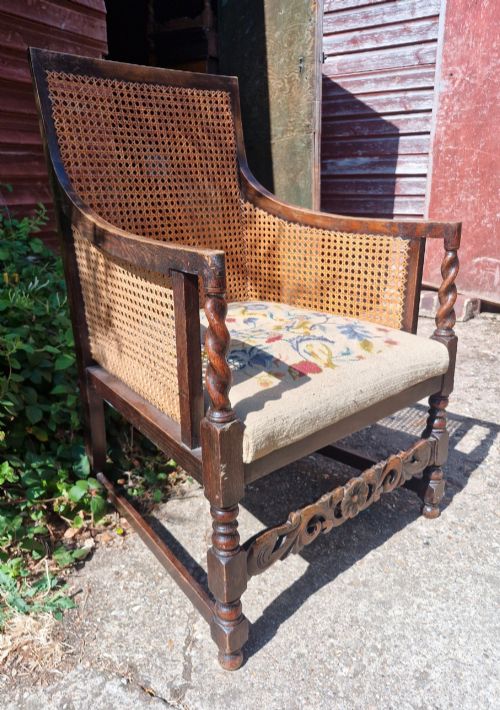
The selections on this page range from formal Regency mahogany dining sets and painted Regency side chairs to Edwardian tub armchairs and French Louis XV style walnut chairs. Regional revivals, including Jacobean and Sheraton interpretations, sit alongside French corbeille seats and Anglo-Indian Regency forms.
Armchairs and dining chairs dominate the selection, often appearing in matched pairs or larger dining sets. Stools, day beds, rocking chairs, and bedroom chairs provide alternative forms utilising the same woven technique across different periods.
Materials and construction
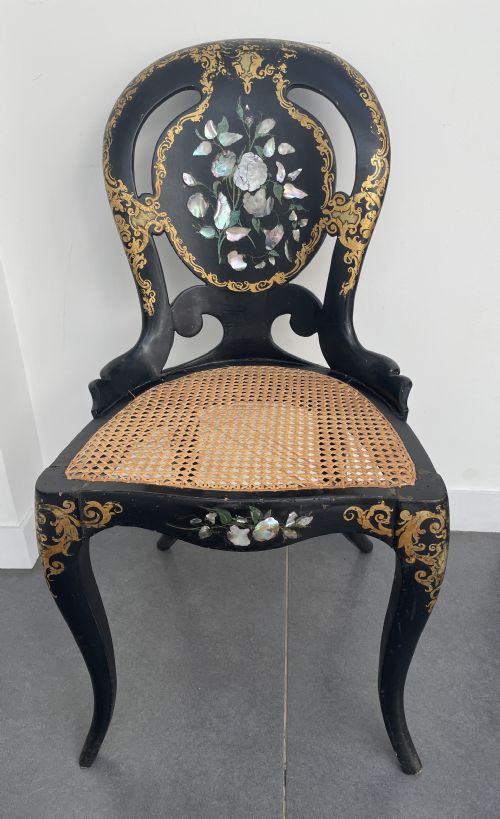
Frames rely on traditional cabinet timbers such as mahogany, walnut, oak, satinwood, and ebonised or painted hardwoods. Brass inlay, mother of pearl, and parcel gilding frequently embellish the woodwork on pieces from the Regency and Victorian eras.
The woven seats and backs utilise split rattan or cane, threaded through drilled holes along the wooden frame rails in intricate multi-strand patterns. Makers often complemented these woven panels with loose cushions in fabric, leather, or feather fillings.
Materials represented across the selection include solid oak, satinwood, brass, painted finishes, and woven cane.
Factors in quality
Quality rests upon the crispness of the timber carving and the integrity of the frame construction, whether joined with traditional pegged mortise and tenon joints or turned components. Finer pieces display refined proportions, sophisticated timber selection such as figured mahogany or walnut, and original surface decoration like paint or gilding.
The woven caning itself dictates the standard of execution, where tight, uniform hand-weaving demonstrates higher craftsmanship than loose or hastily repaired panels. Original cane work surviving in good condition adds significantly to the integrity of a piece.
The Antique Caned Seat Glossary
- Bergère
- An enclosed upholstered armchair with wooden sides and a cane or upholstered back and seat. These chairs often feature generous proportions and plush loose cushions.
- Trafalgar
- A style of nineteenth-century chair, often associated with sabre legs and naval themes popular during the Regency period. They frequently incorporate cane panels in the seat or back.
- Corbeille
- A French style of armchair with a curved, basket-like back that wraps around the sitter. These pieces often draw upon Louis XV or Louis XVI design idioms.
- Sabre leg
- A concave, outwardly curving furniture leg that tapers toward the foot, commonly found on Regency dining and side chairs. This form imparts a sense of movement and lightness.
- Split cane
- Material processed by splitting the outer bark of the rattan palm into strips for weaving. It provides flexibility and strength for seated panels.
Antique Caned Seat: Frequently Asked Questions
How do I care for antique cane seats?
Keep cane seats away from direct heat sources and strong sunlight to prevent the natural fibres from drying out and snapping. Lightly dampening the underside of the cane periodically can help maintain its moisture and elasticity.
Avoid placing excessive weight on single points of the woven panel. Using cushions where provided distributes pressure evenly across the cane web.
Can damaged cane seats be repaired?
Skilled artisans can re-cane damaged seats by hand, replicating traditional hole-to-hole weaving patterns using natural rattan. Professional restoration ensures the new work matches the tension and appearance of surviving original sections.
Minor breaks in modern replacement cane are straightforward to mend, whereas antique hand-woven panels require specialist attention to preserve the frame.
How do I identify a Regency caned chair?
Regency caned chairs typically feature architectural lines, saber legs, ebonised finishes, or dark mahogany timbers. Design motifs often include brass inlay, faux rosewood graining, and classical revival shapes.
These pieces date from the early nineteenth century and combine light, portable forms with durable cane seating suitable for formal dining or library spaces.
Were these seats used with cushions?
Many antique caned seats were originally designed to accommodate loose squab cushions filled with feathers, horsehair, or wool. Dining chairs often omitted cushions to showcase the woven cane work, while armchairs and bergères routinely included them for comfort.
Adding appropriate period-style upholstery enhances comfort while protecting the woven cane from direct wear during daily use.