



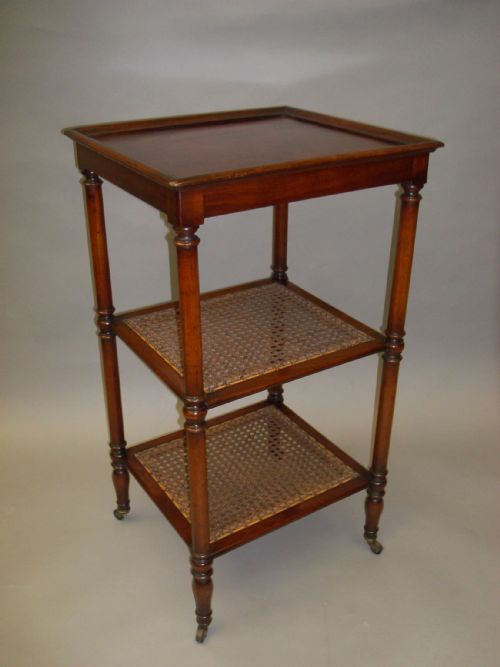
Antique Cane Shelf
An antique cane shelf brings lightness and texture into a room, offering open display surfaces framed in woven natural materials.
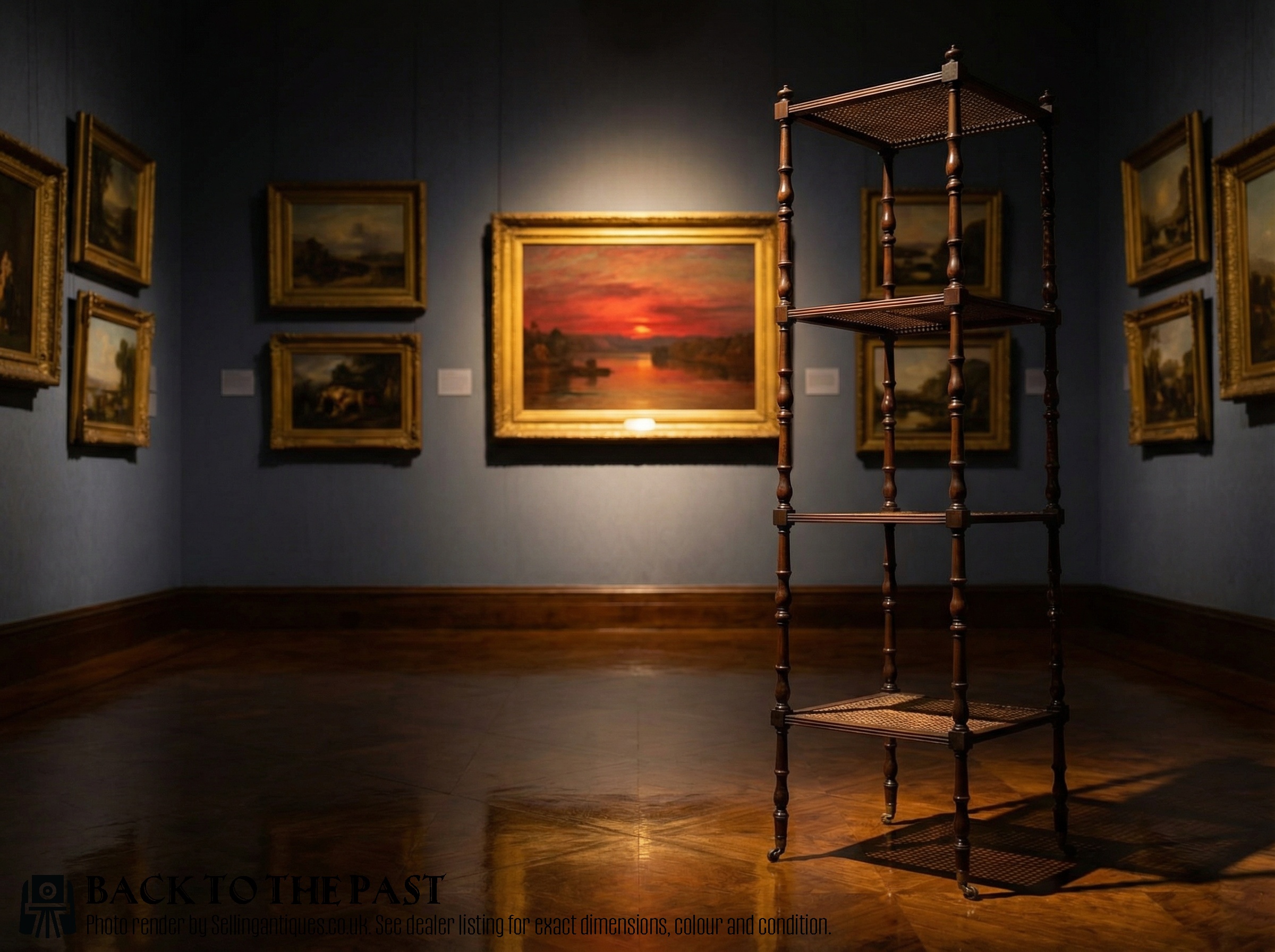
Antique Cane Shelf
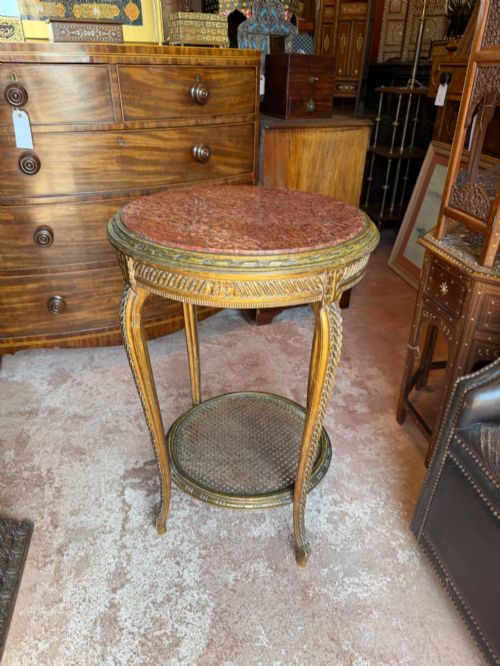
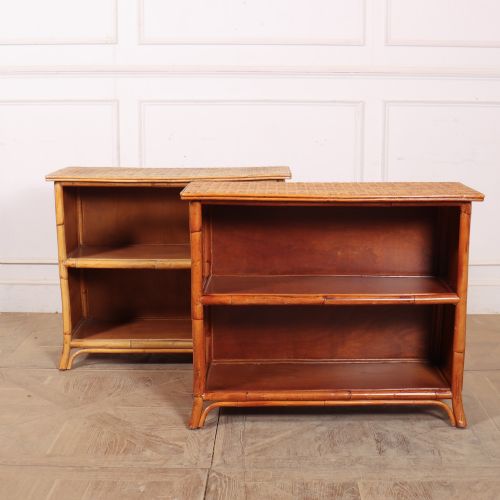
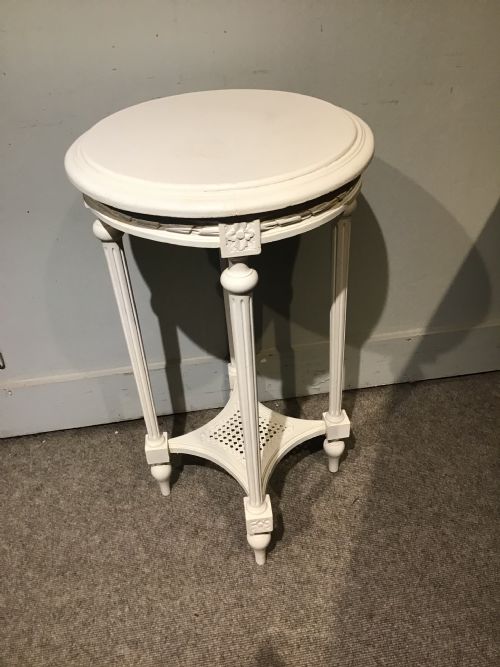
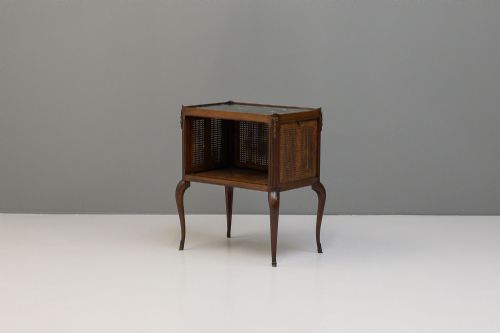
An antique cane shelf encompasses a variety of open display furniture, most commonly appearing on this page as multi-tiered etageres, occasional tables, and gueridons. These pieces combine wooden frameworks with woven panels, serving practical storage and display roles in domestic spaces.
The selections span the nineteenth century through the early twentieth century, drawing on Regency, Edwardian, and various French provincial or revival styles. Buyers frequently encounter two-tier and three-tier formats designed to hold books, decorative objects, or plants.
Makers utilised diverse structural timbers alongside cane work, creating functional surfaces that balance stability with visual lightness. Their origins trace across British and French workshops, reflecting shifts in interior taste from formal classical lines to organic aesthetic movements.
How they were made
Constructors built the primary frames from solid timbers such as mahogany, oak, and painted wood, joined using traditional cabinet-making methods. Canework and rattan panels were hand-woven into recesses or frames to form airy lower tiers or decorative surfaces.
Many examples incorporate contrasting insets of marble, ranging from white to green varieties, fitted neatly into the wooden or giltwood top tiers. Brass mounts and carved details sometimes accent the corners and legs, grounding the lighter woven elements.
Listings feature pieces spanning the nineteenth century up to the 1920s, constructed from materials including mahogany, marble, brass, and rattan.
What varies in quality
The standard of an antique cane shelf rests upon the tightness and regularity of the woven cane work, alongside the structural integrity of the main frame. Pieces constructed from dense timbers like mahogany with tightly fitted marble inserts represent finer manufacturing standards.
Proportion and decorative restraint dictate the upper tier of the range, where carved accents and brass fittings integrate harmoniously without cluttering the design. Simpler painted or bamboo variations offer domestic charm while displaying simpler joinery and lighter secondary woods.
Liberty & Co.·KRIEGER of Paris
The Antique Cane Shelf Glossary
- Etagere
- A set of open shelves or tiers used for displaying small objects or books. This form provides multiple levels for decorative arrangement within a room.
- Gueridon
- A small round table supported by one or more columns, originating in seventeenth-century France. Later iterations often feature multi-tier shelving.
- Canework
- Woven material made from the peeled bark of rattan palms, used to create flexible and breathable panels. It appears on shelves and chair seats across various nineteenth-century pieces.
- Regency
- A British design period spanning the early nineteenth century, characterised by classical restraint and polished mahogany surfaces. Pieces from this era often feature clean tapering forms.
- Aesthetic Movement
- A late nineteenth-century design style that emphasised visual beauty over narrative function, frequently incorporating bamboo and oriental motifs. This movement championed craftsmanship inspired by nature.
Antique Cane Shelf: Frequently Asked Questions
Where should I place an antique cane shelf?
These pieces suit living rooms, hallways, or bedrooms where their open tiers can hold books, plants, or decorative ceramics without blocking light.
Keep them away from direct heat sources and strong sunlight to protect the natural cane and timber from drying out.
Can these shelves hold heavy items?
Most pieces were designed for decorative objects, small books, or tea services rather than heavy library collections.
Distribute weight evenly across the tiers, placing heavier items on the lower wooden or marble surfaces if available.
How do I date a cane shelf?
Examine the timber species, joinery techniques, and decorative style markers such as Regency tapering legs or Edwardian painted finishes.
Comparative study of hardware, such as brass mounts, helps narrow down the period of manufacture alongside the construction of the woven panels.