


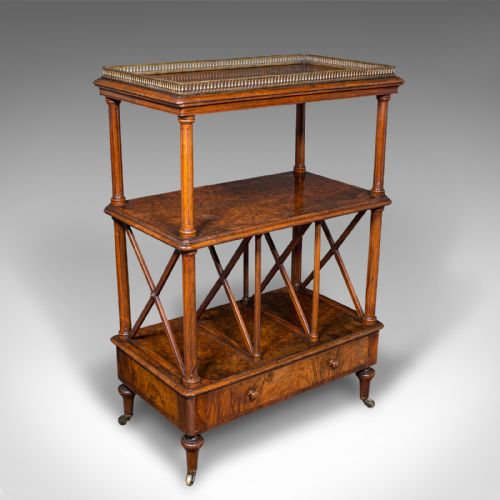

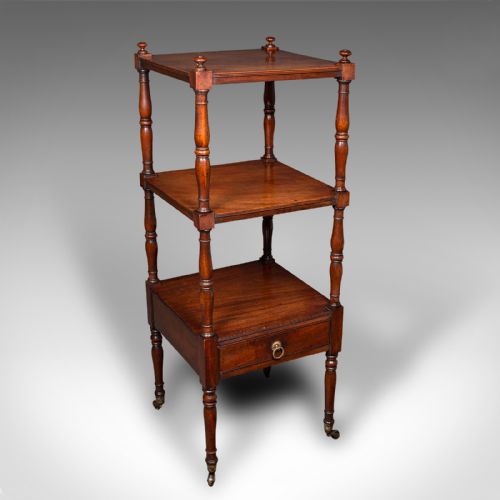


Antique English Whatnot
When you search for an antique English whatnot, you are exploring tiered display furniture designed to hold books, ceramics and ornaments.
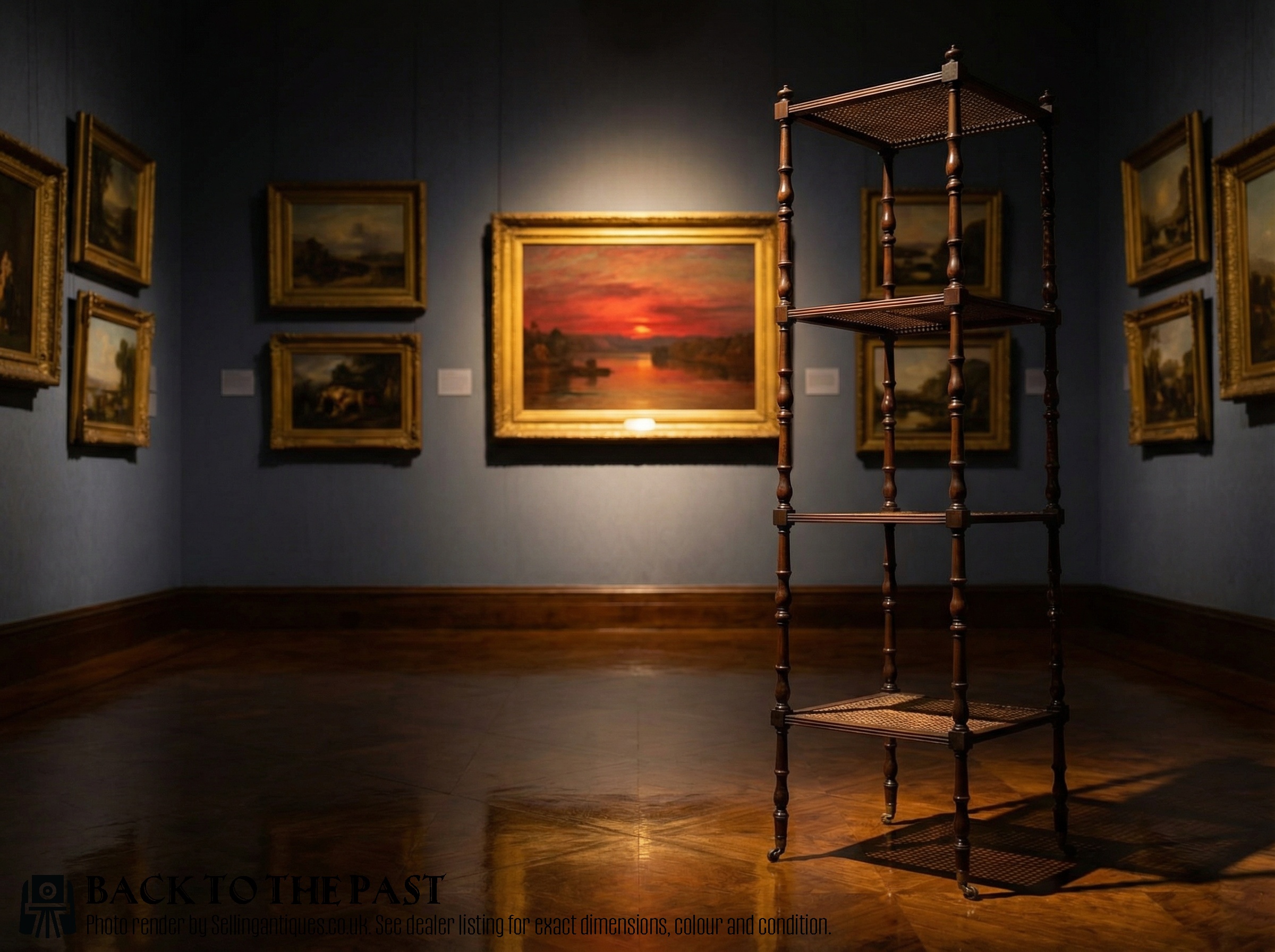
Antique English Whatnot
An antique English whatnot is a tiered shelving unit or display stand that appeared in domestic interiors during the Georgian, Regency and Victorian periods. These pieces were built to organise and exhibit portable decorative items, books and collectibles in the parlour or drawing room.
The most common versions found on this page are multi-tiered mahogany, walnut and rosewood open display stands and corner units. Many incorporate practical additions such as drawers, lower cabinets, or integrated Canterbury slots for newspapers and sheet music.
Makers produced both freestanding floor-standing etageres and wall-mounted variations designed to maximise vertical space in smaller rooms. The form evolved from simple stacked shelves into elaborate pieces featuring inlaid woods, barley twist supports and enclosed display cupboards.
Materials and construction
Cabinetmakers constructed these pieces primarily from dense hardwoods including mahogany, walnut, burr walnut and rosewood, often pairing them with turned or fluted upright supports. Selected examples utilise cane, pine, oak or elm for structural components and secondary framing.
Surface decoration relied on natural grain patterns, contrasting stringing, and occasional carved detailing rather than heavy applied ornament. Freestanding tiers sit upon delicate legs, while wall-mounted variants employ sturdy bracket fixings to secure the shelving safely.
Some nineteenth-century makers cleverly hid storage drawers inside music stands, proving that Victorians loved a tidy parlour.
Distinctions in quality
Quality rests upon the selection of timber veneers and the crispness of the joinery connecting the tiers to the upright columns. Finer examples display carefully matched burr walnut or figured mahogany grains across every shelf and drawer front.
The architectural balance of the tiered structure defines the piece, with superior items maintaining rigidity and proportion without relying on excessive reinforcement. Refinement in the turning of the spindle supports and the integration of storage elements separate standard utility pieces from high-status cabinet work.
The Antique English Whatnot Glossary
- Whatnot
- A multi-tiered piece of furniture designed for displaying ornaments, books and small objects. It originated in the eighteenth century and remained popular throughout the nineteenth century.
- Etagere
- A French term for a display stand with multiple open shelves, often used interchangeably with whatnot in nineteenth-century English cabinet making. These units range from delicate corner brackets to large freestanding display towers.
- Canterbury
- A low stand featuring partitioned sections originally built for holding sheet music, newspapers or folios. Many examples combine this storage function with the upper shelves of a whatnot.
- Burr walnut
- A decorative timber veneer taken from the excrescence on a walnut tree, prized for its swirling, intricate grain patterns. Cabinetmakers utilised it on high-status Victorian display furniture.
- Demi-lune
- A half-moon shape used for the footprint of certain tables, cabinets and corner-fitting shelving units. This profile allowed furniture to sit flush against a wall while projecting into the room.
Antique English Whatnot: Frequently Asked Questions
What is an antique English whatnot used for?
These pieces served as multi-purpose display stands for ceramics, silver, books and ornamental objects in principal rooms. They allowed households to keep frequently used volumes and decorative items organised within easy reach.
Over time, variations emerged that incorporated writing surfaces, storage cupboards, and specialised slots for newspapers or sheet music. This made them adaptable additions to sitting rooms and parlours across the nineteenth century.
How do I distinguish between Regency and Victorian pieces?
Regency examples generally display restrained classical proportions, featuring dark rosewood or mahogany timbers and delicate brass detailing. The upright supports are often slender and cleanly turned, reflecting earlier neoclassical tastes.
Victorian pieces tend to be more robust, frequently utilising burr walnut, elaborate fretwork, or carved ornamentation. They also display greater functional variety, including combined cabinet doors, wall-mounted configurations, and built-in music racks.
Where should I place a whatnot in my home?
Freestanding three or four-tier versions suit corners or empty wall spaces where they can hold books, lamps, or collections of small objects. Their open construction ensures they do not block light or overwhelm smaller rooms.
Wall-mounted variants require secure fixing to solid masonry or stud work to support the weight of books and ceramics safely. Corner formats effectively utilise dead space in dining rooms, studies, and hallways.