


Antique Cane Back Sofa
An antique cane back sofa brings tactile woven texture and historic European style into a room.
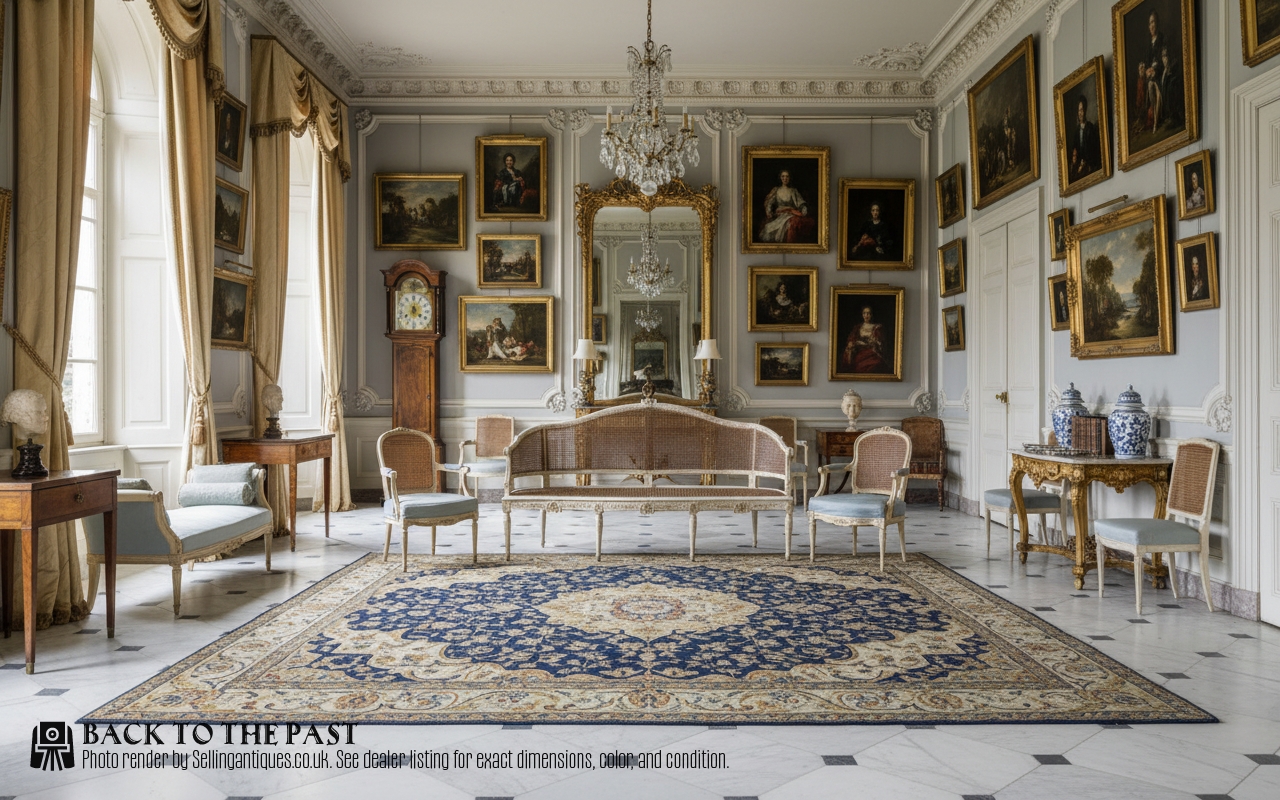
Antique Cane Back Sofa
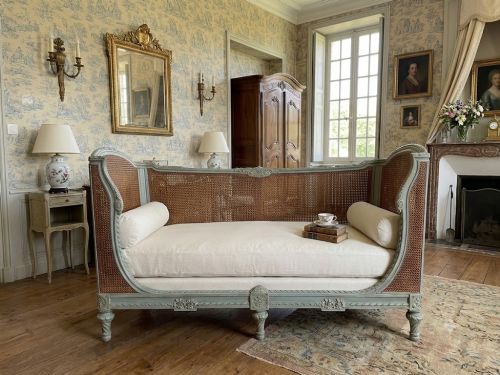
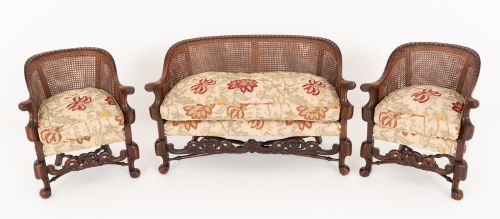
When you search for an antique cane back sofa, you encounter seating fashioned with woven panels in the backrest, spanning periods from the eighteenth century through to the early twentieth century. These pieces appear in forms such as settees, daybeds, and larger salon seating suites.
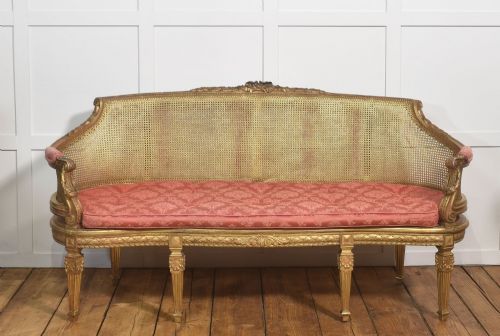
The versions most commonly met on this page reflect revived continental aesthetics, notably French Louis XVI and Louis XV styles, alongside Carolean and Georgian revivals. Walnut, beech, and painted woods form the primary structures supporting the woven cane work.
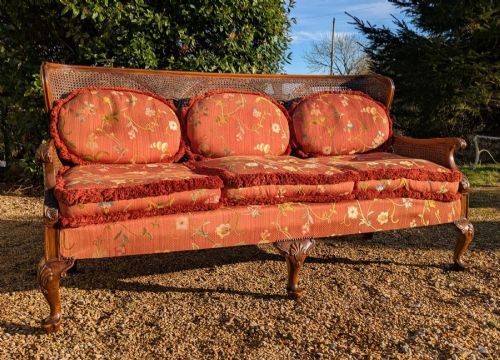
Makers and manufacturers during the nineteenth and twentieth centuries adapted historic forms, producing day beds, window seats, and three-seater couches. Each example employs woven cane panels combined with upholstered squab cushions or feather seating.
Materials and construction methods
Timbers such as walnut, beech, and satinwood provide the rigid framework for these items, often shaped through carving or steam bending as seen in Viennese bentwood examples. Giltwood and painted finishes appear frequently across continental European models.
Canework forms the defining structural and decorative element, woven from split rattan to create porous, resilient backrests. Frames frequently incorporate upholstered elements such as fabric, linen, or velvet cushions alongside the exposed woodwork.
The listings here include items spanning the eighteenth century through to the 1930s, utilising walnut, beech, giltwood, and cane.
Distinguishing quality in construction and finish
The precision of the hand-woven cane work dictates much of the visual standard, where tight, uniform holes and intact strands separate superior examples from clumsy repairs. The crispness of carved wooden details on walnut and giltwood frames further elevates the piece.
Structural integrity relies upon the seasoning of the timber and the rigidity of the joinery within the settee or daybed frame. Original painted surfaces or patinated gilding retain greater visual coherence than later, unsympathetic interventions.
The Antique Cane Back Sofa Glossary
- Canework
- Woven rattan material used for chair and sofa backrests. It provides flexibility and breathability while maintaining structural support.
- Bergere
- An enclosed upholstered armchair or sofa style originating in France, featuring wooden frames and cane or upholstered sides and back. These pieces typically include loose seat cushions.
- Giltwood
- Timber treated with a thin layer of gold leaf or gilt finish. This technique creates a luminous surface common on formal eighteenth-century revival furniture.
- Carolean Style
- A British furniture design period associated with the late seventeenth century, characterised by rich carving and scrolled woodwork. Revival versions appear in later nineteenth-century seating.
- Daybed
- An elongated seating form designed for reclining, combining a sofa back with an extended seat. They appear frequently within French and continental design traditions.
Antique Cane Back Sofa: Frequently Asked Questions
How do I clean a cane back sofa?
Dust the woven cane panels regularly using a soft brush attachment on a vacuum or a dry cloth to prevent debris accumulation.
Maintain the flexibility of the rattan by occasionally dampening the reverse side with a sponge using lukewarm water, allowing it to dry naturally.
Are these sofas suitable for daily sitting?
Most antique cane settees handle normal domestic use comfortably, provided the woven panels remain taut and properly supported.
Heavier daily wear requires checking that the cushion fillings and frame joints remain stable and secure over time.
What distinguishes Louis XVI style frames?
Louis XVI style seating is characterised by straight tapered legs, geometric symmetry, and neoclassical carved details such as fluting.
These frames often feature painted or gilded surfaces contrasting with the natural texture of the woven cane back.
Can broken cane panels be repaired?
Skilled craftspeople can re-weave damaged sections of rattan cane using traditional hand-caning techniques to match the original pattern.
Professional restoration ensures the tension across the entire backrest remains balanced and visually consistent.