
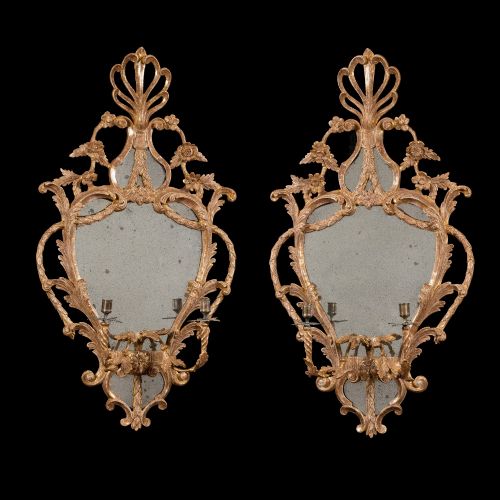
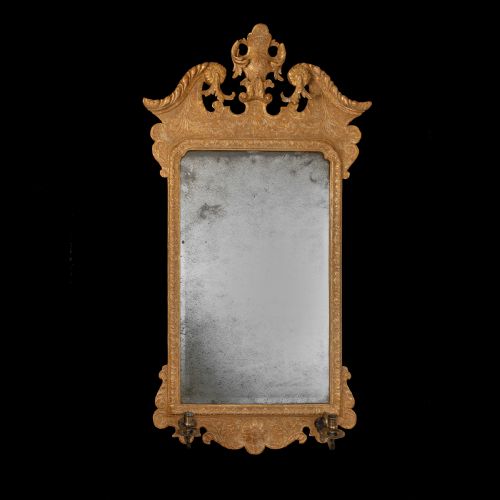
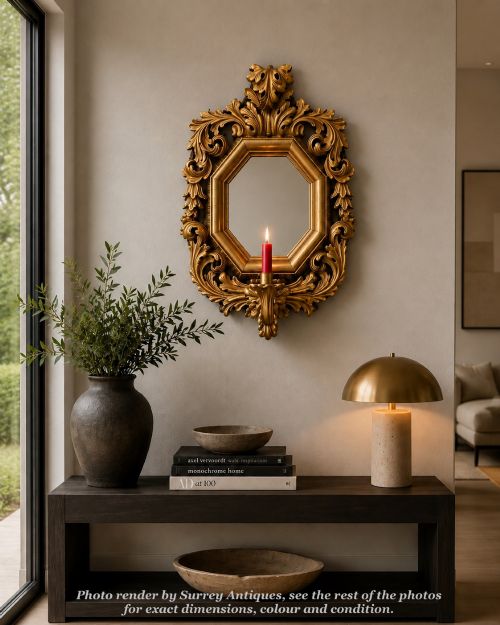

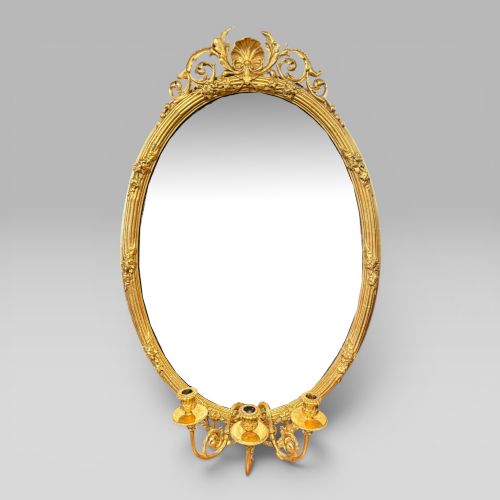

Antique Candle Mirror
An antique candle mirror brings flickering warmth to a room by casting candlelight across silvered glass.
Antique Candle Mirror
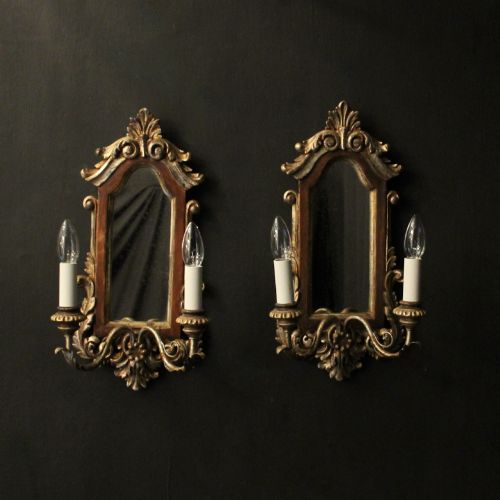
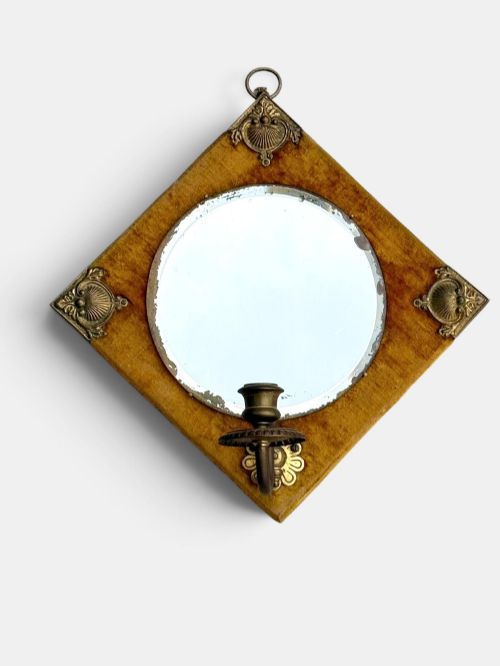
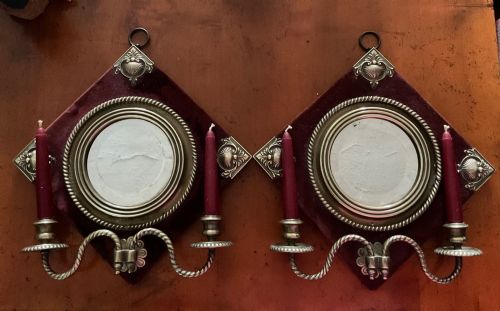
When searching for an antique candle mirror, buyers encounter wall sconces, girandoles, and dressing mirrors designed to hold candles.
The pieces on this page span the eighteenth, nineteenth, and early twentieth centuries, with Victorian and Regency examples appearing frequently.
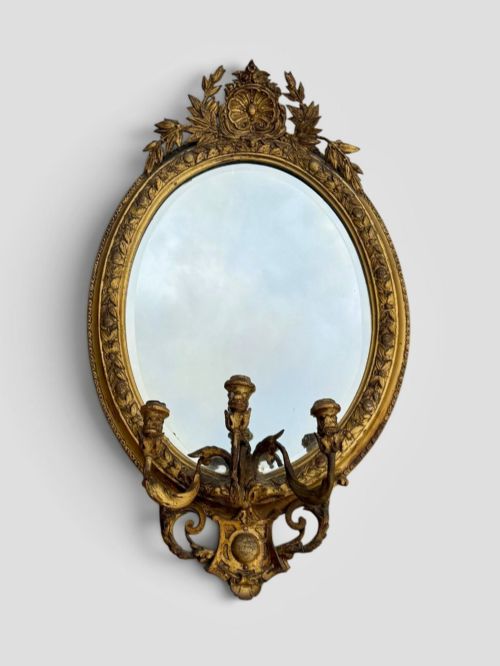
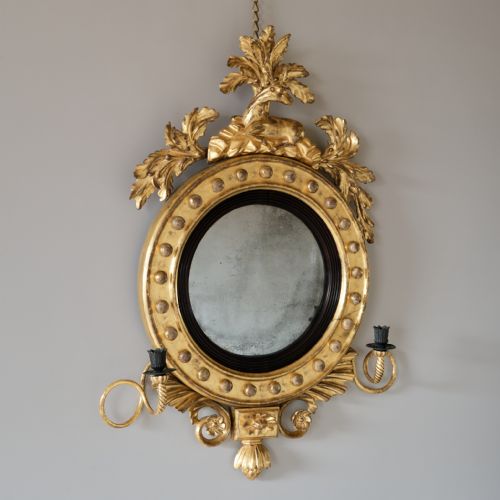
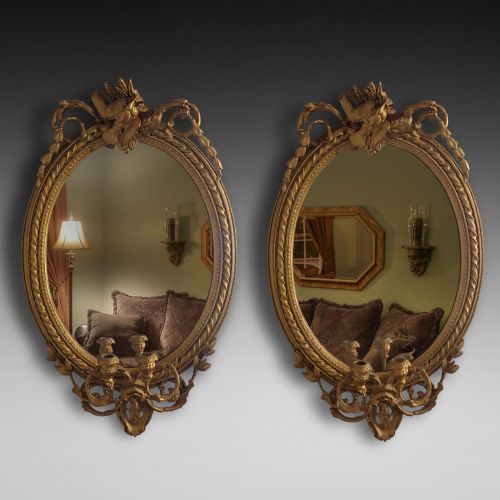
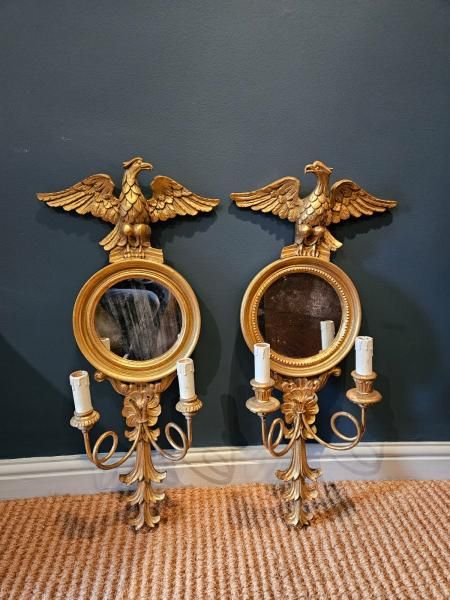
Forms range from convex wall mirrors to carved giltwood girandoles fitted with twin arms for illumination.
Materials and construction methods
Carved giltwood and gesso form the decorative frames of many girandoles, often built over wooden substrates.
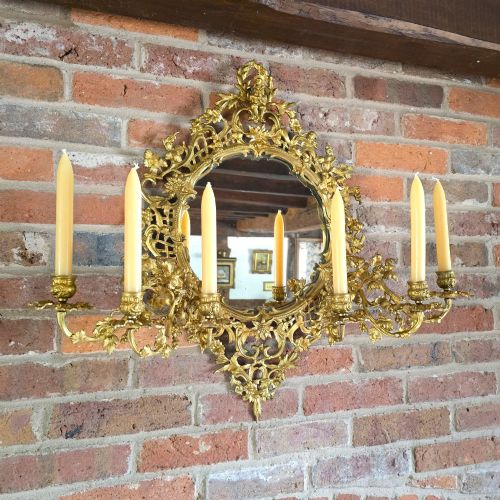
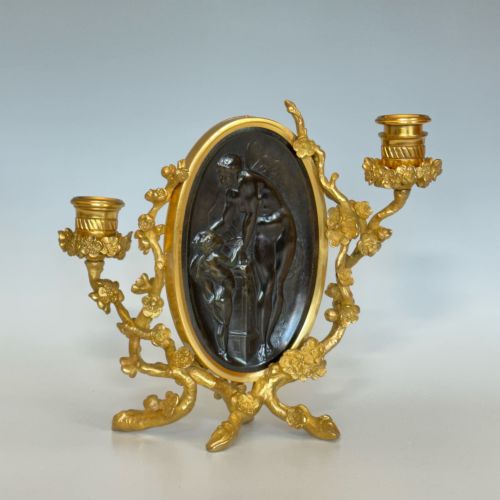
Found metals such as brass, bronze, copper, and ormolu provide structural strength for candle arms and wall mounts.
Listings feature brass, bronze, satinbirch, and walnut alongside traditional giltwood and gesso.
What separates examples in quality
Depth of carving and crispness in gilt gesso details distinguish ambitious pieces from simpler workshop productions.
The survival of original mirror glass and intact candle sconce arms determines the integrity of a piece.
Thiebaut Freres
The Antique Candle Mirror Glossary
- Girandole
- A wall mirror featuring attached candle branches or sconces that reflect the flame. These fixtures served both decorative and illumination purposes in period rooms.
- Gesso
- A plaster-like mixture applied to wood frames before gilding. Artisans carved intricate decorative motifs directly into this dried surface.
- Convex mirror
- A round glass mirror that curves outward to provide a wide-angle reflection of the interior. They often feature gilded frames with ball details.
- Ormolu
- Gilded bronze mounted onto furniture or mirror frames. French makers utilised this technique extensively during the nineteenth century.
- Sconce
- A wall bracket designed to hold candles or lights. Paired mirror backs amplify the flickering glow.
Antique Candle Mirror: Frequently Asked Questions
How were candle mirrors used?
These mirrors hung on walls or stood on dressing furniture to multiply the light of candles in dark rooms.
The reflective glass captured the flickering flames, brightening parlours and bedchambers before electric lighting.
Where should I hang one?
Position a candle mirror at eye level on a wall where it can catch natural light during the day.
Placing one opposite a window or above a mantelpiece maximises its decorative impact in a modern interior.
How do I tell Regency from Victorian pieces?
Regency mirrors frequently display classical restraint, convex glass, and reeded frames dating around eighteen twenty.
Victorian examples tend towards heavier ornamentation, floral gesso, and elaborate Rococo Revival styling.
Are the candle arms original?
Examine the junctions where brass, bronze, or giltwood arms attach to the main mirror frame.
Matching patination and construction methods across the components indicate whether the sconces belong to the piece.