



Decorative Wall Sconce Mirror
A decorative wall sconce mirror brings candlelight and reflected light into a room, combining the function of a sconce with a mirror.
Decorative Wall Sconce Mirror
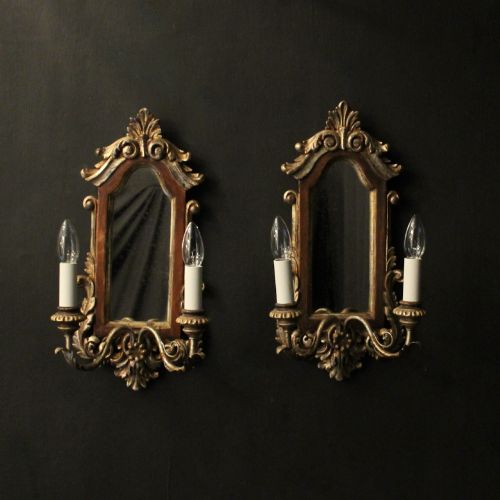
When searching for a decorative wall sconce mirror, buyers encounter a variety of forms including girandoles, display shelves, and paired wall sconces designed to hold candles alongside polished glass. These objects date from the nineteenth century into the early twentieth century, spanning periods such as the Victorian era, the Aesthetic Movement, and the 1930s.
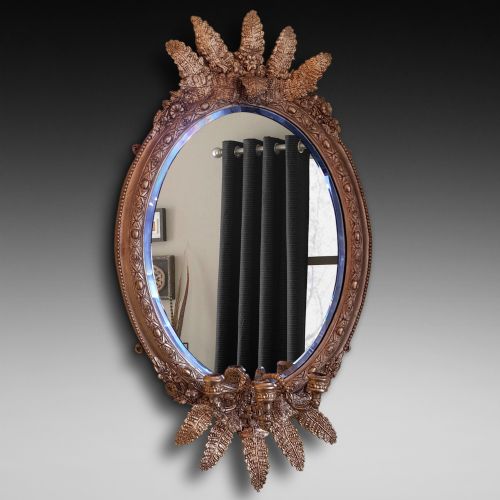
The versions most frequently met on this page include gilded wooden frames, carved gesso work, and brass or copper constructions. Origin styles range from Florentine Baroque and French Rococo Revival to Anglo-Indian brass designs and Italian craftsmanship.
Many examples incorporate candle arms, known as girandoles, which project forward to amplify the light of candles within the room. Other variations feature integrated shelves or brackets, blending display space with reflective glass.
Materials and construction methods
Makers shaped these pieces using timber frames coated in gesso and giltwood, applying layers of gold leaf or gilding over carved details. Brass, copper, and hardwood also feature prominently across nineteenth-century and early twentieth-century examples.
Glass plates provide the reflective surface, often paired with porcelain elements or hand-carved floral and scroll motifs. Metalwork components are joined securely to wooden backplates to support the weight of twin candle arms.
Decorative Wall Sconce Mirror Retail Price Guide 2026
Typical asking prices for decorative wall sconce mirror among the pieces listed under this phrase on Sellingantiques today, from the lower quarter to the upper quarter. They describe what is for sale here now, not the wider market.
Some nineteenth-century brass sconces travelled from North India to European drawing rooms, proving that Victorian interior decorators loved a global mix.
Distinctions in quality
The refinement of the carving separates finer examples from simpler production, particularly in the depth and crispness of gesso and giltwood foliage. Hand-chiselled brass and well-balanced twin arm girandoles display superior metalworking skill compared to basic cast alternatives.
The integrity of the original gilding and the preservation of the mirrored glass plate influence the character of each piece. Superior items retain their original surface patination and structural cohesion across the frame and candle brackets.
The Decorative Wall Sconce Mirror Glossary
- Girandole
- A decorative wall mirror featuring attached candle branches or arms designed to reflect candlelight. These fixtures were placed to maximise illumination in period rooms.
- Gesso
- A plaster-like mixture applied to wooden frames and carved before gilding. It allows for intricate relief ornamentation.
- Giltwood
- Timber covered with a thin layer of gold leaf or gold paint. It provides a bright reflective finish typical of formal period mirrors.
- Aesthetic Movement
- A late nineteenth-century style emphasising artistic visual qualities over narrative content. Pieces from this period often incorporate mixed metals like brass and copper.
Decorative Wall Sconce Mirror: Frequently Asked Questions
How were decorative wall sconce mirrors used?
These pieces served to illuminate dark corners and hallways by multiplying the light from candles placed on their arms.
Positioned above mantelpieces or consoles, they also created an illusion of greater space within formal reception rooms.
How do I clean a giltwood frame?
Dusting gently with a soft, dry brush prevents the accumulation of dirt without disturbing fragile gilding.
Moisture and commercial cleaning agents should be avoided entirely to protect the historical surface finish.
What is the difference between a girandole and a standard wall mirror?
A girandole specifically incorporates integrated candle arms or sconces attached directly to the frame or glass plate.
Standard wall mirrors provide reflection alone without fixtures for holding candles or lighting.
How can I identify a Victorian piece?
Victorian examples often feature heavy gesso ornamentation, Rococo Revival scrolls, or rich giltwood frames.
Construction details such as backboards and mirror plate thickness help distinguish nineteenth-century manufacturing methods.