




Antique Candelabra Desk Lamp
These antique candelabra desk lamps bring functional illumination and robust metalwork to your workspace.
Antique Candelabra Desk Lamp
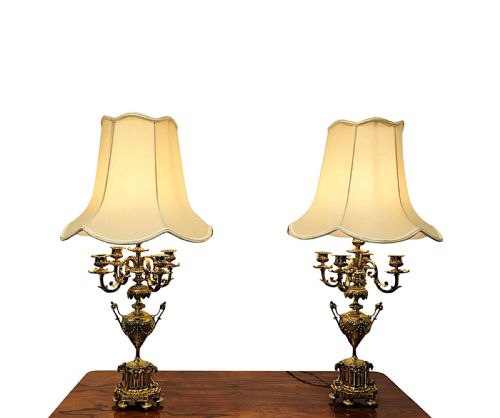
An antique candelabra desk lamp combines the branched form of a traditional candelabrum with the practical task lighting required at a desk or table. You will find examples here spanning the Regency period through to the Edwardian era and the 1920s.
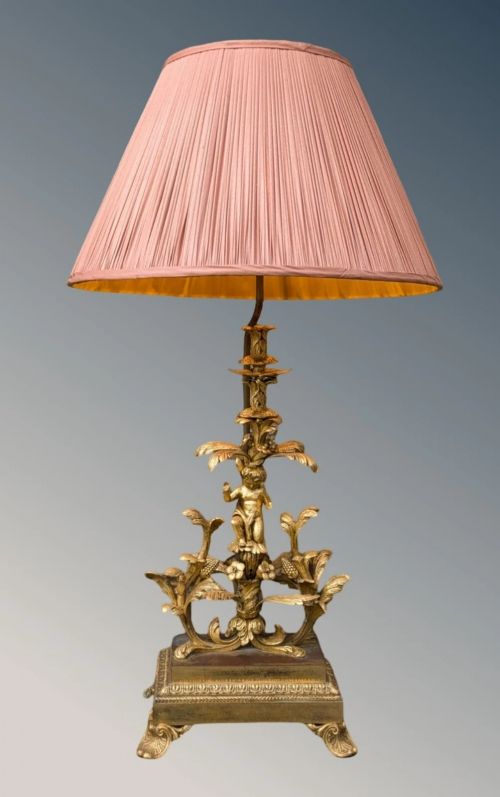
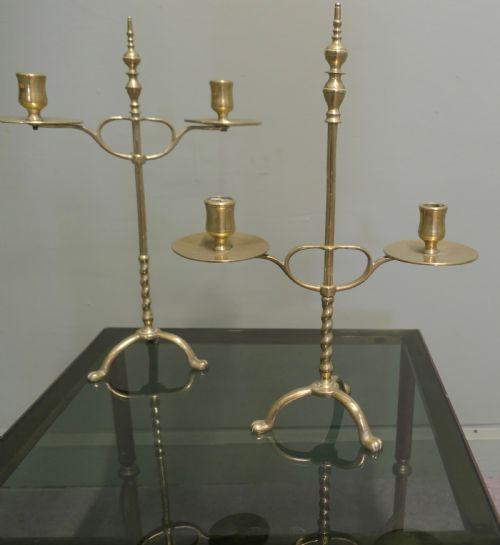
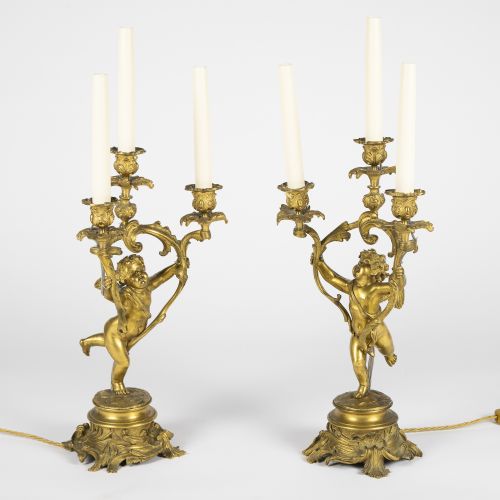
The selection includes converted pieces that originally held candles alongside wiring adaptations created for electric bulbs. Forms range from twin-branch bouillotte lamps to monumental putti and cherub figures cast in bronze and brass.
How they were made
Maker workshops utilised heavy casting techniques for metals such as brass, gilt bronze, ormolu, and patinated bronze. Components were shaped into classical motifs, floral scrollwork, and figural supports before being hand-finished.
Many survivors integrate fabric shades or crystal drops to diffuse the light from their multiple branches. Metal elements were frequently parcel-gilt or nickel-plated to achieve specific surface contrasts.
Cast cherubs and putti frequently scramble up these lamp stems, seemingly attempting to hold up the electric light bulbs above.
What varies in quality
The crispness of the metal chasing separates standard production from superior examples. Finely detailed cast ornamentation on cherubs, acanthus leaves, and bases shows the hand of a skilled artisan.
Weight and structural integrity also divide the range. Heavier bronze and cast brass assemblies maintain better balance across multiple branches than lighter, more utilitarian student lights.
The Antique Candelabra Desk Lamp Glossary
- Ormolu
- Gilded bronze produced by applying a mercury-gilt amalgam to the metal base. This technique was widely practiced in French workshops during the eighteenth and nineteenth centuries.
- Bouillotte lamp
- A traditional desk light featuring a central shaft, multiple candle arms, and an adjustable shade. The shade is typically made from painted metal or tole.
- Patinated bronze
- Bronze that has been chemically treated to alter its surface colour, usually resulting in a dark brown or green tone. This finish protects the metal and highlights sculptural contours.
- Candelabrum
- A branched candlestick designed to hold multiple candles or bulbs simultaneously. In desk applications, these frames are adapted to sit stably on working surfaces.
Antique Candelabra Desk Lamp: Frequently Asked Questions
How do I wire an antique candelabra desk lamp?
Rewiring requires running modern insulated flex through the existing central channel of the lamp. You should consult a qualified electrician to ensure the internal fittings comply with current safety standards.
Many converted pieces retain their original socket housings while discreetly housing modern internal components. Preserving the historical integrity of the metal body during rewiring remains a priority.
What is a bouillotte lamp used for?
A bouillotte lamp was originally designed for the French card game of the same name. The adjustable metal shade directed light downward onto the cards while keeping the players' eyes in shadow.
Today, they serve well on office desks or reading tables where focused illumination is required. The sliding shade allows you to control the height and intensity of the light pool.
How do I clean gilt bronze and ormolu?
Dust these metal surfaces gently with a soft, dry microfibre cloth or a clean artist's paintbrush. Avoid chemical cleaners, abrasive polishes, and water, which can strip the thin layer of gold leaf or damage the patina.
Regular light dusting prevents grime accumulation in the recessed chasings of the cast ornament. Professional conservation is recommended for deep cleaning.
Are these lamps original or converted?
The inventory includes both period pieces originally manufactured for electricity and earlier candelabra converted to table lamps. Conversions typically involve adapting candle sockets to hold electrical lamp holders.
Examination of the base and internal channel usually reveals whether the wiring is a later addition. Both original electric models and historical conversions are represented across the nineteenth and twentieth-century selections.