


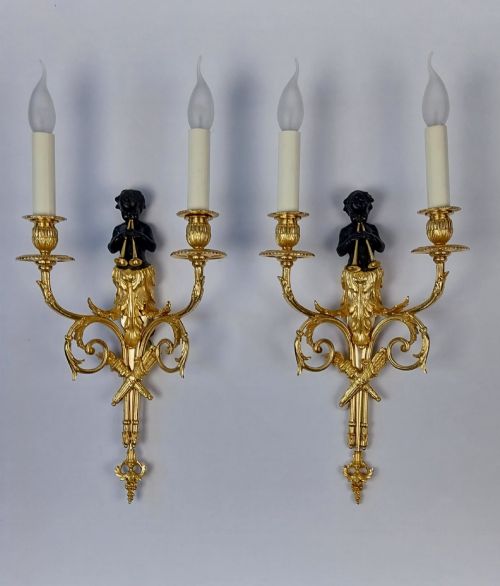

Antique Twin Branch Lighting
Antique twin branch lighting brings dual-arm illumination to interior walls and surfaces through period metalwork and glass.
Antique Twin Branch Lighting
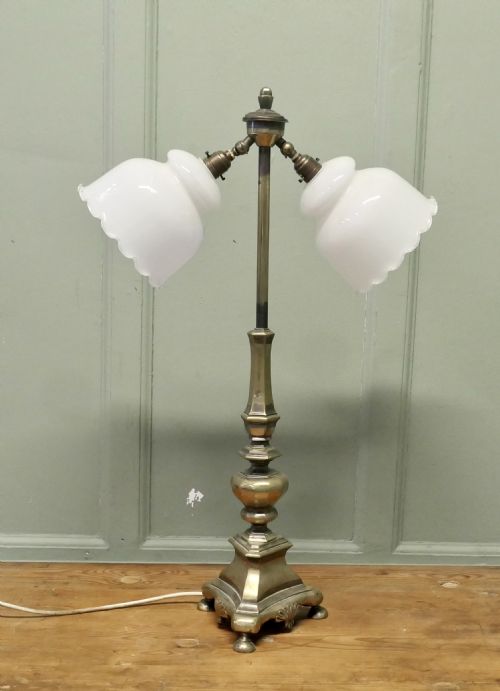
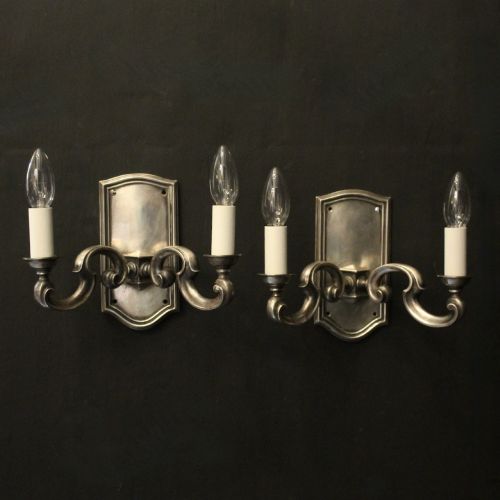
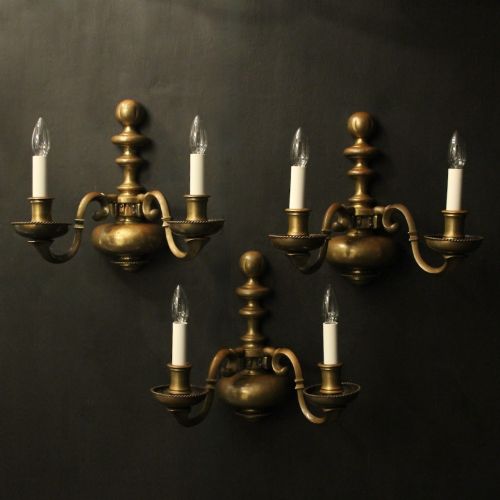
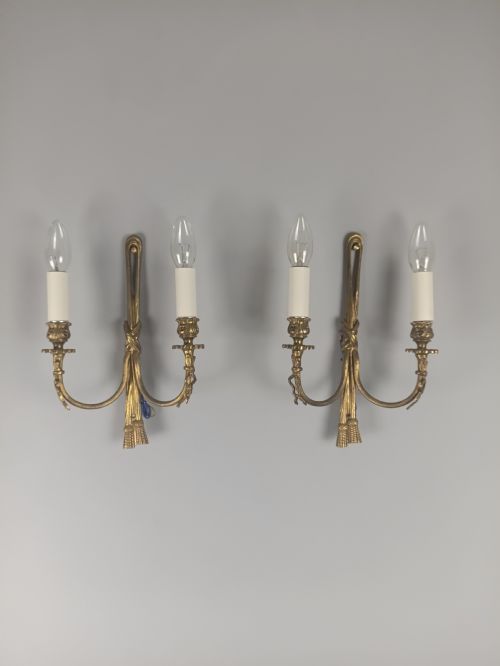
Antique twin branch lighting encompasses two-arm wall sconces, girandoles, candelabras, and lamps designed for dual illumination. When searching for antique twin branch lighting, buyers encounter pieces configured with two distinct arms or light sources.
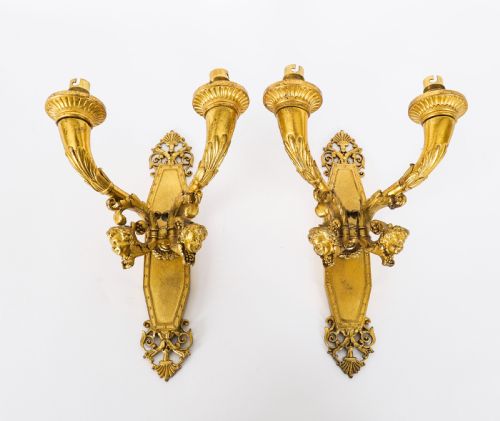
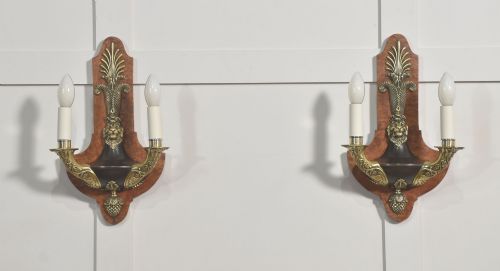
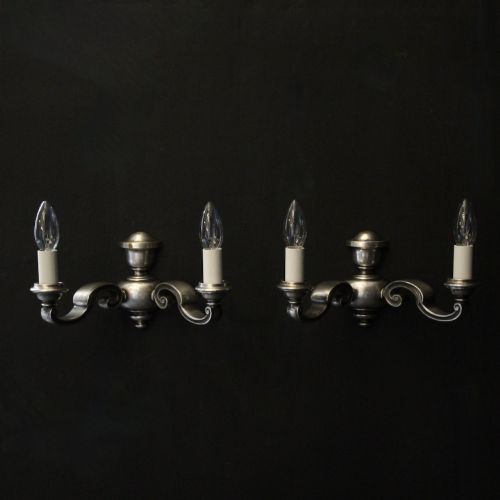
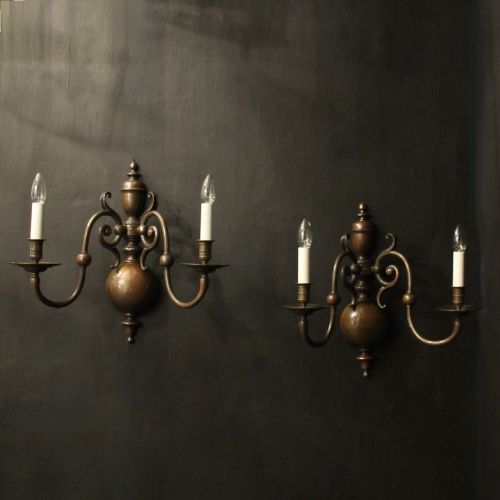
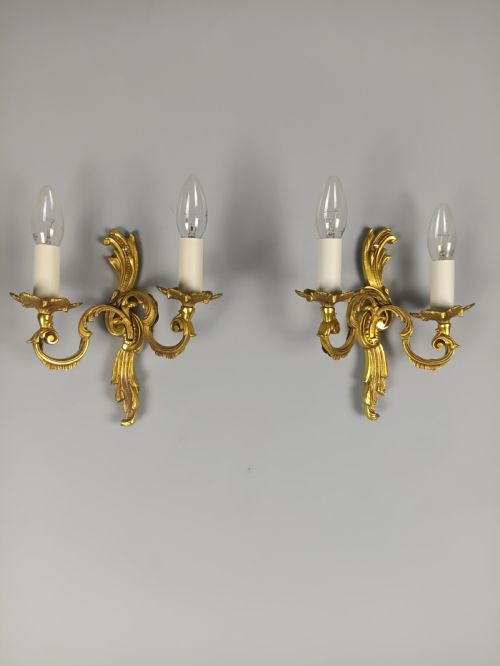
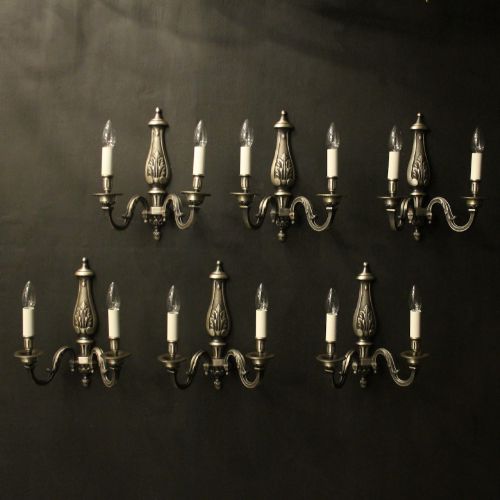
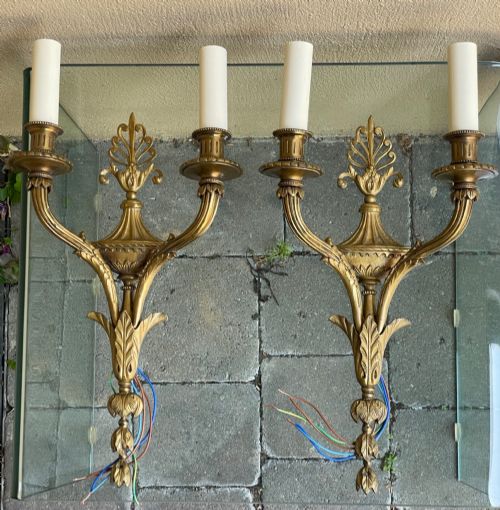
The selection ranges from nineteenth-century Victorian brass and bronze wall lights to Edwardian silver-plated fixtures and nineteen-thirties French gilded designs. Common forms include wall-mounted sconces, candelabras, and standard lamps fitted with dual branches.
Origin points span English, French, and Italian workshops, incorporating styles from French Louis revival and Neoclassical to Art Nouveau and Chinoiserie. Pieces frequently appear in pairs, sets, or individual configurations suited for domestic interiors.
What varies in quality
Quality differentiates through the crispness of metal chasing and the depth of surface gilding or plating. Finer examples display sharp relief in cast ornamentation such as scrollwork and figurative details.
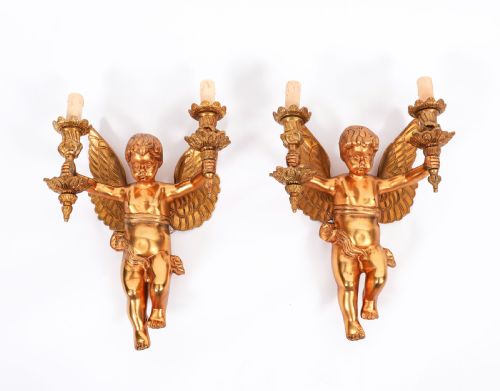
Material selection dictates durability and finish, with heavy cast bronze, ormolu, and sterling silver components marking superior manufacture compared to lighter spelter alternatives. The integration of cut glass or crystal elements further elevates the standard of the piece.
Object types include wall lights, girandoles, candelabras, and standard lamps originating from English, French, and Italian makers.
F. & C. Osler·Baccarat
The Antique Twin Branch Lighting Glossary
- Ormolu
- Gilded bronze produced by applying a mercury-gilding amalgam to cast bronze. This technique creates a rich golden surface found on many French period light fittings.
- Girandole
- An ornamental branched wall light or sconce that incorporates a mirror to reflect illumination. These fixtures combine functional lighting with decorative carved or gilt frames.
- Sconce
- A wall-mounted lighting fixture designed to hold candles or electric lamps. Sconces project outward from the wall surface using one or more supporting arms.
- Candelabra
- A branched candlestick designed to hold multiple candles or light sources. Examples often feature a central stem dividing into two or more distinct branches.
- Newel post lamp
- A decorative light fixture mounted on the ornamental post at the bottom of a staircase. These lamps provide illumination at hallway entrances.
Antique Twin Branch Lighting: Frequently Asked Questions
How are antique twin branch wall lights mounted?
Wall lights generally secure to vertical surfaces using backplates fixed with screws or wall anchors. Historic mounting brackets may require adaptation for modern electrical wiring.
Professional installation ensures the weight of heavy bronze or brass fixtures is safely supported on plaster or masonry walls.
Were these fixtures originally for candles or electricity?
Many nineteenth-century examples were manufactured for candles and later converted to accept electrical wiring. Conversion methods vary from hollowed arms to concealed internal wiring channels.
Original candelabras and girandoles often retain their socket cups or drip pans, showing their initial candle-holding purpose.
How do I identify French revival styles?
French revival lighting incorporates characteristic ornamental vocabulary from Louis XIV, Louis XVI, and Rococo periods. Look for asymmetric scrollwork, acanthus leaves, ribbon bows, and cherub figures cast in ormolu or gilt bronze.
These decorative motifs reflect the nineteenth-century revival of eighteenth-century court aesthetics.
Can mixed metal finishes be cleaned safely?
Gilded, silver-plated, and bronze surfaces require careful maintenance to preserve their historic patination. Gentle dusting with a soft cloth prevents accumulation without abrading delicate surface treatments.
Avoid abrasive metal polishes on ormolu and silver plate, as aggressive cleaning removes thin layers of precious metal.