
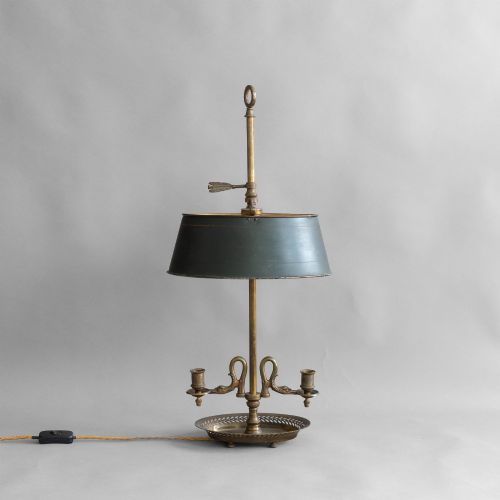
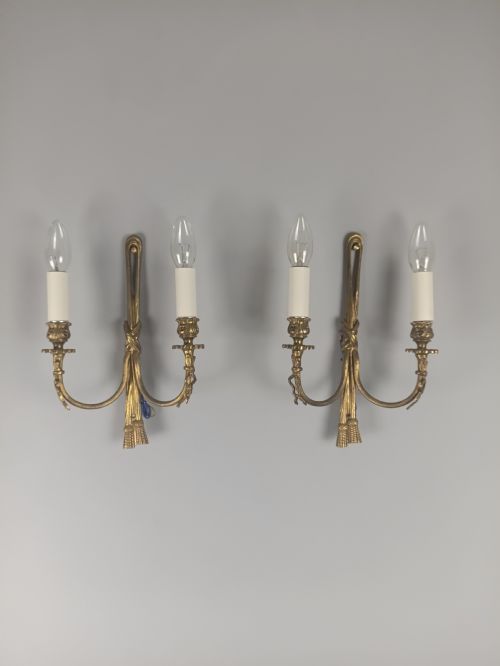

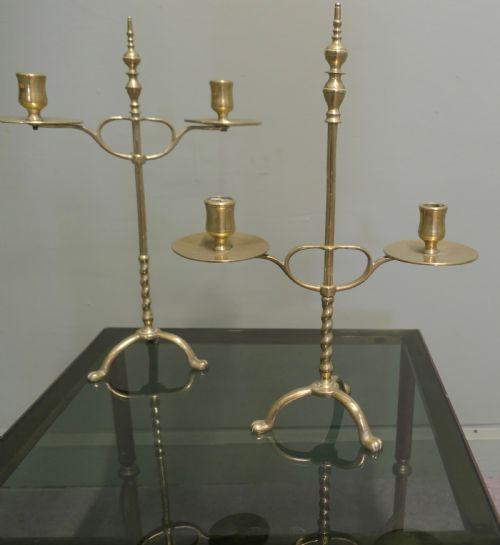
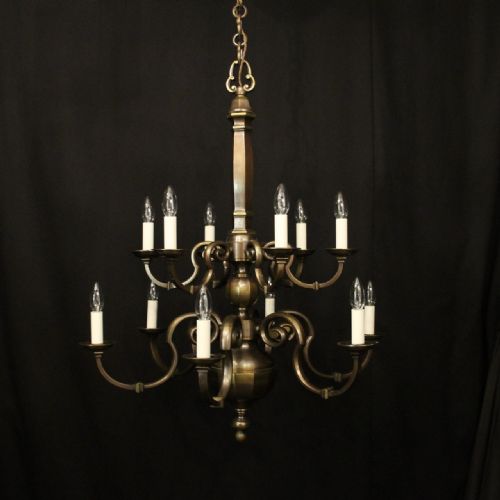


Two Light Brass Lamp
A two light brass lamp brings warm, dual illumination to a room, offering the classic symmetry of paired arms and polished metal.
Two Light Brass Lamp
A two light brass lamp comprises twin-branched lighting fixtures spanning table lamps, wall sconces, and candelabra forms.
The selections here range from Edwardian student lights and Victorian carriage lamps to ornate French rococo and Napoleon III designs.
How they were made
Maker construction relies heavily on cast and repolished brass, often combined with bronze, gilt brass, and ormolu.
Many examples incorporate glass elements, such as frosted glass shades, crystal droplets, and cut glass components.
The listings here draw from the nineteenth and early twentieth centuries, featuring brass, bronze, crystal, and frosted glass across table lamps and wall lights.
What varies in quality
Quality depends upon the crispness of the metal casting and the depth of the chasing, particularly on figural mounts and decorative arms.
The integration of secondary materials, from polished marble bases to hand-cut crystal, defines the tier of the piece.
The Two Light Brass Lamp Glossary
- Ormolu
- Gilded bronze, where a mercury-gilding technique creates a rich golden finish on bronze castings. This process was widely utilised in fine French lighting.
- Repoussé
- Metalwork hammered or pressed into relief from the reverse side. It creates ornate surface ornamentation on brass and copper bodies.
- Cricklite
- A patented night-light and candelabra system using cut glass and brass. These assemblies often feature specialised Clarke's glass components.
- Sconce
- A wall-mounted lighting fixture that carries one or more candles or electric bulbs. The form frequently utilises hinged or rigid twin arms.
- Napoleon III
- A French design style spanning the mid to late nineteenth century. It borrows lavishly from earlier Louis periods with eclectic, ornate detailing.
Two Light Brass Lamp: Frequently Asked Questions
How do I wire a brass lamp?
Rewiring requires running modern flex through the original channels of the brass arms or central column. A qualified electrician should handle the internal connections to ensure safety.
Retaining the original sockets where possible preserves the character of the piece while bringing the wiring up to current standards.
Are these lamps French or English?
The listings span both origins, with French pieces often displaying rococo, gilt bronze, or ormolu finishes. English examples frequently feature arts and crafts brass or student lamp configurations.
Examining the casting style and mounting hardware helps distinguish between the continental and domestic workshops of the nineteenth and early twentieth centuries.
How should I clean brass?
Dusting with a dry, soft cloth prevents the buildup of grime on polished and gilt surfaces. Avoid harsh chemical polishes that strip historical patination or damage delicate lacquers.
For unlacquered brass, a gentle application of a specialist metal cleaner maintains the sheen without removing the underlying character.
Can I use LED bulbs?
Low-wattage LED bulbs work well in these fixtures, generating minimal heat to protect older glass shades and silk cords. Candle-style LED bulbs mimic the appearance of traditional flame lighting.
Checking the maximum wattage rating of the original lamp holders ensures compatibility with modern energy-efficient lamps.