

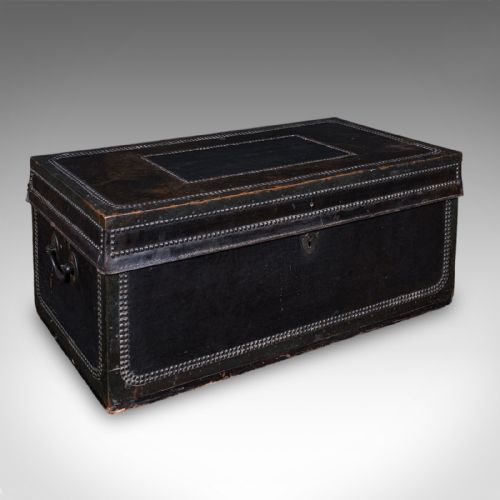


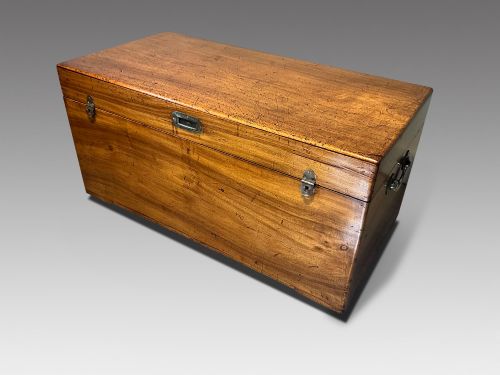


Antique Camphorwood Box
An antique camphorwood box brings the clean scent of the East and the sturdy practicality of the sea into a modern room.
Antique Camphorwood Box
When you search for an antique camphorwood box, you encounter heavy storage chests, trunks, and blanket boxes built for travel and long voyages. These pieces originate from military campaigns, maritime trade, and Chinese export workshops across the nineteenth century.
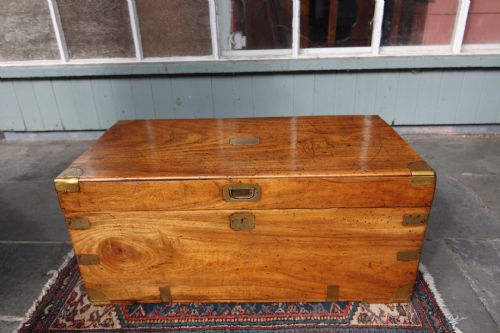
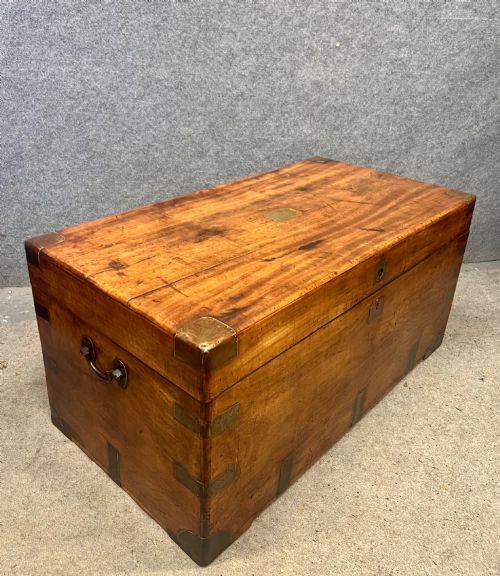
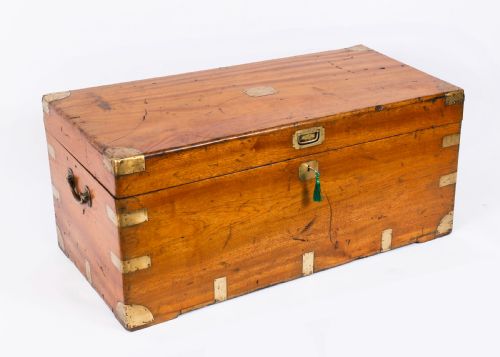
The version you meet most often on this page is the campaign chest, fitted with recessed brass handles and corner brackets designed to withstand rough handling on ships. Alongside these large trunks, smaller writing slopes and document boxes occasionally appear.
Originating from British military outposts, Anglo-Indian workshops, and Chinese treaty ports, these boxes combine utilitarian strength with exotic timber. They serve today as coffee tables, blanket chests, and prominent storage furniture in sitting rooms.
How they were made
Carpenters constructed these pieces primarily from solid camphorwood, a timber chosen for its distinct aromatic scent that naturally deters insects from stored textiles and papers. The wood shows a rich grain, often paired with contrasting timber such as ebony or finished with leather.
Metalwork played a structural role in manufacture, utilising heavy brass corners, straps, and recessed carrying handles to protect the wood joints during transit. Iron and rope also appear on specific maritime forms for securing heavy loads at sea.
Listings span the nineteenth century, featuring Victorian military campaign styles alongside traditional Chinese carved designs and Ceylonese variants.
What varies in quality
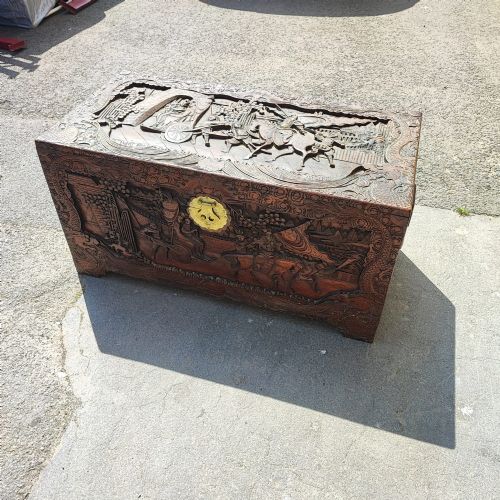
The standard of construction depends largely on the intended use, distinguishing rugged military trunks from decorative export pieces. Simpler campaign boxes rely on plain timber and robust brass binding, whereas Chinese export examples feature deep, intricate relief carving across the entire surface.
Hardware quality sets apart superior items, with heavy cast brass fittings and flush-mounted campaign handles demonstrating finer workshop origin. The choice of secondary timbers and the depth of the camphor wood grain further separate standard utility boxes from exceptional regional pieces.
The Antique Camphorwood Box Glossary
- Camphorwood
- An aromatic timber native to Asia, prized for its insect-repelling qualities and distinctive medicinal scent. It forms the primary structural material for these travel trunks.
- Campaign
- A style of furniture designed for dismantling or easy transport by military officers on active service. These items typically feature recessed brass hardware to prevent snagging.
- Writing slope
- A portable box with an angled lid that opens to reveal a desk surface and storage compartments for stationery. Some examples include metamorphic designs for travel use.
- Canton
- A major Chinese port hub associated with export art and furniture made for Western markets during the nineteenth century. Goods from this region frequently display distinctive painted or carved decoration.
Antique Camphorwood Box: Frequently Asked Questions
Why do these boxes smell strongly?
The distinct aroma comes from the natural oils locked inside the camphor timber. This property was originally utilised to protect woollens and documents from moths during long sea voyages.
Over decades, the wood retains this characteristic scent, though airing the interior can reduce its intensity in a modern home.
How do I use one today?
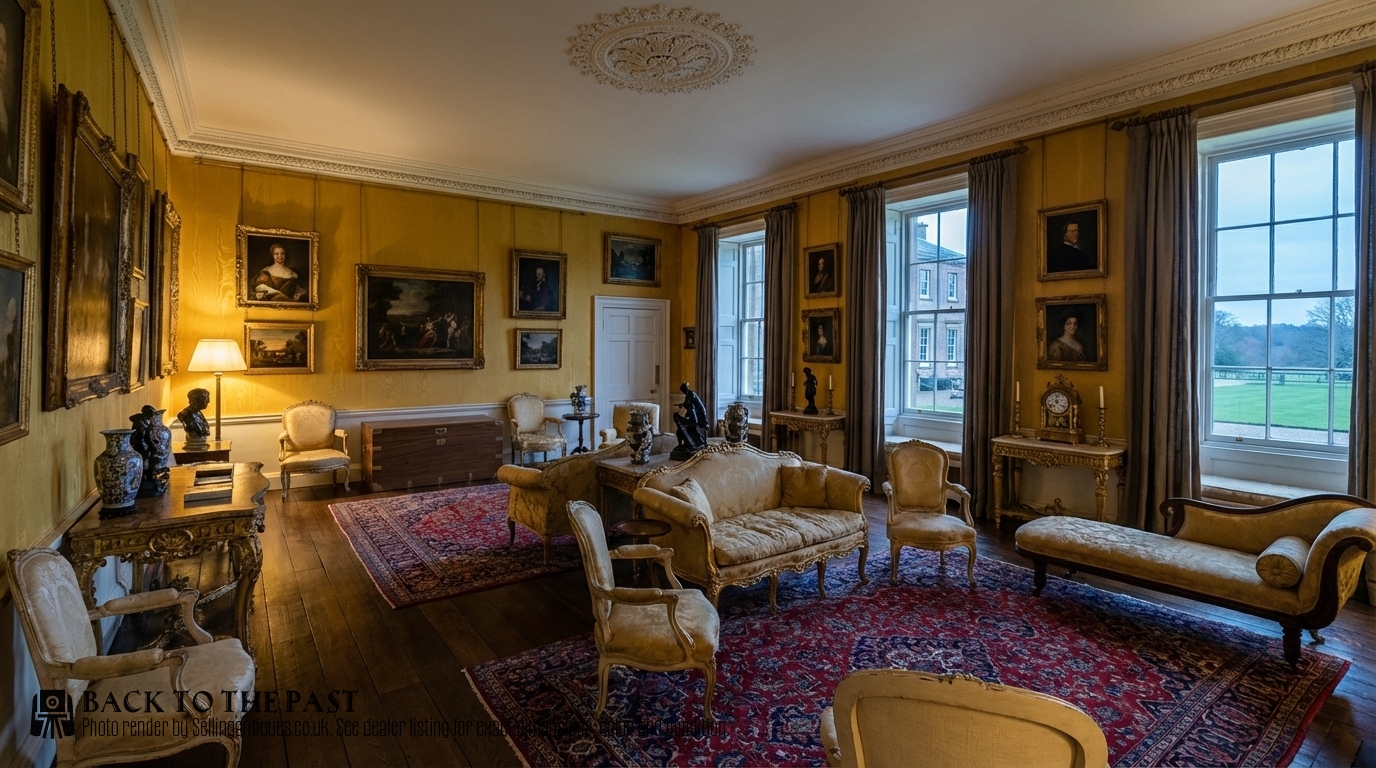
These trunks function well as living room coffee tables, offering concealed storage for blankets, board games, and books. Their flat lids and sturdy construction support everyday domestic use.
Smaller boxes and writing slopes sit comfortably on side tables or desks to hold letters and small personal items.
Were they really used by the military?
British officers and administrators commissioned these sturdy chests for colonial service and military campaigns across the globe. The boxes protected uniforms and papers from damp climates and rough transit.
Their modular design and protective metal hardware originated entirely from the practical demands of nineteenth-century military life.
How do I spot a Chinese export piece?
Chinese export boxes often feature dense, hand-carved panels depicting figures, foliage, and landscapes rather than plain campaign surfaces. Workshops in treaty ports produced these items specifically for Western merchants and travellers.
They frequently combine traditional Chinese joinery methods with the brass fittings demanded by European buyers.