


Antique Campaign Coffer
When you search for an antique campaign coffer, you are looking at robust travel trunks built for officers and merchants on the move.
Antique Campaign Coffer
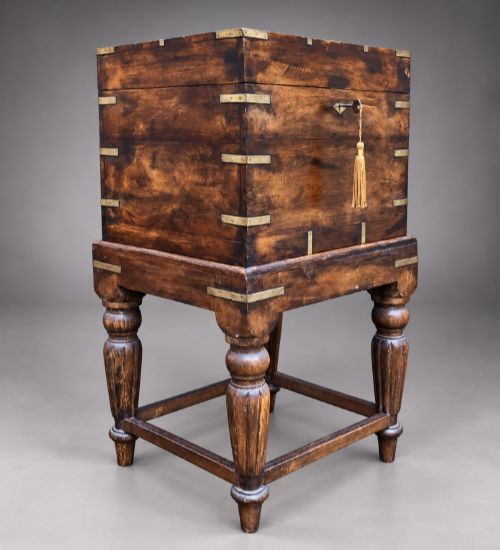
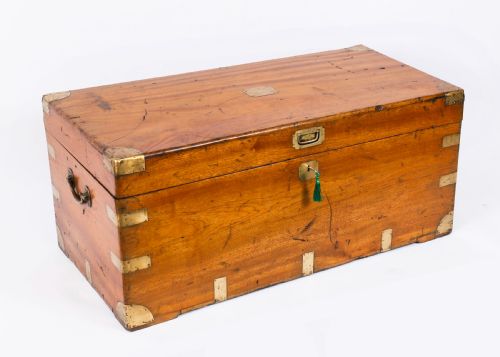
An antique campaign coffer serves as a sturdy storage chest designed for military officers and travellers across the eighteenth and nineteenth centuries. These pieces appear in forms ranging from military trunks and deed boxes to cellarettes and low storage chests.
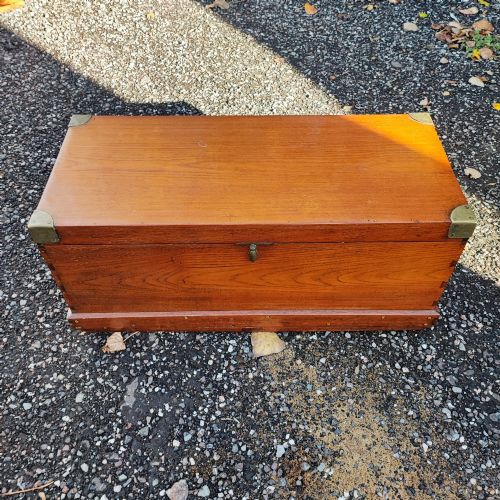
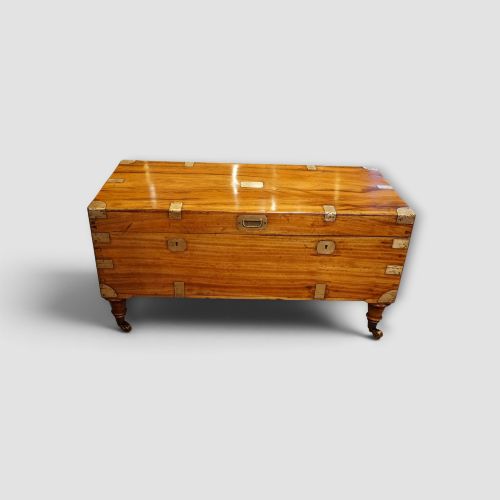
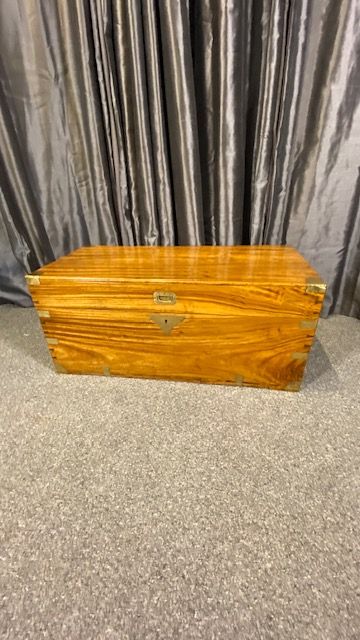
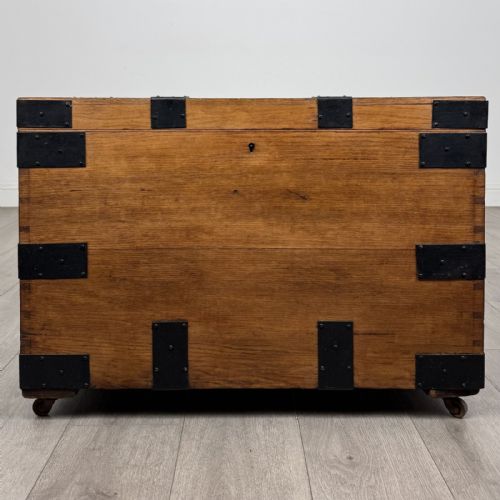
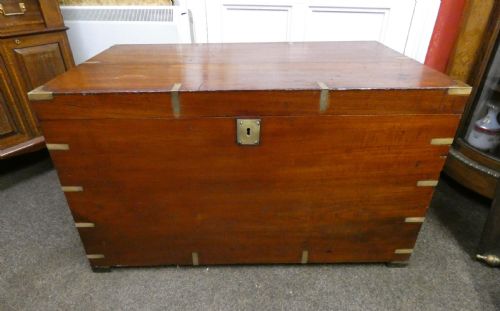
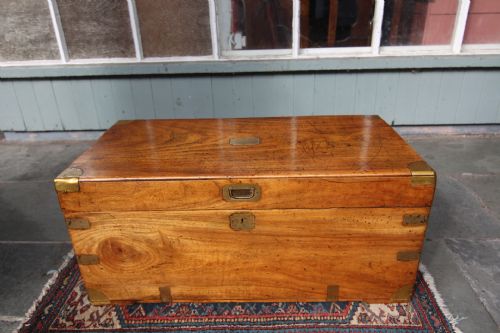
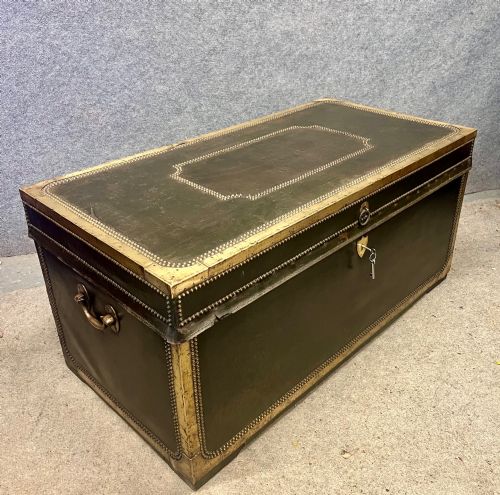
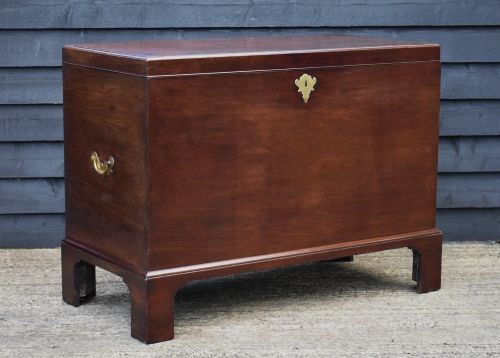
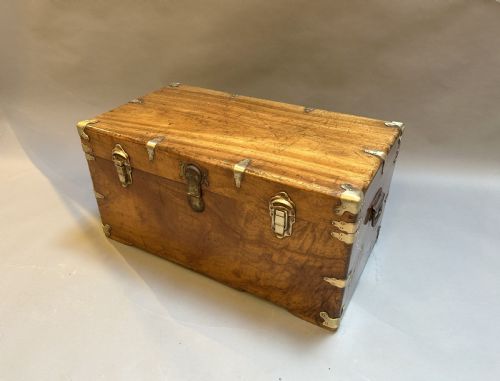
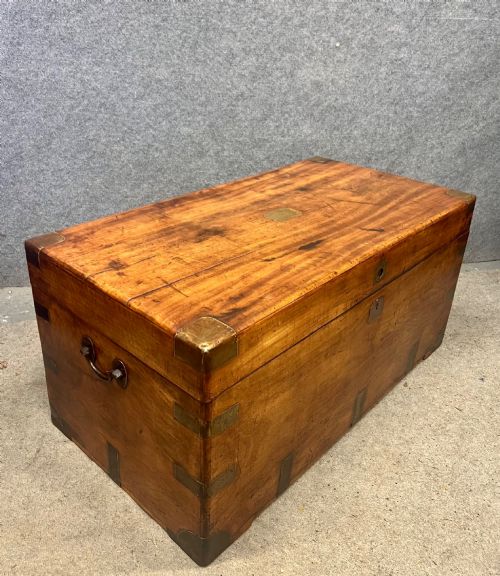
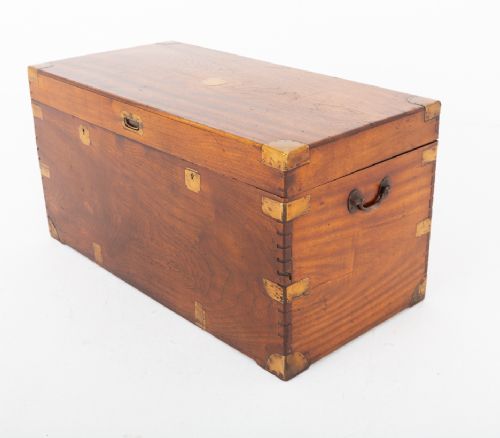
The version you are most likely to meet on this page is the nineteenth-century camphor wood trunk, often reinforced with brass corners and straps for long journeys. Georgian mahogany examples and Anglo-Indian variants also surface frequently, spanning periods from the eighteenth century through to the early twentieth century.
Makers constructed these storage pieces to withstand rough transport by land and sea while housing uniforms, documents, and personal valuables. Their utilitarian roots dictate a practical internal layout, usually consisting of a deep main compartment supplemented by small internal candle boxes or till drawers.
Materials and construction methods
Joiners relied on durable timbers capable of resisting tropical humidity and the strains of transit, predominantly selecting camphor wood, teak, mahogany, and padouk, alongside structural pine and oak. Camphor wood was particularly favoured for its insect-repellent properties, protecting stored textiles during long colonial postings.
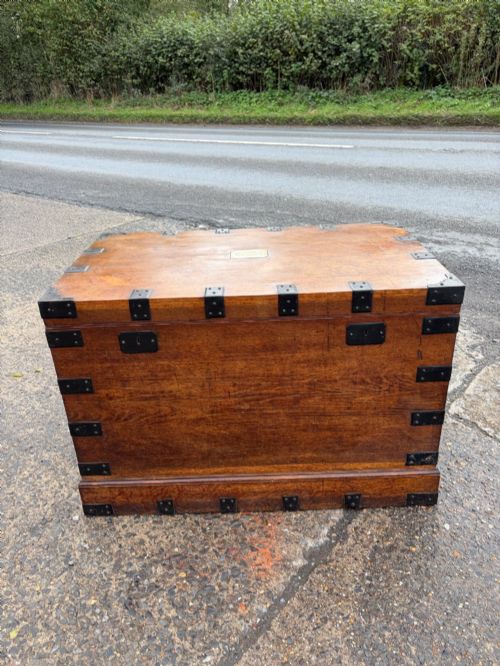
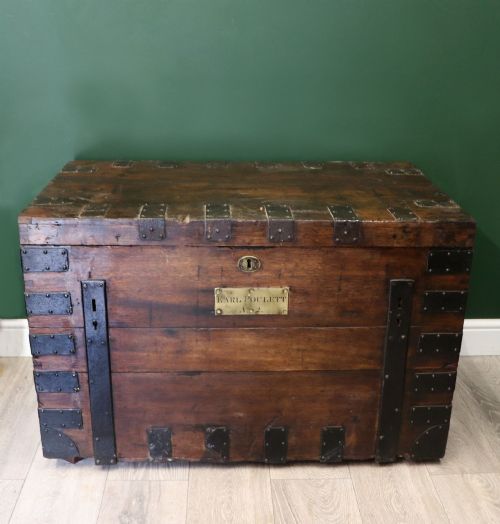
Corner plates, straps, and carrying handles are fashioned from brass or iron, screwed down securely to reinforce every joint and edge against heavy impacts. Leather coverings also appear on Regency and Victorian specimens, studded with metal tacks to seal the seams and protect the underlying wood frame.
Antique Campaign Coffer Retail Price Guide 2026
Typical asking prices for campaign coffer among the pieces listed under this phrase on Sellingantiques today, from the lower quarter to the upper quarter. They describe what is for sale here now, not the wider market.
Listings feature timbers including camphor wood, teak, mahogany, padouk, Spanish oak, and pitch pine alongside brass and iron hardware.
Distinguishing quality and craftsmanship
The distinction between standard transport trunks and top-tier examples lies in the precision of the hardware and the selection of timber. Finer pieces display heavy, hand-cast brass corner brackets countersunk flush into the wood, alongside robust flush-fitting drop handles that endure repeated handling.
Internal joinery and secondary woods reveal the standard of workshop production, with superior coffers utilising dovetailed carcass construction rather than simple nailing. Provenance or identifiable maker stamps embedded in the leather or brass further elevate a piece from a utilitarian container to a documented historical artefact.
Samuel Pratt·Wm. Insall of Bristol·Chapple & Sons
The Antique Campaign Coffer Glossary
- Coffer
- A large wooden box or chest traditionally used for storing valuables or clothing. These pieces often feature hinged lids and sturdy carrying handles.
- Camphor wood
- An aromatic timber native to Asia, utilised extensively for campaign furniture to deter moths and insects. It is recognisable by its distinct medicinal scent.
- Campaign chest
- Modular storage furniture constructed in sections for ease of transport during military expeditions. They feature recessed brass handles to prevent snagging.
- Brass bound
- A method of reinforcing trunk edges and corners with metal strips and brackets. This technique protects the wood from heavy knocks during travel.
- Cellarette
- A fitted cabinet or box designed to hold bottles of wine and spirits securely. Examples from the nineteenth century often rest on dedicated wooden stands.
Antique Campaign Coffer: Frequently Asked Questions
How were these chests used?
Original owners used these trunks to transport uniforms, maps, personal papers, and valuable equipment across the British Empire and beyond. Their modular design allowed soldiers to pack belongings quickly when moving between encampments.
Inside, many feature compartmentalised layouts or small till boxes for smaller items. Modern owners utilise them as coffee tables, blanket boxes, or hallway storage.
How do I care for camphor wood?
Camphor wood requires minimal maintenance, benefiting from occasional dusting and avoidance of direct, harsh sunlight. The natural oils within the wood keep the timber conditioned and naturally repel household pests.
Keep the interior clean and dry, avoiding harsh chemical polishes that might damage the antique finish. Allowing the wood to breathe preserves its distinct natural aroma.
How do I date a campaign trunk?
Dating relies on examining the construction materials, hardware style, and locking mechanisms used in the piece. Eighteenth-century and Regency examples often display hand-wrought ironwork and simpler box joints, while Victorian pieces favour machine-cut brass fittings.
Maker stamps, ink inscriptions, and regimental markings also provide reliable clues to a trunk's age and origin. Comparing the primary timber species helps narrow down the manufacturing decade.