
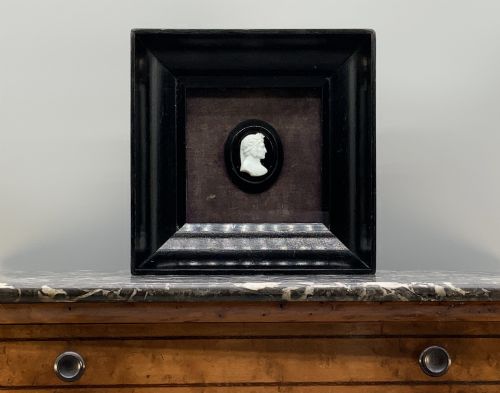
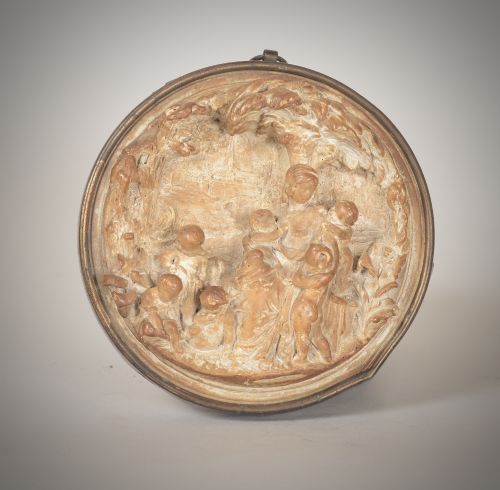


Antique Cameo Plaque
An antique cameo plaque brings classical relief carving to your wall or collection, offering a tactile portrait or scene shaped in stone, ceramic or shell.
Antique Cameo Plaque
An antique cameo plaque presents a raised profile or figural scene, drawing on Neoclassical and Classical Revival aesthetics popular during the eighteenth and nineteenth centuries. These pieces emerge in formats ranging from framed wall art and decorative wall plaques to tabletop ornaments and brooches.
You will most frequently encounter nineteenth-century examples on this page, including Grand Tour souvenirs, Wedgwood jasperware compositions, and carved marble or plaster reliefs. The forms span individual profile portraits of Roman emperors and literary figures, pairs of Italian marble plaques, and framed sets.
Makers and workshops range from Wedgwood and the Thorvalsen Workshop to individual carvers working in ivory, shell and marble. Pieces appear mounted in wood, brass, gilt bronze and precious metals, reflecting both domestic interior decoration and continental travel.
Materials and methods
Carvers shaped traditional cameo plaques from materials such as marble, Italian stone, shell, ivory and mahogany, using hand chisels to isolate the raised figure from a contrasting background. Poured plaster and ceramic bodies like jasperware and stoneware offered alternative methods for achieving crisp relief work through moulding.
Ceramic manufactories utilised specialised clay bodies and slip techniques, notably pate-sur-pate, where liquid white porcelain slip is built up in successive layers upon a dark ground to create translucent sculptural detail. Metal mounts in brass, bronze and nine-carat gold frequently secure or frame these carved and moulded reliefs.
Listings feature eighteenth and nineteenth-century periods, utilising materials such as marble, jasperware, ivory, shell, bronze and plaster.
Markers of quality
The choice of medium and mounting also separates the grades, with fine Italian marble, high-relief shell, and solid precious metal mounts indicating higher ambition. The crispness of Wedgwood jasperware transfer or biscuit relief, alongside the subtlety of pate-sur-pate layering, marks out the superior examples.
R. Pernice·Thorvalsen Workshop·Lamb of Manchester·Mintons
The Antique Cameo Plaque Glossary
- Jasperware
- A fine-grained, unglazed stoneware developed by Wedgwood, most commonly found in pale blue with applied white stoneware reliefs in classical styles. It allows for sharp definition in cameo portraits and plaques.
- Grand Tour
- A cultural journey undertaken by wealthy young Europeans through France and Italy during the eighteenth and nineteenth centuries, acquiring souvenirs such as carved marble and plaster cameo plaques.
- Pate-sur-pate
- A ceramic technique meaning paste on paste, where successive layers of liquid porcelain slip are painted onto a body to build up a translucent, low-relief cameo design.
- Bas-relief
- A sculptural technique where the figures project only slightly from the flat background plane, common in antique cameo plaques and portrait medallions.
- Tondo
- A circular work of art, such as a round cameo plaque or ceramic tondo depicting a classical profile.
Antique Cameo Plaque: Frequently Asked Questions
How do I hang a heavy marble or ceramic plaque?
Heavy marble and ceramic pieces require secure wall fixings suited to the weight of the stone or ceramic body, often utilising custom brass brackets or integrated wire mounts.
Ensure the wall anchor fixes directly into structural brick or studwork rather than plasterboard alone to support the plaque safely.
What is the difference between a cameo plaque and a brooch?
A cameo plaque is designed primarily for display on a wall, cabinet or tabletop, whilst a brooch incorporates a pin fastening on the reverse for wearing on garments.
Some smaller plaques and medallions cross boundaries, featuring removable metal mounts or secondary loops intended for dual display purposes.
How should I clean an antique plaster or marble relief?
Plaster and marble reliefs require dry cleaning methods using a soft, clean brush to gently lift dust from the recessed areas of the carved surface.
Avoid using water or liquid solvents on porous materials like plaster, which absorbs moisture and damages the delicate crispness of the relief.
How do I identify a Grand Tour souvenir plaque?
Grand Tour plaques typically depict classical Roman emperors, mythological scenes or Italian architectural profiles carved in marble, alabaster or cast in plaster.
These pieces date predominantly from the eighteenth and nineteenth centuries, reflecting the classical subjects collected by travellers in Italy.