



Neoclassical Cameo Medallion
A neoclassical cameo medallion brings classical antiquity straight to the wall, offering crisp plaster casts and carved profiles that defined elite European travel.
Neoclassical Cameo Medallion
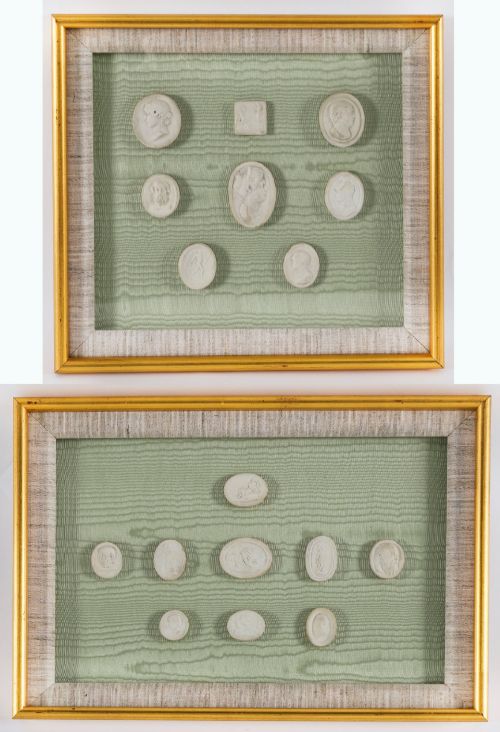
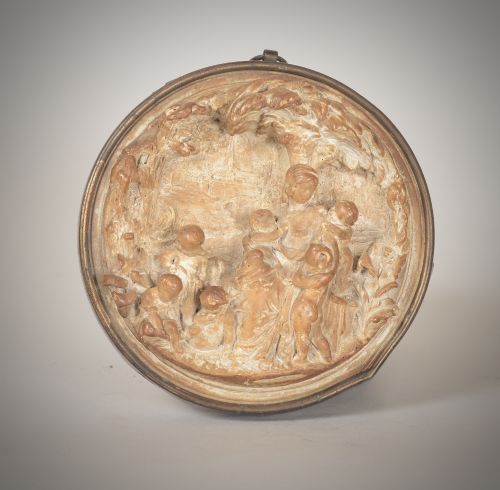
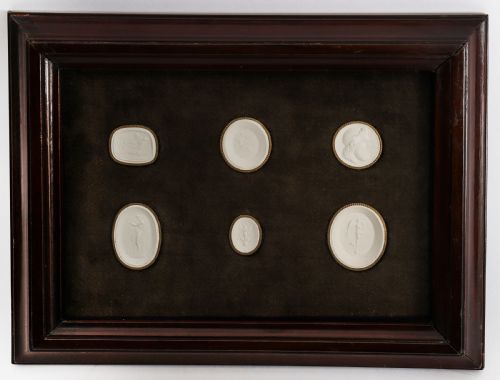
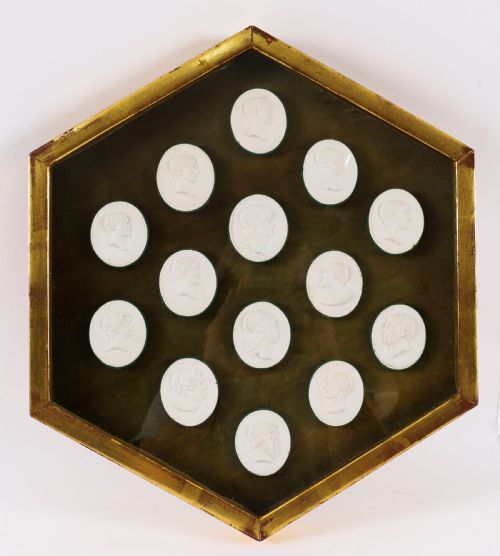
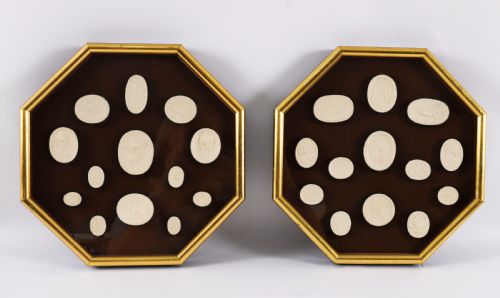
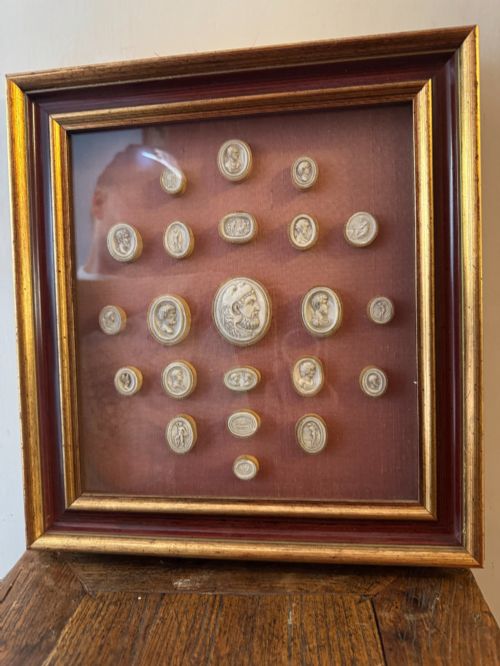
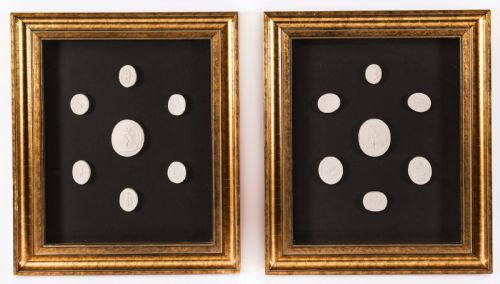
A neoclassical cameo medallion or intaglio panel gathers classical mythology and Roman emperor profiles into orderly framed compositions. You encounter these most frequently as framed nineteenth-century grand tour souvenirs, housing plaster casts or carved marble reliefs.
The objects range from single framed wall plaques to large collections containing dozens of individual medallions arranged on velvet or fabric backgrounds. Earlier examples stretch back to the late eighteenth century, while later interpretations reach into the twentieth century with jasperware and glass paste.
Makers and workshops across Italy and Britain produced these sets for travellers returning from continental journeys. They appear primarily as wall art, framed in giltwood or simple wooden frames designed to protect the delicate plaster and glass components.
Assessing quality and execution
The crispness of the casting defines the upper tier of plaster and gypsum medallions, where fine facial details and sharp lettering remain clear. Softer outlines indicate worn moulds or secondary reproduction casts.
Presentation elevates the work significantly, marked by balanced arrangement, clean velvet backing, and substantial giltwood frames. Simple or crowded mountings place pieces lower in the range.
Roman emperors gaze across centuries from velvet backgrounds, silently judging modern living room decor.
Giovanni Liberotti·Pietro Bracci·Thorvalsen Workshop·James Tassie·Wedgwood
The Neoclassical Cameo Medallion Glossary
- Intaglio
- A design carved into a material so that it sits below the surface, much like a seal. These impressions often served as the matrices for plaster casts.
- Grand tour
- An extended journey through Europe undertaken by wealthy young men to study classical art and antiquities. Souvenirs from these trips form the bulk of these collections.
- Jasperware
- A type of fine stoneware developed in the eighteenth century, featuring a matte surface with raised white reliefs against a coloured ground. It provides a durable alternative to plaster.
- Glass paste
- A vitreous material melted and pressed into moulds to imitate carved gemstones and cameos. Pressed white glass paste creates sharp, durable profile portraits.
- Gypsum
- A soft sulphate mineral used to create fine plaster casts of classical gems and sculptures. It takes intricate detail readily from intaglio moulds.
Neoclassical Cameo Medallion: Frequently Asked Questions
What is a grand tour intaglio collection?
These assemblies comprise multiple plaster or glass casts of ancient gems and sculptures collected during European travels. Travellers arranged them in custom frames as scholarly souvenirs.
They function today as decorative wall art that brings neoclassical design into domestic interiors.
How do you hang framed plaster medallions?
Most pieces feature traditional picture wire or rings attached to wooden or giltwood frames. They require stable wall fixings suited to the combined weight of the frame and glass.
Keep them away from direct sunlight and damp environments to protect the plaster casts and velvet backgrounds.
How do you identify eighteenth century pieces?
Earlier examples often display deeper carving on marble or more delicate mounting styles associated with Georgian craftsmanship. Documentation or signature marks on the reverse can also point towards specific makers.
Nineteenth-century grand tour sets generally feature larger groupings of gypsum casts arranged neatly on fabric.