


Antique Calendar Clock
An antique calendar clock combines timekeeping with date, day or moon-phase indications, offering mechanical complexity and desk or mantel presence.
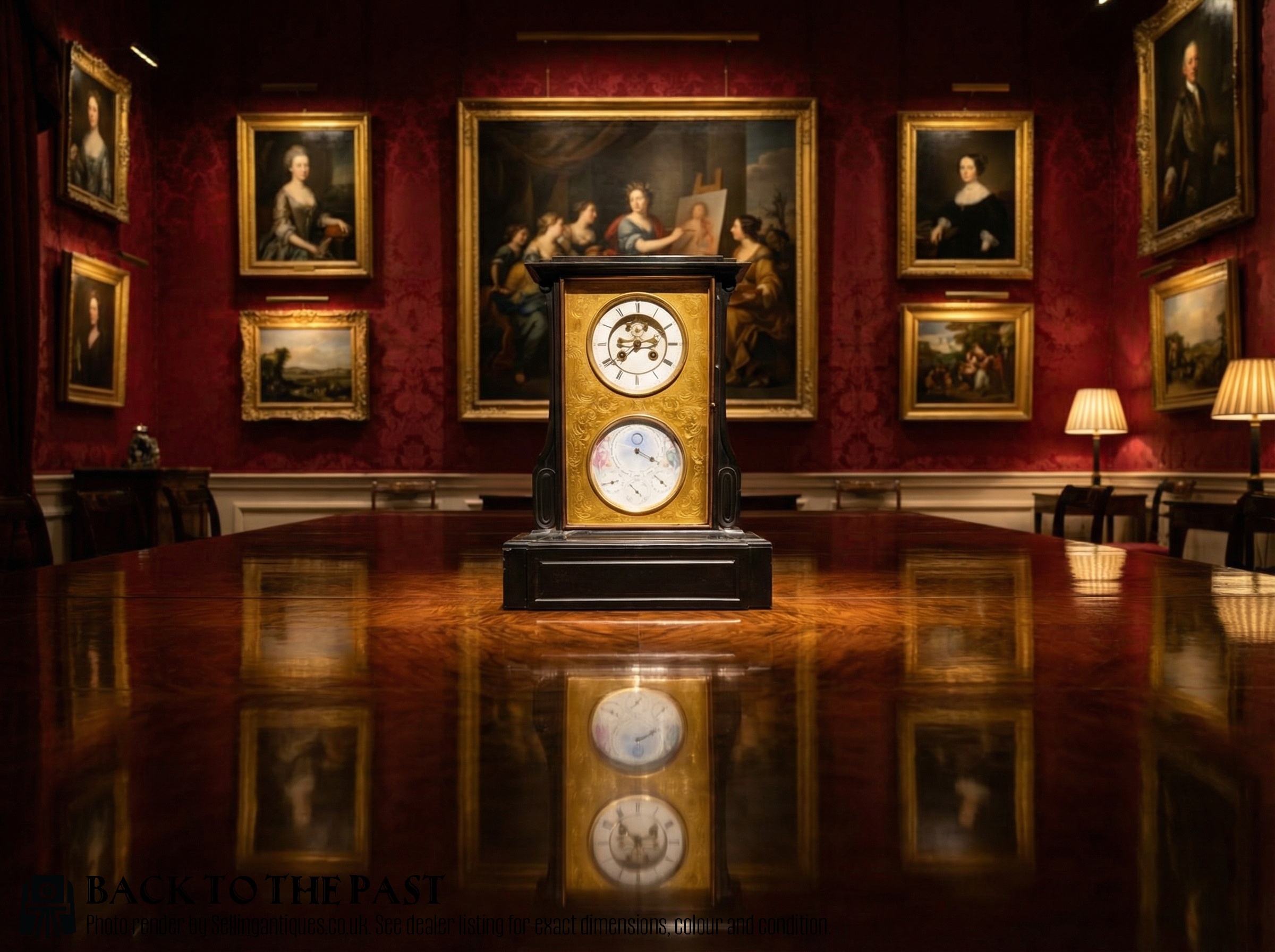
Antique Calendar Clock
An antique calendar clock brings together mechanical timekeeping and date complication, tracking days, months or moon phases alongside hours and minutes. When you search for an antique calendar clock, you encounter forms ranging from heavy slate mantel pieces to portable carriage clocks and Art Deco desk models.
The selection leans heavily toward French production from the nineteenth century, particularly carriage clocks and mantel clocks housed in slate, walnut, brass or marble cases. Alongside these sit eighteenth-century French examples, Edwardian walnut pendulum models, and mid-twentieth-century pieces.
Carriage clocks with date work or grand sonnerie strikes represent a major portion of the available forms, often retaining fitted travel cases. Slate and marble architectural clocks provide heavier mantel options, while walnut is utilised across both Victorian and Edwardian domestic styles.
Materials and construction methods
Cases utilise a distinct palette of heavy and polished materials, including Belgium slate, white marble, walnut, brass, gilt bronze and chrome. Glass panels frequently protect delicate movements in carriage clocks, while enamel is applied to dials for clear legibility of dates and numerals.
Movements are built from brass and steel components, integrating complex gear trains for perpetual calendars, moon-phase displays, equation of time calculations and grand sonnerie striking mechanisms. Cabinets combine carved woodwork, cast metal mounts and precision glass fitting to house these intricate gear assemblies.
Some carriage clocks arrive with their original travel boxes and paperwork, proving that vintage commuters packed heavy brass date-trackers for their weekend trips.
Distinctions in craftsmanship and complexity
Quality rests in the sophistication of the internal mechanism and the crispness of its execution, moving from simple date indicators up to perpetual calendars with moon-phase and equation of time functions. Higher-tier examples feature fully integrated date work driven by established makers rather than basic auxiliary attachments.
Case materials and exterior detailing further separate pieces, distinguishing standard wood cabinets from heavily carved walnut, cast gilt brass, polished Belgium slate or streamline Bakelite and chrome combinations. The survival of original boxes, paperwork, and engraved platforms elevates the standing of individual items.
Louis Goret·L Epee·J. F. Bautte Et Cie·Drocourt·Moser·Brocot
The Antique Calendar Clock Glossary
- Perpetual calendar
- A mechanism that automatically adjusts for the varying lengths of months and leap years.
- Grand sonnerie
- A striking train that sounds both the hours and the quarters automatically on every quarter hour.
- Equation of time
- A complication showing the difference between apparent solar time and mean solar time.
- Gorge case
- A stepped, rectangular brass carriage clock case style popular in the nineteenth century.
- Moon-phase
- A dial aperture displaying the visual phases of the lunar cycle over a lunar month.
Antique Calendar Clock: Frequently Asked Questions
What is an antique calendar clock?
An antique calendar clock is a timepiece that incorporates mechanisms to display dates, days, months or lunar cycles alongside the standard time.
These pieces range from portable brass carriage clocks to heavy stone mantel clocks and wooden desk models produced across the nineteenth and twentieth centuries.
How do perpetual calendars work?
A perpetual calendar mechanism uses a complex system of cams and gears to track the length of each month automatically.
This internal programming accounts for shorter months and leap years without requiring manual resetting by the owner.
Where were these clocks made?
The pieces seen here originate predominantly from French workshops and makers, alongside examples from Belgium, Britain, Hungary and America.
France produced a significant portion of the carriage clocks and slate mantel clocks featuring advanced date work.
How do I care for a calendar clock?
Living with these clocks involves placing them on stable surfaces away from direct sunlight, dampness and extreme temperature fluctuations.
Professional servicing is recommended to keep the delicate gear trains for the calendar and striking mechanisms operating correctly.