
Antique Cabinet with Glass Sides
An antique cabinet with glass sides lets you display treasured possessions while keeping them protected, combining period craftsmanship with practical visibility.
Antique Cabinet with Glass Sides
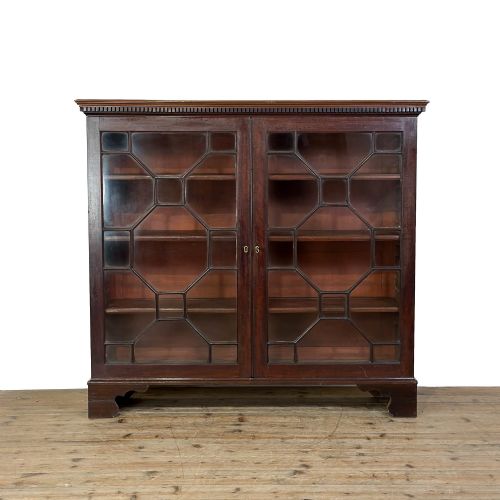
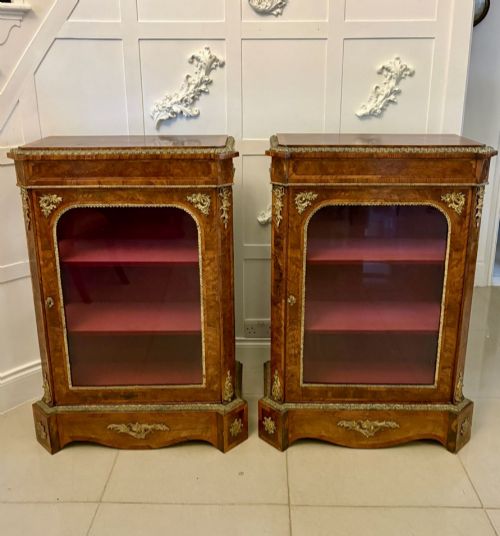
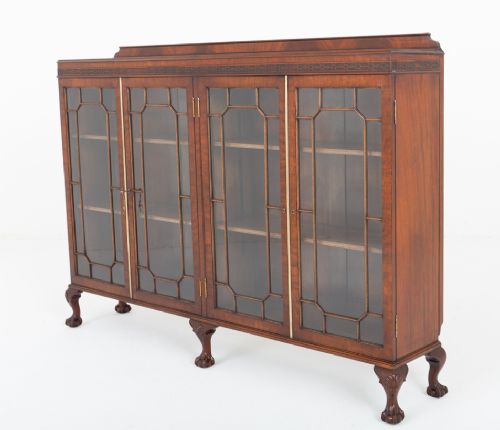
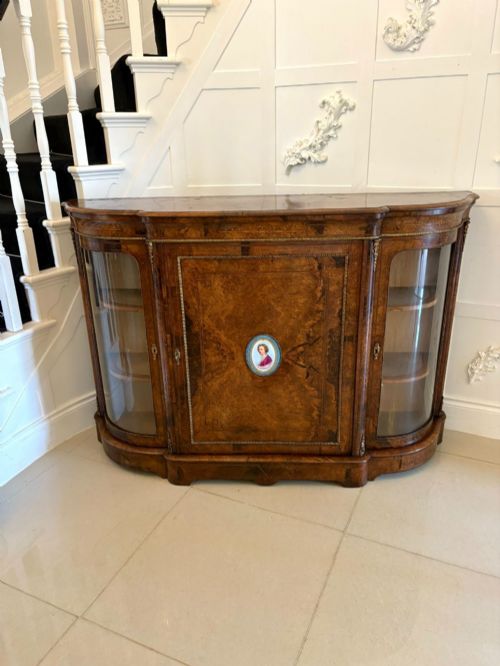
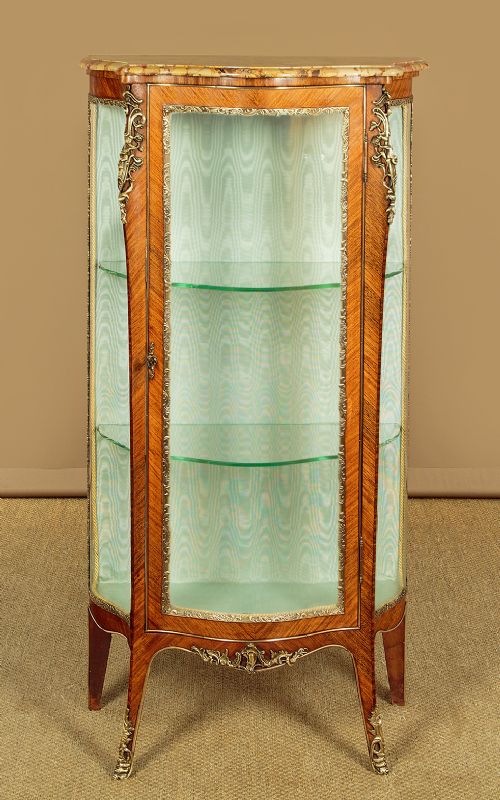
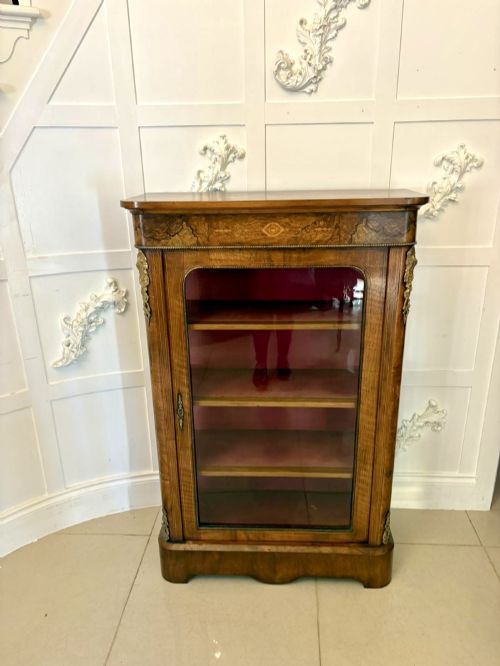
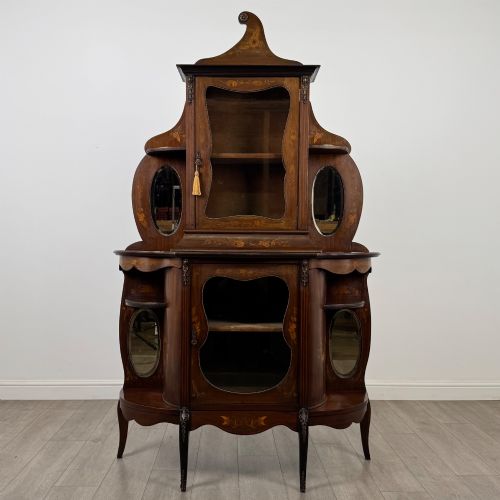
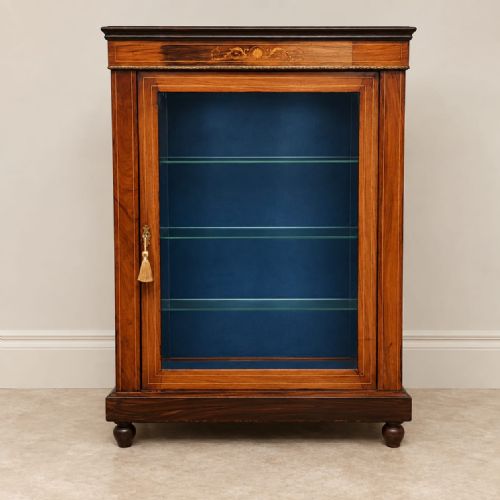
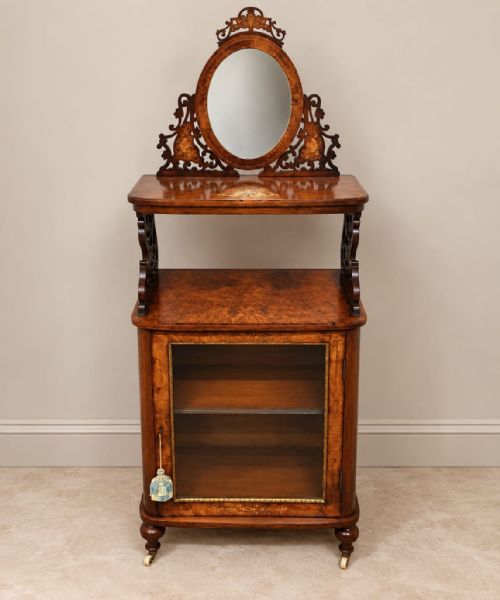
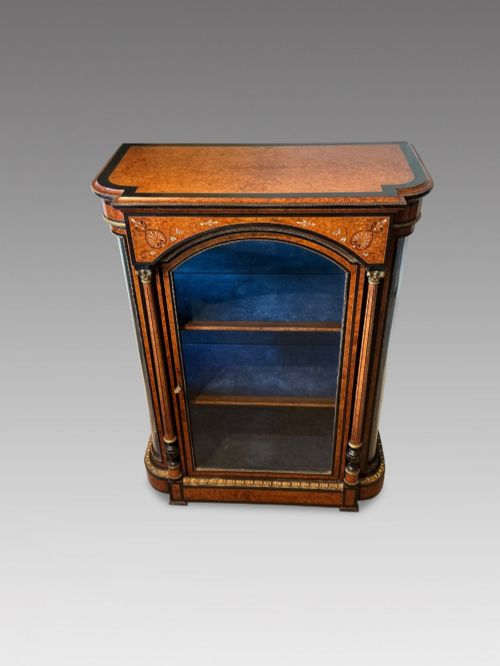
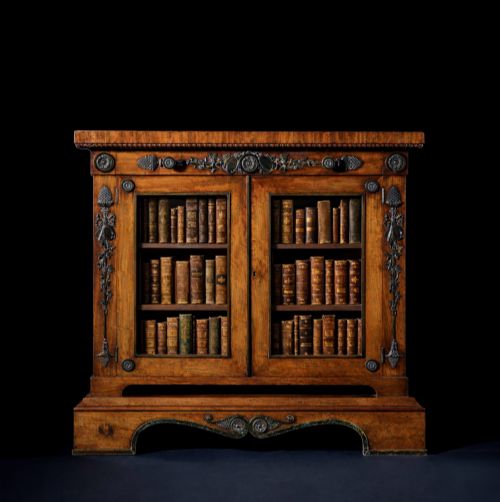
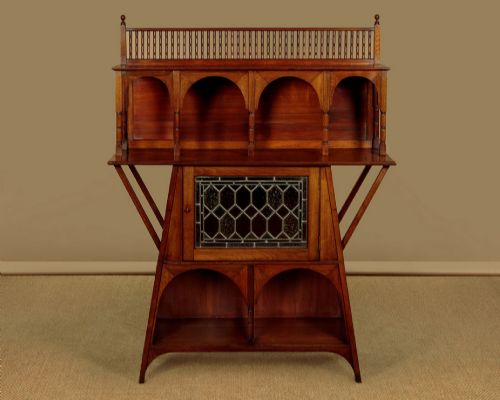
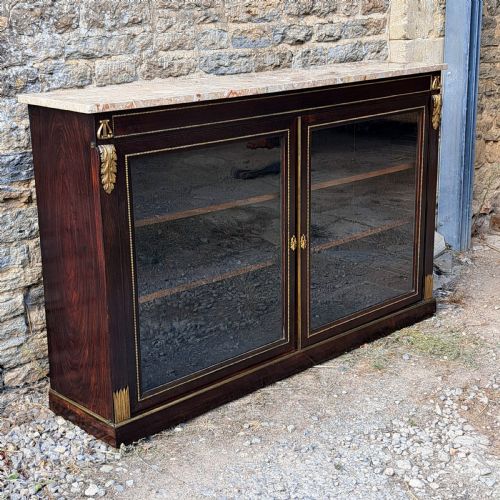
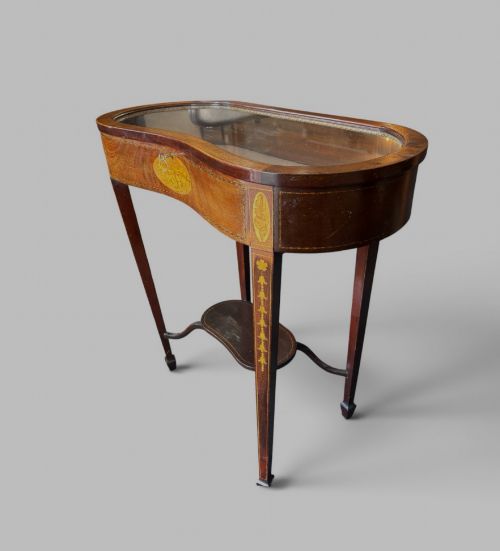
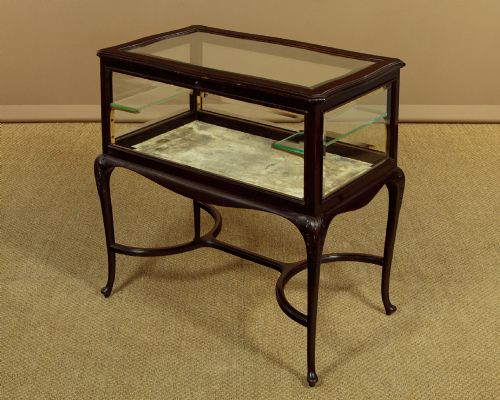
When you search for an antique cabinet with glass sides, you are looking at glazed display furniture designed to showcase ceramics, books or decorative objects. These pieces originate primarily from the Victorian and Edwardian eras, alongside pieces dated to the nineteenth and early twentieth centuries. The versions you are most likely to meet on this page take the form of pier cabinets, credenzas, side cabinets and display cabinets.
The materials recorded in these listings show a preference for rich timbers such as burr walnut, mahogany, satinwood, ebonised wood, rosewood and walnut. Makers embellished these carcases with ormolu mounts, brass details, fabric linings, mirror backs and boxwood marquetry. Styles span from Victorian and Edwardian to Rococo Revival and early twentieth century designs, reflecting the changing tastes of their original owners.
Materials and construction methods
Cabinet makers constructed the frames of these pieces using solid timbers and decorative veneers like burr walnut, mahogany and satinwood. They incorporated glazed panels into the sides and doors, allowing light to flood the interior shelves. Ebonised finishes and amboyna inlays added dark contrast and intricate pattern to the wooden surfaces.
Metalwork played a defining role in the ornamentation of these cabinets. Guild artisans applied cast ormolu mounts and brass details to highlight corners, cornices and friezes. Interior spaces frequently featured fabric linings or mirror backs to enhance the reflection of light behind displayed items.
Listings feature walnut, mahogany, and rosewood timbers alongside ormolu mounts and glass panels.
Distinguishing quality in glazed cabinets
The distinction between standard and superior pieces rests on the choice of timber and the precision of the marquetry. Cabinets featuring highly figured burr walnut veneers or fine boxwood inlay demonstrate greater workshop skill than plain alternatives. The integration of cast ormolu mounts rather than simpler brass hardware indicates higher production expenditure.
Structural complexity also separates the tiers of quality. Pieces with shaped glass, bowed sides or barley twist columns demand advanced carpentry techniques. The survival of original mirror backs and intact fabric linings further separates well-preserved examples from altered ones.
The Antique Cabinet with Glass Sides Glossary
- Ormolu
- Gilded bronze mounts used extensively on nineteenth-century furniture for decorative enrichment. This technique involves applying a gold amalgam to bronze before heating.
- Marquetry
- Inlaid patterns formed by fitting veneers into a prepared background of wood. Craftsmen used contrasting timbers like boxwood to create floral or geometric designs.
- Credenza
- A sideboard or cabinet featuring cupboards and central display space, popular during the Victorian period. These pieces often stand on low plinths or short feet.
- Pier Cabinet
- A narrow display cabinet designed to fit the wall space between windows. They typically feature a single glazed door and flat sides.
- Ebonised Wood
- Timber treated to imitate ebony through staining or painting. This finish achieved a fashionable dark, glossy surface on Victorian and Edwardian furniture.
Antique Cabinet with Glass Sides: Frequently Asked Questions
How do I date a glass-sided cabinet?
Dating relies on observing the timber choices, decorative motifs and overall style. Pieces utilising burr walnut with ormolu mounts typically point to the Victorian era, while satinwood inlay often indicates Edwardian production.
Structural details like barley twist columns and boxwood marquetry help narrow down the period. Comparing the hardware and lining materials provides further chronological clues.
Where should I place a display cabinet?
These cabinets suit living rooms, dining spaces or hallways where natural light can pass through their glass sides. Placing them away from direct sunlight protects both the antique wood and the items displayed inside.
Ensure the floor is level so the doors and glazed panels hang correctly. Pairing a pier cabinet with appropriate wall space allows its silhouette to stand out.
How are credenzas different from pier cabinets?
Credenzas are wider, heavier sideboard-style cabinets that often feature central cupboards flanked by curved glass doors or open display sections. They were designed for principal reception rooms.
Pier cabinets are tall and narrow, specifically built to occupy the wall space between architectural openings. Both types make extensive use of glass sides for visibility.