




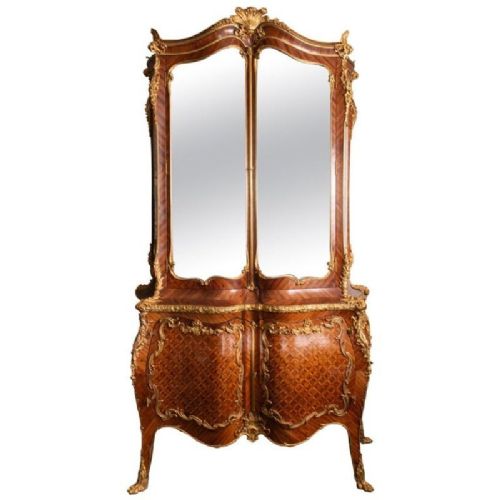


Rococo Revival Glazed Vitrine
A rococo revival glazed vitrine brings exuberant nineteenth-century French style and glass-shelved display directly into a modern room.
Rococo Revival Glazed Vitrine
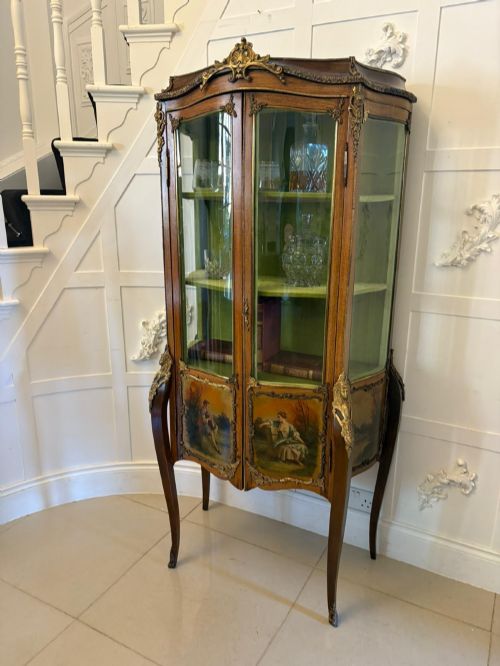
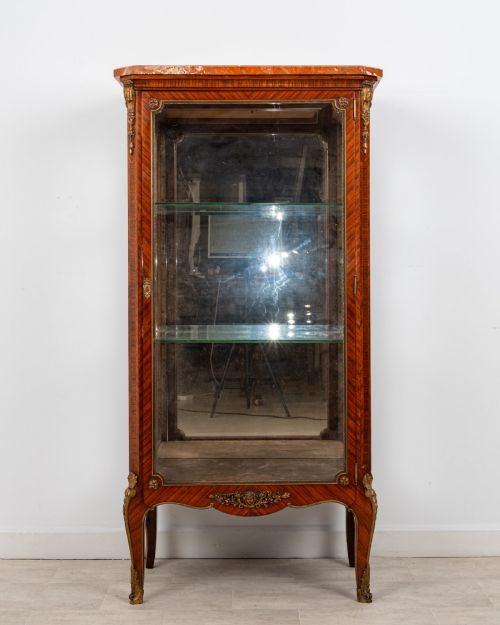
A rococo revival glazed vitrine combines serpentine woodwork with extensive glass panelling to showcase decorative objects and cabinet porcelain. These cabinets emerge primarily from nineteenth-century French workshops, drawing heavily on Louis XV design vocabulary.
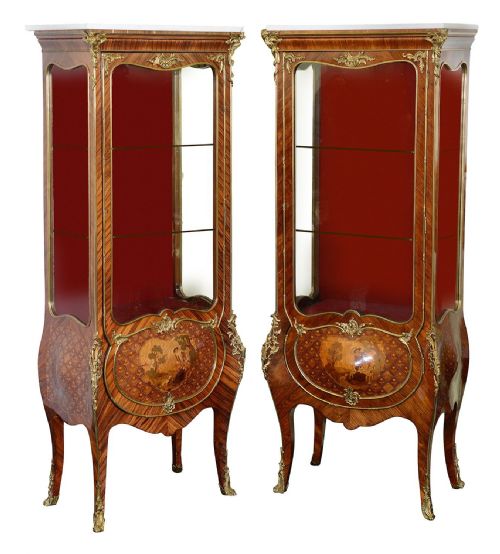
The forms span tall upright display cabinets, bombe shaped vitrines, and lower bijouterie tables with glazed tops. Most examples rely on rich kingwood veneers, mahogany, or painted panels to frame the interior display space.
Makers working within this idiom integrate curved wooden framing with transparent sides to maximise light reflection. Buyers encounter pieces ranging from compact Edwardian serpentine display tables to large imposing cabinets dating from eighteen eighty.
How they were made
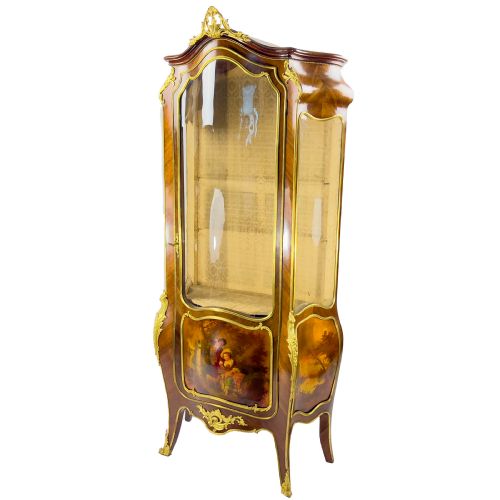
Cabinet makers construct the carcasses using timbers such as mahogany or kingwood, frequently laid out in intricate parquetry and marquetry patterns. Vernis Martin painted panels depicting pastoral scenes often decorate the lower sections of these cabinets.
Gilded bronze or ormolu mounts punctuate the corners, feet, and key escutcheons, following asymmetrical rocaille scrolls. Marble tops, sourced in white or variegated shades, frequently cap the upper surface of nineteenth-century pieces.
Curved glass requires specialised heating and bending techniques to fit the undulating serpentine fronts. Interior velvet or fabric linings complete the presentation surface for displayed items.
One exceptional cabinet hides its contents behind a bombe profile so swelling it demands its own architectural breathing room.
What varies in quality
Quality reveals itself in the crispness of the chased ormolu mounts and the precision of the kingwood parquetry. Superior cabinets demonstrate fluid, organic carving along the wooden frames that echoes genuine eighteenth-century prototypes.
The complexity of the carcass shape dictates the standard of workmanship, particularly where serpentine fronts meet curved glass panels. Hand-painted Vernis Martin panels display varying degrees of artistic skill in their figure work and landscape detail.
François Linke·Gouffel
The Rococo Revival Glazed Vitrine Glossary
- Ormolu
- Gilded bronze mounts applied to furniture. This material provides metallic highlight and protects vulnerable corners.
- Vernis Martin
- A simulated Japanese lacquer technique developed in France. Artisans applied multiple translucent varnish layers over painted decoration.
- Vitrine
- A glass-fronted display cabinet. These pieces protect delicate collections from dust while offering all-round visibility.
- Parquetry
- Geometric wood veneer patterns. Craftsmen arrange small pieces of contrasting timber to form optical designs.
- Bombe
- An outwardly swelling, convex furniture shape. This silhouette characterises sophisticated mid-nineteenth-century French case pieces.
Rococo Revival Glazed Vitrine: Frequently Asked Questions
What is a rococo revival glazed vitrine?
A rococo revival glazed vitrine is a nineteenth-century display cabinet featuring curved woodwork, glass panels, and ornamental ormolu mounts.
These pieces draw inspiration from earlier French Louis XV styles, prioritising asymmetry and organic floral motifs.
How were vitrines used originally?
Vitrines served as secure display furniture for porcelain, miniatures, and curiosities collected by prosperous households.
The glass panels and mirrored interiors allowed owners to exhibit their prized possessions while protecting them from dust.
Where should I place a vitrine?
Position a vitrine away from direct sunlight to protect interior fabric linings and any paper or textile objects on display.
Generous proportions mean these cabinets require stable floor space where their curved glass and ormolu mounts remain visible.
How do I identify a nineteenth-century piece?
Nineteenth-century examples often combine kingwood veneers with fire-gilded ormolu mounts and hand-painted Vernis Martin panels.
Construction details, timber ageing, and specific revival stylistic markers help distinguish these from later Edwardian or twentieth-century interpretations.