


Antique Burmese Table
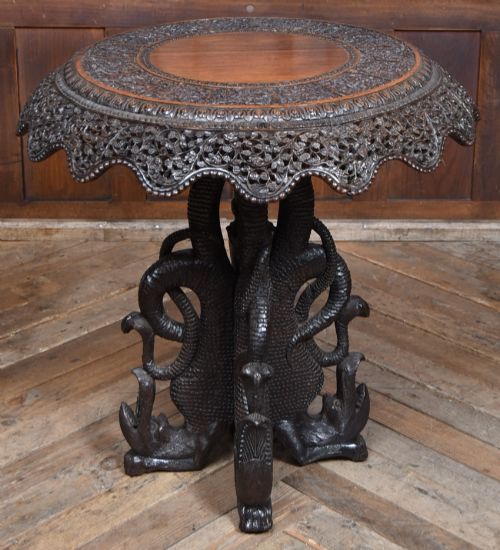
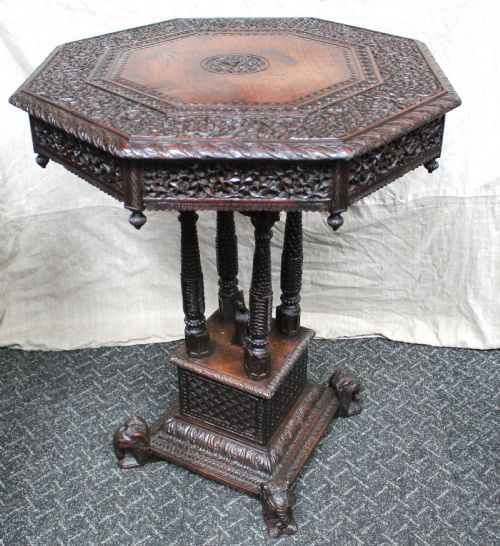
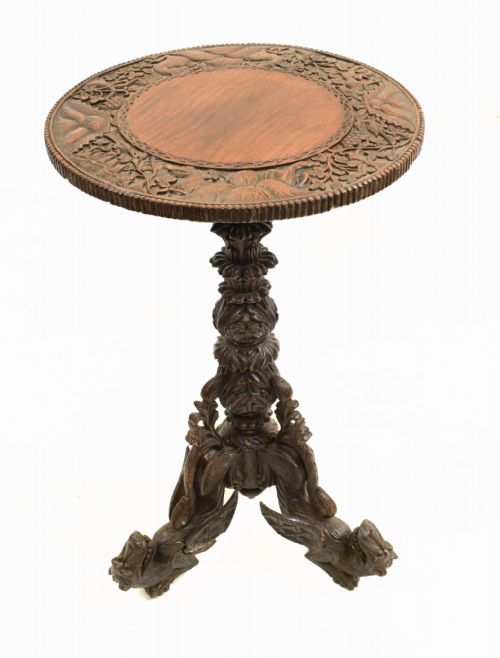
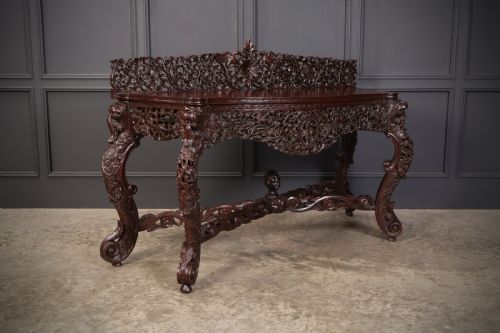
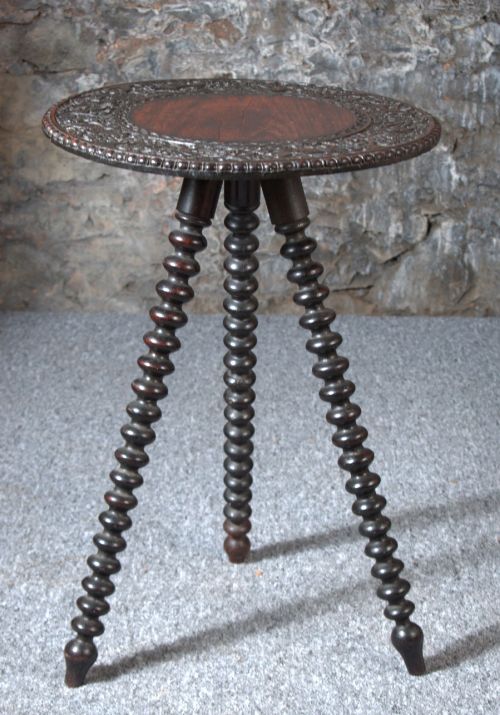
An antique burmese table brings dense regional timbers and deeply undercut foliage into the room.
Antique Burmese Table
An antique burmese table encompasses a diverse range of occasional, side, console, and tilt-top forms originating from the nineteenth century and the Victorian era. These pieces frequently manifest in styles such as Anglo-Burmese, Anglo-Indian Colonial, and Burmese Vernacular.
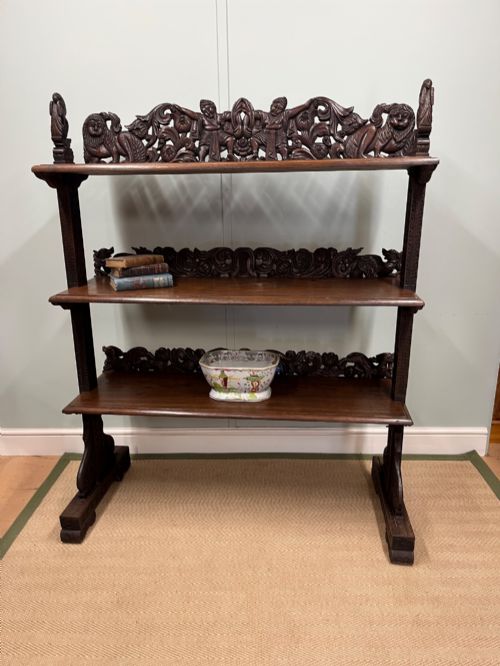
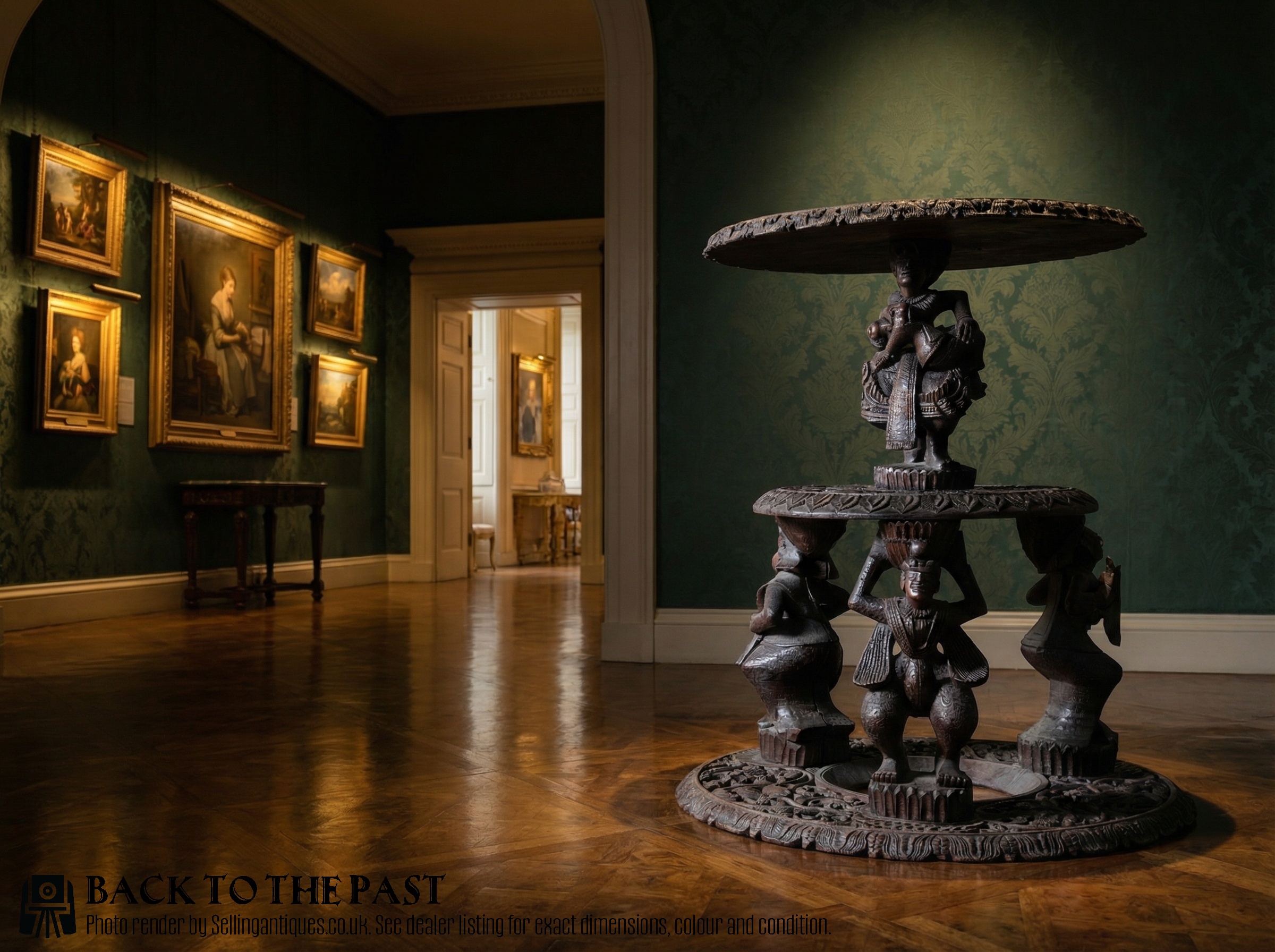
The buyer meets side tables, tiered buffets, and round occasional tables most commonly on this page. Many examples incorporate deep relief carving featuring figures, foliage, and structural supports like elephant legs.
Origins trace directly to Southeast Asian workshops producing furniture for both local use and the colonial export market. The inventory balances smaller folding book stands and tea tables with substantial dining and centre tables.
How they were made
Makers utilised dense native timbers including teak, padauk, and assorted hardwoods to withstand intricate hand carving. These heavy woods provided the stable ground necessary for deep undercutting without splintering.
Surface finishes involved traditional lacquering and painted treatments on wood. Lacquered Burmese tables display smooth, sealed coats built up over time, contrasting with the bare carved grain of padauk and teak pieces.
The inventory records side tables, console tables, tilt-top tables, and three-tier buffets.
What varies in quality
The depth, crispness, and spatial arrangement of the hand carving dictate the standing of an antique burmese table. Superior examples exhibit sharply defined foliage and figures with clear dimensionality, whereas lesser pieces display shallow, generalised incisions.
Timber selection and structural integrity further divide the range. Dense, well-figured padauk or heavy teak with tight joinery represents the upper tier, while plain secondary woods and loose construction sit lower.
The Antique Burmese Table Glossary
- Padauk
- A heavy, durable tropical hardwood with a reddish-brown hue. It was frequently selected by makers for pieces requiring intricate relief carving.
- Tilt top table
- A table featuring a mechanism that allows the surface to hinge into a vertical position when not in use. This form saved space in colonial rooms.
- Buffet
- A tiered shelving unit used for display and storage. Nineteenth-century examples often incorporate three carved tiers supported by turned pillars.
- Anglo-Burmese
- A design style combining traditional Burmese carving techniques with British furniture forms of the nineteenth century. These objects catered to colonial households.
- Lacquer
- A durable resin finish applied in multiple layers to wood surfaces. It provides a glossy, protective coating found on specific regional tables.
Antique Burmese Table: Frequently Asked Questions
How do I style an antique burmese table?
These carved wooden pieces anchor a room easily when placed beside plain upholstery or neutral walls. Their dark timber tones and textured surfaces provide a strong focal point.
Allow sufficient space around tiered buffets or round tables so the carved details remain visible. Avoid overcrowding the surface with objects to let the craftsmanship show.
What is the difference between teak and padauk?
Teak is a heavy, oily timber native to the region that resists moisture and wears well over decades. It forms the basis of many village and utility tables.
Padauk exhibits a distinct reddish coloration and exceptional density, making it the preferred choice for deeply carved console and side tables.
How were tilt top tables used?
Tilt top tables functioned as flexible furniture items in nineteenth-century homes. Operators tipped the surface flat against a wall when floor space was required.
They served primarily as occasional or tea tables during gatherings. The pivoting mechanism relied on a clever catch block beneath the top.
Are these tables purely decorative?
While the dense carving draws immediate attention, these tables served practical domestic roles. Side tables, console tables, and tiered buffets held books, tea services, and lamps.
Their sturdy hardwood construction ensures they remain fully functional for daily use in modern settings.
How do I identify an Anglo-Burmese piece?
Anglo-Burmese furniture marries British furniture forms, such as occasional or console tables, with traditional Southeast Asian iconography. Look for dense floral carving combined with standard western proportions.
The presence of colonial motifs alongside native figures typically signals this cross-cultural exchange.