
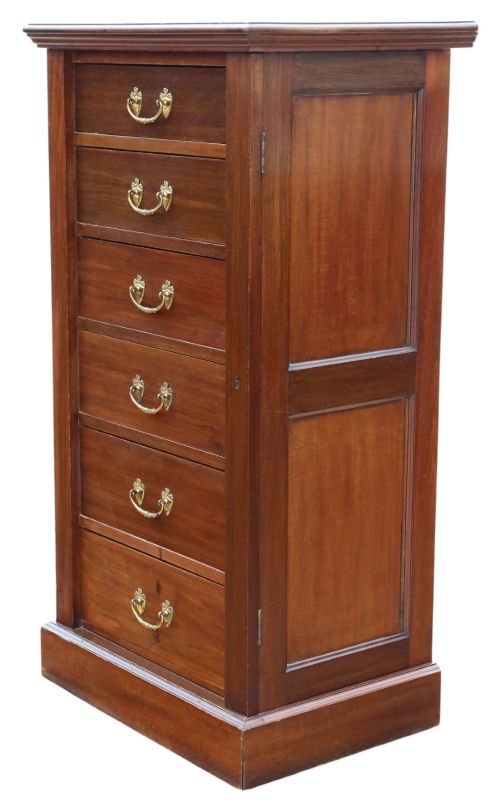
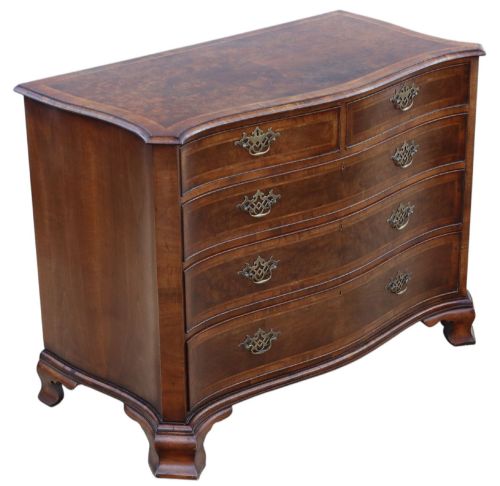
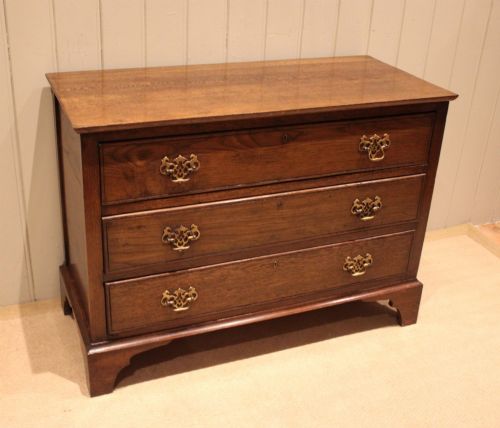
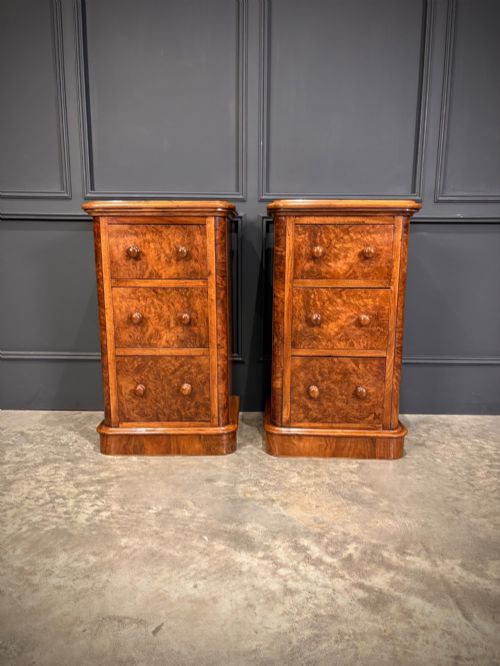
Antique Brown Chest Drawers
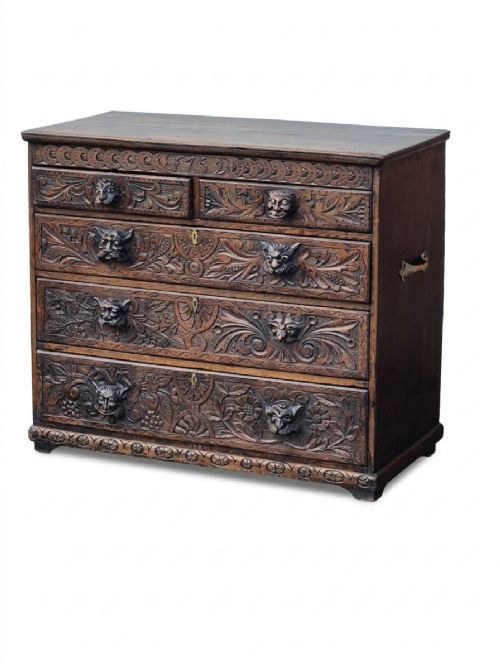
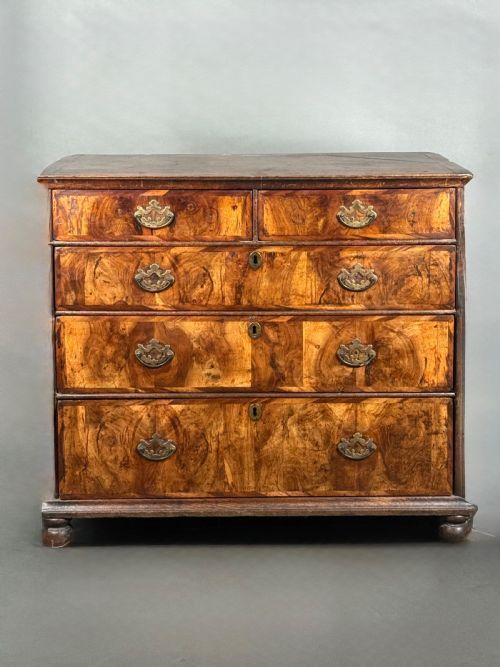
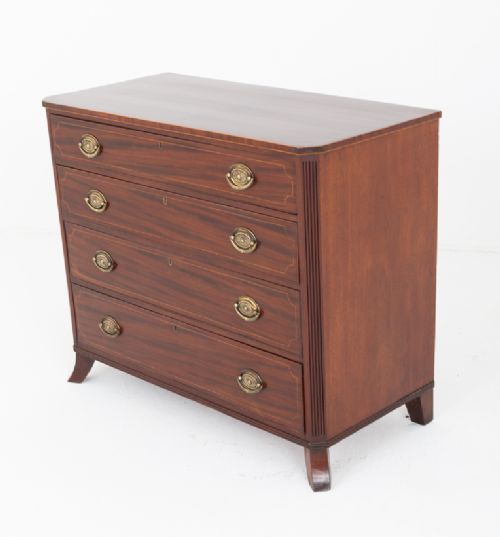
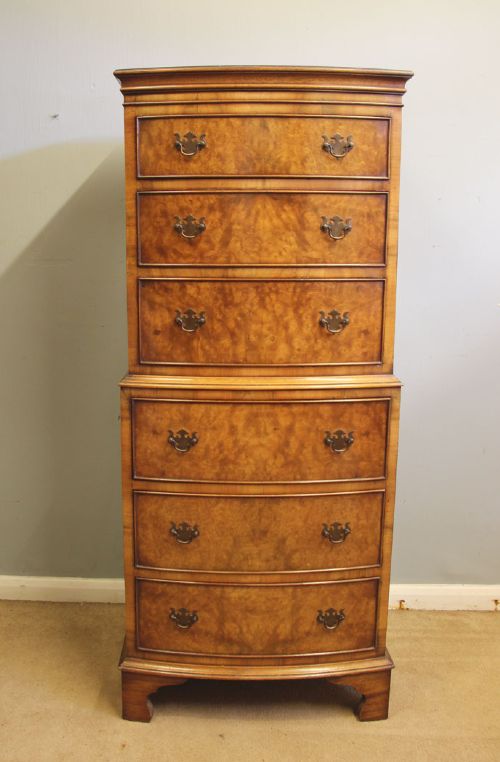
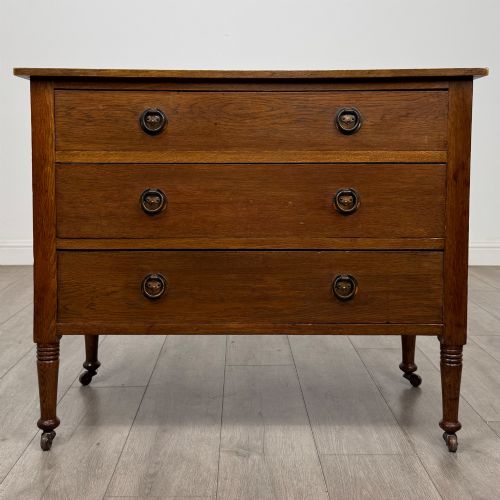
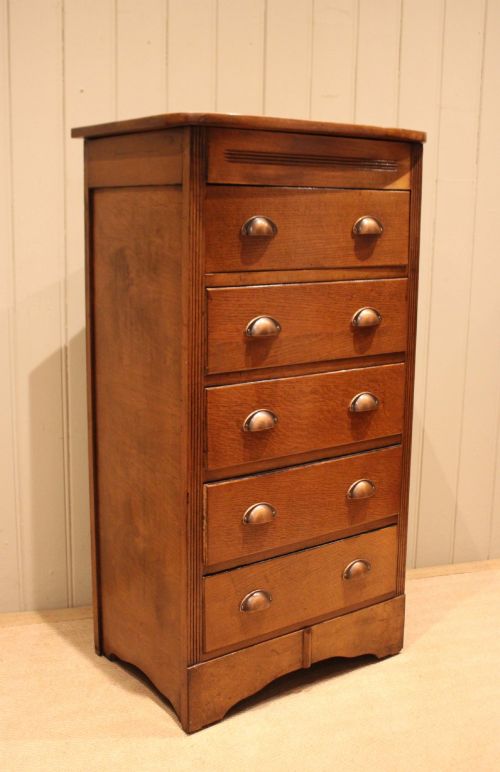
These antique brown chest drawers bring warmth and history to a room, offering practical storage through rich walnut, mahogany and oak timbers.
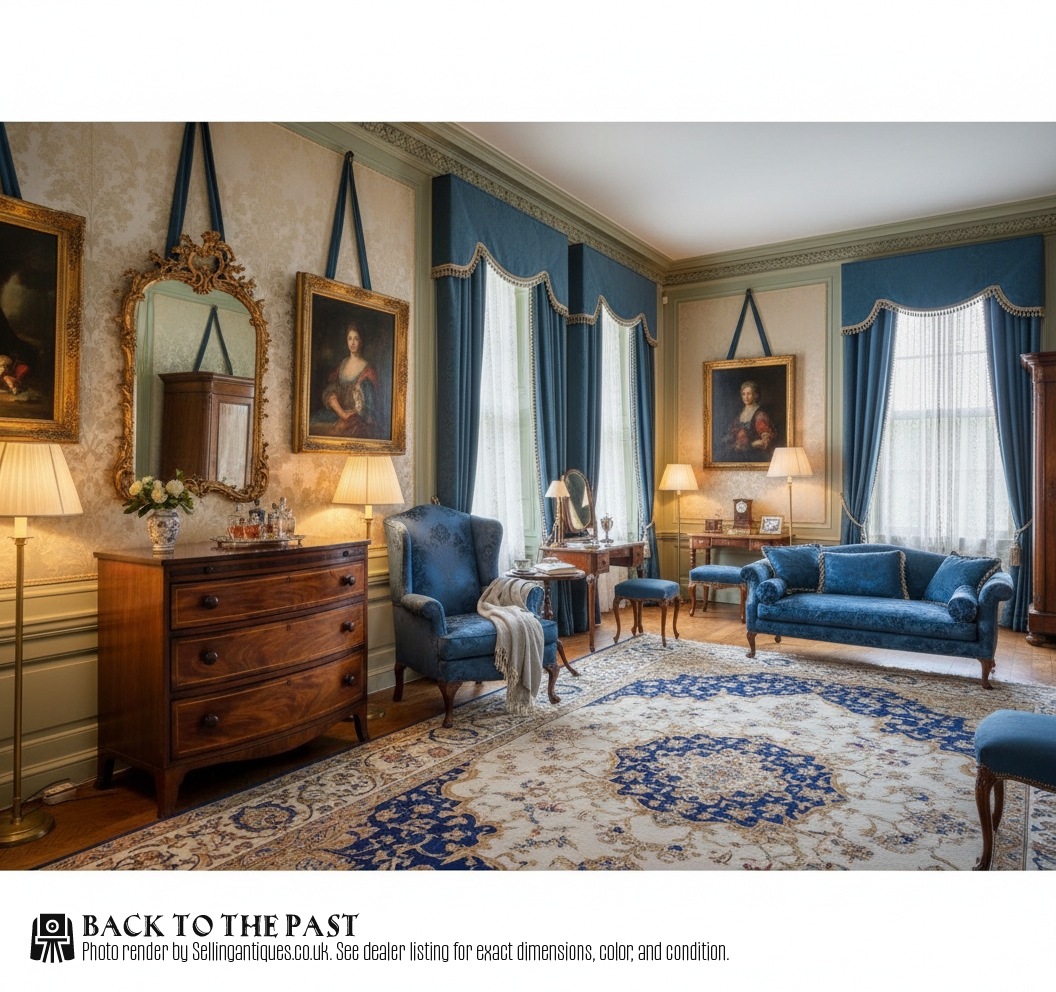
Antique Brown Chest Drawers
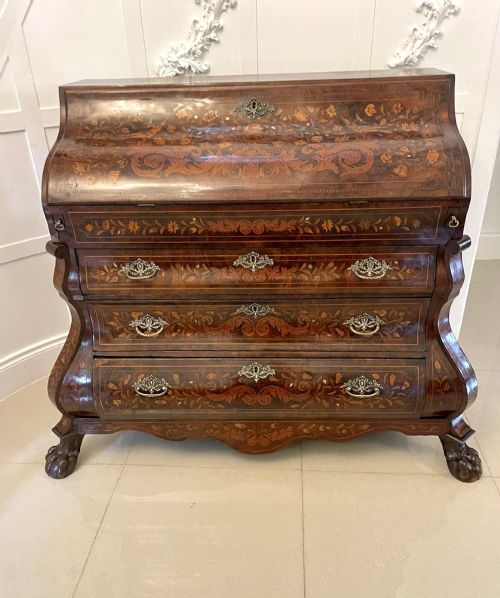
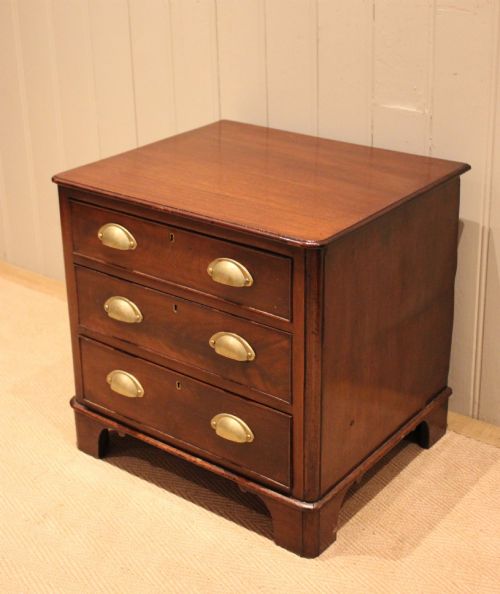
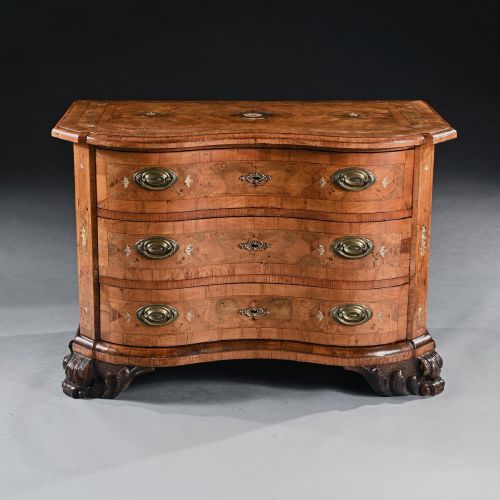
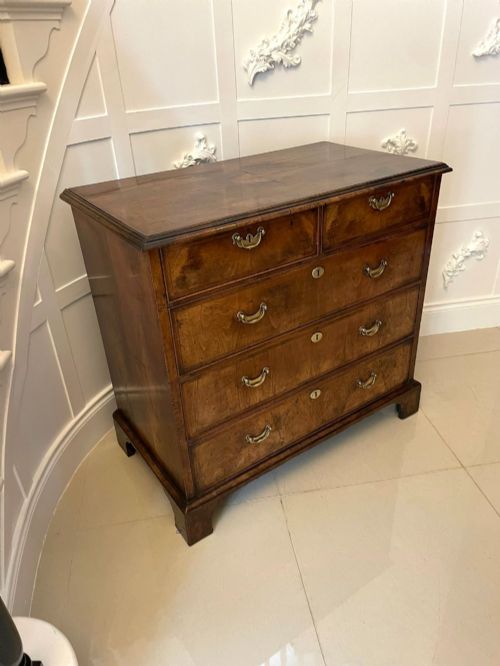
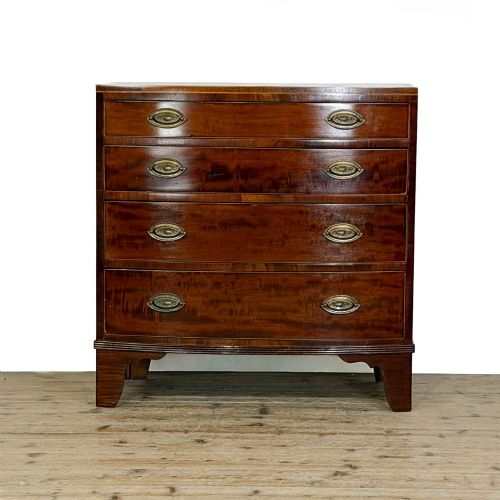
An antique brown chest drawers provides sturdy storage capacity through stacked horizontal compartments, appearing across periods from the early eighteenth century through the Edwardian era. Pieces span simple oak utility forms and compact bedside versions to grand serpentine commodes and bow front designs.
Mahogany and walnut predominate among surviving examples, alongside robust oak and figured burr veneers. Buyers encounter straightforward rectangular forms alongside tallboys, chests on chests and pieces fitted with brushing slides.
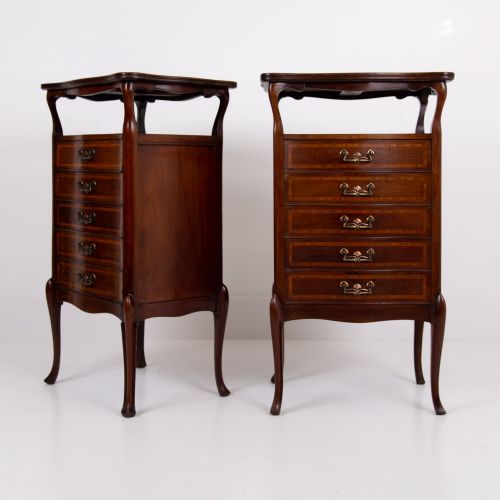
The aesthetic shifts from austere Georgian proportions to elaborate Victorian ornamentation, marquetry inlay and French provincial influences. Most items on this page display the deep, warm brown tones developed by aged timber over centuries.
How they were made
Cabinet makers utilised solid timber and decorative veneers applied to secondary woods, selecting mahogany, walnut and oak for their structural strength and grain patterns. Craftsmen laid down figured walnut, burr walnut and flame mahogany veneers in symmetrical arrangements across drawer fronts and top panels.
Joinery relied upon dovetail joints for drawer construction, ensuring durability under daily use. Cabinet makers incorporated brass handles, escutcheons and occasionally pewter and ivory marquetry or satinwood banding to finish the facades.
Antique Brown Chest Drawers Retail Price Guide 2026
Typical asking prices for brown chest drawers among the pieces listed under this phrase on Sellingantiques today, from the lower quarter to the upper quarter. They describe what is for sale here now, not the wider market.
The inventory records pieces from the early eighteenth century through the art deco era.
What varies in quality
The selection of timber veneer dictates visual distinction, with figured walnut and flame mahogany displaying complex grain movement that lesser planks lack. The precision of marquetry inlay, parquetry patterns and crossbanding separates standard utilitarian items from exhibition pieces.
Structural integrity depends on the tightness of drawer dovetails and the retention of original brass hardware. Proportions dictate desirability, with small low chests and neat bow front formats commanding greater attention than heavy, utilitarian carcases.
The Antique Brown Chest Drawers Glossary
- Bow front
- A convex curved cabinet front that swells outward in the centre, popular during the Georgian and Regency periods.
- Brushing slide
- A pull-out shelf integrated above the top drawer, used historically for folding clothes or writing.
- Marquetry
- Decorative patterns formed by inserting pieces of contrasting veneer into a wood foundation, depicting floral or geometric designs.
- Crossbanding
- A narrow strip of veneer laid border-wise around the edges of a panel, with the grain running perpendicular to the centre.
- Serpentine
- A shaped furniture front featuring a concave centre flanked by two convex ends, creating a flowing wave effect.
Antique Brown Chest Drawers: Frequently Asked Questions
How do I date an antique chest of drawers?
Dating relies upon examining the construction methods, timber choices and hardware styles visible on the piece. Eighteenth-century examples often feature hand-cut dovetails and solid oak linings, whereas later Victorian items display machine-sawn elements.
Changes in decorative vocabulary, such as Regency satinwood banding or Edwardian oak framing, help narrow the decade of manufacture. Comparing the backboards and drawer sides provides further clues to the workshop era.
Where should I place an antique chest in my home?
These chests function effectively in bedrooms, hallways and living spaces where surface area and drawer storage are required. Smaller bow front and bedside versions fit neatly into tight alcoves or beside seating arrangements.
Larger tallboys and commodes anchor larger walls while providing substantial capacity for linens, clothing or everyday items.
What is a bureau desk?
A bureau desk combines a sloping hinged writing flap with a chest of drawers beneath. Opening the flap reveals a fitted interior containing small pigeonholes and miniature drawers for correspondence.
Cabinet makers produced these dual-purpose items in mahogany and walnut throughout the eighteenth and nineteenth centuries to save space in domestic interiors.