



Antique Bronze Side Lamp
An antique bronze side lamp brings weight and warm metallic reflection to a room, drawing the eye with sculptural metalwork and aged patination.
Antique Bronze Side Lamp
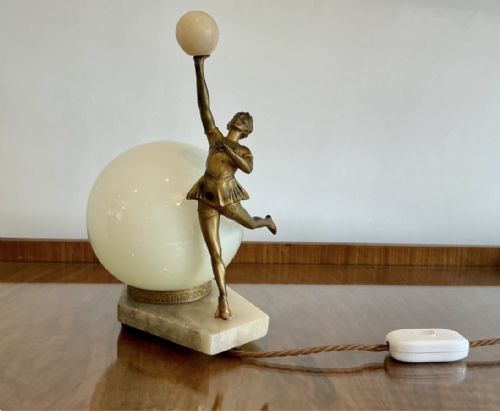
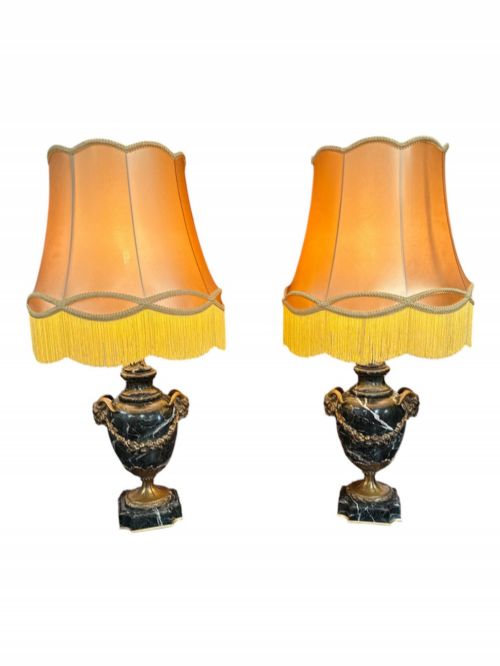
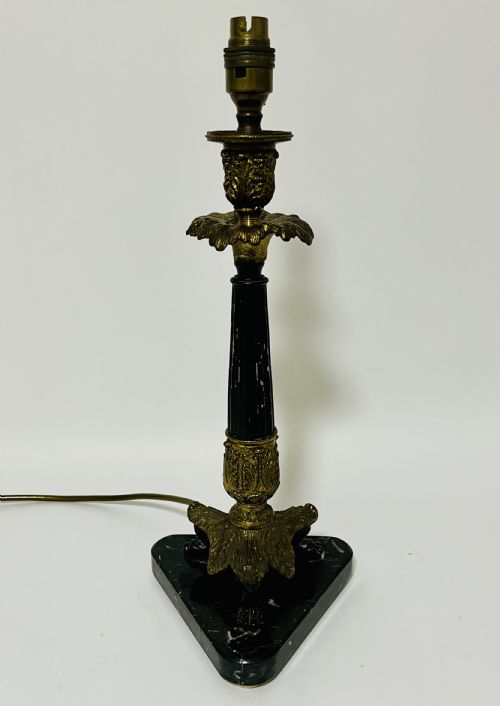
An antique bronze side lamp combines structural metalwork with illumination, often taking the form of figural table lamps, urn lamps, and mounted bases. These pieces emerge from the nineteenth and early twentieth centuries, spanning periods such as the Victorian era, the Art Deco movement, and the late nineteenth century.
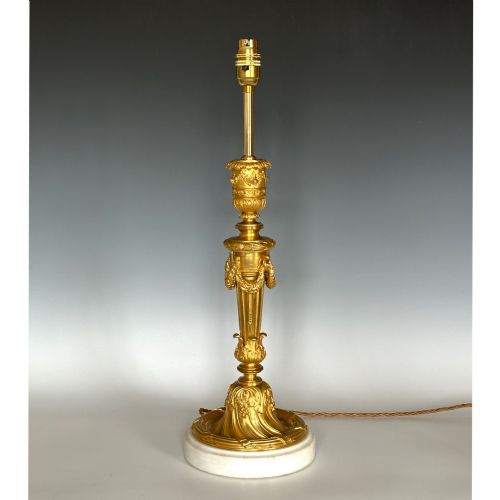
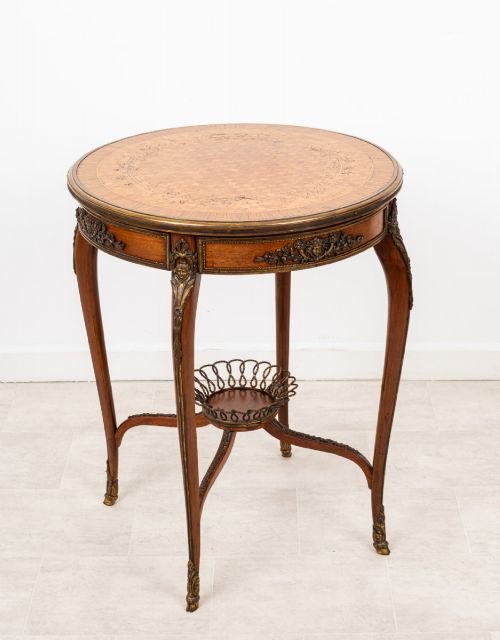
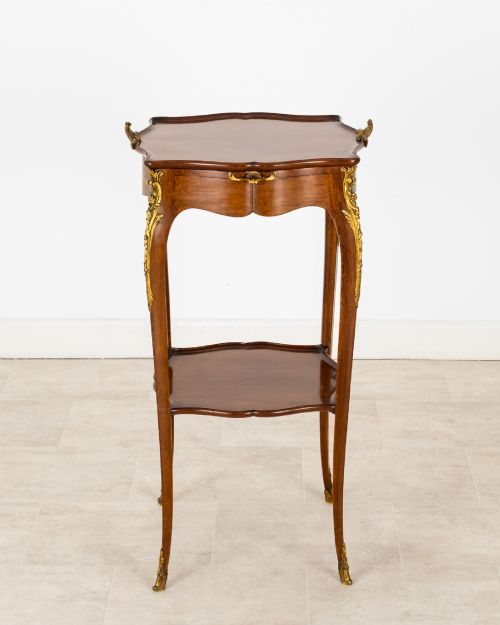
The selection here frequently pairs bronze or gilt brass with marble bases and fabric or silk shades. Alongside dedicated lamp bases, the inventory includes lamp tables and occasional tables fitted with bronze mounts, reflecting the dual function of furniture and lighting in period interiors.
How they were made
Maker workshops utilised cast bronze, ormolu, and gilt brass, often mounting the metal components onto white or coloured marble plinths. Tables integrated into this category combine mahogany, walnut, kingwood, and satinwood with cast metal mounts.
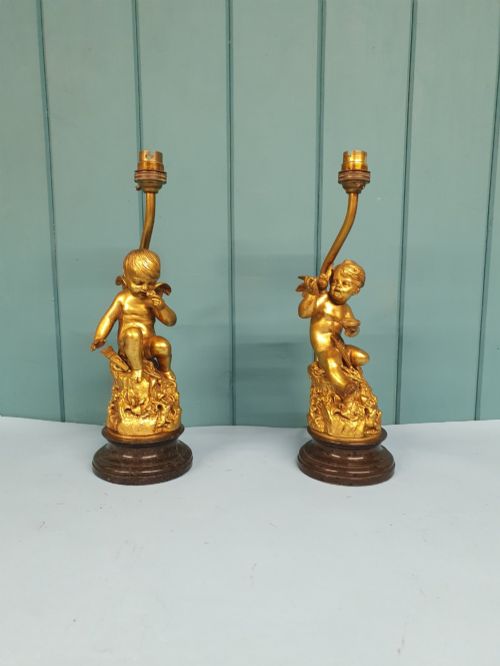
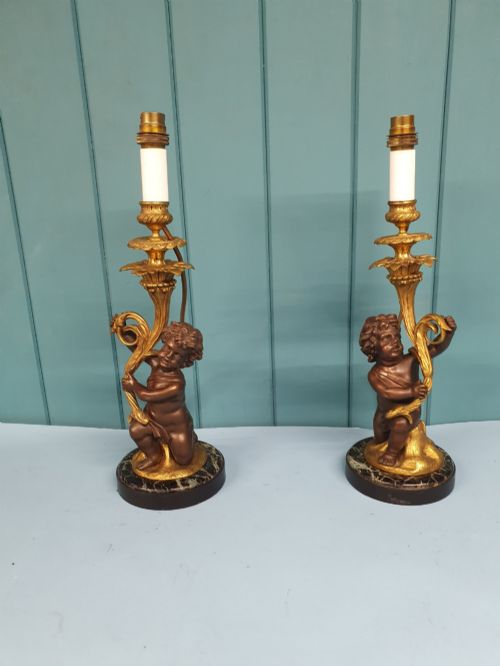
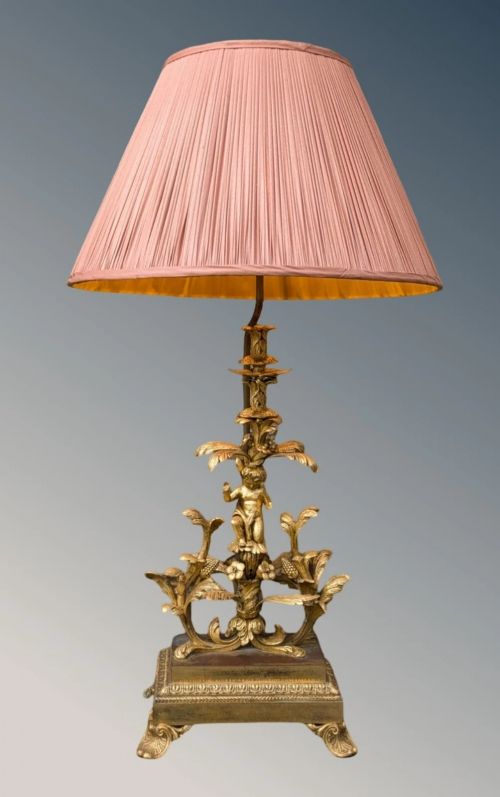
Casting techniques yielded detailed figural motifs including cherubs and human forms, while surface finishing involved fire gilding or patination to achieve deep metallic tones. Wiring and fittings seen today are frequently adapted for modern use while retaining the original metal bodies.
Cherubs appear with surprising frequency across nineteenth-century metalwork, cast in the act of holding aloft nineteenth-century illumination.
What varies in quality
Quality rests in the crispness of the bronze casting and the depth of the subsequent gilding or patination. Finer examples display sharp relief in figural work and secure, heavy mounting to marble or wooden bases.
The integration of materials also defines the standard of a piece, seen in the seamless fit of ormolu mounts onto timber tables or the structural integrity of stone urn bases. Substantial weight and refined hand-finishing separate standard production from exceptional workshop output.
E Rousseau·François Linke·Maison Bagues
The Antique Bronze Side Lamp Glossary
- Ormolu
- Gilded bronze, where a layer of gold amalgam is applied to a bronze base and heated to fuse the finish. This technique creates a durable, warm golden surface found on nineteenth-century mounts and lamp bases.
- Gueridon
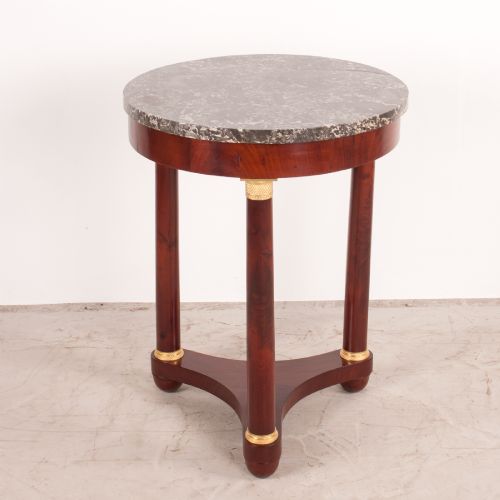
- A small round occasional table, frequently utilised to support a lamp or decorative object. These tables often incorporate marble tops and gilt bronze mounts.
- Cassolette
- A decorative vessel, often in marble and ormolu, designed with a reversible lid that functions as a burner or a solid vase. In lighting, these vessels are adapted to serve as lamp bases.
- Spelter
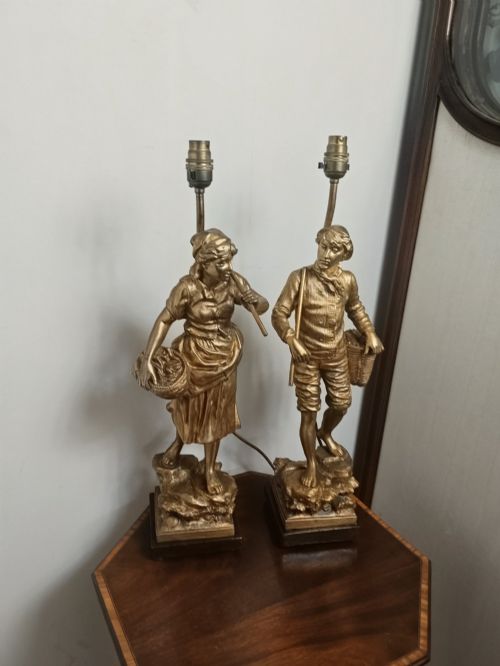
- A zinc alloy utilised as a substitute for bronze in decorative figures and lamp bases. It takes patination well but possesses a lighter weight and softer structural strength than bronze.
- Marquetry
- The art of applying small pieces of veneer to a structure to form decorative patterns. This technique appears on the wooden tables associated with lamp placement in the inventory.
Antique Bronze Side Lamp: Frequently Asked Questions
What periods do these lamps come from?
The pieces span the nineteenth and early twentieth centuries, encompassing Victorian production, French Empire designs, and Art Deco creations from the 1920s and 1930s.
Stylistic markers range from Rococo Revival and Louis XV curves to clean modernist lines, reflecting changing interior tastes across decades.
Are these lamps wired for modern use?
Most surviving antique lamp bases have been adapted with contemporary wiring to meet safety standards while preserving the historic metal body.
Buyers should examine specific listings to confirm whether rewiring has taken place and what type of bulb fitting is installed.
How do I identify French Empire style?
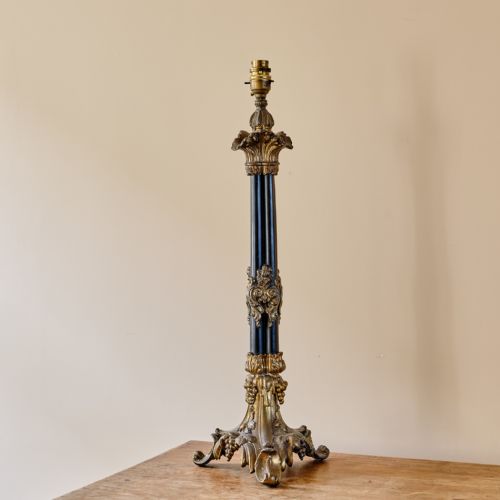
French Empire pieces display classical motifs inspired by antiquity, including laurel wreaths, sphinxes, columns, and gilt bronze mounts against dark wood or marble.
This style projects formal symmetry and heavy imperial grandeur, distinguishing it from the lighter curves of Louis XV revival pieces.
What is the difference between bronze and spelter?
Bronze is an alloy of copper and tin that yields heavy, durable castings capable of holding sharp, intricate detail and rich patination over centuries.
Spelter is a softer, lighter zinc-based metal used during the late nineteenth and early twentieth centuries as an economical alternative to bronze.