



Victorian Bronze Putto Lamp
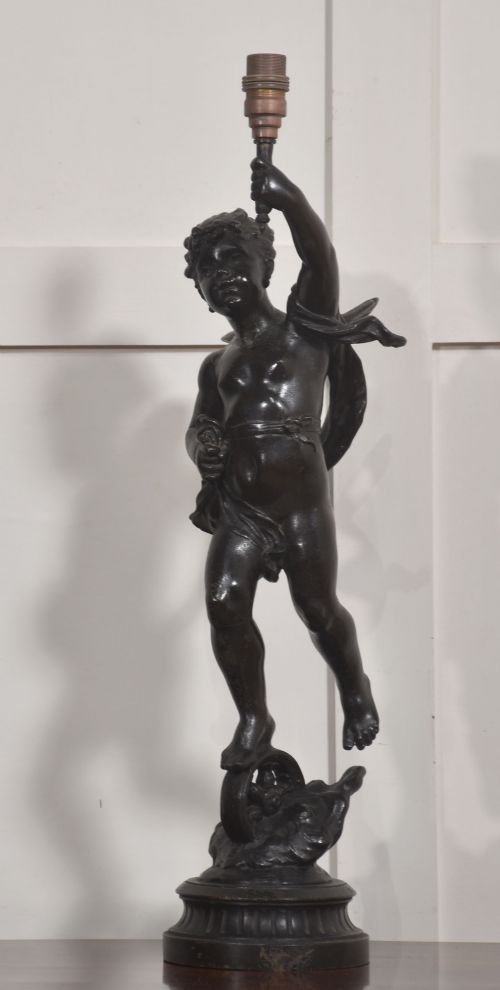
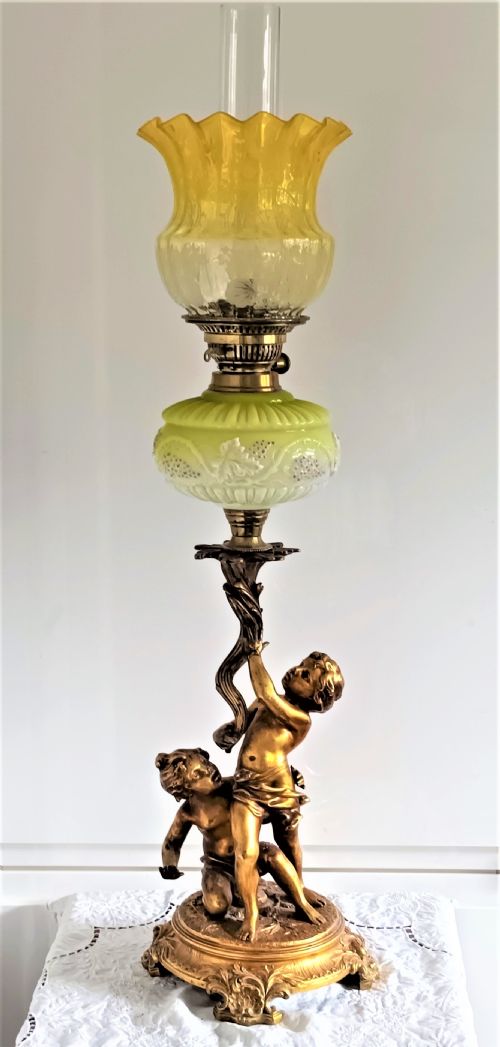
A victorian bronze putto lamp brings sculptural presence and warm illumination into a room, featuring cast figures supporting lights.
Victorian Bronze Putto Lamp
When searching for a victorian bronze putto lamp, a buyer explores figural lighting typically cast during the nineteenth century. These objects combine sculptural metalwork with functional illumination, taking the form of table lamps, oil lamps, or ceiling lights.
The versions most commonly met on this page include patinated and gilded bronze figures of cherubs or putti combined with materials such as marble, brass, and fabric. Many originate from French workshops adhering to styles like Rococo Revival, Neoclassical, and French Second Empire.
Makers and designers from the period, including Aug. Moreau, produced figural pieces that later underwent conversion to electrical table lamps. Buyers encounter single statuettes converted to lamps alongside matched pairs and multi-light ceiling fixtures.
Materials and Construction
Stonework such as marble frequently forms the base for these lamps, providing weight and stability beneath the metal figures. Combinations of glass, fabric shades, and glass beads complete the construction of the lighting fixtures.
Victorian Bronze Putto Lamp Retail Price Guide 2026
Typical asking prices for victorian bronze putto lamp among the pieces listed under this phrase on Sellingantiques today, from the lower quarter to the upper quarter. They describe what is for sale here now, not the wider market.
Listings on this page span the nineteenth century into the early twentieth century, featuring bronze, marble, and brass.
Assessing Quality and Execution
The refinement of the metal casting distinguishes finer examples from simpler production pieces. Crisp chiselling on the bronze surface and expressive detailing in the faces of the putti indicate superior workmanship.
Material integration also dictates quality, particularly where bronze components meet marble bases or original ormolu mercury gilding remains intact. Matched pairs and signed works by makers demonstrate higher atelier standards.
Aug. Moreau
The Victorian Bronze Putto Lamp Glossary
- Putto
- A plump, naked child depicted in classical art, often winged. These figures appear frequently as the central sculptural element in nineteenth-century lighting.
- Ormolu
- Finely ground high-carat gold applied to a bronze object using a mercury amalgamation technique. This process creates a brilliant, durable golden surface seen on French nineteenth-century pieces.
- Patinated bronze
- Metal that has acquired a surface coloration through chemical treatment or age. This finish highlights the sculptural contours of the cherub figures.
- Neoclassical
- A style originating from the revival of classical Greek and Roman art and architecture. It emphasises symmetry, restraint, and classical motifs in decorative objects.
Victorian Bronze Putto Lamp: Frequently Asked Questions
What is a putto lamp?
A putto lamp is a decorative lighting fixture featuring a sculptural figure of a cherub or child. These pieces date predominantly to the nineteenth century and combine metal casting with functional illumination.
They appear as table lamps, converted oil lamps, and ceiling lights, often incorporating materials like bronze, marble, and gilt metal.
How do I identify French styles?
French styles like Rococo Revival and Neoclassical appear in the casting details and overall design of the bronze figures. These pieces reflect specific nineteenth-century aesthetic movements originating in France.
Atelier standards and casting techniques help distinguish these continental works from English production pieces of the same era.
Were these lamps electrified originally?
Many nineteenth-century lamps began as oil lamps or bronze statuettes before undergoing later conversion to electricity. This adaptation allowed older figural bases to function with modern wiring.
Original oil lamp components and converted bases both form part of the selection available to collectors.
How do I clean bronze and marble?
Bronze surfaces require gentle dusting with a soft cloth to preserve the patination or gilding. Avoid harsh chemical cleaners that can strip the original metal finish.
Marble bases benefit from wiping with a damp cloth followed by thorough drying to protect the stone from staining.