


Antique Bronze Girl
An antique bronze girl brings nineteenth and twentieth century foundry work into domestic spaces through figures of maidens, dancers, and rural workers.
Antique Bronze Girl
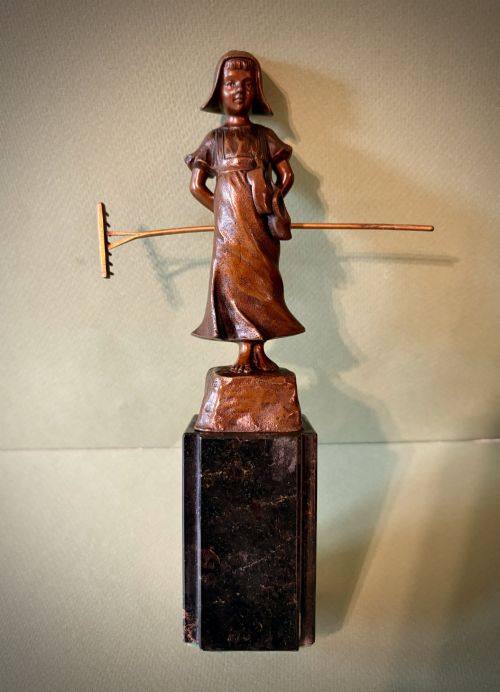
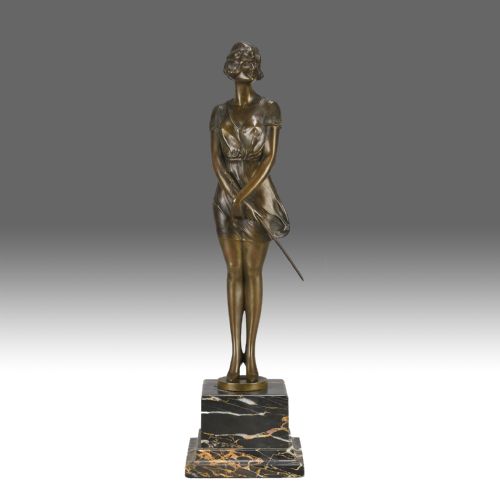
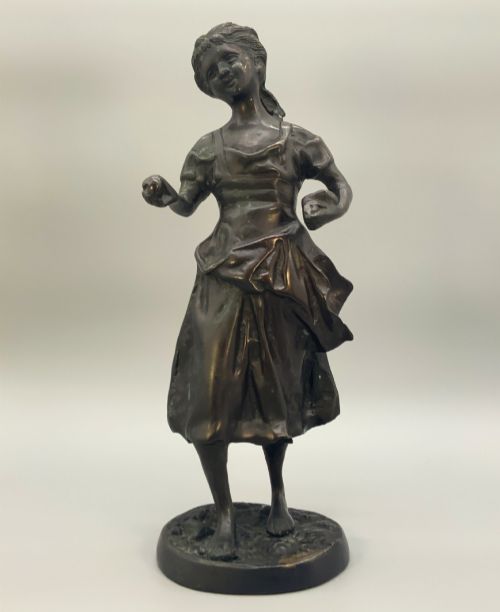
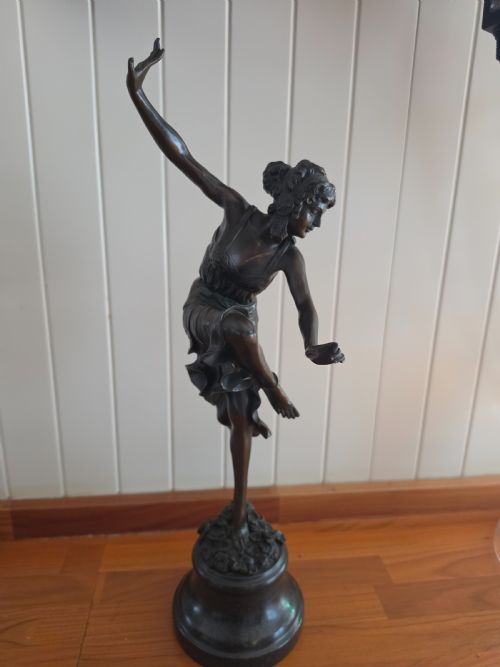
When you search for an antique bronze girl, you encounter a diverse array of nineteenth and twentieth century figures ranging from provincial French farm subjects to sophisticated Art Deco dancers. The examples on this page span the Victorian, Georgian, and Art Nouveau eras, alongside numerous early twentieth century and Art Deco pieces.
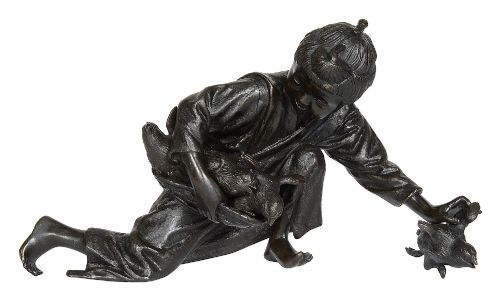
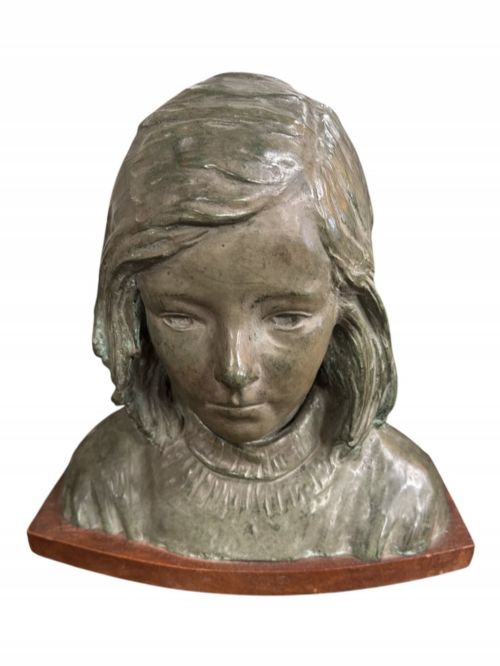
The objects take many forms, including full-length statuettes, portrait busts, table lamps, and figural seals. You will frequently find young maidens depicted gathering chickens, picking apples, or handling animals, executed in styles that reflect French, Austrian, Japanese Meiji, and American workshops.
Materials and foundry techniques
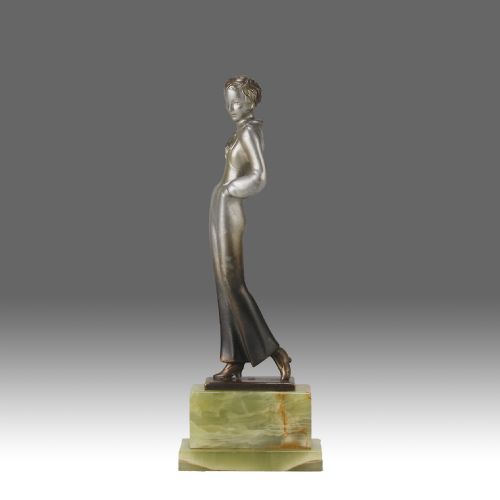
Foundries primarily utilised cast bronze, patinated bronze, gilt bronze, and bronzed metal to create these figures, frequently mounting the heavier works upon bases of marble or onyx. Cold-painting techniques added specific surface colours to Austrian and Viennese productions, while other makers combined bronze with carved wood or ormolu details.
Sculptors employed the lost-wax casting method or sand casting to achieve fine detail in drapery, hair, and facial expressions. Surface finishes range from dark chemical patination to bright silvering and gilding, depending on the stylistic demands of the period.
Among the maidens and dancers, a faithful dog and a teddy bear keep watch by a young girl's side.
Distinguishing quality in figures
The choice of base materials and the complexity of the surface finish further separate standard castings from exceptional works. Signed pieces by established sculptors demonstrate a higher degree of anatomical accuracy and artistic expression.
Bruno Zach·Josef Lorenzl·Moreau Family·C J R Colinet·H Chiparus·Pierre Laurel·Alexandre Kelety·Emmanuel Villanis·J Camus·Geo Maxim·Guillot·G V Vaerenbergh·Math Moreau·Royal Dux·Mario Korbel·Leon Pilet·Charles Octave Levy
The Antique Bronze Girl Glossary
- Patinated bronze
- Bronze that has been treated with chemical solutions to produce a specific surface colour or dark tone. This finish protects the metal and defines the sculptural contours.
- Cold-painted bronze
- Metal figures painted with oil or enamel paints after casting, without being fired in a kiln. This technique is particularly characteristic of Austrian and Viennese workshops.
- Ormolu
- Finely ground high-carat gold applied to a bronze object through a mercury amalgamation process. It creates a bright golden finish seen on nineteenth-century decorative bases and mounts.
- Art Deco
- A design style spanning the 1920s and 1930s characterised by streamlined forms, geometric styling, and depictions of modern dancers and flappers. It succeeds the floral curves of Art Nouveau.
- Meiji period
- The era of Japanese history from 1868 to 1912 noted for intricate metalwork and traditional figures exported to Western markets. Pieces from this time demonstrate exceptional metallurgical skill.
Antique Bronze Girl: Frequently Asked Questions
What periods do these bronze figures cover?
The pieces span from the Georgian and Victorian eras through the late nineteenth century and into the 1920s and 1930s.
You will find nineteenth-century French romantic subjects alongside Art Nouveau studies and early twentieth-century Art Deco dancer figures.
How were these bronze statues displayed originally?
Many figures were designed as standalone mantelpiece ornaments, cabinet sculptures, or architectural desk accessories.
Some iterations incorporated functional elements, such as table lamps, seals, or decorative vessels integrated into the cast.
Are all the figures made of solid bronze?
While many are cast in solid bronze or patinated bronze, other items utilise bronzed metal or incorporate mixed media.
Foundries frequently mounted these metal sculptures onto heavy bases constructed from marble, onyx, or wood for stability.
How can I tell an Art Deco piece from an earlier style?
Art Deco figures, dating from the 1920s and 1930s, favour stylised geometry, active dancers, and sleek materials like silvered bronze.
Earlier nineteenth-century pieces tend toward naturalistic farm girls, classical maidens, and romantic or sentimental narratives.