



Antique British Station Clock
An antique British station clock brings the purposeful weight of the railway network straight to your wall.
Antique British Station Clock
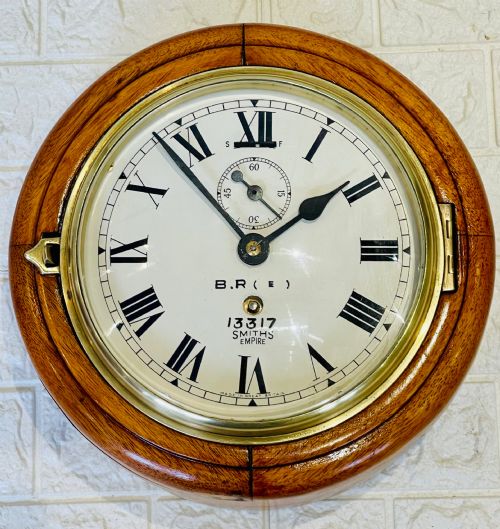
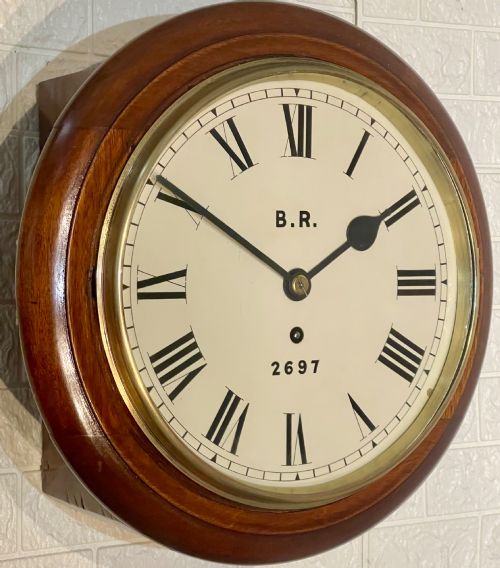
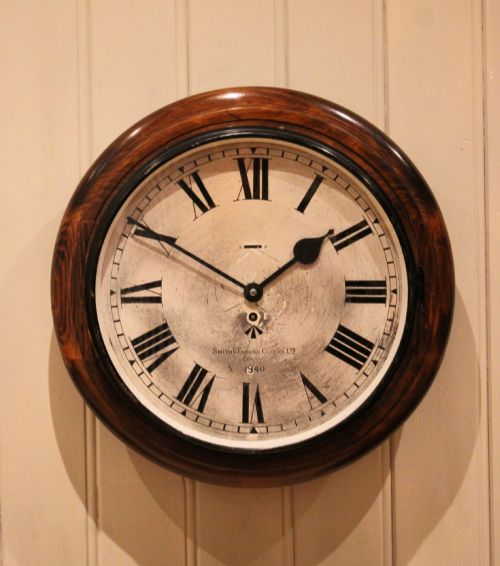
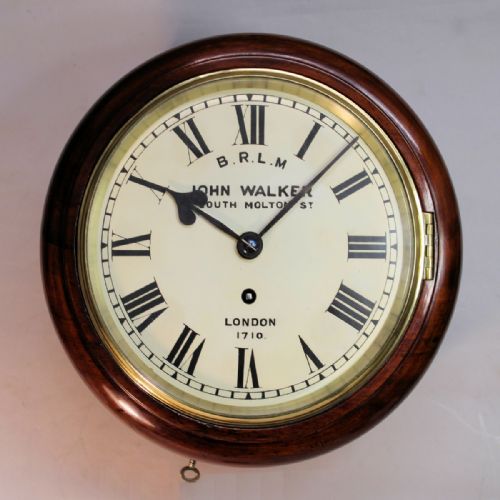
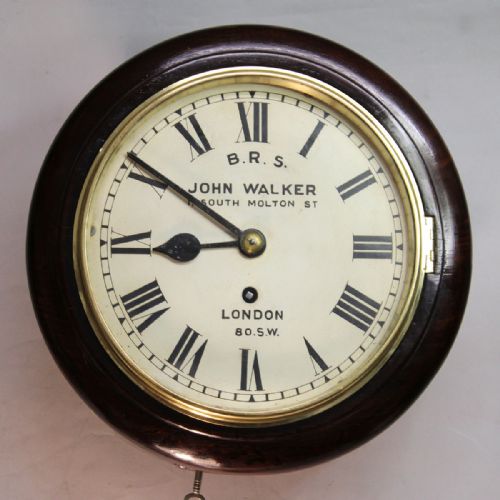
An antique British station clock is a robust timekeeper originally built for railway platforms, offices, and administrative rooms across the network. These pieces carry the designations of companies such as the London, Midland and Scottish Railway, the London and North Eastern Railway, and British Railways.
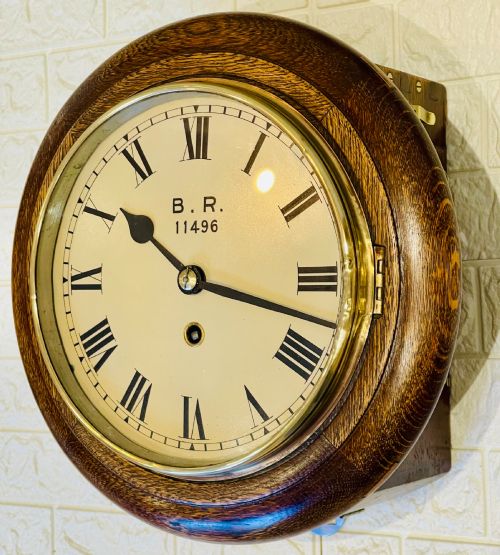
The version most commonly met on this page is the fusee wall clock featuring a clear white dial and a sturdy timber surround. Examples span periods from the Victorian era through the Edwardian years and into the mid-twentieth century.
Alongside standard railway timekeepers, the selection includes related wall pieces such as banjo clock barometers and double-sided factory clocks. Their origins range from small provincial halts to major town stations.
How they were made
The construction relies on solid timber cases turned or carved from oak, mahogany, beech, and other woods to house the heavy mechanisms securely. Dial surrounds often feature hinged bezels in brass or iron fitted with protective glass.
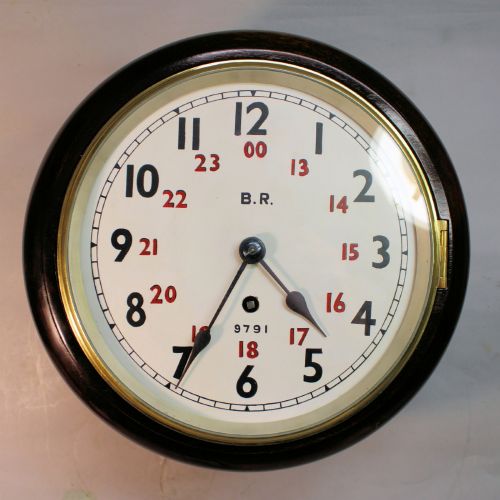
Internal movements depend on fusee mechanisms designed to maintain even tension on the chain as the mainspring unwinds, ensuring reliable timekeeping. Dials are traditionally painted metal or enamel with bold Roman or Arabic numerals for rapid reading from a distance.
The listings span the Victorian era through the Edwardian period and into 1950s utility design, utilising brass, oak, and mahogany.
What varies in quality
Quality in an antique British station clock rests on the provenance and the maker responsible for the movement. Pieces associated with named makers or specific stations carry greater historical weight.
The calibre of the cabinetwork and the crispness of the dial lettering also distinguish standard utility models from finer workshop productions. Heavy brass bezels and well-finished fusee movements set the higher end of the range apart.
John Walker·Gents of Leicester·Smiths Sectric·Camerer Cuss And Co
The Antique British Station Clock Glossary
- Fusee
- A conical pulley used in clock movements to equalize the power of the mainspring as it runs down. This device ensures consistent force reaches the escapement for accurate timekeeping.
- Dial
- The face of the clock where the hours are displayed. On railway clocks, these are typically painted white with bold numerals designed for high legibility.
- Banjo clock barometer
- A wall instrument combining a dial clock with a vertical barometer case shaped like a banjo. These incorporate carved wood styles seen in Edwardian interiors.
- Bezel
- The metal or wood ring that holds the glass protecting the clock dial. Many railway clocks use a brass bezel hinged for easy access to the hands.
Antique British Station Clock: Frequently Asked Questions
Why do railway clocks have fusee movements?
Railway timekeeping demanded absolute precision across the network, and fusee movements delivered steady power output throughout the running cycle.
This mechanical refinement prevented the loss of accuracy as the mainspring relaxed over the course of its run.
What is a wartime ministry clock?
Wartime ministry clocks were produced under government oversight during periods of conflict, often utilising alternative woods such as beech.
They reflect streamlined manufacturing practices when brass and mahogany were conserved for other uses.
How do I identify a station's provenance?
Provenance is frequently painted directly onto the dial or stamped on the timber case with initials representing regional railway companies.
Names of specific towns or junctions, such as Darlington or Lymington, offer a direct link to the clock's operational past.