

Antique Breakfront Shelving
Antique breakfront shelving offers commanding proportions and timber grain, bringing library scale into the home.
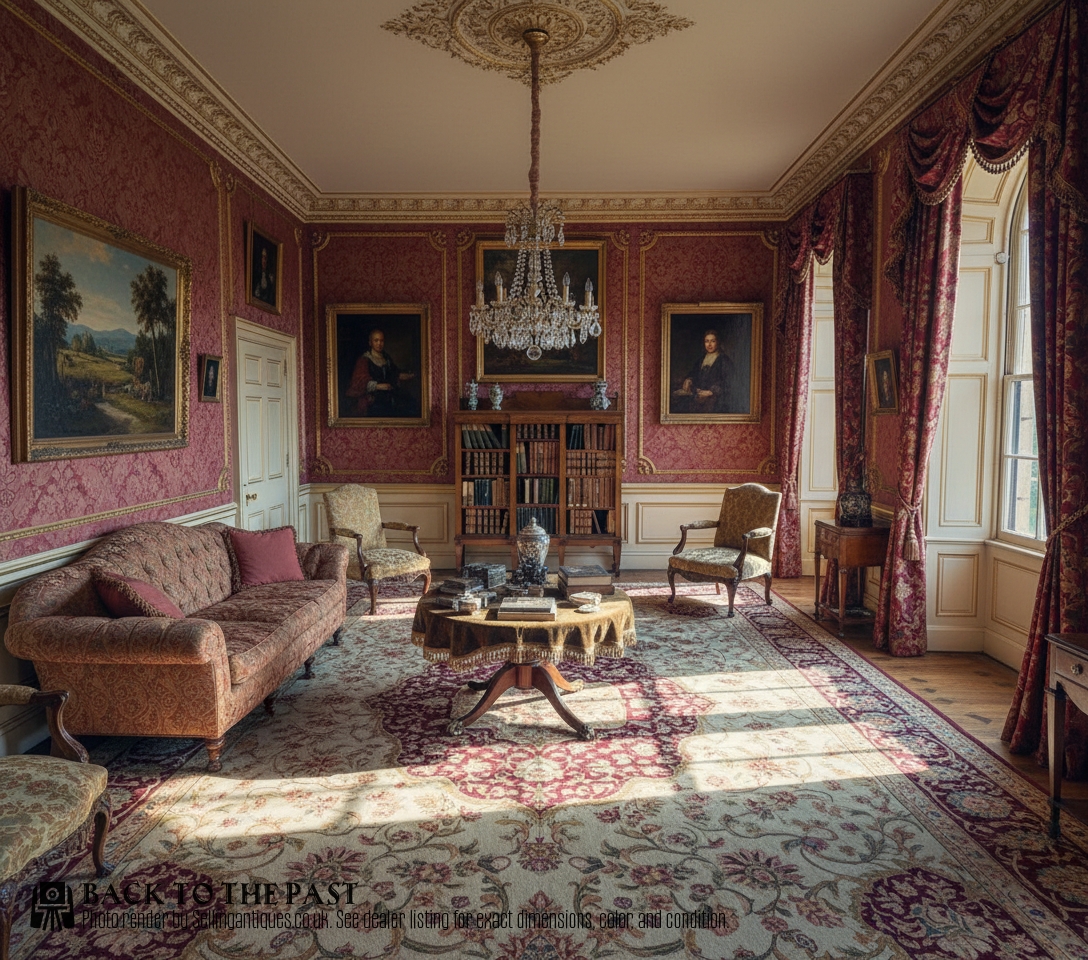
Antique Breakfront Shelving
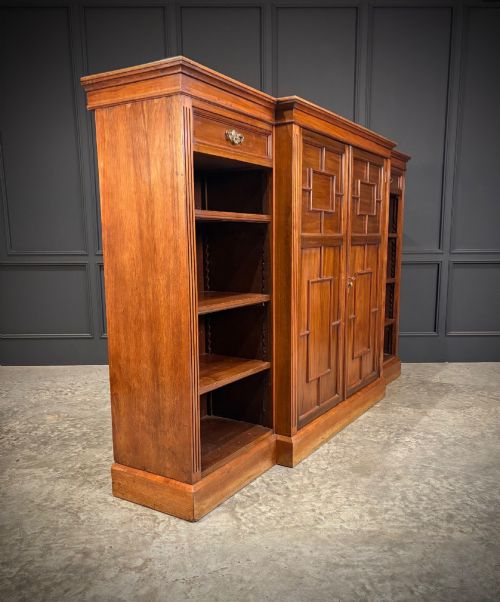
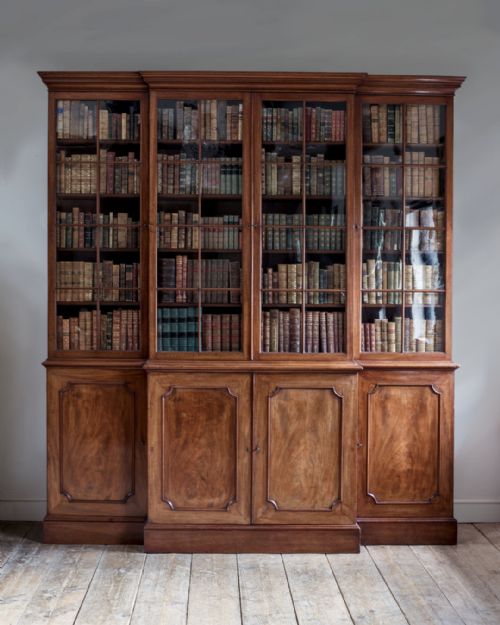
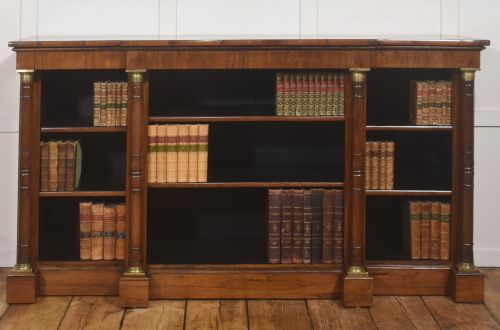
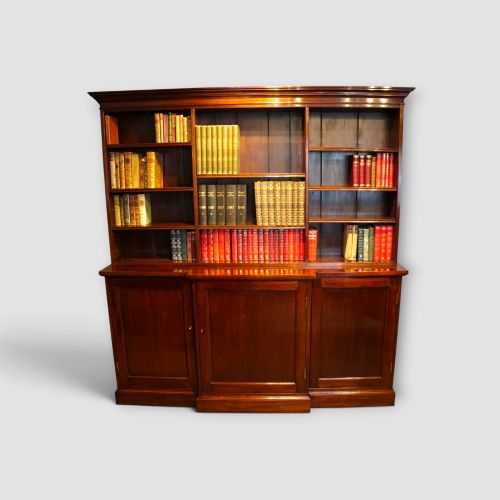
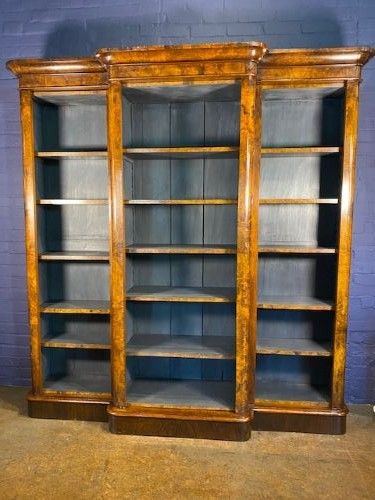
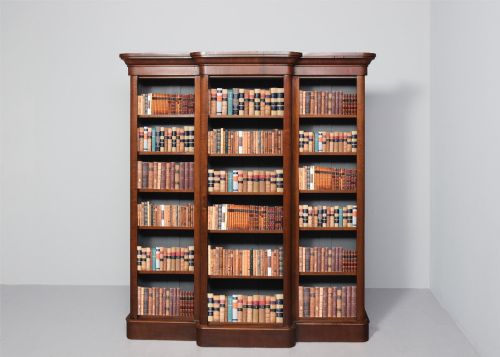
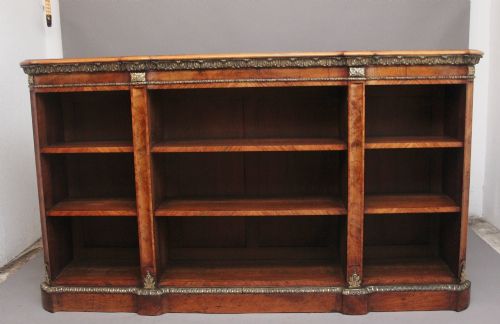
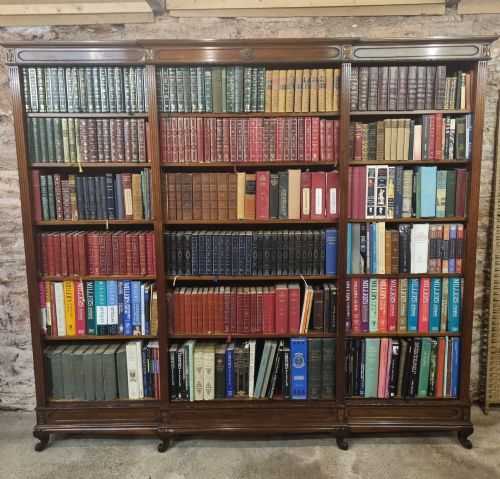
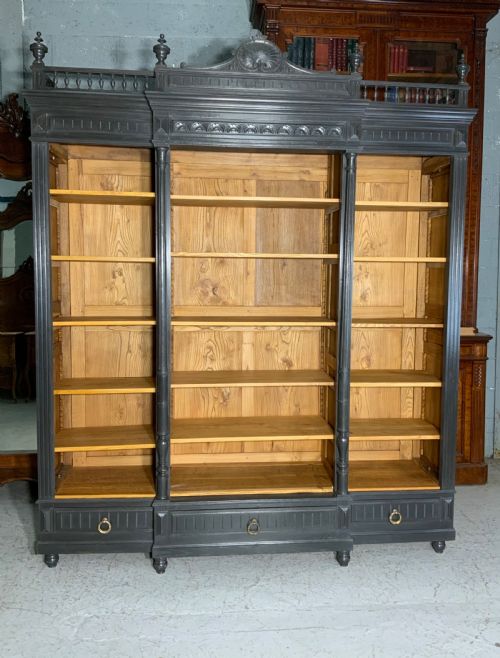
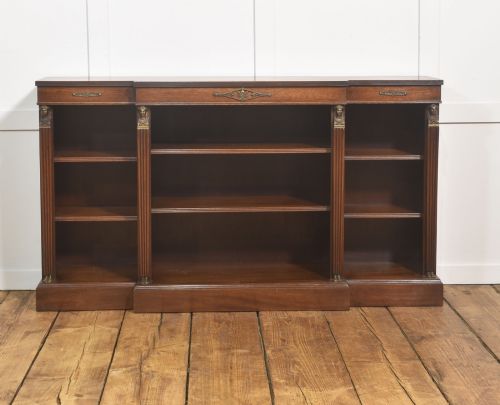
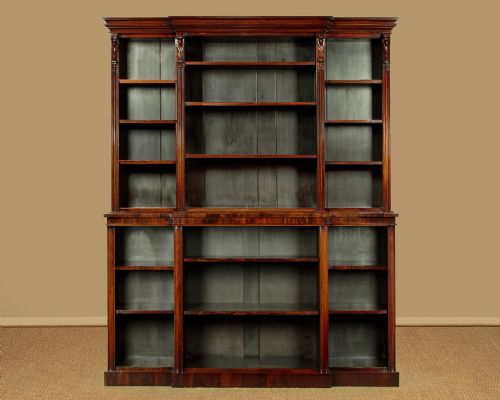
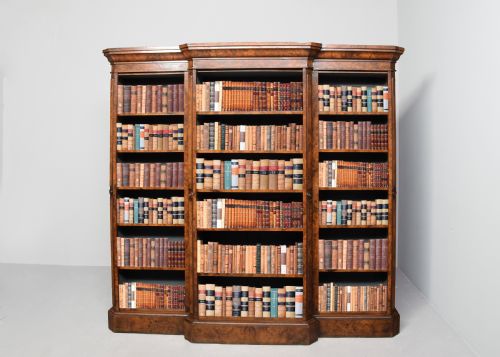
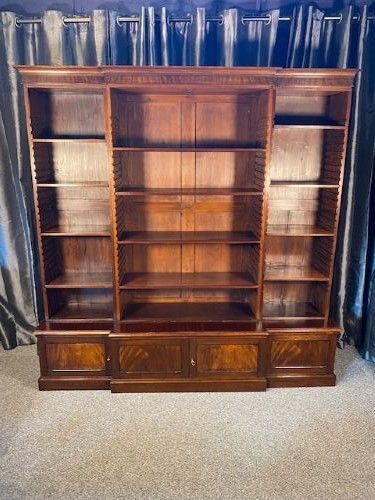
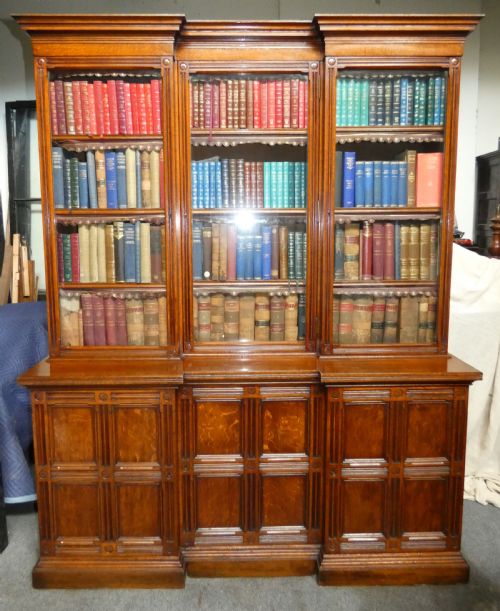
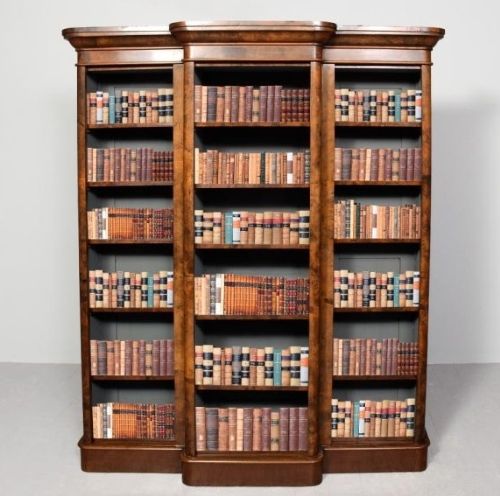
Antique breakfront shelving presents a distinctive stepped forward central section flanked by slightly recessed wings, creating depth and architectural presence in a room. These pieces function primarily as open bookcases, library storage, and credenzas designed to display volumes and decorative objects.
The version most commonly encountered on this page is the Victorian or Edwardian mahogany, walnut, or burr walnut open bookcase. These large library pieces feature adjustable shelving and substantial timber construction spanning the nineteenth and early twentieth centuries.
Makers and makers' styles span Regency, Georgian, and Neoclassical designs, alongside specific pieces originating from workshops such as Gillows. Such furniture serves both domestic studies and grander reception rooms with equal utility.
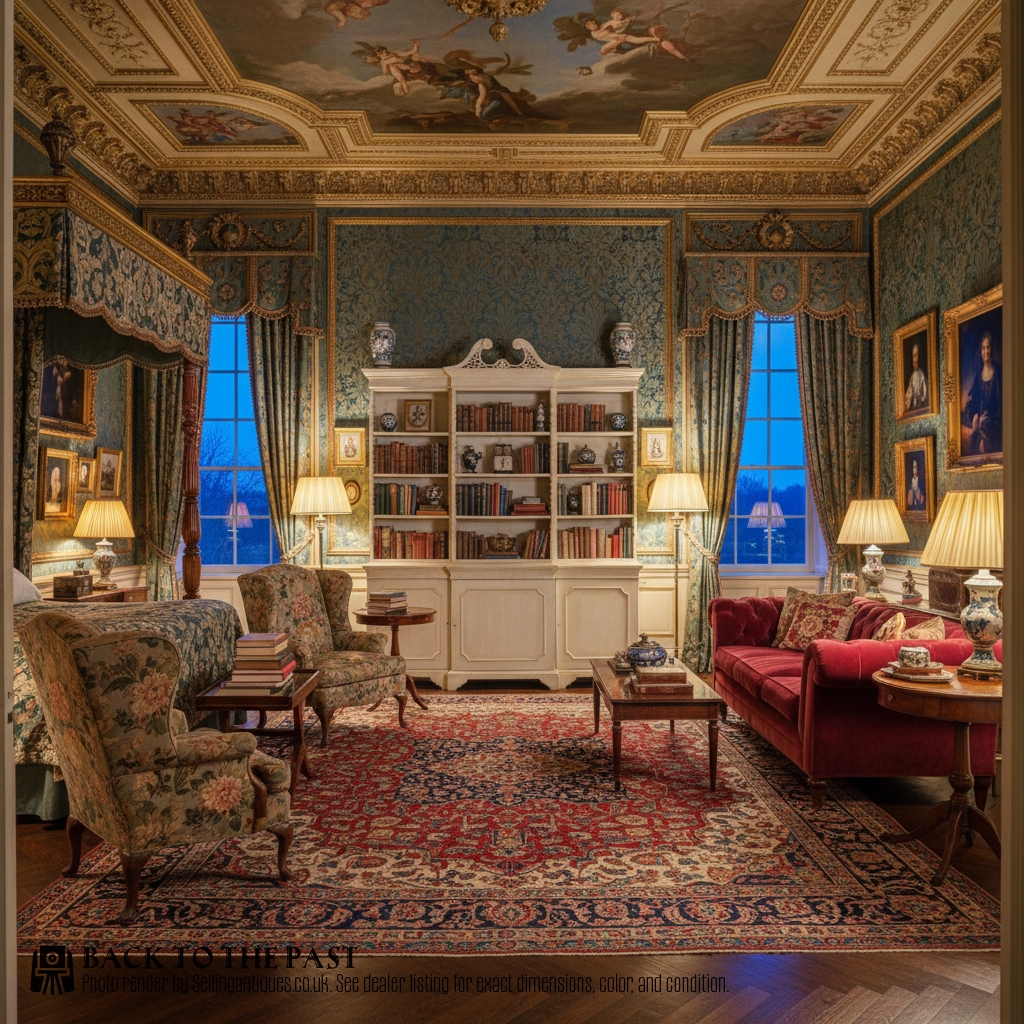
Materials and Construction Techniques
Makers utilised dense hardwoods including mahogany, rosewood, oak, and burr walnut as the primary structural bodies. These timbers often display rich flame figuring and careful crossbanding.
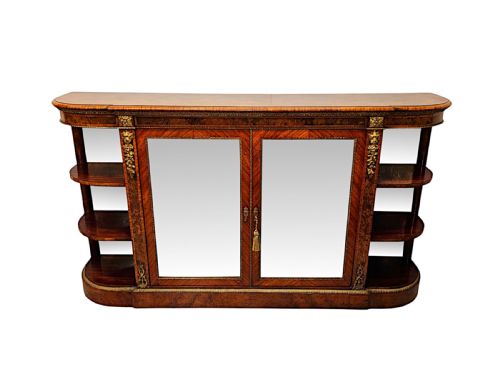
Decorative embellishments relied upon brass, gilt metal, and ormolu mounts fitted to cabinetry, alongside intricate inlay work. Shelves were engineered to be adjustable within the vertical sections.
Antique Breakfront Shelving Retail Price Guide 2026
Typical asking prices for breakfront shelving among the pieces listed under this phrase on Sellingantiques today, from the lower quarter to the upper quarter. They describe what is for sale here now, not the wider market.
Some library bookcases retain nineteenth-century shelf adjustment notches that still bear the faint pencil marks of the cabinetmaker.
Distinctions in Quality and Manufacture
The distinction between standard utility storage and superior cabinet work lies in the selection of timber veneers, such as highly figured burr walnut or flame mahogany. Finer examples exhibit disciplined proportions and more complex crossbanding.
Applied ornamentation also signals grade. Pieces featuring well-cast ormolu mounts, intricate marquetry inlay, and stamped maker attributions sit at the upper end of cabinet production compared to plain structural timber frames.
Johnstone and Jeanes·Gillows·Robert Strahan
The Antique Breakfront Shelving Glossary
- Breakfront
- A cabinet design where the central section projects forward from the side wings. This architectural layout creates visual depth.
- Ormolu
- Gilded bronze or brass mounts applied to furniture as decoration. It is frequently seen on walnut and mahogany pieces from the nineteenth century.
- Crossbanding
- A strip of veneer running perpendicular to the grain of the main surface. It provides a neat border to shelves and tabletops.
- Credenza
- A low cabinet or sideboard designed for display and storage. Examples often incorporate glass doors or open shelving.
Antique Breakfront Shelving: Frequently Asked Questions
What is breakfront shelving?
Breakfront shelving refers to bookcases and cabinets where the central portion steps forward from the recessed wings. This layout breaks up long flat walls and provides varied depth.
Such pieces usually incorporate adjustable open shelves or glazed compartments designed for large library collections.
How are these bookcases dated?
Dating relies on timber choice, construction methods, and stylistic cues such as Regency or Edwardian revival details. Secondary woods and fastener types help confirm the era.
Makers' stamps or brass plaques occasionally provide direct attribution to nineteenth century workshops.
Where were these pieces used?
These large bookcases were traditionally built for country house libraries, studies, and substantial drawing rooms. They housed extensive leather-bound library collections.
Today they serve similar display and storage functions in high-ceilinged domestic interiors.
Are the shelves adjustable?
Many period examples include adjustable wooden shelving supported by rack-and-pinion systems or traditional wooden fillets. This allowed owners to alter shelf heights for varying book sizes.
Original adjustable shelving remains a desirable feature in antique library furniture.