


Antique Brass Trough
An antique brass trough brings structural warmth and polished weight to a room, offering a durable home for plants or papers.
Antique Brass Trough
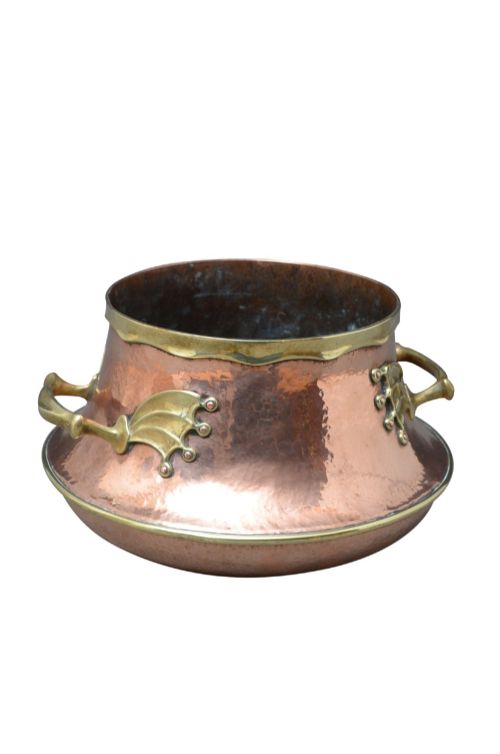
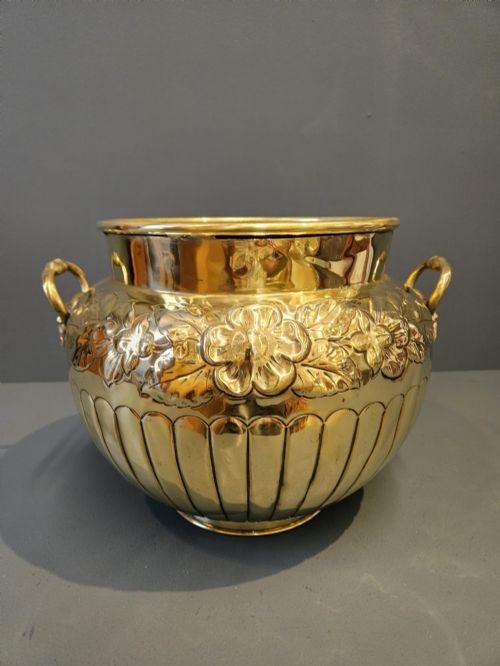
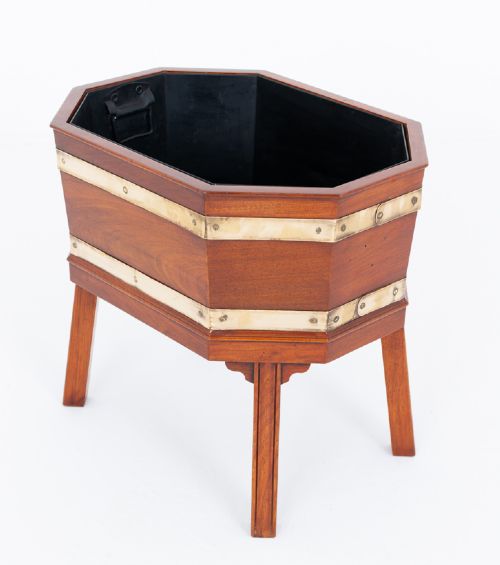
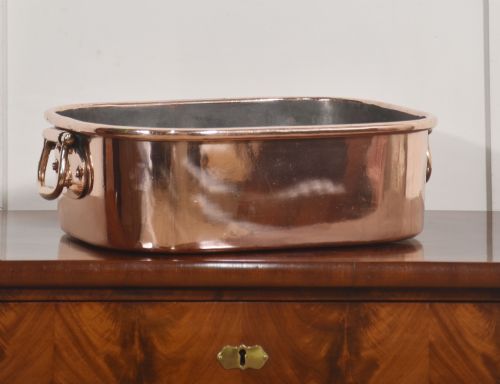
When you search for an antique brass trough, you encounter a varied group of utilitarian vessels and desk accessories that span the eighteenth, nineteenth, and early twentieth centuries. These pieces appear primarily as planters, jardinieres, wine coolers, and extending book slides, often combining brass with secondary timbers like mahogany, walnut, and coromandel.
The domestic role of these items shifted depending on their form, ranging from heavy plant holders lined with zinc to extendable desk stands designed to hold bound volumes upright. Victorian and Edwardian examples dominate the selection, showing the era's fondness for metalwork displayed alongside polished woods and decorative ceramics.
Makers and workshops utilised specific regional techniques, from French Empire styling to English Gothic Revival, creating items that served both practical storage and decorative display. Buyers will find that simpler nineteenth-century brass planters sit alongside more complex wine coolers and book holders fitted with porcelain plaques or pietra dura.
How they were made
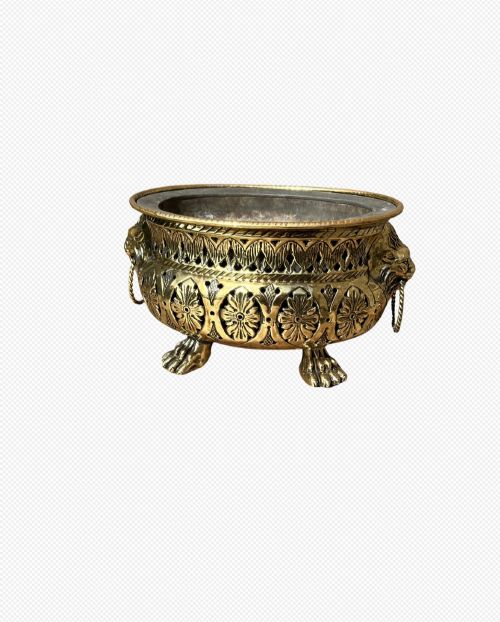
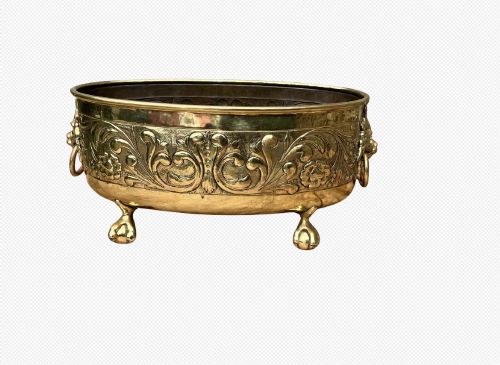
Metalworking techniques for these troughs involved heavy casting, sheet metal fabrication, and repoussé decoration, where artisans hammered designs from the reverse side to create raised surface patterns. Many planters incorporated zinc or copper linings to contain moisture, while freestanding vessels often relied on solid brass feet or animal-head mounts riveted to the body.
Wooden forms, particularly book slides and wine coolers, utilised dense timbers like mahogany, walnut, and coromandel mounted with brass hinges, bands, and extending mechanisms. Carpenters employed meticulous joinery to support the weight of books or bottles, frequently integrating inlaid ormolu, porcelain plaques, and painted panels into the timber framework.
Some nineteenth-century brass planters feature fierce animal-head mounts, glaring silently at the ferns placed inside them.
What varies in quality
Quality in these pieces depends heavily on the weight of the metal and the precision of the joinery between brass and timber. Thicker gauge brass resists buckling and holds crisp repoussé detailing far better than thin, pressed sheet metal.
The sophistication of auxiliary materials dictates the upper tier of the range, distinguishing standard utility items from those featuring fine porcelain plaques, pietra dura inlays, or patent mechanisms like those by Betjemanns. Superior construction shows in smooth extending actions for book slides and robust, watertight linings in planters and wine coolers.
Betjemanns·Lister and Co·Tiffany and Co
The Antique Brass Trough Glossary
- Jardiniere
- A decorative pot or trough designed to hold growing plants. These vessels often feature heavy brass or copper construction and may include internal metal liners.
- Book slide
- An extending desk accessory used to hold upright volumes between two anchored or sliding ends. They frequently incorporate brass mounts and exotic woods.
- Repoussé
- A metalworking technique where the artisan hammers a design from the reverse side to create low relief ornamentation on the front.
- Ormolu
- Gilt bronze mounted onto furniture or decorative objects to provide contrasting metallic highlights.
- Pietra dura
- An inlay technique using cut and fitted polished coloured stones to create pictorial designs on panels.
Antique Brass Trough: Frequently Asked Questions
What is an antique brass trough used for?
These troughs served multiple household functions, acting primarily as plant holders, wine coolers, or desk organizers depending on their internal fittings and depth.
Planters and jardinieres usually contain metal linings to protect surrounding surfaces, whereas book slides use brass mounts and expanding wooden bases to support library volumes.
How do I date a brass planter?
Dating relies on stylistic markers such as Gothic Revival motifs, Arts and Crafts hand-working, or Regency proportions, alongside the construction methods used for the metal and timber.
Heavier cast brass and specific secondary woods like coromandel or mahogany often point toward mid-nineteenth-century Victorian manufacturing.
Are all brass troughs watertight?
Not every trough was designed to hold water or damp soil directly, as many served decorative indoor functions or acted as bottle coolers rather than planters.
Examples fitted with original zinc or copper liners are generally suited for live plants, while unlined wooden wine coolers require protective inner vessels.
How should I clean antique brass?
Maintenance requires preserving the natural aged patina rather than achieving a bright, modern polish, which can strip away historic character.
Gentle dusting and occasional light waxing of any incorporated wooden elements keep the materials stable without removing oxidation.