





Antique Brass Table Centerpieces
Antique brass table centerpieces combine heavy cast metal and glass to anchor a formal dining table with height and shine.
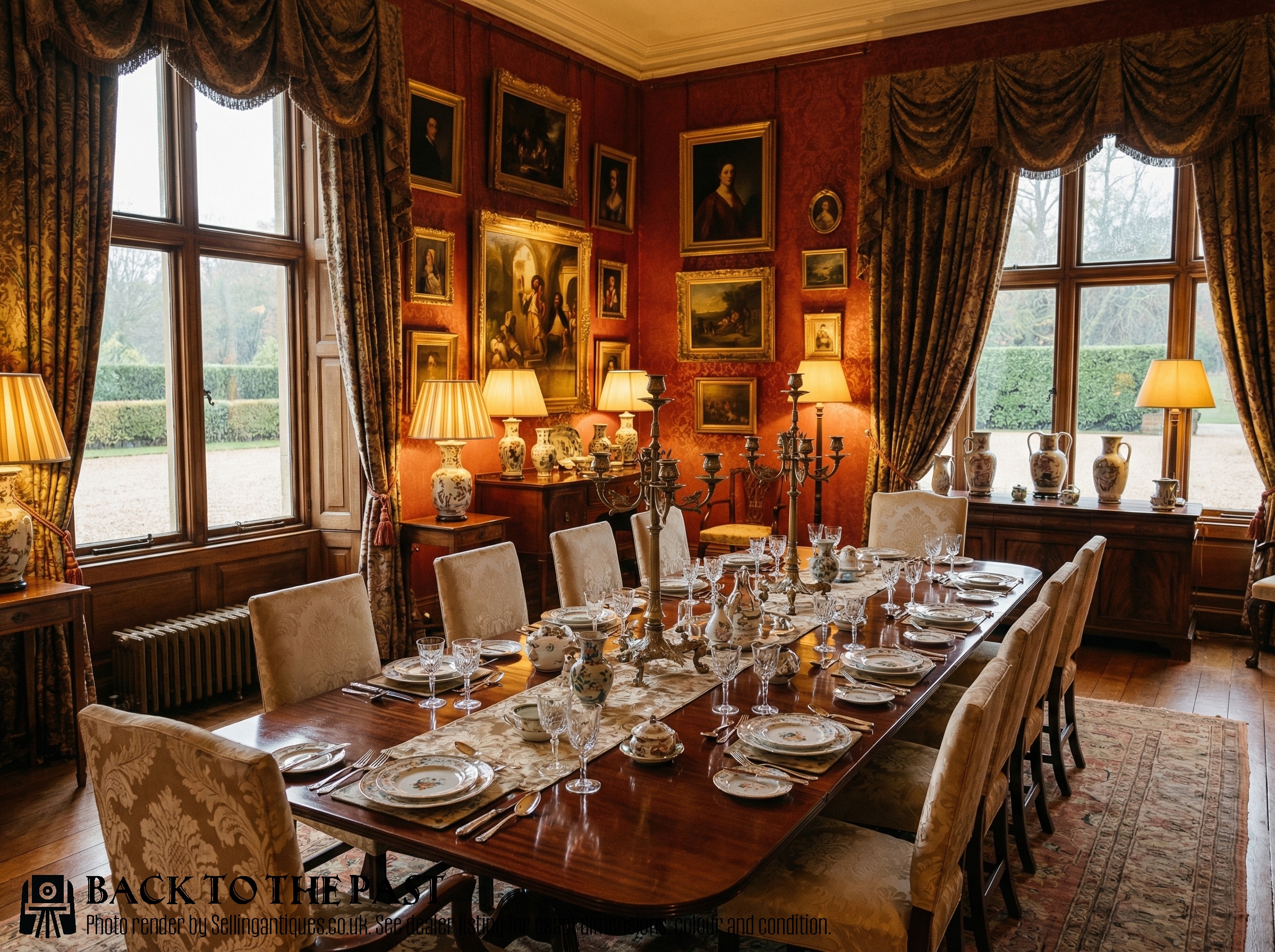
Antique Brass Table Centerpieces
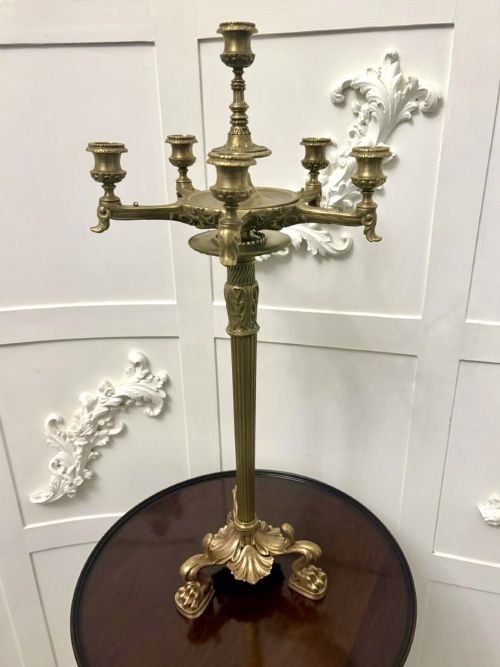
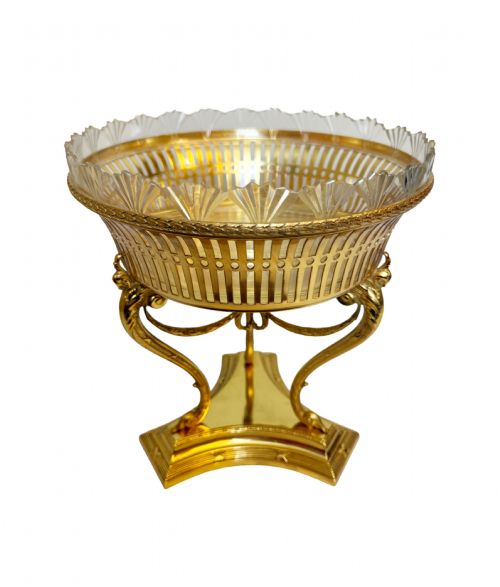
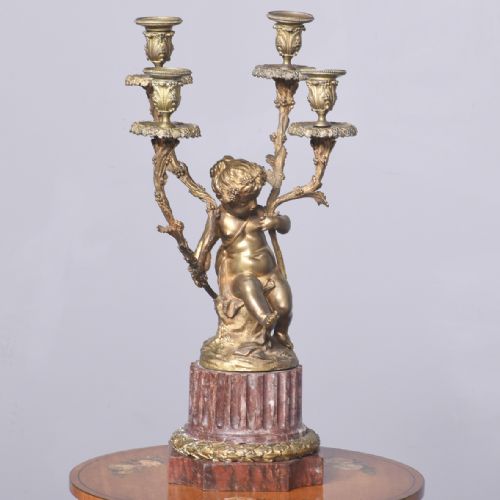
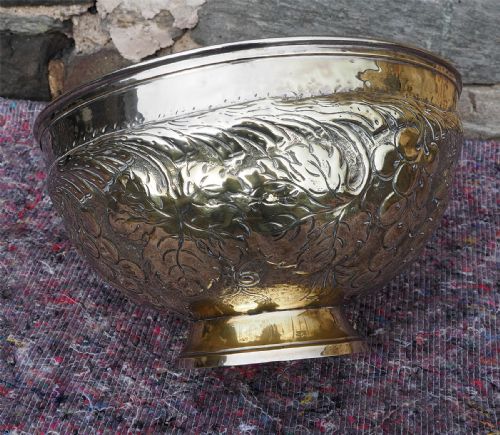
When searching for antique brass table centerpieces, buyers encounter a mix of heavy metal tableware, candelabra, and decorative bowls dating from the nineteenth and early twentieth centuries. These objects served to hold fruit, flowers, or candles during formal meals, bringing height and metallic reflection to the centre of a dining table.
The selections span periods from the Regency era through the Victorian years and into the 1920s, reflecting shifts in taste from ornate French revival styles to cleaner Art Deco lines. Most pieces originate from British and continental workshops, with French designs appearing frequently among the candelabra and tazze.
Forms vary widely between low pedestal platters, multi-branched candelabra, and large bowls fitted with cut glass inserts or crystal drops. Buyers will find that standard brass sits alongside gilt bronze, ormolu, and combinations incorporating marble or porcelain.
How they were made
Makers formed the body of these pieces using cast brass, bronze, or ormolu, often employing multiple cast sections joined together to create complex, multi-armed candelabra or pedestal bowls. Surfaces were finished through chasing, gilding, or polishing to achieve contrasting textures of bright metal and matt detail.
Glass elements such as bowls, inserts, and hanging crystal drops were mouth-blown and frequently cut by hand to refract candlelight. Combinations of materials relied on precise mechanical fitments, using threaded rods and screws to secure porcelain bodies, marble bases, and metal arms together.
Listings feature items spanning the nineteenth century, 1910, and the 1920s, constructed from brass, gilt bronze, ormolu, cut glass, porcelain, and marble.
What varies in quality
Quality rests in the crispness of the metal casting and the depth of the chasing work, where sharp, clean leaf and scroll details distinguish better workshops from mass production. The weight of the metal and the stability of multi-part construction indicate the original investment in materials and labour.
Integrity of component parts plays a major role, particularly where glass inserts, crystal drops, or porcelain figures are original to the metal frame rather than later replacements. The preservation of original gilding or patination without aggressive over-cleaning maintains the visual harmony intended by the maker.
The Antique Brass Table Centerpieces Glossary
- Ormolu
- Gilded bronze, typically produced by applying a mercury and gold amalgam to a bronze base and heating it. This technique creates a rich, durable golden surface seen on nineteenth-century French pieces.
- Candelabra
- A branched candlestick designed to hold multiple candles simultaneously. They often feature removable branches or adjustable arms.
- Tazza
- A shallow ornamental bowl or platter raised on a high foot or pedestal. These pieces were traditionally used for serving fruit or sweets.
- Table Lustre
- A candelabra or candlestick hung with cut glass prisms or drops designed to catch and multiply candlelight. The glass pendants vibrate and sparkle in the ambient room light.
- Barley Twist
- A form of turned column that spirals around a central axis like twisted barley sugar. It appears frequently in nineteenth-century brass candlestick stems.
Antique Brass Table Centerpieces: Frequently Asked Questions
How do I clean an antique brass centrepiece?
Dust the piece regularly with a soft, dry cloth to prevent grime accumulation.
Avoid harsh commercial metal polishes that strip original patination and remove thin layers of historic gilt bronze or ormolu.
How do I date a brass centrepiece?
Examine the casting quality, fastening methods, and overall decorative style to establish a baseline period.
Stylistic markers such as Regency curves, Victorian botanical motifs, or Art Deco geometry help narrow the manufacturing decade.
Can missing glass inserts be replaced?
Replacement glass inserts and cut drops can be sourced, though finding exact period matches requires patience.
Dimensions must be measured precisely to fit existing brass rims and prongs without putting pressure on fragile antique glass.