


Antique Brass Scope
These optical instruments and scientific tools, known collectively as an antique brass scope, bring precision engineering and historical utility to any collection.
Antique Brass Scope
An antique brass scope encompasses terrestrial and astronomical telescopes, opera glasses, microscopes, and navigational instruments formed from brass and associated materials. The selection spans pocket-sized two-draw spyglasses to large library telescopes mounted on original wooden tripods.
Victorian examples dominate the available forms, alongside Regency, Edwardian, and Georgian periods. Multi-draw draw-tubes, leather-clad barrels, and mahogany cases recur frequently across the inventory.
How they were made
The primary structural material is turned brass, combined with glass lenses and frequently wrapped in stitched leather or housed in mahogany, oak, and fruitwood cases. Cast iron appears on larger tripod stands and scientific mountings.
Makers utilised telescoping draw-tubes to allow portable instruments to extend for use and collapse for storage. Precision threading, engraved maker signatures, and optical brasswork defined the construction methods of nineteenth-century opticians.
Listings feature scientific instruments and telescopes spanning the Georgian, Regency, Victorian, and Edwardian eras, constructed from brass, glass, leather, and mahogany.
What varies in quality
Quality rests in the precision of the optical mechanics, the clarity of the glass lenses, and the crispness of the engraved maker details on the brass barrel. Instruments retaining their original fitted wooden cases or matching tripod stands represent superior preservation.
The complexity of the mechanism also differentiates the range, from simple two-draw pocket refractors to multi-draw day or night terrestrial scopes and sophisticated bar-limb microscopes.
R & J Beck Ltd·Voigtländer & Sohn AG·Ross of London·Broadhurst Clarkson & Co·Chadburn Brothers·Thomas Harris & Son·Dollond
The Antique Brass Scope Glossary
- Draw-tube
- A sliding section of a telescope barrel that extends to adjust the focal length. Multiple draws allow a long instrument to collapse into a compact size.
- Terrestrial telescope
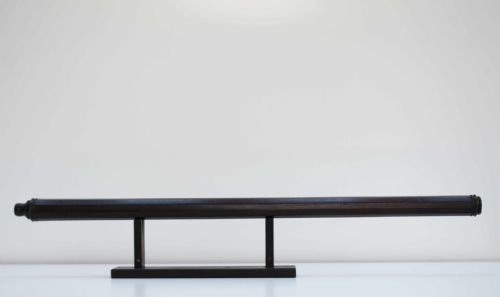
- An optical instrument designed for viewing land objects rather than stars, incorporating erecting lenses to present the image the right way up.
- Bar-limb microscope
- A nineteenth-century microscope design where the optical body is supported by a solid central brass bar attached to a heavy foot.
- Altazimuth theodolite
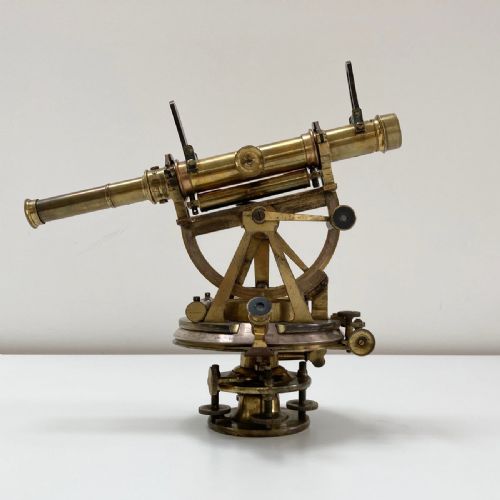
- A precision instrument used for measuring horizontal and vertical angles in surveying and navigation, often fitted with leveling screws and compasses.
- Achromatic
- A lens designed to correct chromatic aberration, bringing light of different wavelengths to common focus to eliminate false colour fringes around images.
Antique Brass Scope: Frequently Asked Questions
Can I use these antique telescopes for stargazing?
While many historical instruments were built for terrestrial navigation or general viewing, some library telescopes feature astronomical configurations. Expect narrower fields of view compared to modern optics.
Handle draw-tubes with care when extending them for viewing. Secure the instrument properly on a sturdy surface or tripod before use.
What is the difference between draw numbers?
The draw number refers to the count of sliding telescoping brass tubes that extend from the main barrel. More draws allow a longer focal length while maintaining a compact closed size.
Pocket versions often feature up to six draws for maximum portability. Larger library scopes typically utilise fewer, heavier sections for stability.
How do I identify the maker of my scope?
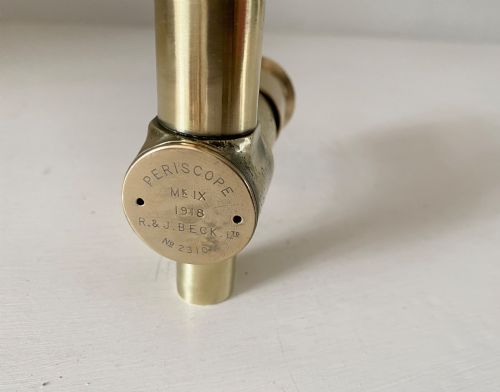
Makers typically engraved their names, firm titles, and business addresses directly onto the final draw tube near the eyepiece. Look for signatures alongside terms like optician or London.
Some military or naval instruments also bear government acceptance marks or broad arrow stamps. Comparing these details with known workshop dates helps narrow the production period.