

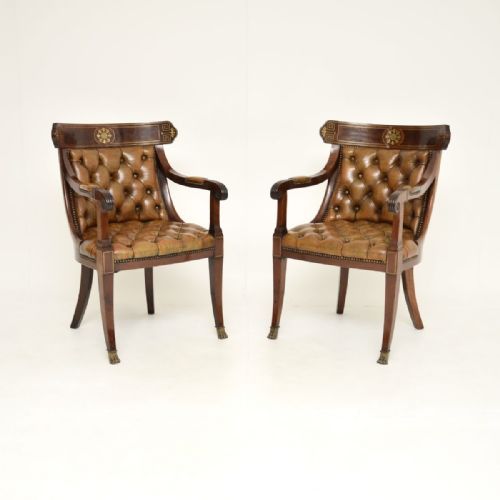


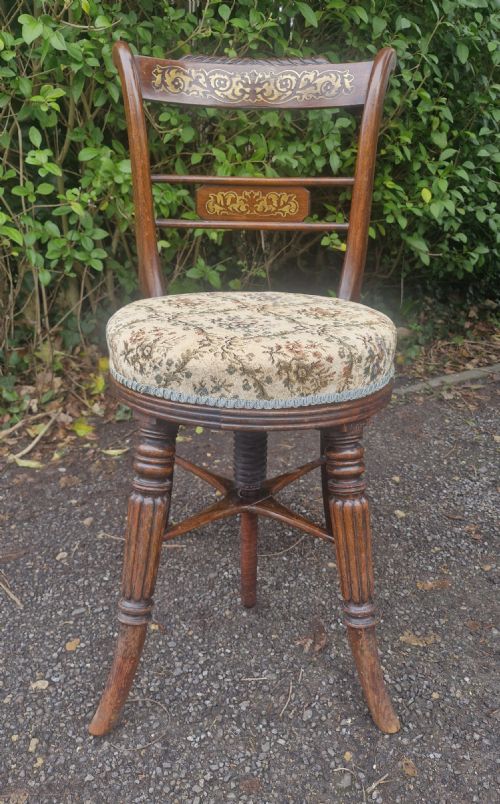
Antique Brass Inlay Chair
An antique brass inlay chair brings together classical timbers and gleaming metalwork, offering a seat of distinction for the traditional interior.
Antique Brass Inlay Chair
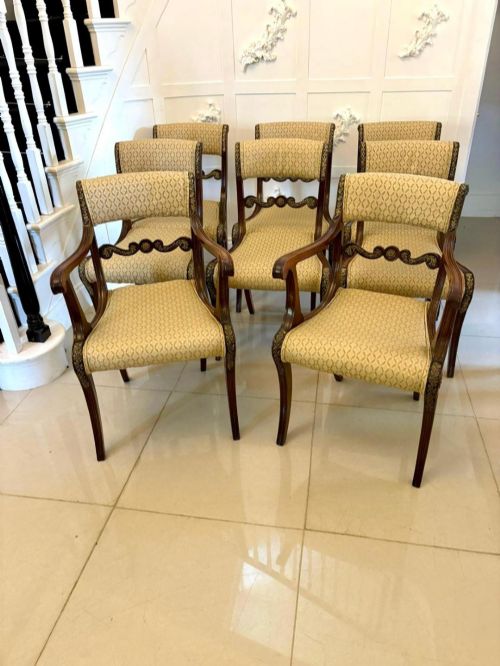
When you search for an antique brass inlay chair, you encounter seating largely rooted in the Regency and 19th Century periods, encompassing forms from dining chairs to library armchairs and music stools. These pieces range from sets of matched dining seats to individual elbow chairs and occasional hall chairs.
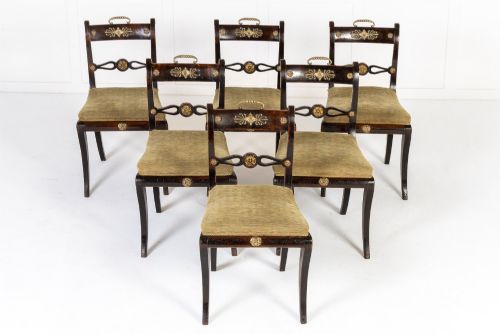
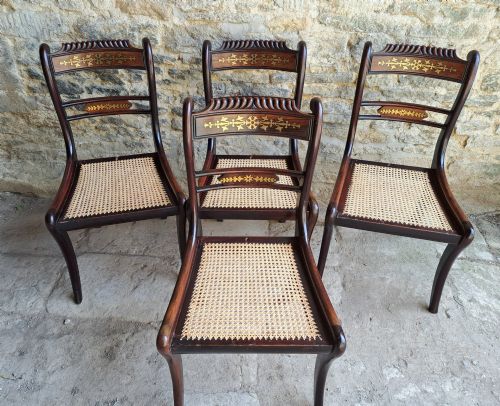
The version you are most likely to meet on this page is a mahogany or rosewood dining chair or elbow chair bearing bright metal decoration along the top rail or splat. English Regency examples sit alongside pieces from Anglo-Indian traditions, Chinese workshops, and later Victorian revivals.
Makers utilised contrasting timbers such as satinwood alongside dark hardwoods to frame the metallic decoration. Forms vary widely from formal dining settings to horseshoe-shaped armchairs and Savonarola styles.
How they were made
Cabinetmakers constructed the frames using dense timbers like mahogany, rosewood, and satinwood, which provided a stable dark surface for bright ornamentation. Artisans routed channels into the wood to receive precisely cut brass wire, strip, or figurative motifs, securing the metal flush with the surrounding grain.
Upholstered elements relied on traditional stuffing methods covered in leather, fabric, or velvet, fixed with rows of brass tacks that echoed the inlay work on the timber frames. Surface finishes were built up using traditional polishing techniques to deepen the colour of the wood and protect the delicate metal embellishments.
Even music stools received the full Regency brass treatment, ensuring pianists sat in matching metal-decorated splendour.
What varies in quality
The standard of an antique brass inlay chair rests upon the precision of the metalwork and the selection of the primary timber. Finer examples display tightly fitted brass elements flush with the wood, whereas simpler pieces show wider gaps or reliance on simulated rosewood graining rather than solid exotic timber.
Structural integrity also divides the range, particularly at the joints of dining chairs and elbow chairs that endured heavy daily use. Complete matching sets command greater interest than assembled groups, while secondary woods and the crispness of carved details further separate standard production from exhibition quality work.
Howard & Son's·John Gee
The Antique Brass Inlay Chair Glossary
- Brass inlay
- The technique of embedding thin strips or shaped pieces of brass into routed channels within wooden furniture surfaces. This method creates decorative patterns that contrast brightly against dark tropical timbers.
- Regency
- A design period spanning the early 19th Century, characterised by classical revival motifs and architectural symmetry. Furniture from this era frequently incorporates brass inlay alongside mahogany or rosewood.
- Rosewood
- A heavy, dense tropical timber featuring dark figuring and a rich reddish-brown colour. Cabinetmakers prized this material for high-status dining and library seating.
- Elbow chair
- An armchair designed with low arms that typically sits at the head of a dining table or functions as a desk seat. These pieces often repeat the decorative motifs of smaller side chairs in a matched set.
- Satinwood
- A pale, lustrous timber used primarily for contrasting inlay work and banding against darker primary woods. It provides a luminous golden background for delicate brass detailing.
Antique Brass Inlay Chair: Frequently Asked Questions
How do I date an antique brass inlay chair?
Dating relies upon examining the timber species, structural framing methods, and stylistic cues such as classical reeding or sabre legs. Pieces from the Regency period typically exhibit refined proportions and specific brass motifs that distinguish them from later Victorian revivals.
Secondary woods and construction techniques hidden beneath the upholstery also provide vital clues to the exact decade of manufacture.
Were these chairs used at dining tables?
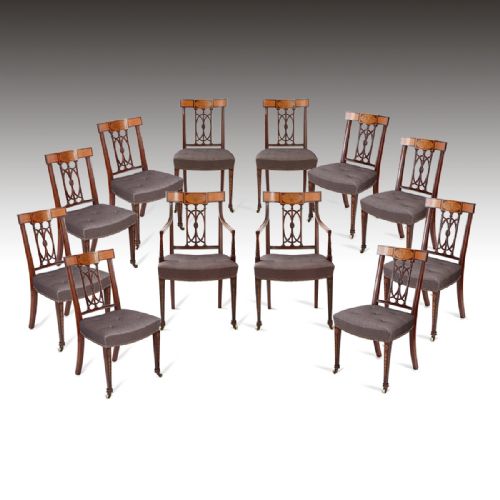
Many examples on this page served as formal dining chairs, often found in large matched sets ranging from four to twelve pieces. Alongside them, elbow chairs were positioned at the heads of the table.
Individual pieces also functioned as hall chairs, desk seats, or music stools in parlours and libraries.
How should I care for brass inlay?
Maintenance requires gentle dusting with a soft, dry cloth to prevent abrasive particles from scratching the timber and the soft metal. Avoid harsh commercial brass cleaners that might seep into the surrounding wood grain and stain the polished surface.
Maintaining stable room humidity protects the wood from seasonal expansion and contraction, which can cause metal inlays to loosen over time.
What is the difference between rosewood and simulated rosewood?
Genuine rosewood is a dense, naturally figured exotic timber with deep reddish-brown tones used for high-end furniture. Simulated rosewood involves painting or graining a secondary wood, such as beech or birch, to imitate the appearance of the expensive timber.
Both finishes appear on period seating, with simulated versions offering a decorative alternative during the Regency era.