



Antique Brass Hod
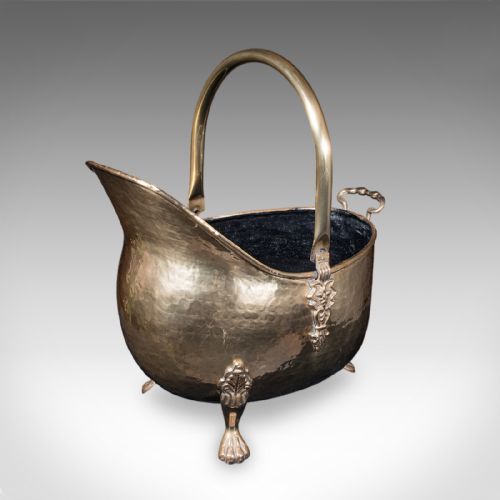
An antique brass hod brings functional warmth to the hearth, offering a sturdy and handsome vessel for domestic fuel storage.
Antique Brass Hod
When seeking an antique brass hod, you encounter a variety of fireside accessories designed to hold coal near the fireplace. The selections span from George III and Regency periods through the Victorian, Edwardian, and Art Nouveau eras.
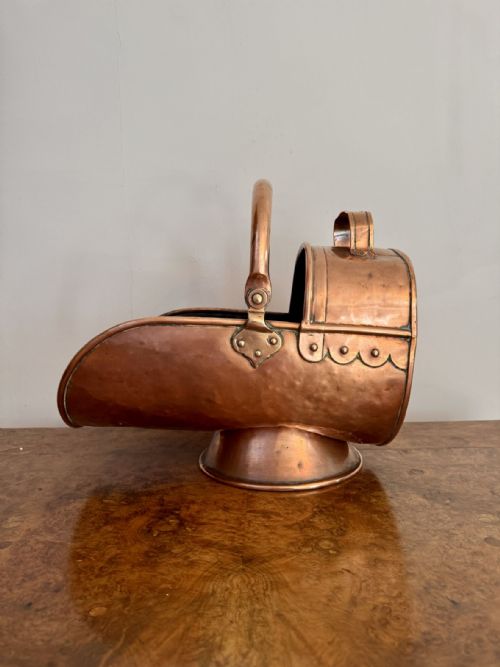
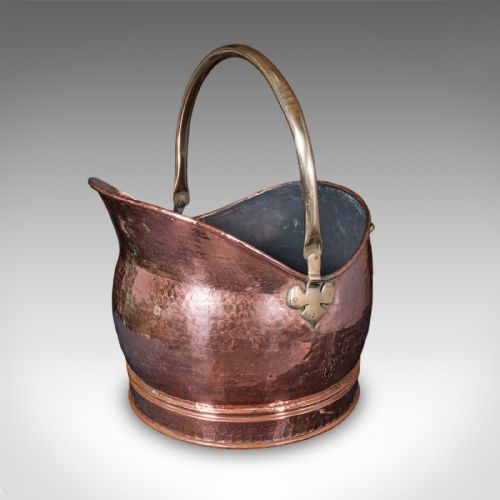
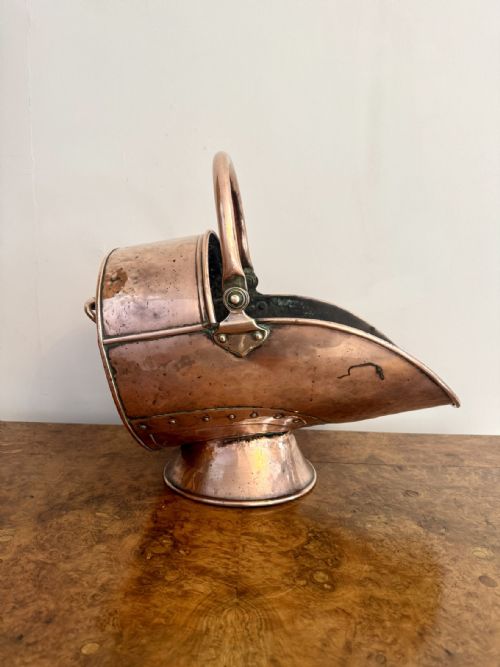
You are most likely to meet Victorian brass and copper coal scuttles or helmets on this page, often accompanied by matching shovels or internal liners. Forms range from simple buckets and bins to double-lidded hods and helmet-shaped vessels.
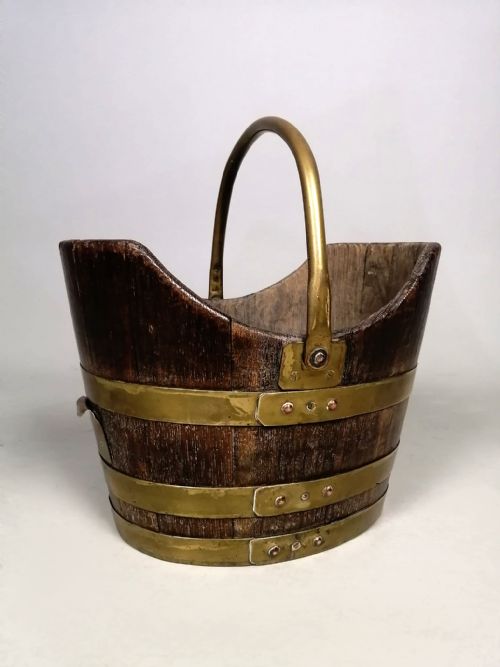
The evidence shows construction utilising not only solid brass and copper, but also combinations featuring oak, walnut, mahogany, iron, and silver plate. These pieces served a purely utilitarian role in period homes before becoming decorative fireside focal points.
Materials and construction methods
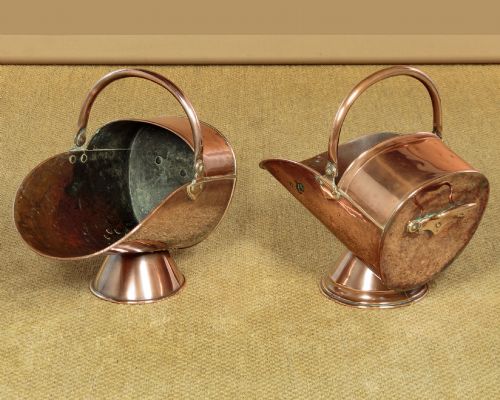
The primary metals recorded in the listings are brass and copper, frequently paired together to create contrasting bodies and trims. Metal workers shaped these materials into helmets, buckets, and hods, sometimes incorporating hand-finished details.
Timber varieties such as oak, walnut, and mahogany appear in wooden scuttles and purdoniums, often fitted with metal liners to handle coal safely. Iron and silver plate also feature in structural elements and decorative banding across the periods.
Listings feature items spanning the 18th, 19th, and early 20th centuries, covering George III, Regency, Victorian, Edwardian, and Arts and Crafts styles.
Assessing quality in fireside containers
Quality in these vessels rests on the substantial weight of the metal and the integrity of the construction, such as secure joints and heavy brass banding. Pieces retaining original components like brass shovels and internal metal liners command greater interest.
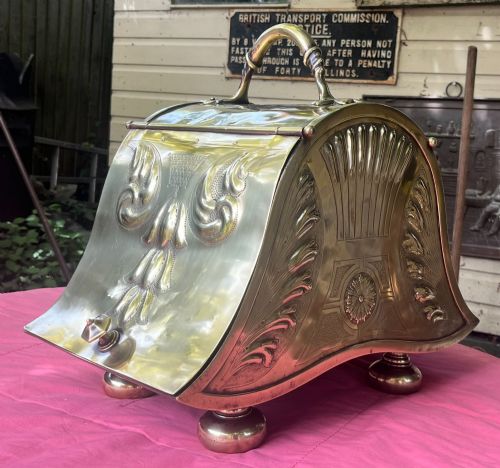
Artisanal touches distinguish standard utilitarian items from finer examples, particularly in the repoussé work of Arts and Crafts pieces or the flowing lines of Art Nouveau designs. The use of secondary timbers like oak and walnut alongside quality brass elevates certain scuttles above plain metal bins.
Benham and Froud
The Antique Brass Hod Glossary
- Scuttle
- A metal or wooden bucket used for holding coal, often featuring a pivoted handle and a slanted opening or spout for easy pouring.
- Helmet
- A specific coal scuttle profile shaped like an upturned classical helmet, featuring a wide mouth and a raised back. This shape became popular during the Georgian and Victorian periods.
- Purdonium
- A box-like Victorian coal container with a hinged lid and a drop-down front, often enclosing a metal liner and standing on feet. They were designed to keep fuel tidily concealed in the parlour.
Antique Brass Hod: Frequently Asked Questions
What is the difference between a coal hod and a scuttle?
A coal hod traditionally refers to a deep container designed for carrying and storing fuel, whereas a scuttle often includes a specific flared lip or spout for pouring.
Both terms describe vessels built for the hearth, though makers applied them to various bucket and helmet forms across different centuries.
How do I date an antique brass coal bucket?
Dating relies on stylistic clues, such as the neoclassical lines of George III pieces, the heavy ornamentation of Victorian examples, or the organic motifs of Art Nouveau.
Materials also offer guidance, as walnut purdoniums and oak-bodied hods often point toward specific nineteenth-century manufacturing trends.
Did these pieces always come with shovels?
Many fine examples were originally retailed with matching brass shovels designed to hang neatly from brackets on the side of the scuttle.
While original shovels enhance a piece, many surviving hods and buckets lost their companions through decades of active fireside use.
How should I use an antique hod in a modern home?
These metal and wooden vessels make practical storage containers for hearthside logs, kindling, or even rolled-up blankets and magazines.
Their robust construction of brass, copper, and hardwood allows them to function in contemporary living spaces much as they did in Victorian parlours.