


Claw Foot Scuttle
These claw foot scuttle pieces are practical fireside accessories designed to hold coal or logs, offering period charm for any hearth.
Claw Foot Scuttle
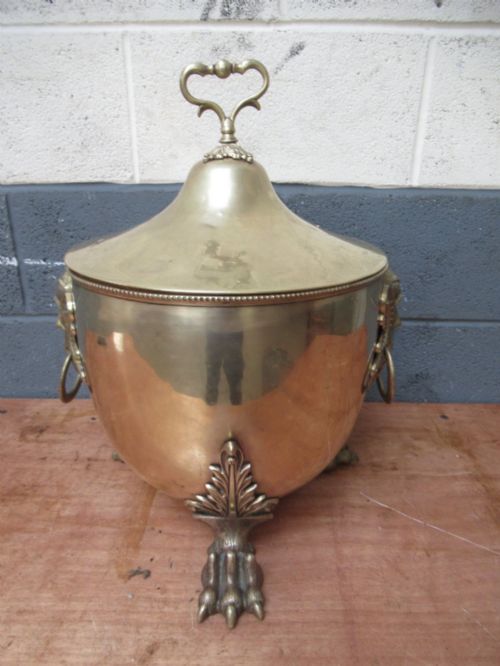
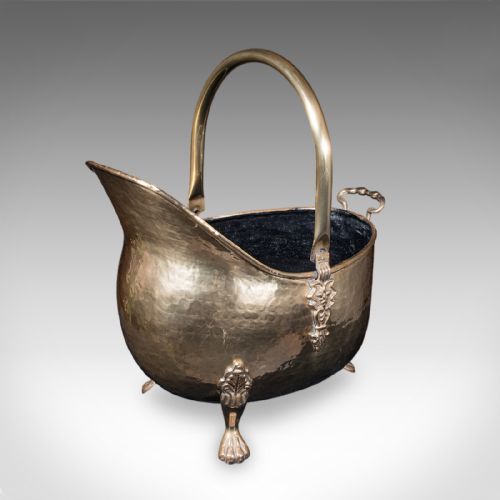
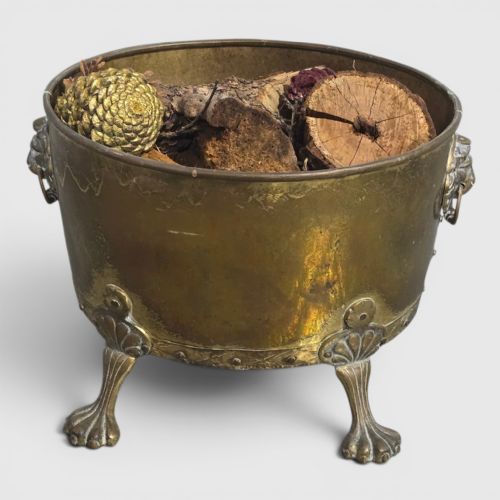
When you search for a claw foot scuttle, you are looking at functional fireside metalwork designed to hold coal, logs, or kindling by the hearth. The examples on this page are predominantly Victorian and 19th Century pieces, taking the form of coal buckets, log bins, and fireside stores. Most versions meet you in polished brass or copper, often standing on distinct feet to elevate the container from the floor.
The assortment spans simple utilitarian bins to decorative vessels influenced by the Aesthetic Movement or Regency styles. You will find oval lidded log bins, handbeaten copper containers, and pieces featuring embossed details or contrasting metal bands. These items served a purely domestic purpose in period homes, transporting fuel from the coal cellar to the fireplace.
How they were made
Makers utilised sheet brass and copper as the primary materials, shaping them through beating, spinning, and joining techniques. Many items feature handbeaten surfaces that display the hammer marks of the artisan, while others rely on smooth, polished sheet metal soldered or riveted together. Brass and copper predominated, occasionally augmented by cast elements for feet and handles.
Listings feature items predominantly from the Victorian period and the wider 19th century, executed in brass, copper, and pine.
What varies in quality
The distinction between standard utility items and finer pieces lies in the weight of the metal and the execution of decorative details. Heavier gauge brass and thick handbeaten copper denote a superior build, designed to withstand the daily rigours of hauling fuel. Lighter vessels often feel more fragile and display simpler, pressed decoration rather than hand-worked relief.
Handcraftsmanship elevates certain examples, particularly where makers applied thoughtful embossing, chased patterns, or contrasting metal bands. The refinement of the cast feet and handles also signals quality, with crisper casting and secure fixings marking out the better workshop productions. Plain utilitarian bins serve their function, but articulated decorative choices define the upper end of the range.
William Soutter & Sons
The Claw Foot Scuttle Glossary
- Scuttle
- A metal container with a handle and sometimes a lid, traditionally used for carrying and storing coal by a fireplace. It sits beside the hearth as both a useful utility and a decorative accent.
- Log Bin
- A large container designed specifically to store logs and firewood near a hearth. These vessels are typically constructed from robust metals like brass or copper, or occasionally pine.
- Toleware
- Painted or lacquered sheet metal items produced in imitation of Asian lacquerware. This technique appears on certain decorative bins and fireside containers.
- Aesthetic Movement
- A late 19th century design style emphasising visual beauty over narrative or moral content. Pieces from this period often feature stylised ornamentation and refined surface finishes.
- Regency
- An architectural and design style spanning the early 19th century, known for classical restraint and clean lines. Items attributed to this period display formal elegance in their proportions.
Claw Foot Scuttle: Frequently Asked Questions
What is a claw foot scuttle used for?
These vessels were originally designed to hold and transport coal or logs for household fires. They kept fuel close at hand while maintaining a tidy appearance by the hearth.
Today, they serve a similar practical function for modern wood burners and open fires, while doubling as decorative interior pieces for storing blankets or magazines.
How do I clean a brass coal bin?
Cleaning depends on whether you prefer a bright polished finish or a dark aged patina. A mild metal cleaner applied with a soft cloth removes dust and tarnish without stripping the character of the piece.
Avoid harsh abrasives, particularly on handbeaten or embossed surfaces, as these can flatten the texture and damage the historic finish of the metal.
Are these pieces waterproof?
Most historic coal scuttles and log bins were constructed to hold dry fuel rather than liquids. Over time, soldered joints can develop microscopic gaps that may allow moisture to seep through if used as planters.
If you plan to use a copper or brass bin as a planter, place a modern waterproof liner inside to protect the historic metal from stagnant water and soil corrosion.
How do I date a brass fireside bin?
Dating relies on observing construction techniques, materials, and stylistic markers such as Aesthetic Movement motifs or Regency proportions. Heavier cast components and handbeaten surfaces often point to 19th-century or Victorian manufacturing methods. Nomenclature and maker stamps, where present, provide further clues to the specific decade of production.