

Antique Brass Fire Screen
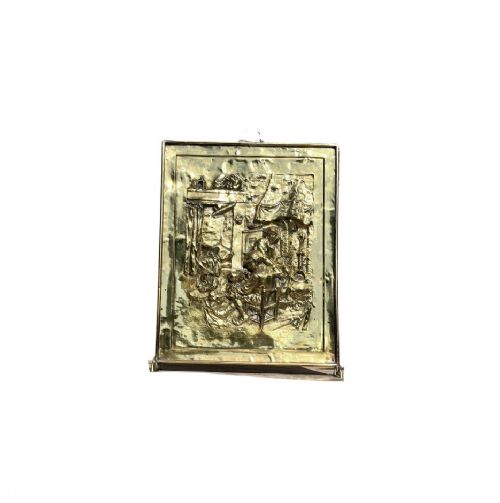
An antique brass fire screen is a hearth guard designed to block escaping embers, and these folding and panel designs bring period French style directly to the fireplace.
Identifying an antique brass fire screen
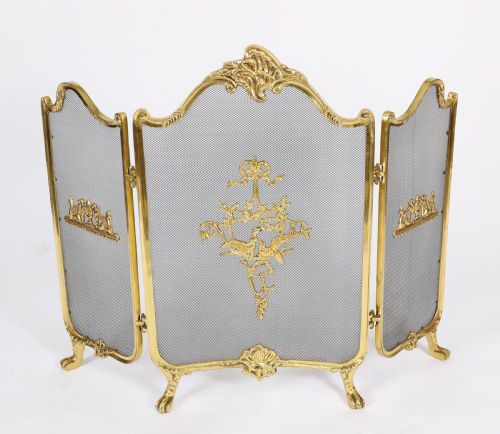
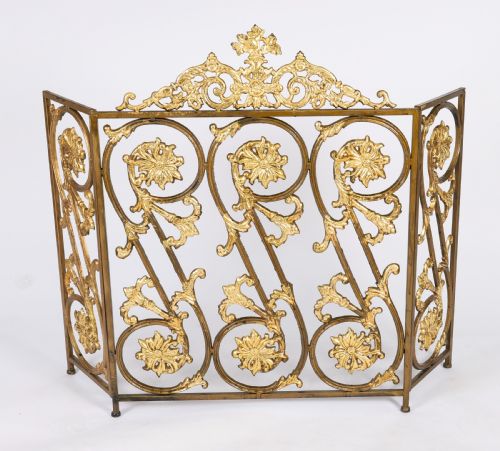
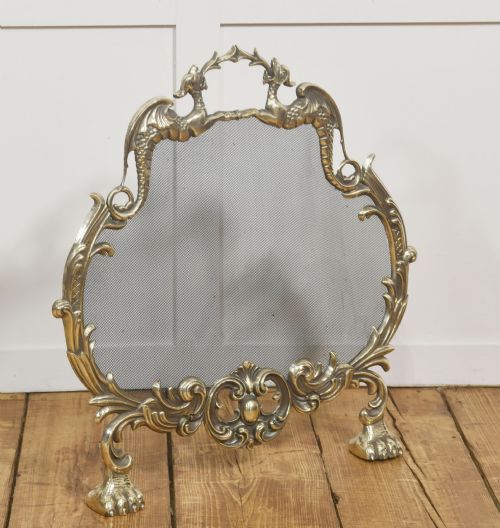
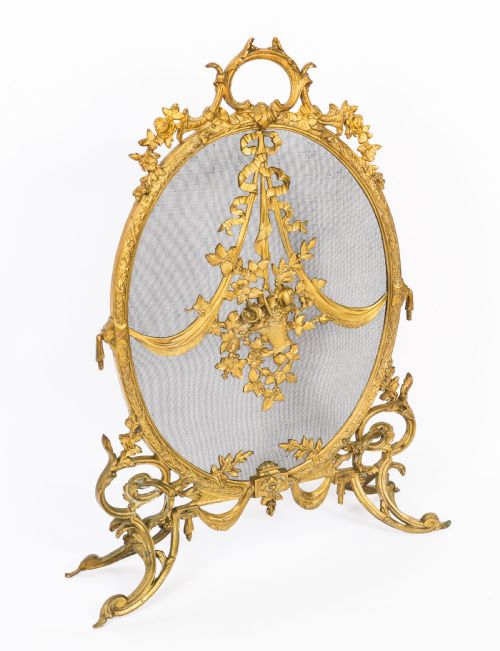
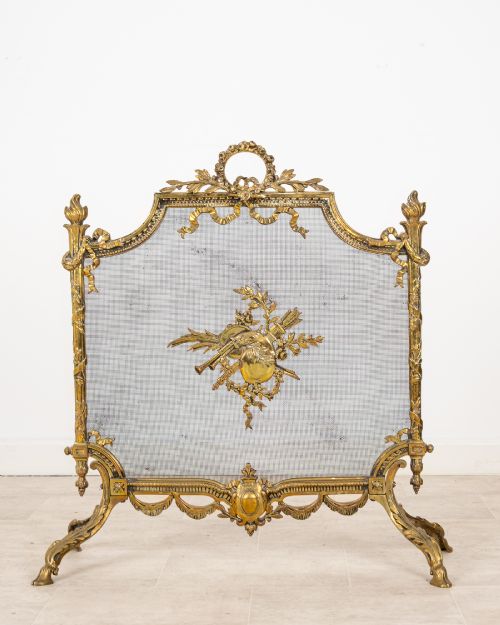
When you search for an antique brass fire screen, you are looking at hearth guards designed to block stray embers while complementing the fireplace. The selection spans the nineteenth century up through the nineteen-twenties, incorporating French Rococo Revival, Louis XV, Louis XVI, Victorian, and Art Nouveau influences.
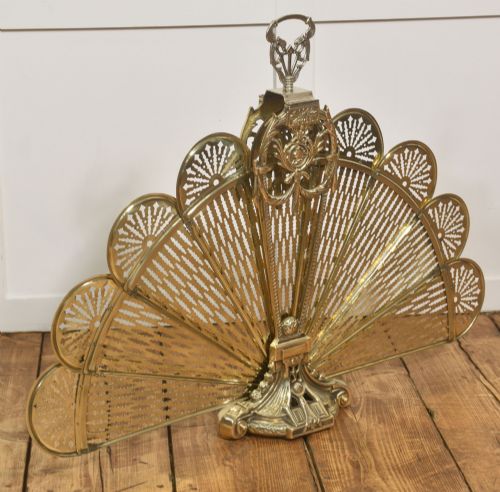
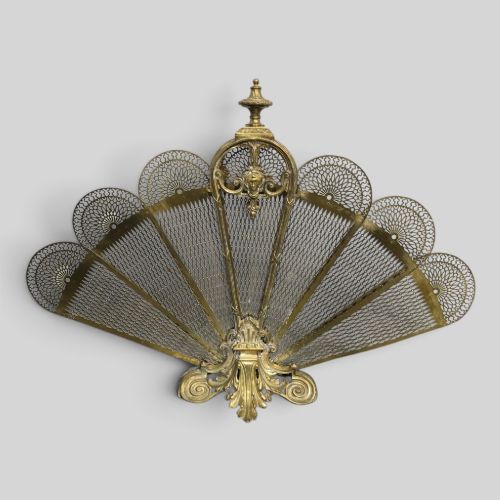
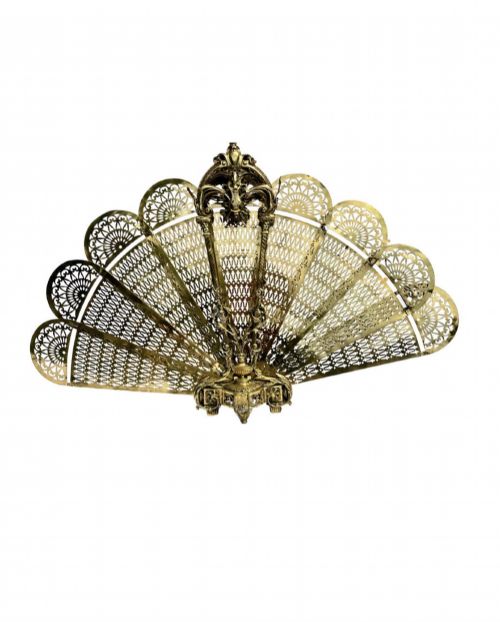
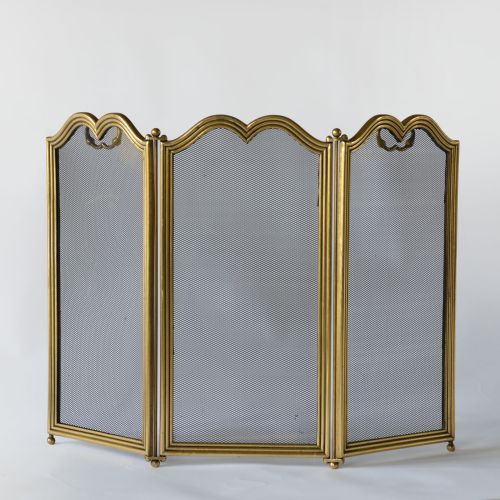
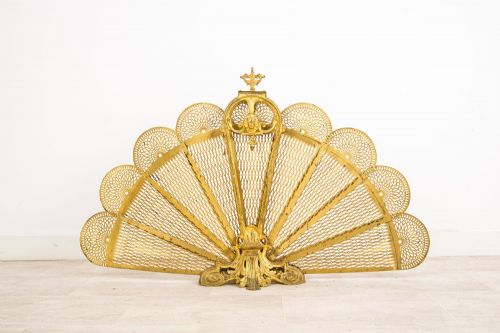
You will most frequently meet folding fan or peacock tail designs alongside solid or mesh panels. Many originate from France, utilising gilt brass, ormolu, and cast brass alongside iron frames, mirrored glass, and hand-painted details.
Materials and construction
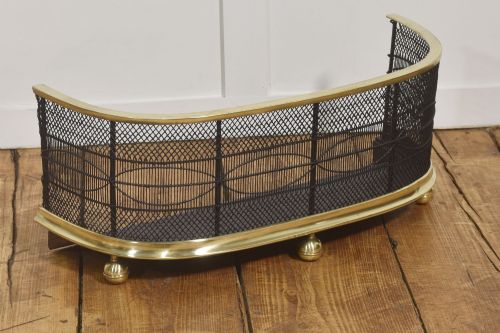
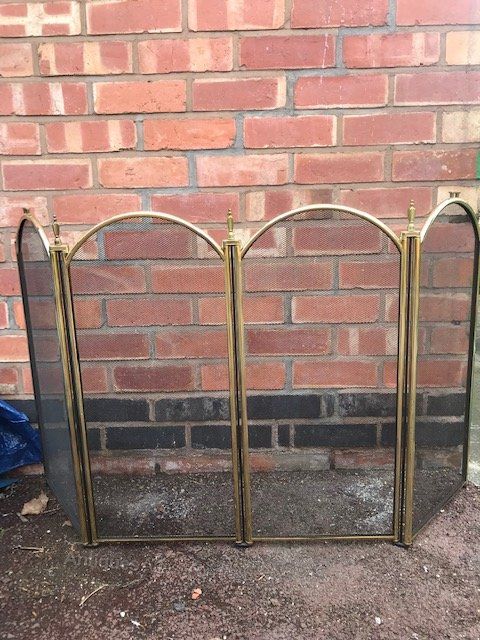
These pieces rely heavily on brass, gilt brass, cast brass, and ormolu, often paired with iron for structural support. Wire mesh panels and bevelled edge glass serve as the primary shields against heat and sparks.
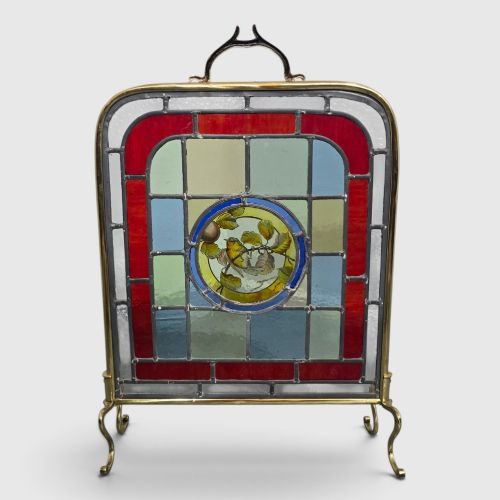
Artisans employed folding mechanisms for multi-section peacock designs, alongside detailed casting for Rococo Revival and Louis-style frames. Hand-painted panels and mirrored glass surfaces complete the decorative elements seen across the archive.
Retail Price Guide 2026
Typical UK retail prices for brass fire screen, calculated from the Sellingantiques database of over a million retail prices indexed since 2003. This retail price guide relies exclusively on Sellingantiques data; no external sources or auction records are used, so the figures do not describe the wider market.
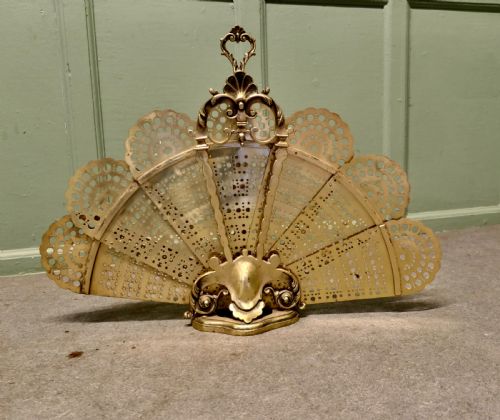
Several examples take the exact shape of a strutting peacock's tail, ensuring the bird fans its metallic feathers permanently across your hearth.
Judging quality in brass fire screens
Quality rests in the crispness of the cast brass or ormolu ornament and the smooth articulation of folding fan sections. Heavier gauge metal and integrated bevelled glass or hand-painted details distinguish finer examples from standard production.
The sophistication of the stylistic revival, whether French Rococo or Louis XVI, dictates the depth and complexity of the brasswork. Pieces retaining original wire mesh and sound hinge mechanisms stand at the upper end of the range.
The Antique Brass Fire Screen Glossary
- Ormolu
- Gilded bronze or brass applied to decorative mounts and frames. This technique provides a rich metallic finish characteristic of French decorative arts.
- Peacock fan
- A folding fire screen composed of multiple overlapping metal blades that expand outwards. These guards open and close like a hand fan to protect the hearth.
- Rococo Revival
- A nineteenth-century design movement favouring asymmetrical scrollwork and naturalistic asymmetry. It draws directly upon eighteenth-century French ornamentation.
- Gilt brass
- Brass coated with a thin layer of gold or gold-coloured wash. The treatment enhances the warm reflective qualities of the metalwork.
- Bevelled glass
- Glass panes with angled edges set into a metal frame. This treatment adds depth and refracts candlelight near the fireplace.
Frequently Asked Questions
How do you fold a peacock fire screen?
These screens operate on a central pivot or hinge system that allows the individual brass blades to fan outwards or fold flat together.
Gentle handling ensures the brass segments move smoothly along their tracks without straining the rivets.
What is the purpose of a fire screen?
An antique brass fire screen serves primarily to shield the room from sudden sparks and embers while the hearth is unattended.
Outside of burning seasons, they remain in place to dress the fireplace and reflect light into the room.
Are these screens safe to use with modern fires?
Many surviving examples feature sturdy wire mesh or solid metal panels capable of blocking sparks from open solid-fuel fires.
Care should be taken with folding fan models to ensure the frame remains stable on uneven hearths.
How do I distinguish French styles from Victorian ones?
French pieces often display Rococo Revival or Louis-style cast ornamentation, utilise ormolu, and frequently take the form of folding peacock fans.
Victorian English examples lean toward simpler brass frames, sometimes incorporating bevelled glass mirrors or hand-painted panels.