

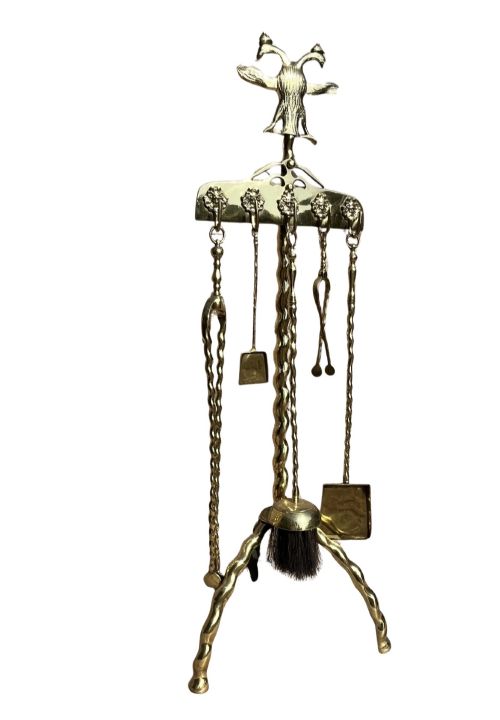
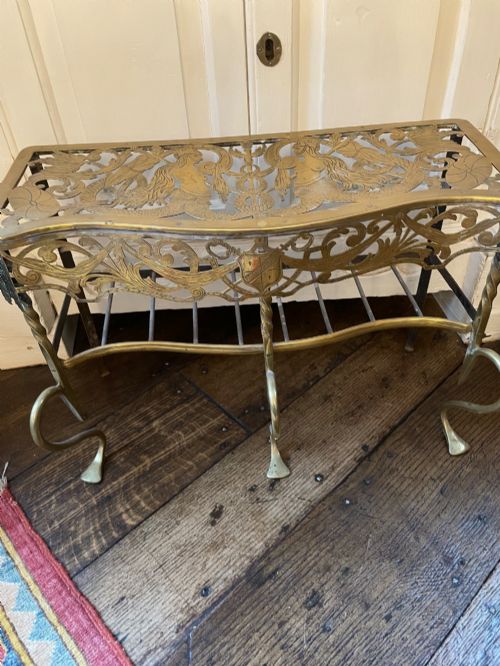
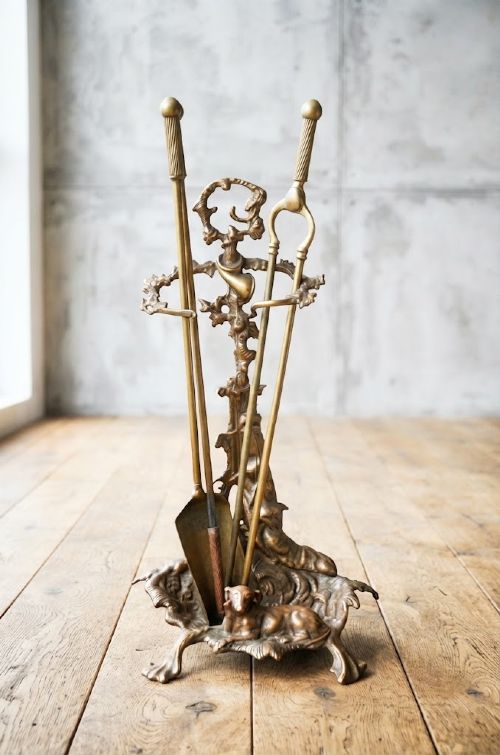






Antique Brass Companion Stand
An antique brass companion stand organises the hearth or desk, bringing polished metal and timber into daily use.
Antique Brass Companion Stand
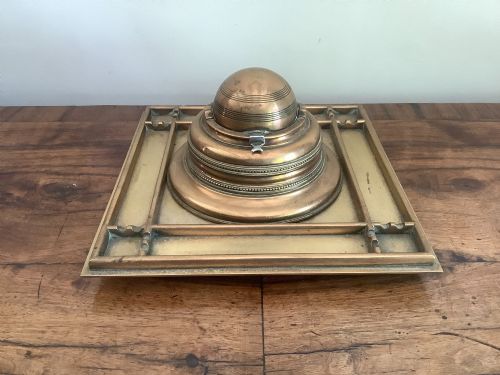
An antique brass companion stand encompasses fireside sets, desk inkstands, and floor-standing smoking accessories forged or cast across the nineteenth and early twentieth centuries. These pieces serve to hold tools, inkwells, or cigar equipment in domestic rooms.
The varieties met most frequently include Victorian and Edwardian fireside companion sets alongside walnut, rosewood, and brass desk stands. Pieces range from utilitarian brass tool rests to decorative floor-standing stands featuring hunting scenes or figural casts.
Origins span English, French, and regional workshops, drawing on styles from Regency elegance to Art Deco geometry and Gothic Revival weight. Each piece reflects the functional requirements of writing desks or coal-burning hearths.
Materials and methods of construction
Foundry casting and sheet manipulation shape the brass elements, often paired with heavy steel for poker and shovel components to withstand hearth heat. Frames integrate dense hardwoods such as walnut, rosewood, and coromandel, frequently inlaid with brass stringing.
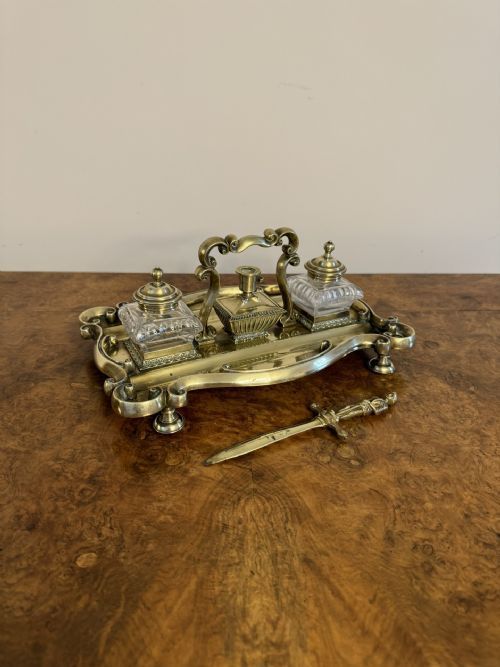
Desk stands incorporate cut glass inkwells with brass collars, whilst specialised pieces utilise marble, green onyx, tortoiseshell, and mother-of-pearl veneers. Joinery and metal-mounting techniques secure the functional wells and tool racks within the timber bases.
Antique Brass Companion Stand Retail Price Guide 2026
Typical asking prices for brass companion stand among the pieces listed under this phrase on Sellingantiques today, from the lower quarter to the upper quarter. They describe what is for sale here now, not the wider market.
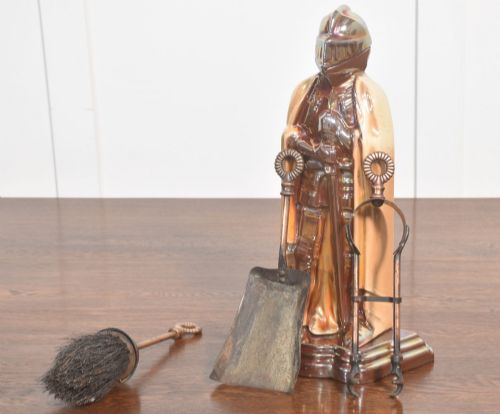
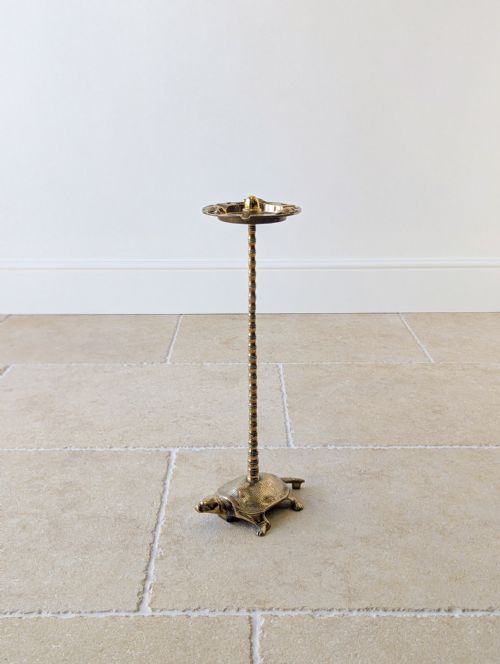
A cast-iron knight and a brass tortoise both hold vigil over hearths and smoking rooms.
Distinctions in standard and execution
The caliber of a stand rests upon the crispness of the brass casting and the weight of the supporting frame, where heavier gauges and finer chasing distinguish superior examples. Timber carcases display select burr veneers and precise brass inlay rather than plain secondary woods.
Detailing extends to integrated drawers, matched glass ink inserts, and sculptural figural elements that maintain proportion and secure joints. Finer pieces demonstrate harmonious material combinations, such as tortoiseshell or mother-of-pearl, fitted cleanly into the primary wood.
The Birmingham Guild
The Antique Brass Companion Stand Glossary
- Inkstand
- A desk accessory designed to hold one or more inkwells, often with built-in channels for pens and a drawer for small stationery items.
- Companion set
- A collection of hearth tools, such as tongs, pokers, and shovels, arranged together on a dedicated stand or rest.
- Footman
- A metal stand placed before a fireplace to keep dishes warm, typically constructed from brass and steel with cabriole legs.
- Ormolu
- Gilt bronze or brass applied to decorative objects and furniture mounts to provide a bright golden surface finish.
- Coromandel
- A dense, dark-grained timber imported from Asia, frequently used for luxury desk stands and boxes during the nineteenth century.
Antique Brass Companion Stand: Frequently Asked Questions
How do I clean antique brass?
Dust the surface gently with a soft dry cloth to remove grit without disturbing the aged patina. Avoid harsh chemical polishes that strip the historic finish.
For stubborn residue, apply a mild soap solution on a damp cloth, drying the metal thoroughly immediately afterward.
Where were companion stands placed?
Fireside companion stands stood directly on the hearth or floor beside the fireplace for immediate access to pokers and tongs. Smaller desk stands sat upon writing tables or libraries to manage correspondence.
Floor-standing cigar and smoking stands occupied smoking rooms or studies next to armchairs.
How do I date a desk stand?
Examine the timber species, veneer thickness, and the style of the brass mounts against known period design movements. Regency and Victorian pieces often show distinct rosewood graining and heavy cast brass handles.
Later Edwardian and Art Deco examples introduce green onyx bases and simplified geometric brass frameworks.
Are inkwells usually removable?
Most quality inkwells lift out from their fitted collars in the wood or metal base for cleaning and refilling. Glass inserts should match the apertures precisely.
Fixed liners occasionally appear in simpler or later utilitarian desk accessories.