


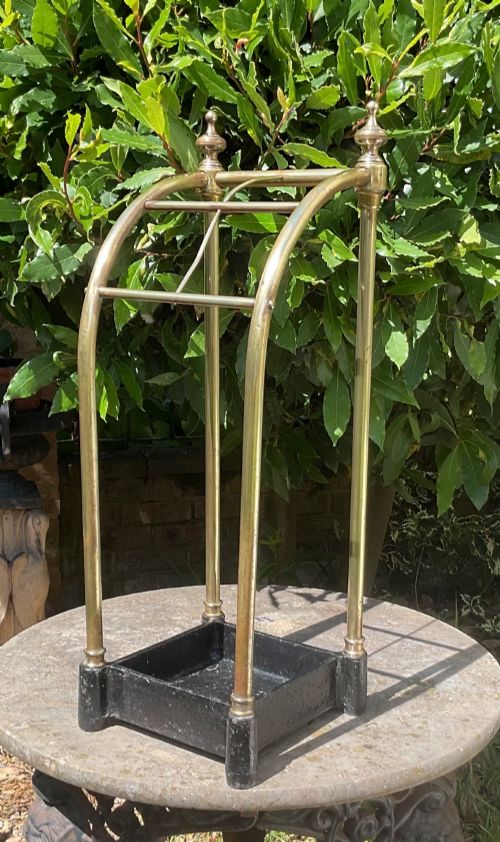


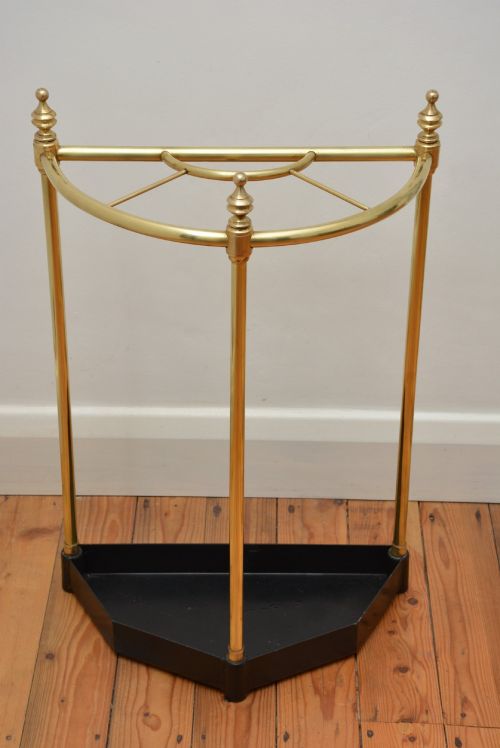
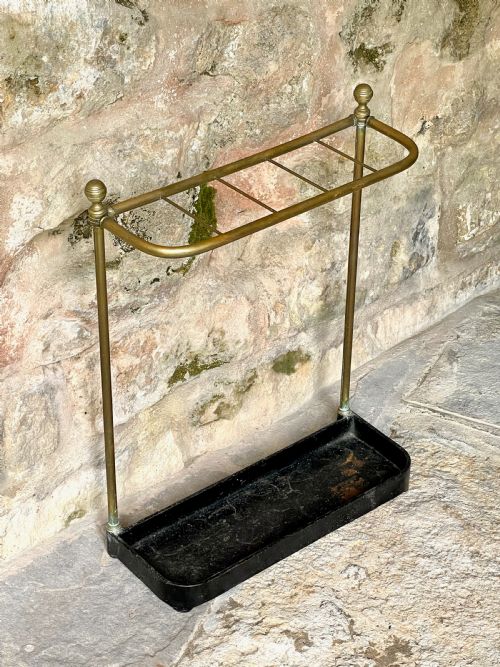

Cast Brass Umbrella Holder
A cast brass umbrella holder meets the daily weather at the hallway threshold with substantial weight and bright metallic presence.
Cast Brass Umbrella Holder
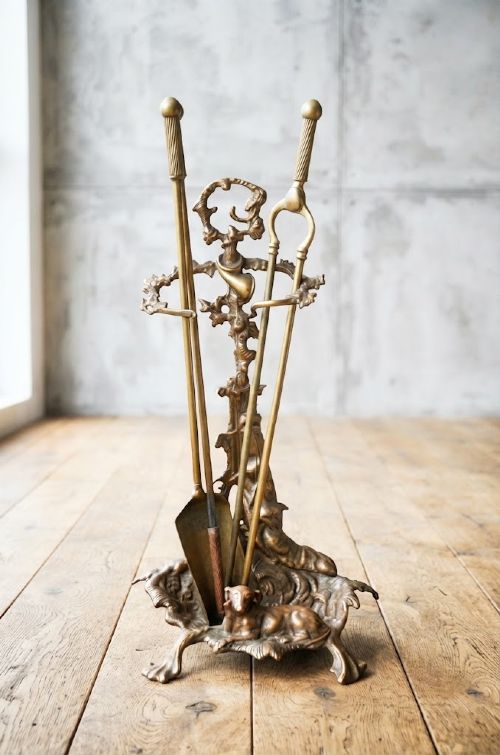
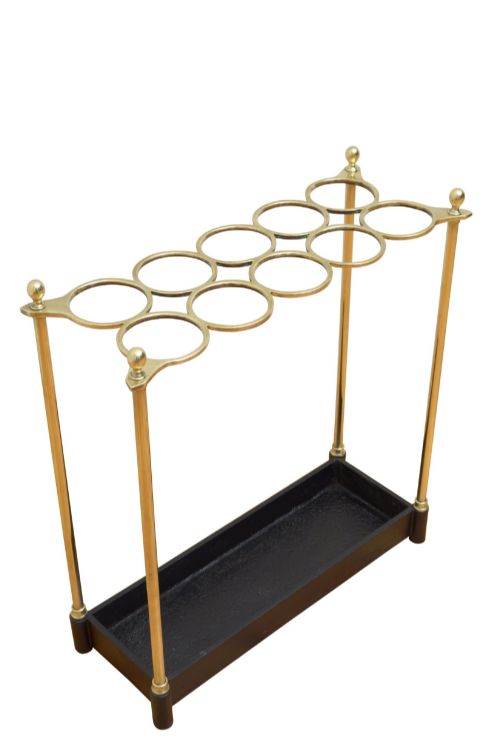
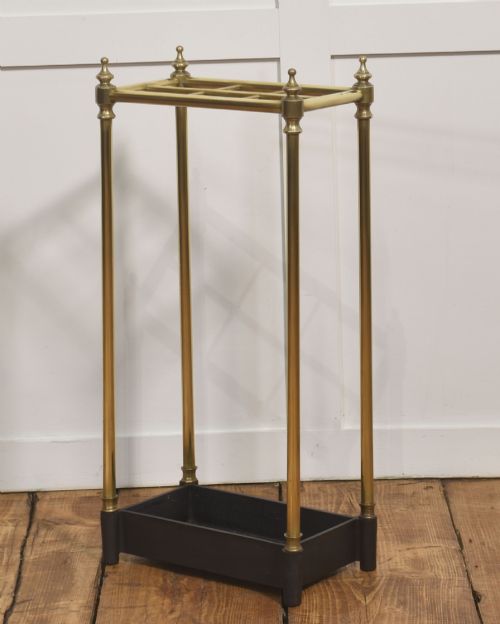
A cast brass umbrella holder provides a dedicated hallway vessel for walking sticks, canes and wet umbrellas. Buyers exploring this category encounter sturdy hallway furnishings designed to keep heavy boot rooms and entrance halls orderly.
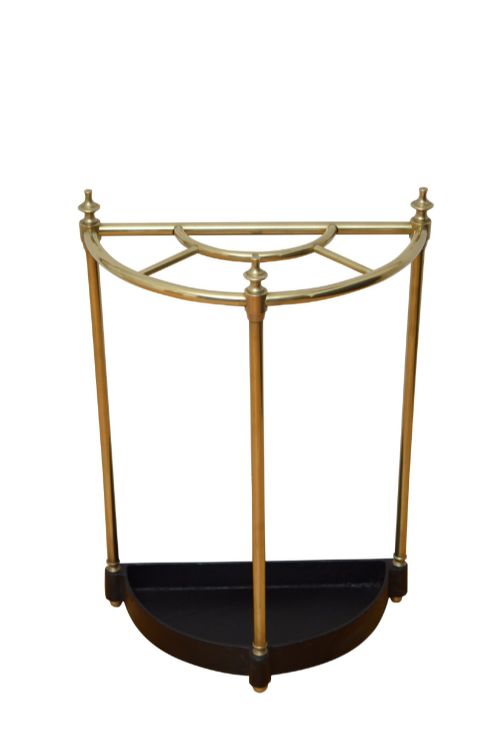
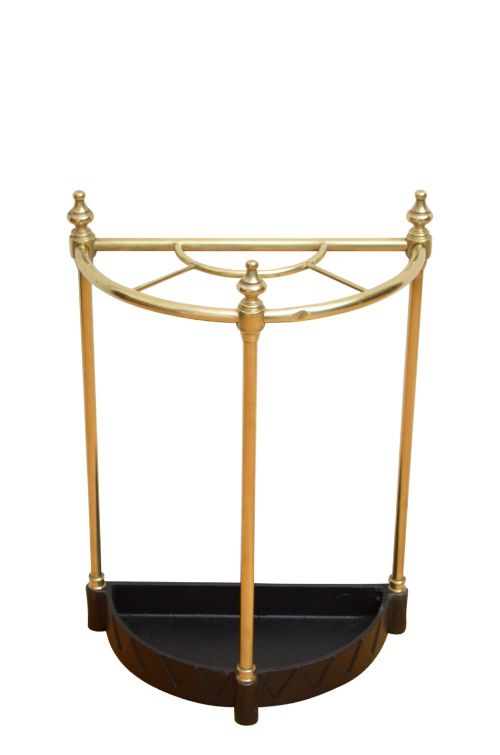
The most common form on this page is the demi lune or half moon design, shaped flat at the back to sit flush against a hallway wall. Circular and corner configurations also appear regularly, alongside combinations pairing brass with cast iron bases.
Originating predominantly from the Victorian, Edwardian and early twentieth century periods, these pieces reflect the heavy use of urban townhouses and country estates where outerwear accessories required robust organisation.
Materials and construction methods
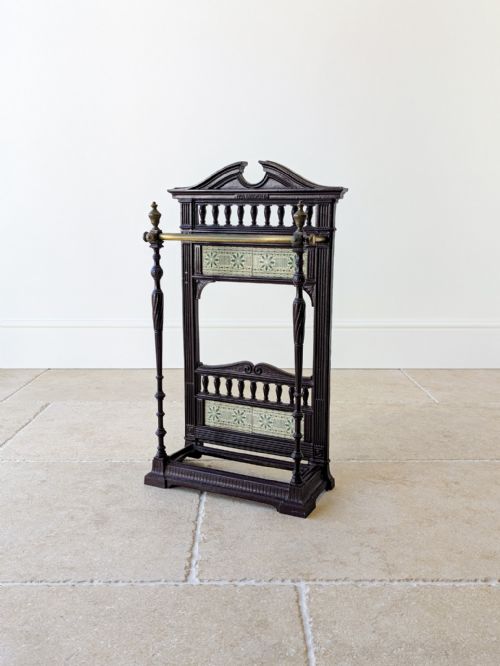
Makers utilised heavy cast brass for structural frameworks, decorative finials and supportive rings, often combining the metal with cast iron weighted bases to prevent tipping under the load of damp walking sticks. Some examples incorporate oak or mahogany frames paired with brass loops.
Sand casting served as the primary technique for forming the rigid components, leaving characteristic textural subtleties on the reverse of panels and within structural joints. Drip trays fashioned from brass or iron caught rainwater at the floor level, protecting timber floorboards from moisture.
Cast Brass Umbrella Holder Retail Price Guide 2026
Typical asking prices for cast brass umbrella holder among the pieces listed under this phrase on Sellingantiques today, from the lower quarter to the upper quarter. They describe what is for sale here now, not the wider market.
Listings span the Victorian, Edwardian and 1930 periods, incorporating brass, cast iron, oak and mahogany.
Distinctions in quality and execution
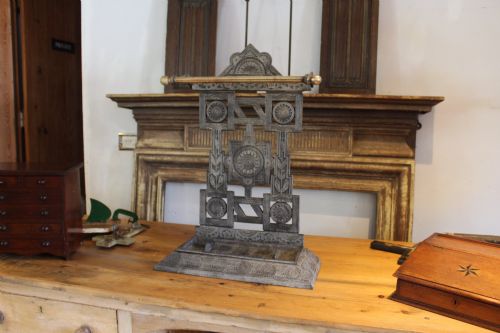
Quality rests upon the crispness of the cast detailing, whether the piece displays elaborate aesthetic movement ornamentation, hunting scenes or clean architectural lines. Weight distribution dictates stability, separating robust hall furniture from lighter decorative reproductions.
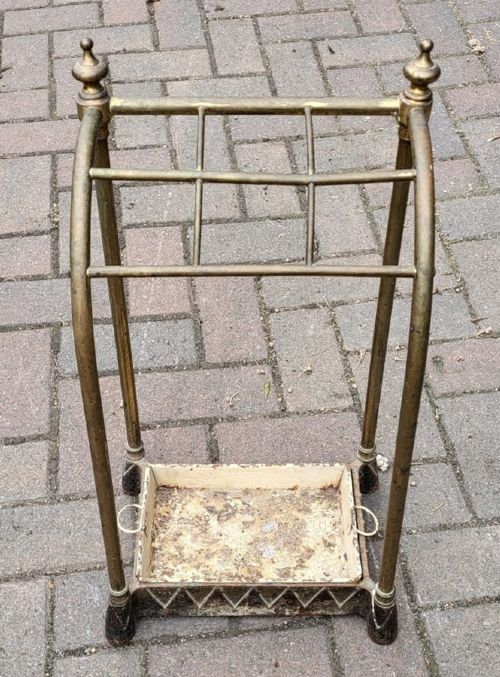
The integration of original drip trays and specific architectural forms, such as corner shapes or demi lune profiles, elevates the standing of an individual piece. Makers who incorporated distinct design elements like dog tooth trays or decorative ball finials achieved superior finish.
Coalbrookdale·Thomas Jeckyll·Shoolbred
The Cast Brass Umbrella Holder Glossary
- Demi lune
- Half moon shape designed to fit flat against a hallway wall. This configuration saves valuable floor space in narrow entrance passages.
- Drip tray
- Metal base pan positioned beneath the umbrella loops to catch moisture. It protects interior flooring from wet walking sticks.
- Finial
- Decorative terminal knob or ornament finishing the top of a vertical post. These elements provide visual weight to the upper frame.
- Stick loop
- Metal divider ring or framework that secures upright canes and umbrellas in place. They prevent bundles of sticks from leaning outward.
- Aesthetic movement
- Late nineteenth century design style emphasising art for art sake and eclectic motifs. Pieces from this movement display distinct artistic ornament.
Cast Brass Umbrella Holder: Frequently Asked Questions
How do I stop rust on the iron parts?
Keep the metal dry by emptying and wiping the lower drip tray after wet weather exposure.
Applying a light coat of microcrystalline wax protects exposed iron surfaces from moisture in damp entrance halls.
Where should I place a hallway stand?
Position the piece near the main entrance door on a solid, water resistant surface to catch dripping rain gear.
Demi lune and corner variants fit neatly into narrow passages without obstructing heavy foot traffic.
Are these stands heavy enough for heavy canes?
Most examples utilise weighted cast iron bases or heavy brass framing specifically designed to bear the downward pressure of sturdy walking timber.
Heavier Victorian and Edwardian models easily support multiple heavy umbrellas without toppling.
How do I date a brass stand?
Examine the construction methods, screw types and stylistic cues such as aesthetic movement or art nouveau motifs recorded in the listing.
Victorian and Edwardian pieces exhibit distinct casting textures and heavier metal gauges compared to later production.