



Antique Brass Cloisonne
Antique brass cloisonne unites heavy metal vessels and decorative plates enriched with intricate enamel wirework from nineteenth and early twentieth century workshops.
Antique Brass Cloisonne
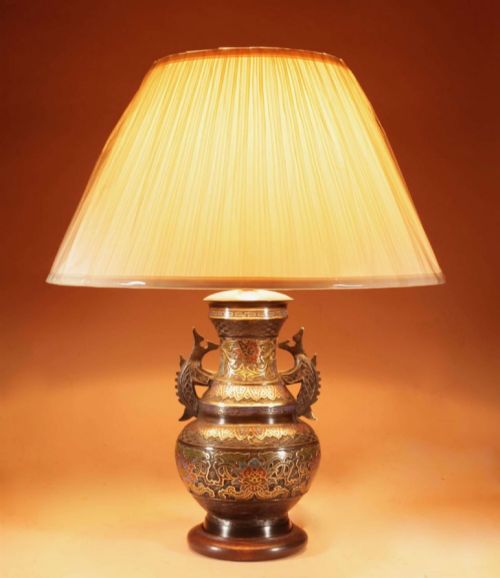
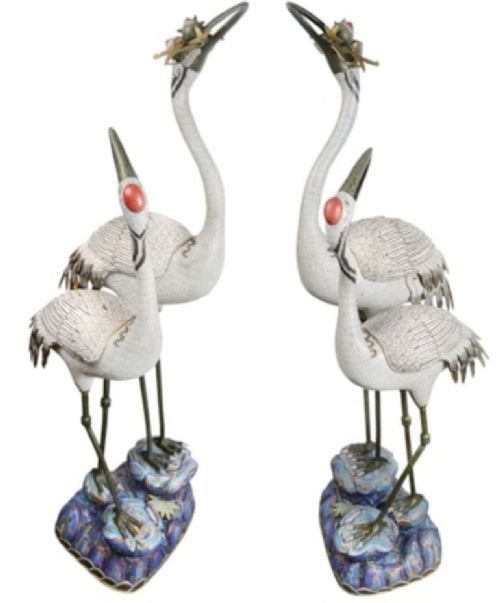
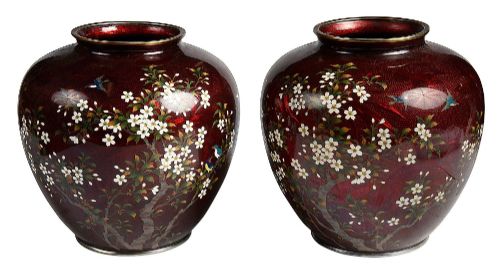
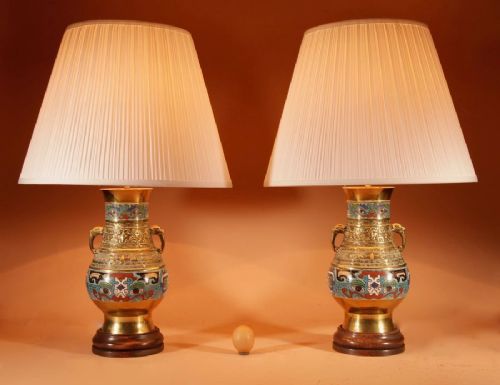
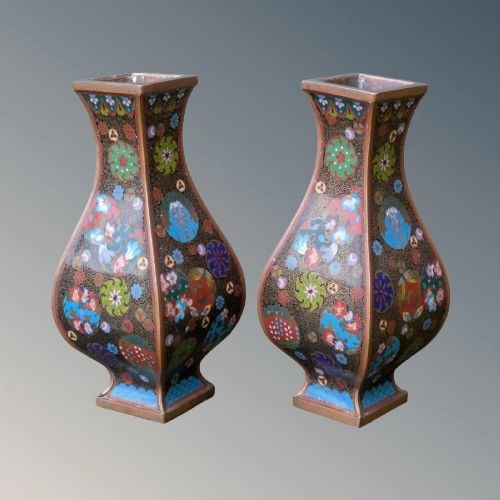
Antique brass cloisonne centres on decorative metalware created through applied wire partitions and vibrant coloured glass pastes. The selection here spans practical table lamps, mantel clocks, and jewellery boxes alongside purely ornamental chargers, bowls, and vases.
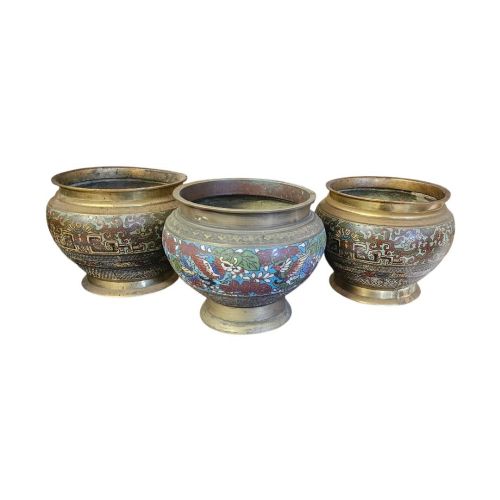
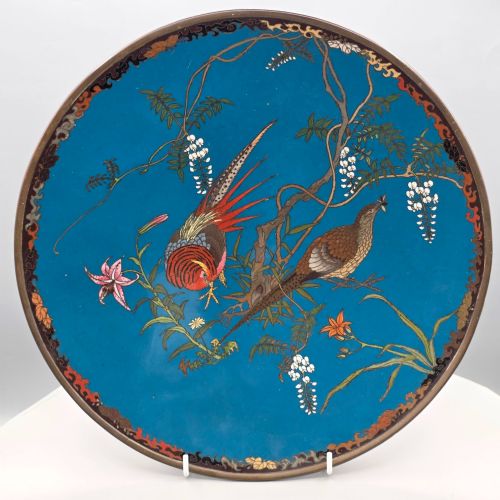
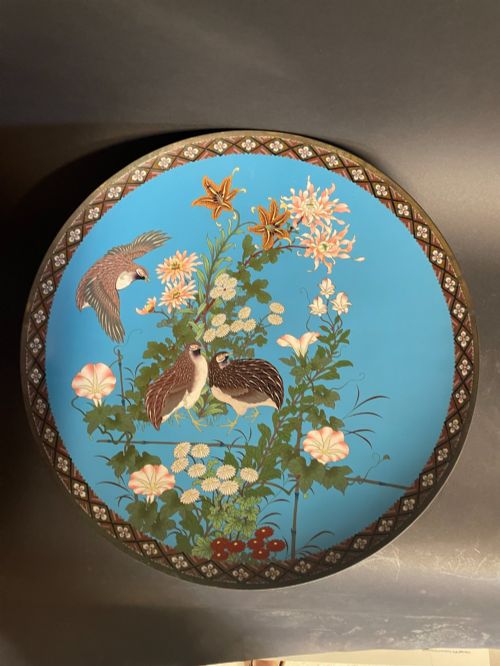
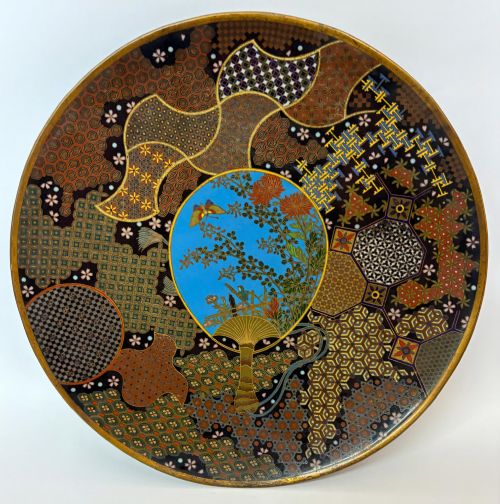
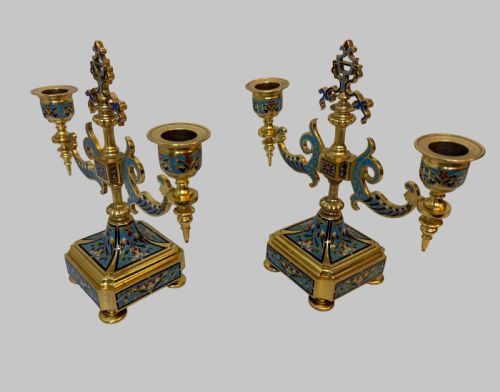
Most examples originate from Japanese Meiji period studios or Chinese Qing dynasty workshops, alongside select French nineteenth-century decorative pieces. Buyers encounter large chargers depicting birds, landscapes, and dragons, plus pairs of lidded vessels and jardinieres.
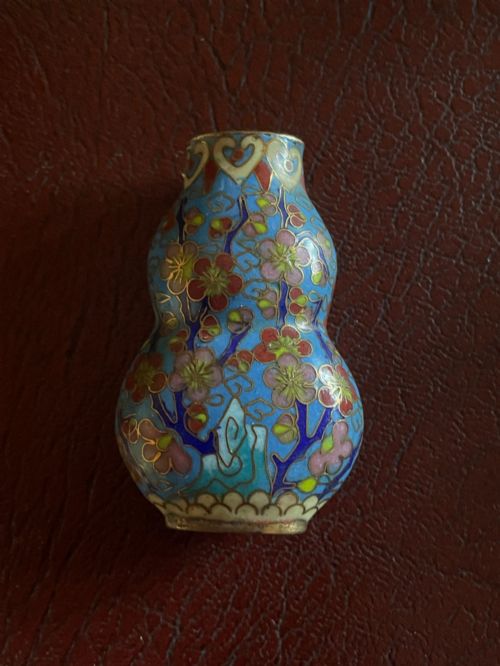
Forms range from miniature vases to massive fifty-centimetre display plates, often retaining their original gilt bronze mounts or wooden stands. These decorative objects bridge Eastern export artistry and Victorian interior taste.
What varies in quality
Quality rests upon the fineness of the wirework and the density of the cloison cells, where tighter geometric control separates masterworks from standard production pieces. Superior items display meticulous symmetry and minute detail within complex subjects such as feathers, scales, and foliage.
The clarity and depth of the enamel paste heavily influence the overall standard, as superior vitreous layers resist clouding and show vibrant, even tones across large surfaces. Flawless polishing of the finished brass wires without pitting or surface gaps marks the output of skilled Meiji or Qing period studios.
Several rigid owls, vigilant quails, and startled frogs populate these metal landscapes, staring down collectors with permanent metallic charm.
The Antique Brass Cloisonne Glossary
- Cloisonne
- Enamel decoration formed by soldering thin metal wires onto a base to create compartments for coloured glass pastes. This technique allows for intricate multi-coloured pictorial designs across vases and chargers.
- Champleve
- Enamel work where troughs or cells are cast or gouged directly into the thick bronze or brass body rather than built up with soldered wires. This creates bolder outlines and deeper colour recesses.
- Charger
- A large ornamental decorative plate meant for display on walls, cabinets, or stands rather than dining use. These wide surfaces often showcase elaborate depictions of birds, dragons, and natural landscapes.
- Jardiere
- A large ornamental pot or container designed to hold indoor plants or floral arrangements. They frequently appear in heavy bronze or brass with matching stands.
- Meiji Period
- The era of Japanese history spanning from eighteen sixty-eight to nineteen twelve, celebrated for technical perfection in metalwork and enamel production. Pieces from this time show extreme precision in wire placement.
Antique Brass Cloisonne: Frequently Asked Questions
How do I clean antique cloisonne safely?
Dust surfaces gently with a soft, dry microfibre cloth to protect the fragile glass enamels from abrasive particles. Avoid chemical dips, harsh metal polishes, or excessive water immersion that might weaken the soldered brass wires.
For stubborn grime, use a slightly damp cloth with mild soap, drying the metal and enamel immediately afterwards. Proper preservation keeps the polished bronze mounts and vitreous colours stable for generations.
Were these items purely decorative?
Many large chargers, vases, and display plaques served strictly as ornamental art pieces within nineteenth-century drawing rooms and cabinets of curiosity. Other forms such as jardinieres, jewellery boxes, clocks, and table lamps combined functional utility with rich visual artistry.
Export workshops in China and Japan tailored these diverse objects specifically for Western interior decoration tastes. Their dual role as practical furnishings and intricate works of art explains their enduring appeal.
How can I distinguish Japanese from Chinese pieces?
Japanese Meiji period items typically feature exceptionally fine, hair-thin brass wires and highly naturalistic depictions of birds, flowers, and landscapes. The enamel work often displays a smooth, mirror-like polish with subtle colour gradations.
Chinese Qing dynasty examples frequently utilise heavier bronze or brass bases with broader wire partitions and bolder, more stylised symmetrical patterns. They often incorporate rich champleve techniques alongside traditional cloisonne wirework.
Can I use antique table lamps safely today?
Many antique brass lamps have been converted or rewired to meet modern electrical standards by professional restorers. Buyers should inspect the internal wiring and consult a qualified electrician before connecting any period lighting to mains power.
The original bronze and enamel bodies remain robust, allowing these decorative fixtures to illuminate contemporary spaces safely when fitted with modern cords.