



Decorative Oval Platter
These decorative oval platter examples bring rich historical craftsmanship and utility to any room, offering versatile surfaces for display and serving.
Decorative Oval Platter
A decorative oval platter spans serving platters, trays, and chargers across multiple periods from the nineteenth century into the twentieth century. These pieces encompass diverse regional origins including English potteries, Japanese metalwork, and Swedish workshops.
The form appears in varied materials such as porcelain, earthenware, copper, brass, mahogany, and papier-mâché. Buyers encounter styles ranging from Georgian and Victorian Rococo Revival to Arts and Crafts, Art Nouveau, and Chinoiserie.
How they were made
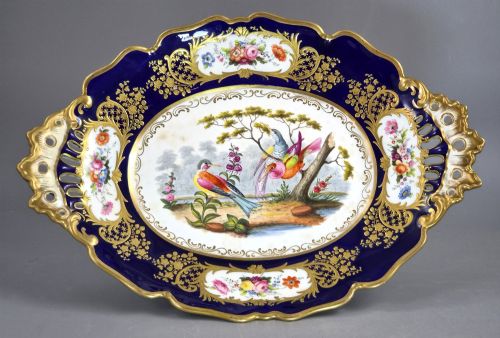
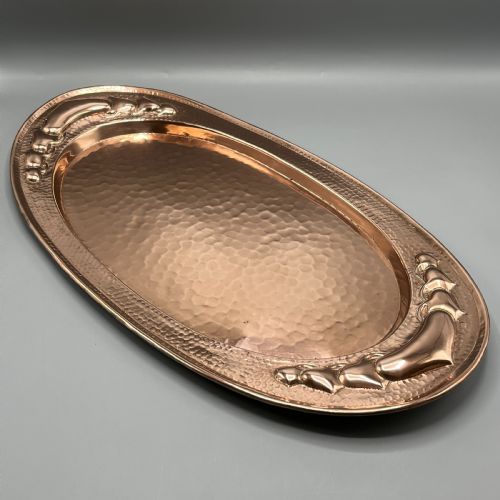
Ceramic examples rely on moulded earthenware and porcelain bodies decorated with cobalt blue, transfer printing, or hand-painted fruit motifs. Metal pieces utilise techniques like repoussé copper, cloisonné enamel, and cast brass galleries fitted to wood.
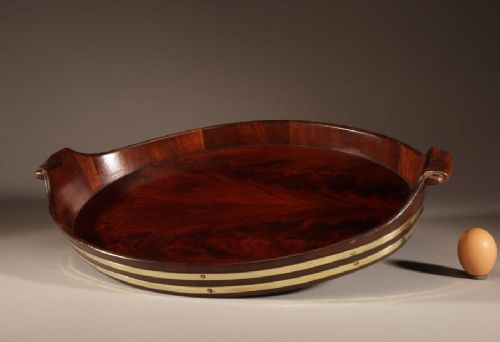
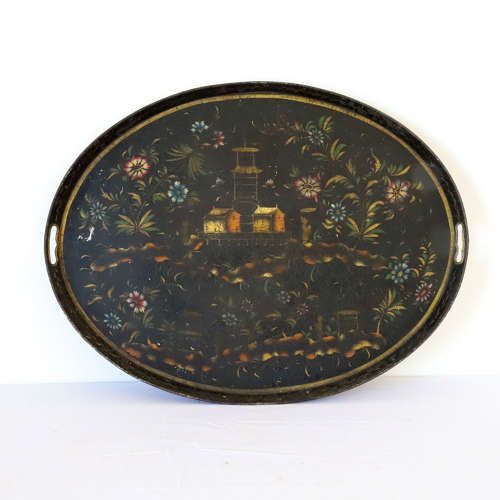
Wooden and papier-mâché trays combine structural joinery or moulded pulp with lacquered finishes, gold leaf, and fine satinwood inlay. Makers apply traditional glazing, gilding, and metalworking methods appropriate to each period's workshop traditions.
One copper tray arrives bearing the enduring imprint of an industrious Victorian hand, reminding us these polished surfaces once worked hard for their supper.
What varies in quality
Quality differentiates through the crispness of hand-painted details, the depth of repoussé metalwork, and the precision of inlaid wood or fitted brass galleries. Superior pieces demonstrate confident handling of pictorial transfers, enamel work, and glaze applications.
The integrity of the underlying material, whether dense porcelain, substantial copper, or well-seasoned mahogany, dictates durability and finish retention. Well-executed maker attribution and refined decorative restraint elevate standard utilitarian items into distinguished examples.
Coalport·Liberty and Co·Christofle·Royal Worcester·Royal Crown Derby·Meissen·Clay
The Decorative Oval Platter Glossary
- Repoussé
- Metalwork technique where the design is hammered into relief from the reverse side. This method creates tactile surface decoration on copper and brass trays.
- Cloisonné
- Enamelling process using wire partitions soldered to a metal base to contain coloured pastes. Japanese examples demonstrate intricate execution of this technique.
- Papier-mâché
- Composite material made from paper pulp or layers of paper bound with glue, then lacquered. It provides a lightweight yet durable base for painted trays.
- Galleried tray
- A tray featuring a raised border or pierced metal railing around the edge. This structural addition keeps items secure during service.
- Transfer printing
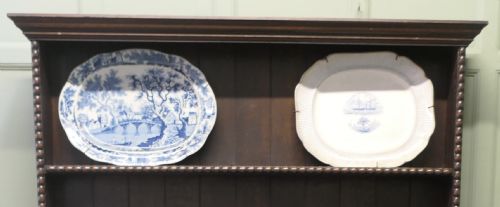
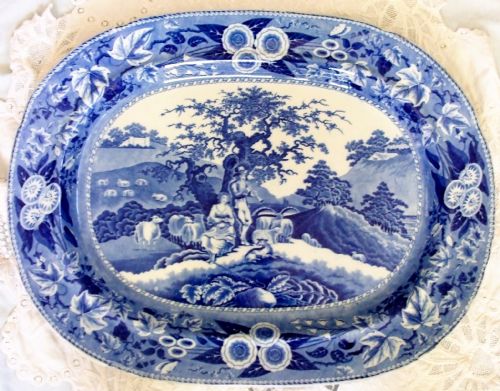
- Ceramic decoration method using an engraved copper plate to transfer a design onto paper and then onto pottery. Blue and white patterns frequently utilise this process.
Decorative Oval Platter: Frequently Asked Questions
How were these platters originally used?
These pieces served functional roles in dining rooms and parlours for carrying drinks, meat dishes, fish, or dessert courses. Many also functioned as decorative display dishes on sideboards and tables.
Over time, their roles shifted depending on the material, with metal and papier-mâché trays handling heavier service while porcelain dishes remained on the dining table.
Are these trays safe for food use?
Ceramic and porcelain platters generally remain suitable for serving food, provided the glaze is intact and free from heavy wear. Metal and lacquered wooden trays suit decorative display or dry service.
Historic finishes on papier-mâché and antique copper require gentle cleaning methods and avoid direct contact with wet or acidic foods.
How do I identify the period?
Dating relies on combining material characteristics, decorative styles such as Arts and Crafts or Regency, and any workshop marks. Transfer-printed motifs and ceramic bodies offer reliable clues for nineteenth-century dating.
Secondary indicators include the construction of wooden galleries, the weight of the metal, and the composition of papier-mâché bases.
How do I care for antique metal trays?
Copper, brass, and pewter items require occasional dusting with a soft cloth and minimal moisture to protect the surface finish. Avoid harsh chemical polishes that strip away patination accumulated over decades.
Keeping them away from direct sunlight and excessive humidity preserves the integrity of applied patinas and lacquers.