
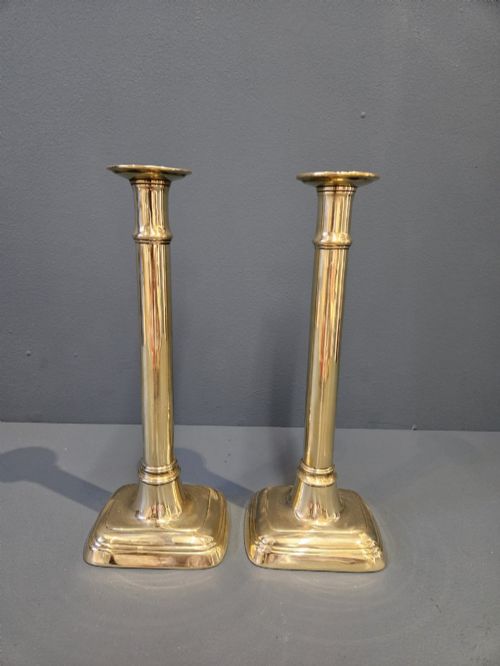
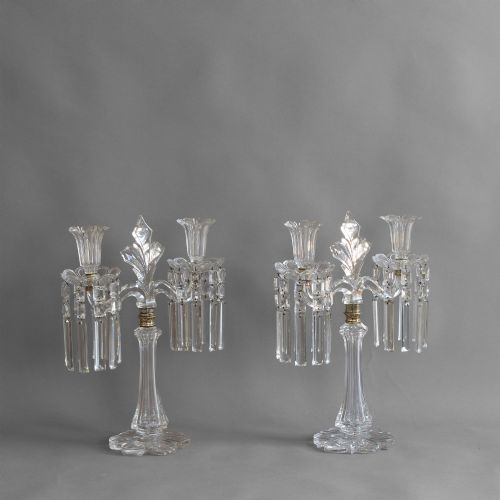
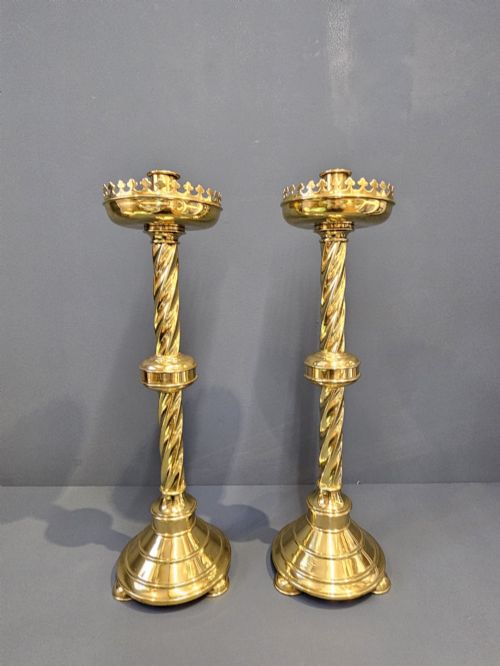
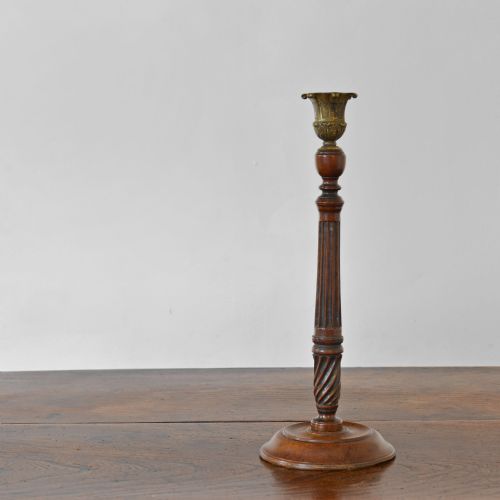
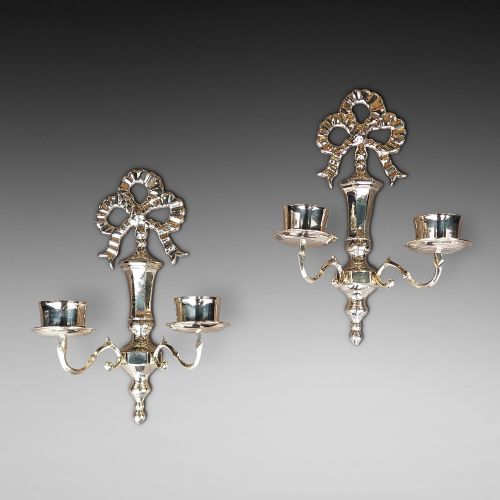
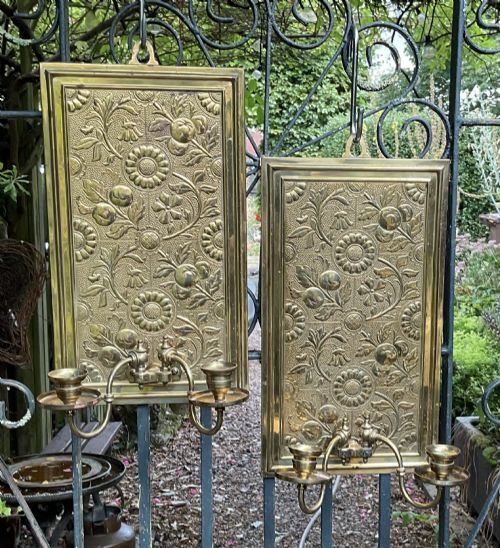
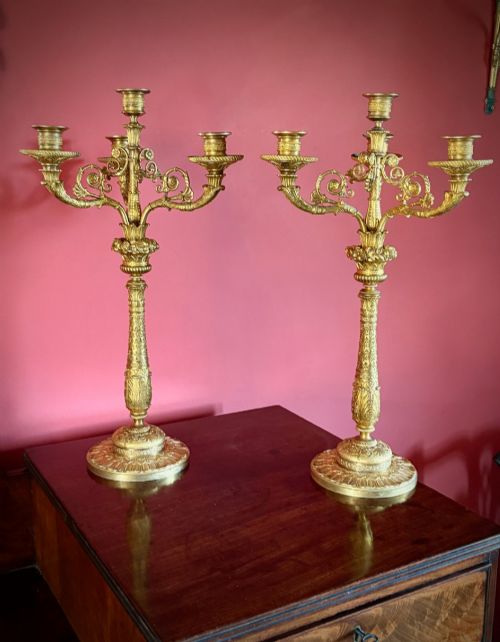
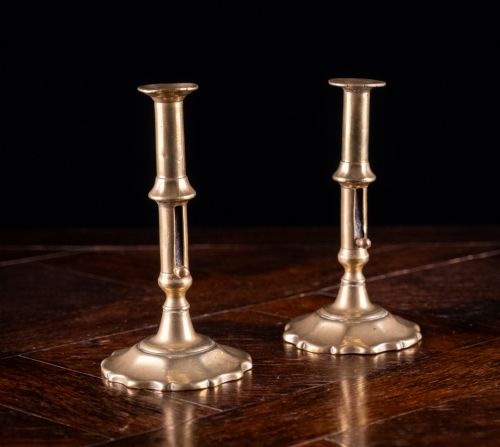
Antique Brass Candleholder
These antique brass candleholder selections bring practical historic lighting and warm metallic character to any room.
What an antique brass candleholder is
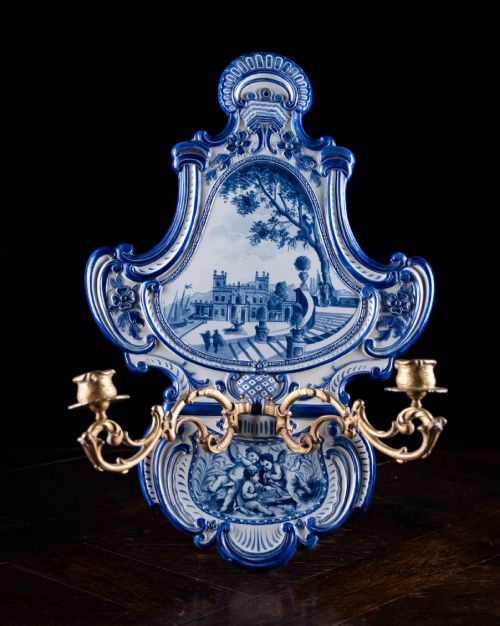
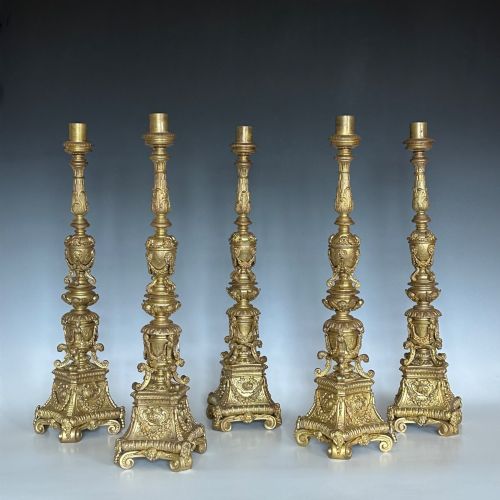
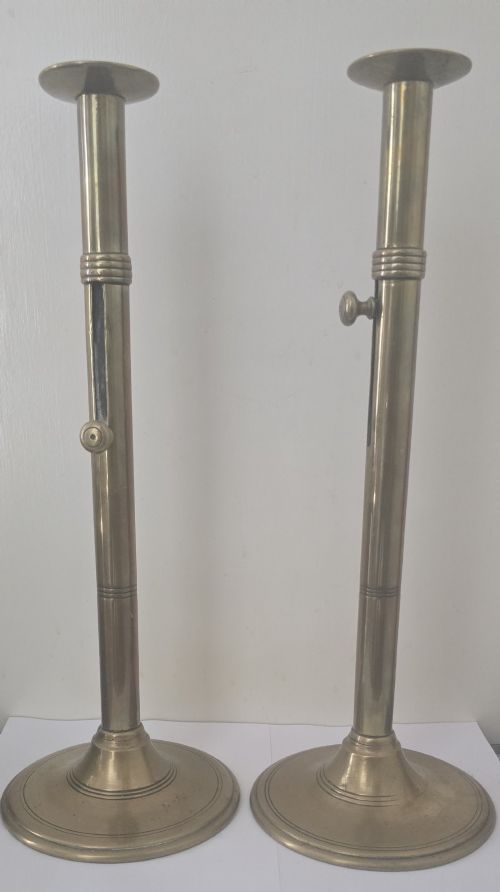
An antique brass candleholder provides a functional historic lighting form shaped by centuries of domestic and ecclesiastical use. When searching for an antique brass candleholder, collectors encounter various domestic and decorative configurations designed for tabletops, walls, or handheld movement.
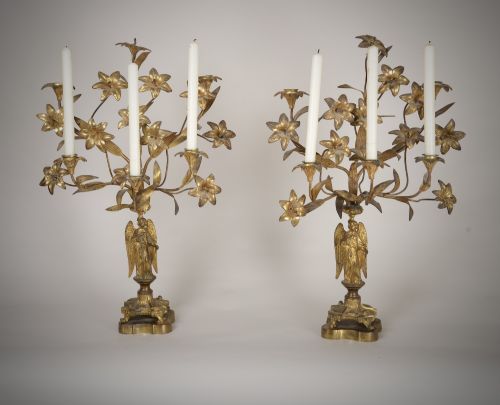
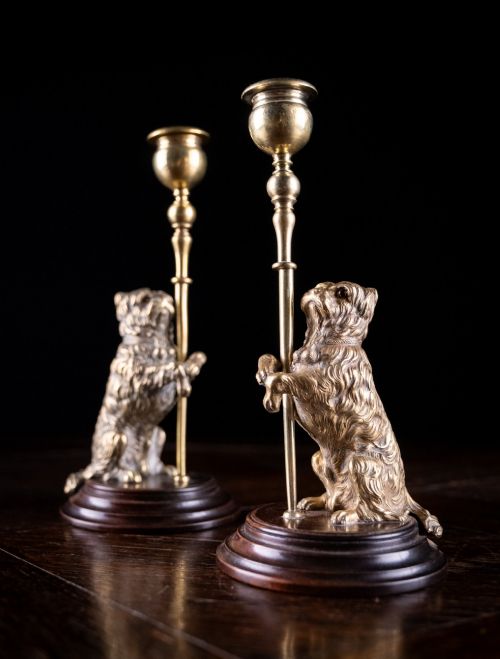
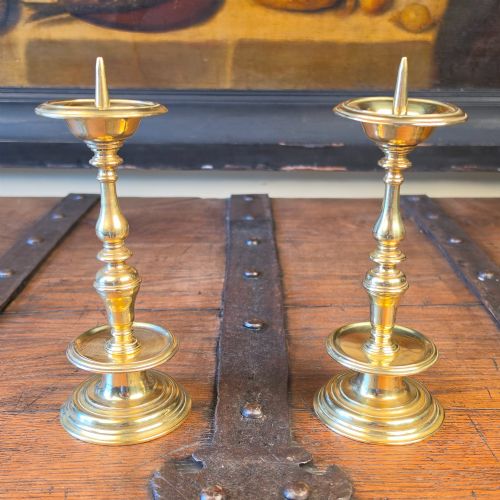
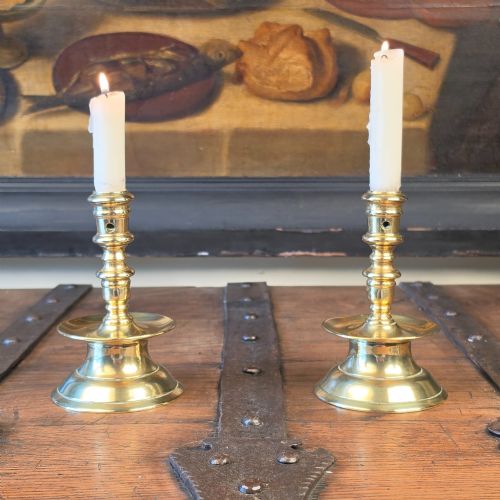
The pieces available span several distinct periods including the eighteenth century, nineteenth century, and the year nineteen hundred. Forms range from simple single sticks to multi-armed candelabras and specialised chambersticks.
Georgian examples sit alongside Victorian and Arts and Crafts pieces, reflecting changing domestic tastes across Britain and Europe. Buyers frequently meet styles such as Georgian, Neoclassical Revival, Arts and Crafts, Louis XVI Style, Gothic Revival, and standard Victorian designs.
How they were made
Maker workshops utilised brass as the primary metal alloy, sometimes combining it with glass elements to create more elaborate lighting pieces. Casting techniques shaped the heavier structural components of the candlesticks, wall sconces, and candelabras.
Individual components often involved turning on a lathe or casting in sections before being joined together to form the complete candleholder. Surface finishes developed through standard workshop practices of the period, leaving behind the patination seen today.
Retail Price Guide 2026
Typical UK retail prices for brass candleholder, calculated from the Sellingantiques database of over a million retail prices indexed since 2003. This retail price guide relies exclusively on Sellingantiques data; no external sources or auction records are used, so the figures do not describe the wider market.
The inventory includes candlesticks, wall sconces, candelabras, and chambersticks in Georgian and Arts and Crafts styles.
What varies in quality
Quality differences emerge in the precision of the casting and the crispness of decorative details like petal bases or tulip shaped sconces. Heavier, more substantial metal distribution distinguishes the finer domestic pieces from standard production items.
Stylistic cohesion within matched pairs and the integrity of historical joinery separate standard utilitarian objects from sophisticated decorative works. The refinement of the brass surface and the complexity of architectural or revivalist detailing also define the upper tier.
The Antique Brass Candleholder Glossary
- Brass
- An alloy of copper and zinc used extensively for historical metalware and lighting. It provides durability and a warm metallic tone.
- Chamberstick
- A low candleholder fitted with a drip pan and a loop handle for carrying room to room. These items often date to the nineteenth century or earlier.
- Sconce
- A wall-mounted lighting fixture designed to hold candles. Examples include ecclesiastical Gothic brass wall sconces.
- Candelabra
- A branched candleholder designed to hold multiple candles simultaneously. Six armed versions demonstrate more complex domestic or formal lighting arrangements.
- Petal base
- A foot design spreading outward in lobes resembling flower petals. This decorative feature appears on eighteenth century Georgian candlesticks.
Frequently Asked Questions
What is a chamberstick?
A chamberstick is a portable candleholder featuring a shallow drip pan and a loop handle. This design allowed individuals to carry light safely through rooms before the advent of electricity.
Such pieces date to periods like the nineteenth century and nineteen hundred, often used in bedrooms or hallways.
How do I date an antique brass candleholder?
Dating relies on observing stylistic markers such as Georgian petal bases, Victorian proportions, or Arts and Crafts simplicity. Manufacturing methods like casting techniques also provide clues to the era of production.
Comparing structural forms against documented eighteenth and nineteenth century examples helps establish a reliable timeline.
Where were wall sconces used?
Wall sconces were mounted in domestic rooms, hallways, and ecclesiastical spaces to provide ambient illumination. Ecclesiastical Gothic brass wall sconces indicate church or chapel origins.
These fixtures maximised light distribution by reflecting candle flames off nearby walls.
What styles are common in brass candleholders?
Common styles include Georgian, Victorian, Arts and Crafts, Louis XVI Style, and Gothic Revival. Each movement brought distinct decorative motifs and proportions to the metalware.
Neoclassical Revival and eighteenth century Georgian forms show specific architectural influences adapted for domestic lighting.