




Antique Brass Bound Bucket
An antique brass bound bucket brings tactile warmth to a room while holding logs, wine, or kindling.

Identifying an antique brass bound bucket
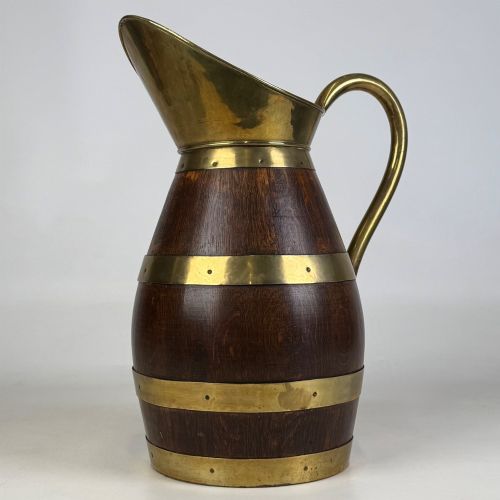
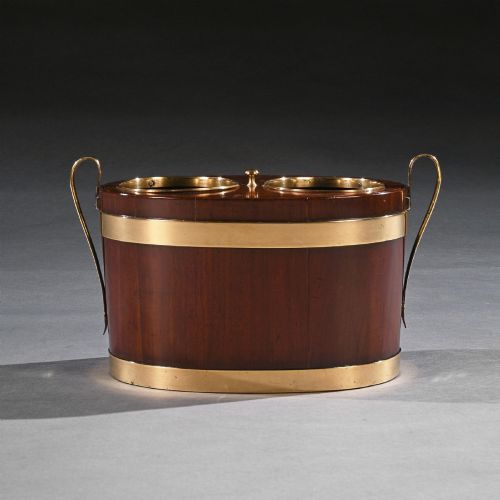
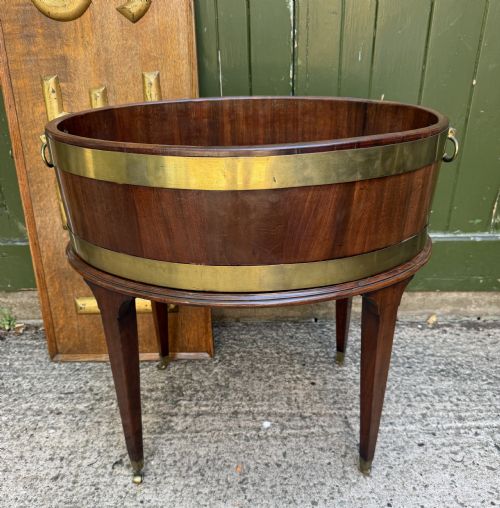
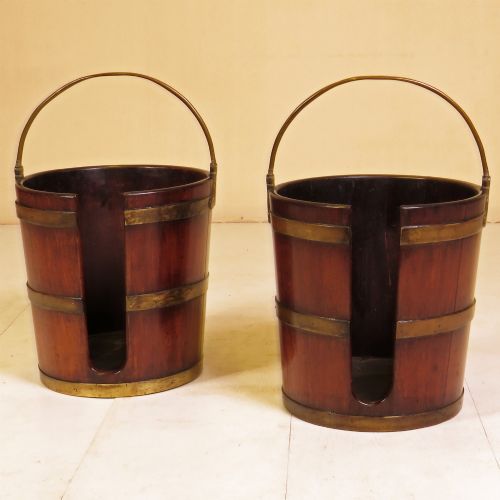
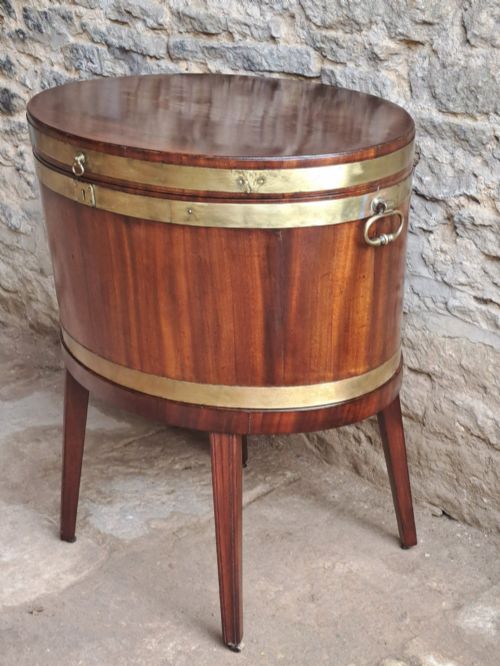
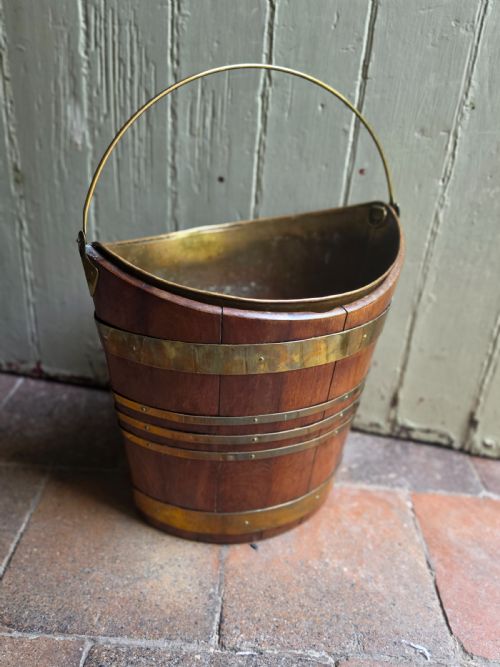
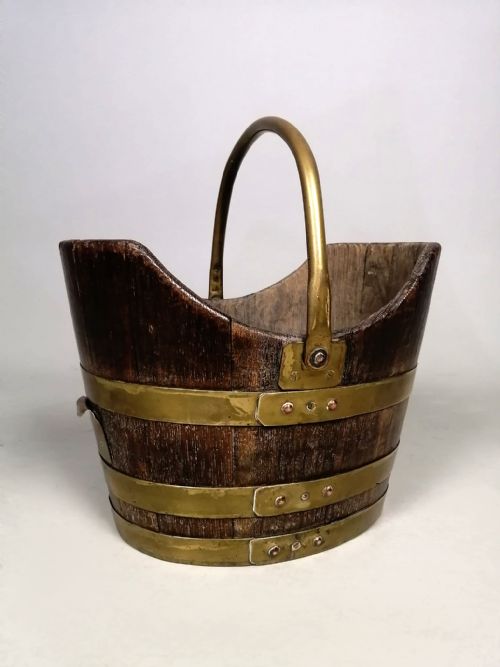
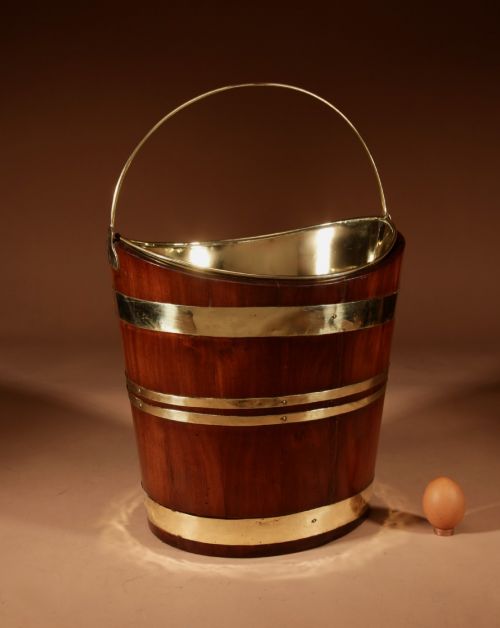
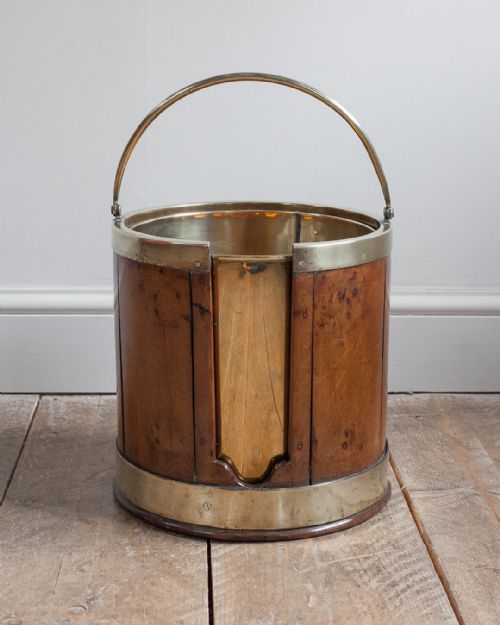
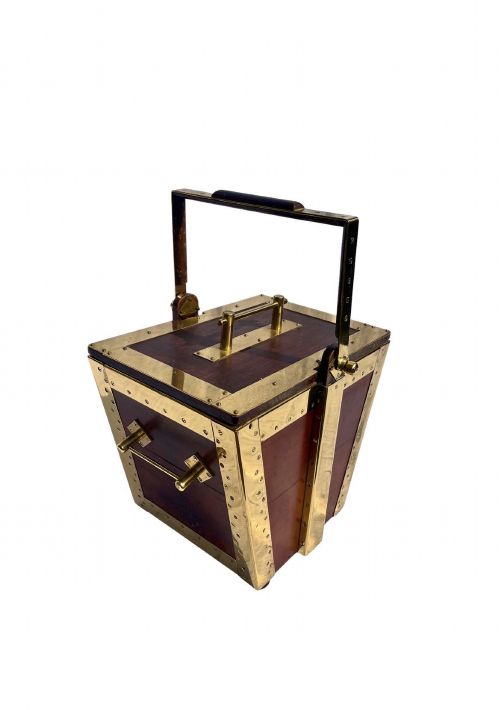
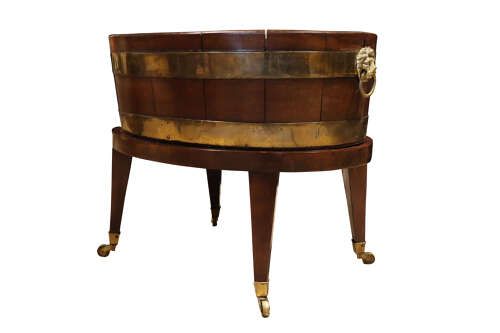
An antique brass bound bucket spans functional forms including wine coolers, plate buckets, fireplace buckets, and cellarettes. These pieces appear primarily across Georgian, Victorian, and nineteenth-century periods, showcasing various traditional utilitarian shapes.
The most common form met on this page is the mahogany version encircled with bright brass bands, sometimes featuring inlay, oval profiles, or iron fittings. They connect historical domestic utility directly with enduring cabinet-making traditions.
Construction and materials
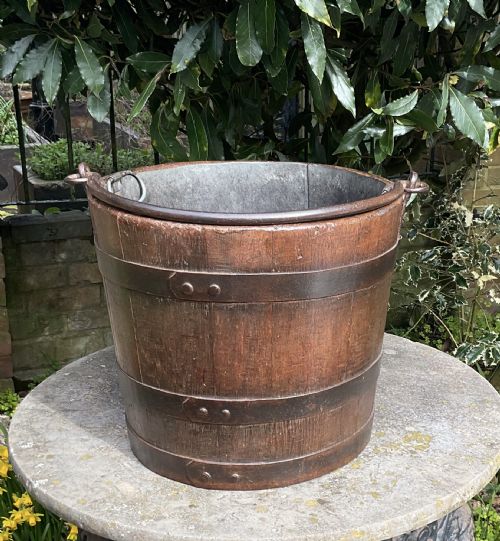
Coopers and cabinet-makers built these vessels using solid timbers like mahogany, occasionally incorporating boxwood stringing, iron reinforcements, and painted tin surfaces. Stave construction held the curved bodies together securely under daily domestic pressures.
Heavy brass bands were secured around the wood using numerous small pins or tacks, providing both structural reinforcement and a decorative contrast to the dark grain of the timber. Handles made from brass or iron completed the functional assembly.
Retail Price Guide 2026
Typical UK retail prices for brass bound bucket, calculated from the Sellingantiques database of over a million retail prices indexed since 2003. This retail price guide relies exclusively on Sellingantiques data; no external sources or auction records are used, so the figures do not describe the wider market.
Listings feature items spanning the Georgian, Victorian, and nineteenth-century periods, constructed primarily from mahogany, brass, boxwood, and iron.
Judgements of quality
Superior examples demonstrate meticulous stave jointing and carefully selected timber figure, where the mahogany grain follows the sweep of the body. Inferior pieces often display coarser brass work or timber with less distinguished grain character.
The refinement of the brass bands and the crispness of any inlaid boxwood detailing elevate certain pieces above standard utilitarian wares. Authenticity of the metalwork and the integrity of the original timber surfaces govern the standing of each piece.
Samual Norman
The Antique Brass Bound Bucket Glossary
- Cellarette
- A lockable container used for holding bottles of wine near the dining table. These frequently mirror the stave-built construction of buckets.
- Plate bucket
- A deep cylindrical or oval vessel historically designed to transport heavy ceramic or metal plates safely. They often feature sturdy fixed handles.
- Wine cooler
- A large vessel lined to hold ice and bottles during dining, appearing in oval or cylindrical mahogany forms. They form a central part of formal dining room furnishings.
- Stave
- One of the narrow strips of wood assembled edge-to-edge to form the curved body of a bucket. Coopers shaped each piece carefully to ensure a watertight or tight joint.
Frequently Asked Questions
What were antique brass bound buckets used for?
These vessels served various practical domestic functions in Georgian and Victorian households, ranging from cooling wine at the dining table to holding coal and logs by the fireplace. Some specialised forms safely transported heavy tableware.
Over time, their robust construction and striking combination of timber and metal made them popular decorative accessories in domestic interiors.
How do I tell a Georgian bucket from a Victorian one?
Georgian pieces often display refined proportions, precise boxwood inlay, and elegant mahogany grain selection typical of eighteenth-century cabinet work. Victorian examples frequently maintain heavier proportions and straightforward functional detailing.
Comparing the style of the brass work and the specific joinery helps clarify the period of manufacture.
Where should I place an antique bucket at home?
An antique brass bound bucket functions naturally beside a fireplace to hold logs or kindling, echoing its historical domestic use. They also sit effectively as freestanding decor in living spaces.
Their substantial timber forms add texture and historical weight to both traditional and contemporary room schemes.
What timbers were used for these buckets?
Mahogany served as the primary timber for fine examples, offering rich brown tones and durable qualities suited to stave construction. Boxwood occasionally appeared as contrasting inlay.
Other materials recorded include painted tin and iron, widening the range of surviving historic domestic forms.