
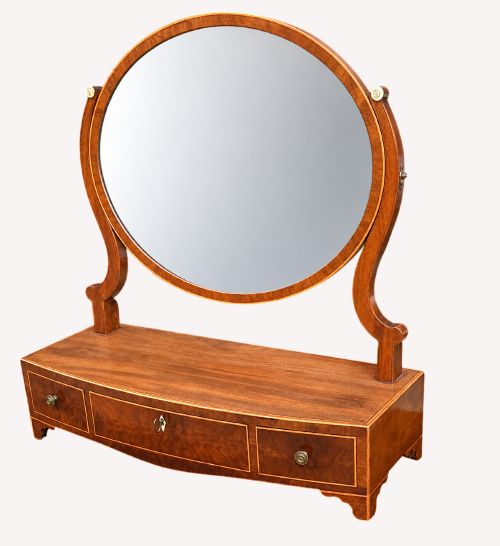
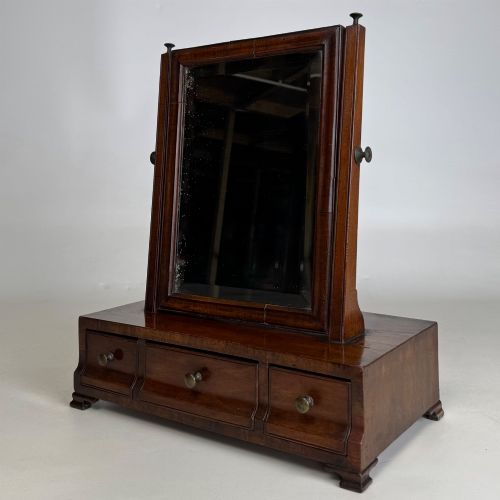
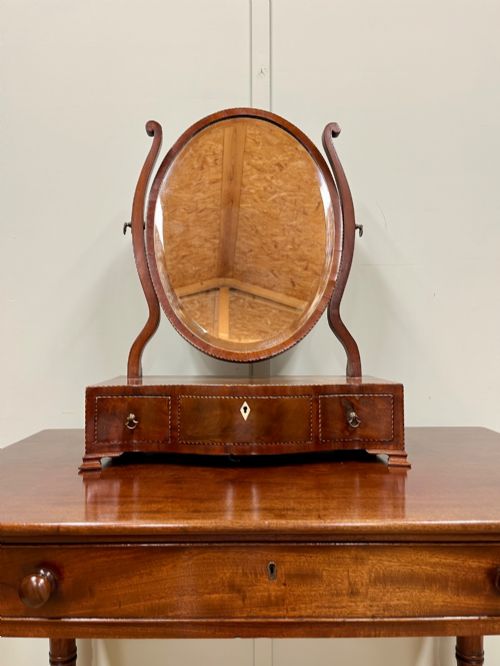
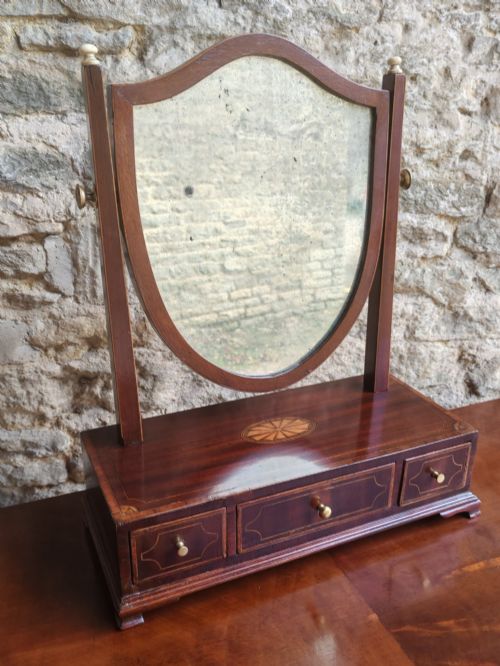


Antique Box Base Mirror
An antique box base mirror brings period warmth and a clever lidded compartment straight to your dressing table.
What They Are
An antique box base mirror combines a functional looking glass with a small lidded storage compartment beneath, sitting securely on a tabletop. These pieces are often referred to as dressing mirrors, dressing glasses, or toilet mirrors in period descriptions.
The form spans the Georgian era and the nineteenth century, with examples recorded from the eighteenth century up to eighteen fifty. You will encounter both rectangular and oval glass plates framed in timber and mounted on upright supports.
Mahogany and walnut predominate among the surviving examples on this page, reflecting the timber preferences of Georgian and Victorian cabinet makers. Many pieces retain their original box bases fitted with small drawers for storing trinkets and grooming accessories.
How They Were Made
Cabinet makers constructed the box bases using solid hardwoods such as mahogany and walnut, frequently incorporating figured veneer panels on the drawer fronts and lids. Joinery relied on traditional techniques to house the small storage drawers beneath the pivoting mirror frame.
The glass plate sits within a slender wooden frame attached to side arms by brass pivots or screws, allowing the user to tilt the angle of reflection. Gilt highlights, gold leaf, and bone escutcheons or pulls occasionally accent the polished wooden surfaces.
Retail Price Guide 2026
Typical UK retail prices for box base mirror, calculated from the Sellingantiques database of over a million retail prices indexed since 2003. This retail price guide relies exclusively on Sellingantiques data; no external sources or auction records are used, so the figures do not describe the wider market.
What Varies in Quality
Quality rests in the choice of timber and the crispness of the cabinet work, particularly in the selection of richly figured mahogany or walnut veneers on the box base. Finer examples display harmonious proportions between the height of the mirror frame and the depth of the box below.
The refinement of the brass hardware, from the side screw pivots to the escutcheons on the tiny drawers, distinguishes more ambitious pieces from simpler utilitarian versions. Original surfaces and untouched patination elevate an individual mirror above those with later restorations.
JOHN FRANKLIN LONDON
The Antique Box Base Mirror Glossary
- Box base
- The compartmented lower section of a dressing mirror that provides storage space and acts as a stable footing.
- Toilet mirror
- A period term for a small tabletop mirror used during grooming and dressing, synonymous with a dressing glass.
- Plate
- The sheet of glass itself, which in older pieces may show subtle distortions or original bevels.
- Escutcheon
- A small protective plate surrounding a keyhole on the drawer front of the box base, often fashioned from bone or brass.
Frequently Asked Questions
What is an antique box base mirror?
It is a tabletop looking glass mounted on a small wooden chest or box containing drawers. The design allowed users to adjust the mirror angle while keeping small personal items close at hand.
These pieces were essential bedroom furnishings during the Georgian and Victorian periods, placed upon chests of drawers or dedicated dressing tables.
How do I date a dressing mirror?
Dating relies on observing the timber species, construction methods, and the overall profile of the mirror frame and box base. Georgian examples frequently feature mahogany or walnut, while distinct shifts in proportion occur between the eighteenth century and the nineteenth century.
Looking at the backboards, secondary timbers, and the style of the brass pivots also helps determine the period of manufacture.
Where should I place it at home?
These compact mirrors sit comfortably on modern dressing tables, sideboards, or chests of drawers in a bedroom or hallway. Their dual function provides both a reflective surface and small hidden storage for jewellery or keys.
Ensure the surface is level and stable so the pivoting frame operates smoothly without strain on the side arms.
Did walnut or mahogany come first?
Walnut dominated British cabinet making during the earlier part of the eighteenth century, including the reigns of the Georges. Mahogany rose to prominence later in the century as trade routes expanded and timber preferences shifted.
Both woods continued to be utilised by skilled makers, resulting in distinct visual character across different decades.