
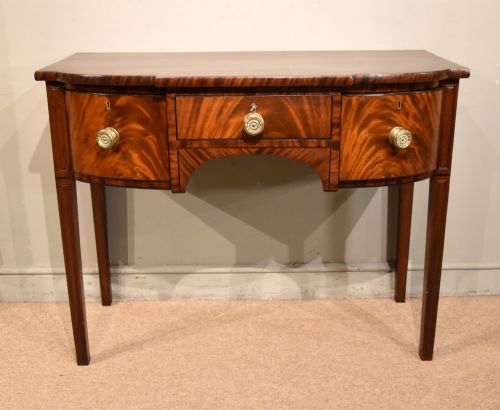
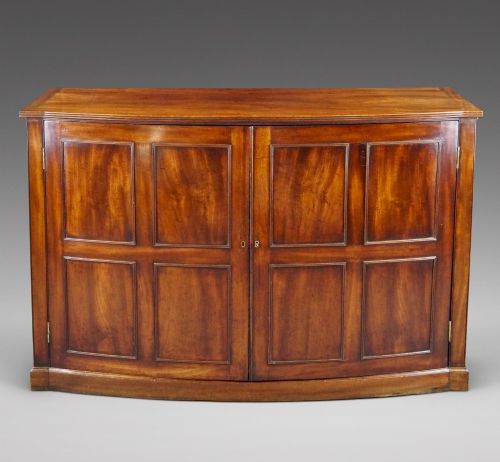
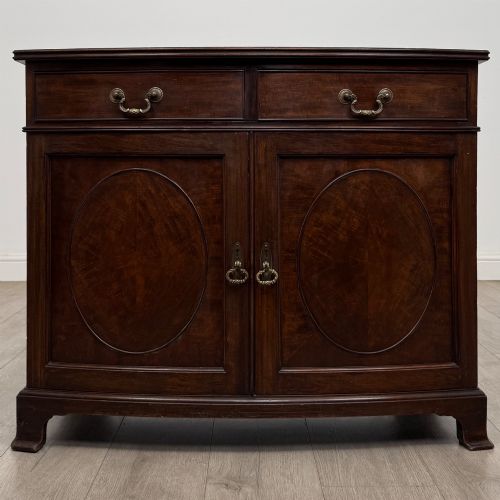
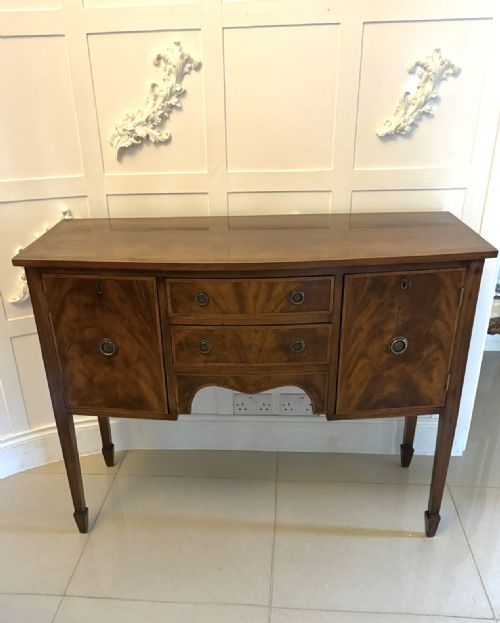
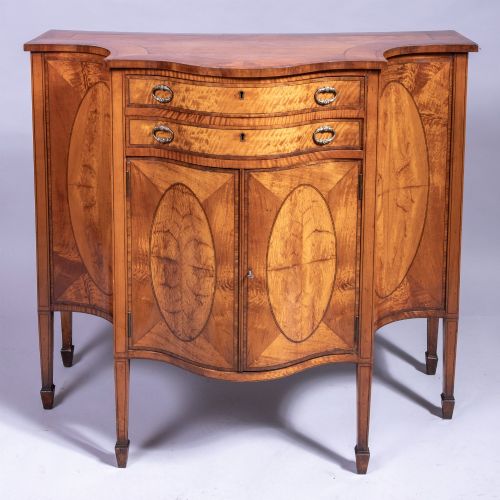

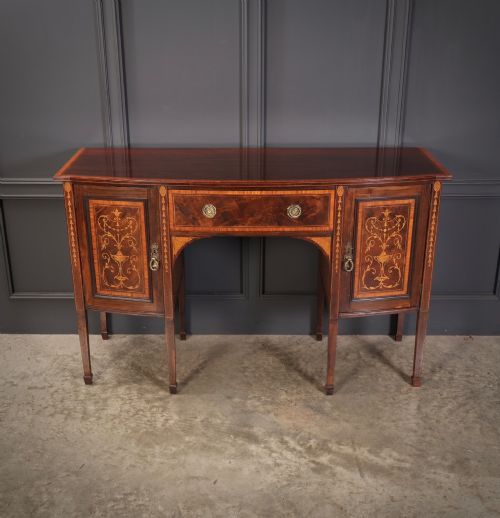
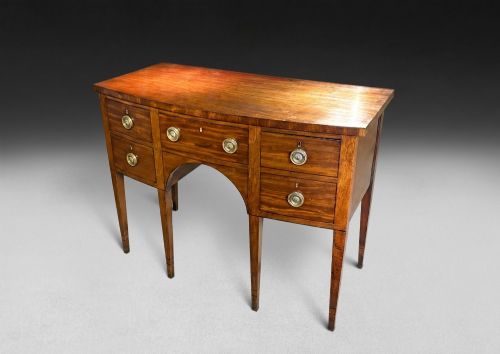
Antique Bowfront Sideboard Cabinet
An antique bowfront sideboard cabinet offers curved elegance and generous storage, making it a functional centrepiece for the dining room.
Antique Bowfront Sideboard Cabinet
An antique bowfront sideboard cabinet is a substantial dining room piece defined by its convex curving front and capacity for serving or storage. These items emerge primarily from the Georgian, Victorian, and Edwardian eras, alongside later revivals.
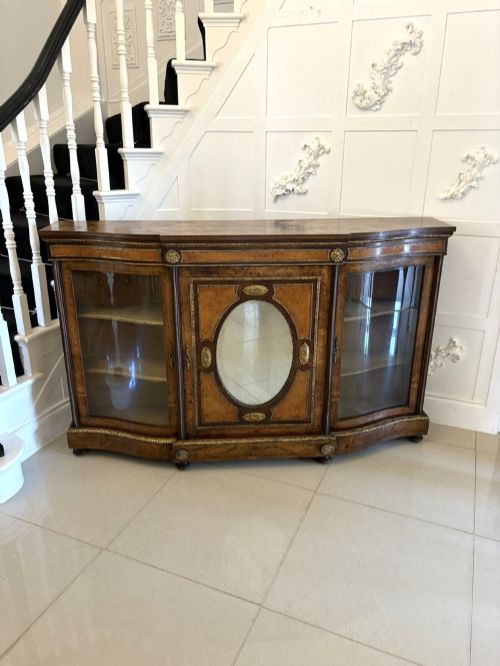
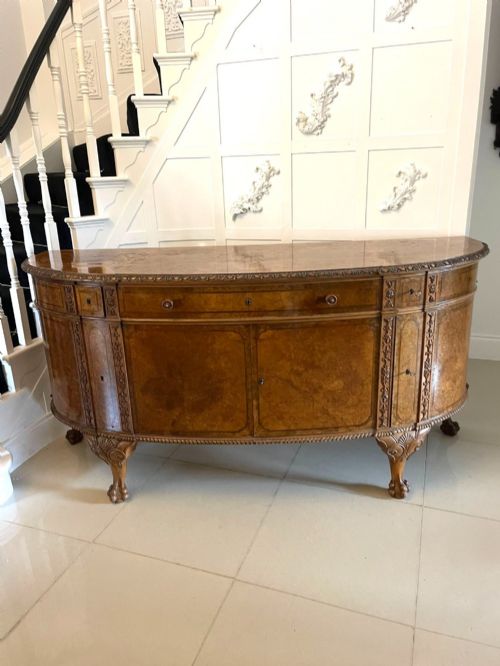
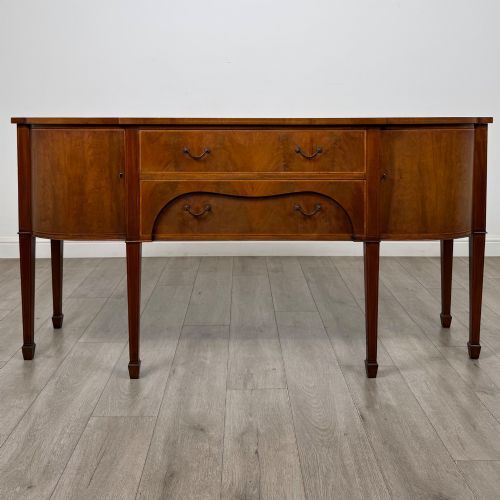
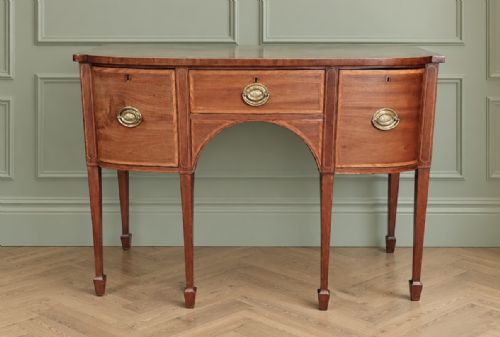
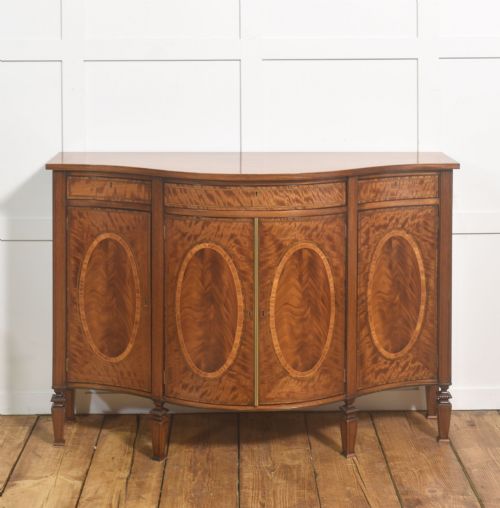
The pieces on this page span several stylistic movements, including George III, Regency, Sheraton Revival, and Edwardian design. Buyers will regularly encounter mahogany and satinwood constructions, often featuring crossbanding or inlay.
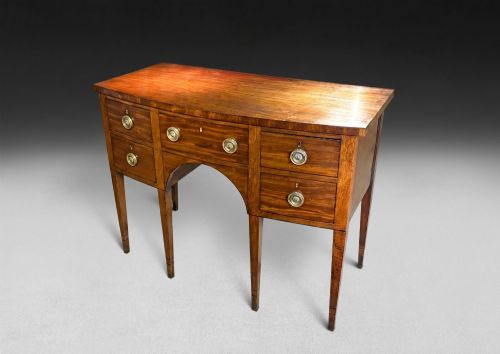
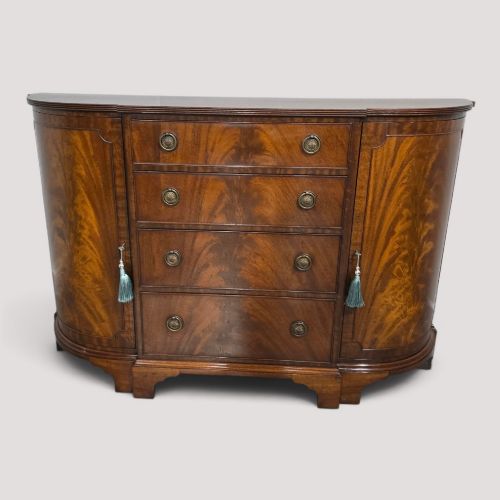
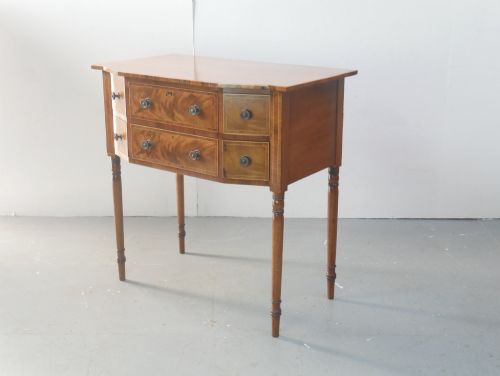
Forms range from traditional six-legged servers to compact cupboards and breakfront configurations. Each variation serves the practical demands of dining spaces while displaying the cabinetmaker's skill in curving timber.
Materials and construction methods
Cabinetmakers relied heavily on solid mahogany and flame mahogany veneer to achieve rich grain patterns across the curved drawer and door fronts. Satinwood and boxwood frequently provided contrasting stringing and geometric inlay details.
Structural elements incorporated brass handles and escutcheons, while specific pieces utilised ormolu mounts and glass panels. Burr walnut also appears in select nineteenth-century interpretations, paired with marquetry decoration.
The listings demonstrate a strong presence of mahogany and satinwood, spanning Georgian, Victorian, and Edwardian periods with both inlaid and carved decorative schemes.
Distinguishing quality and craftsmanship
Quality rests in the selection of timber figures, such as highly flamed mahogany or figured satinwood, matched symmetrically across the curved facade. The crispness of inlaid stringing and the integration of fine marquetry elevate the visual standard.
Construction integrity reveals itself in the smoothness of the bowed drawers and the alignment of cabinet doors. Superior examples demonstrate careful attention to secondary timbers and the retention of original brass hardware.
The Antique Bowfront Sideboard Cabinet Glossary
- Bowfront
- A convex curved front projecting outward in a smooth arc. This shape defines the primary profile of these cabinets.
- Crossbanding
- A narrow strip of veneer laid around the border of a drawer or top with the grain running at right angles to the surrounding surface. It frames the central timber figure.
- Satinwood
- A durable, lustrous yellow timber imported from tropical regions. It is frequently employed for light-coloured veneer and contrasting inlay.
- Ormolu
- Gilt bronze ornamentation applied to furniture. This decorative technique appears on select nineteenth-century pieces.
- Marquetry
- Decorative patterns formed by the insertion of various coloured veneers into a solid wood ground. It creates pictorial or geometric designs on cabinet doors.
Antique Bowfront Sideboard Cabinet: Frequently Asked Questions
Where should I place a bowfront cabinet?
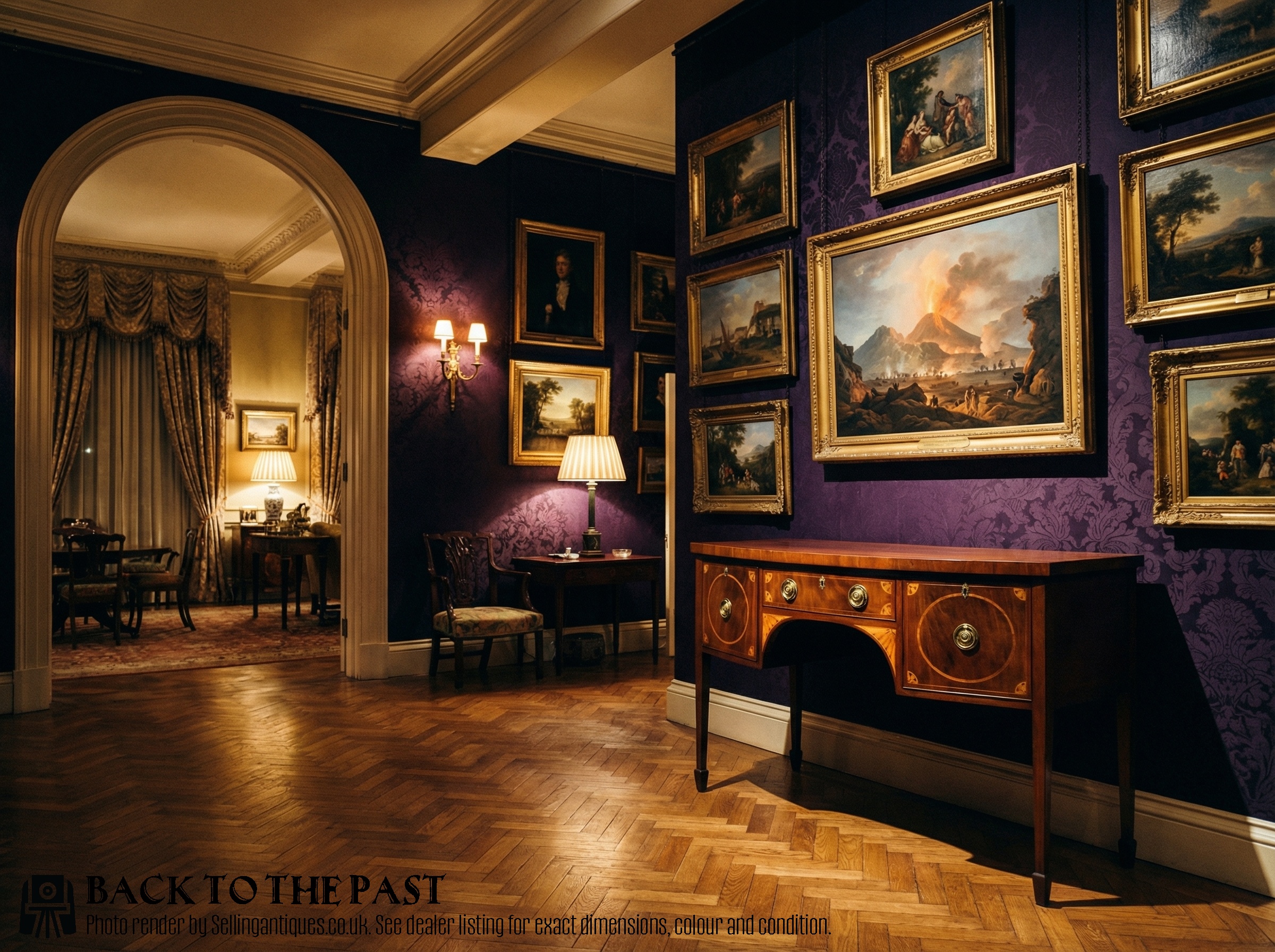
These pieces suit dining rooms, large hallways, or living spaces where a curved profile softens rectilinear architecture. Their depth requires adequate floor space to allow doors and drawers to open fully.
Positioning them against a principal wall lets the polished timber grain catch the ambient light. They function effectively as serving surfaces during meals or as display storage.
How do I identify a Georgian bowfront sideboard?
Look for dense, heavy mahogany timbers, hand-cut dovetails within the drawer construction, and restrained inlay such as ebony or boxwood lines. Georgian pieces rely on architectural proportions rather than heavy ornamentation.
Legs are typically tapered and spade-footed or square in section. The overall feel prioritises structural honesty and balanced utility over flamboyant decoration.
What is the difference between Edwardian and Georgian pieces?
Edwardian interpretations often display lighter satinwood timbers, extensive marquetry, and Sheraton Revival influences that celebrate a more delicate aesthetic. They frequently date around nineteen hundred.
Georgian examples from the eighteenth century utilise heavier solid mahogany construction with simpler stringing and more robust framing. The cabinetmaking techniques reflect the specific technological shifts of each era.
How do I care for mahogany surfaces?
Maintain the timber by dusting regularly with a dry, soft cloth and avoiding silicone-based polishes that build up residue. Apply a traditional beeswax sparingly to nourish the grain.
Keep the cabinet away from direct sunlight and strong heat sources to prevent the timber veneers from drying or splitting. Stable room humidity preserves the joints and polish.