
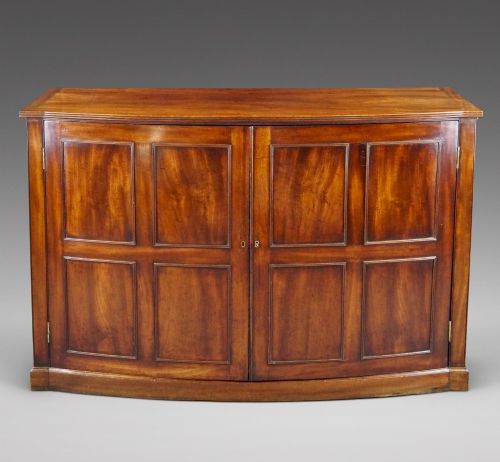
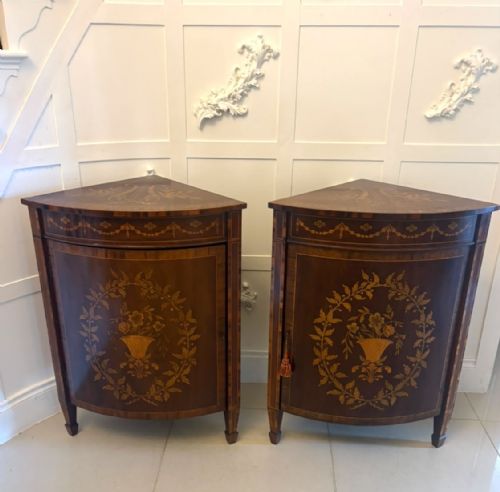
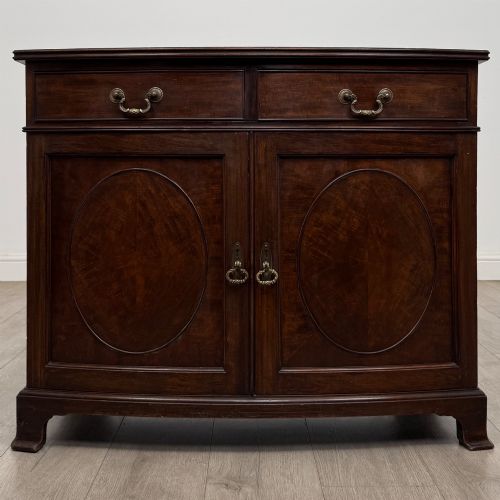
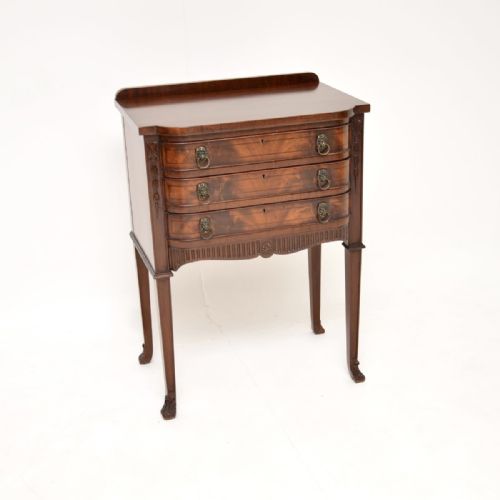
Antique Bowfront Cupboard
An antique bowfront cupboard brings curved timber and practical storage into a room, offering Georgian and later designs built to anchor a corner or wall.

Antique Bowfront Cupboard
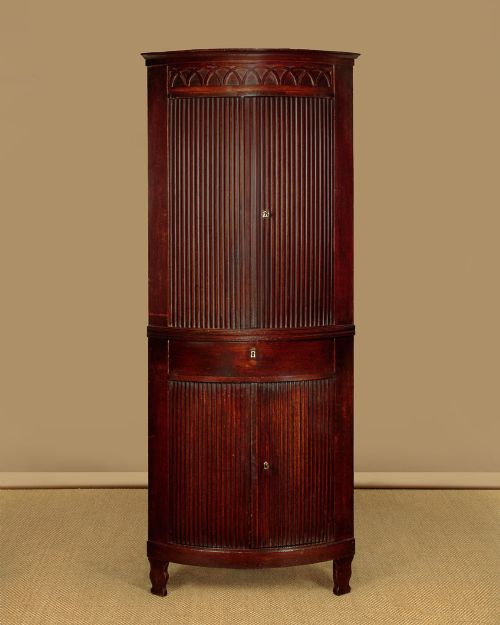
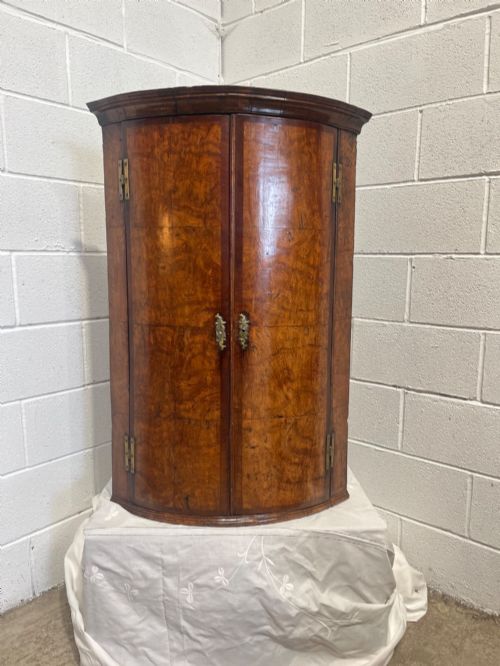
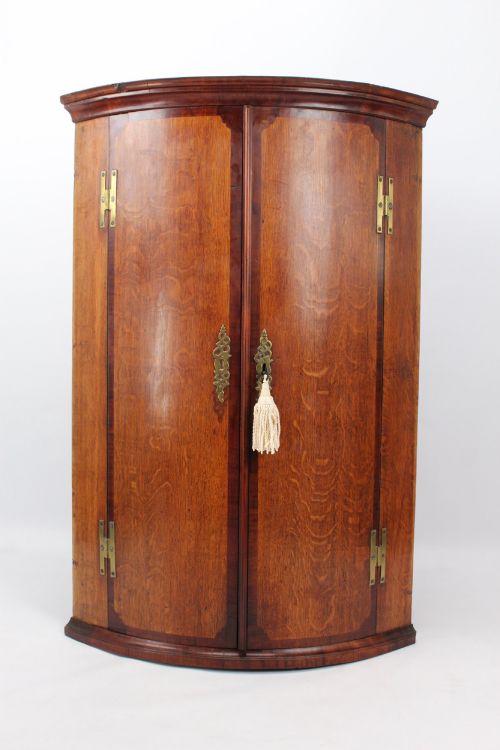
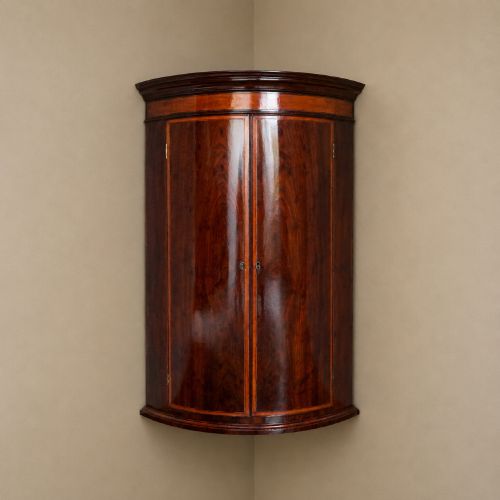
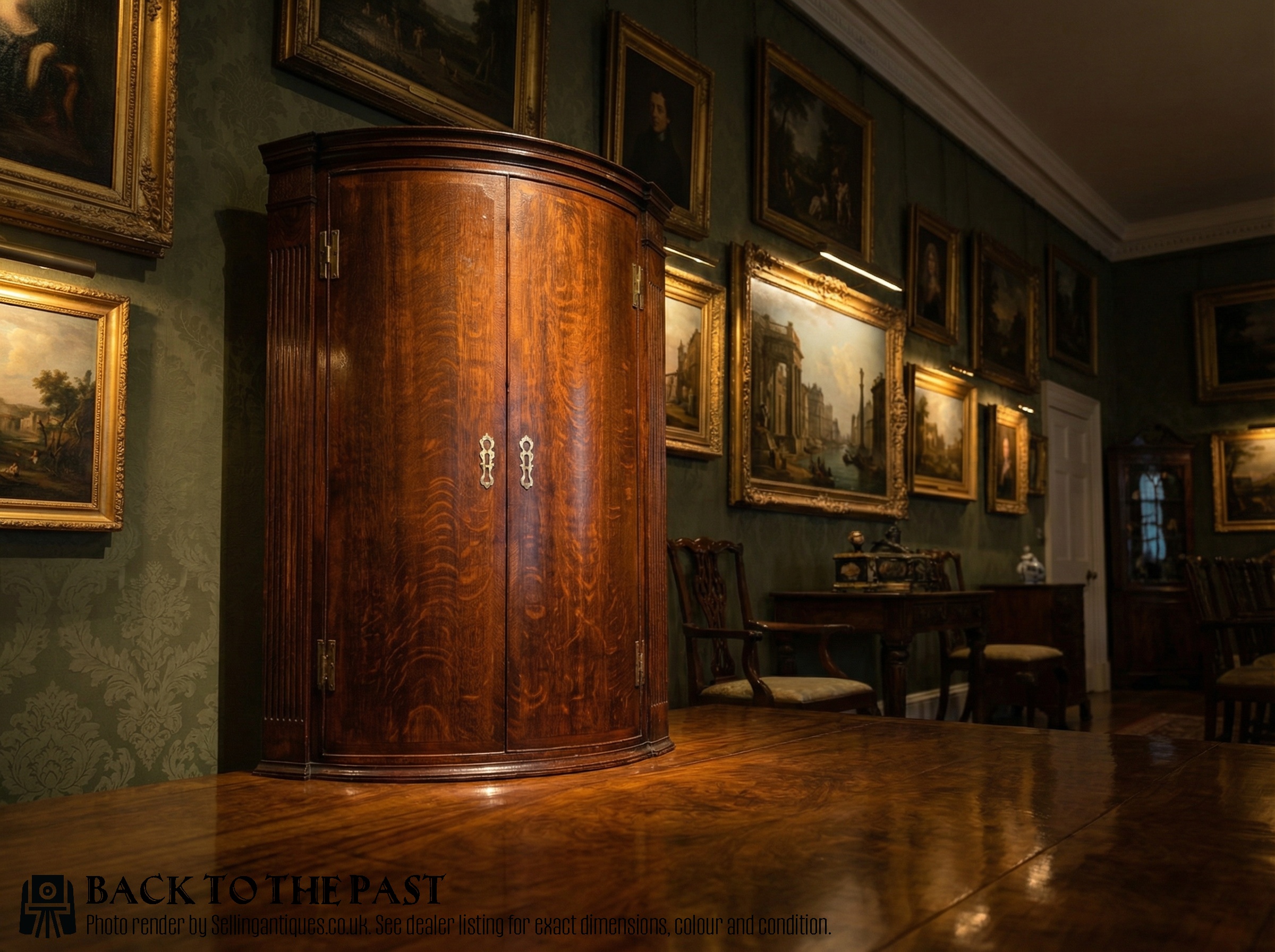
An antique bowfront cupboard presents a curved front profile that softens the corners of a room while providing enclosed storage. These pieces appear across several eras, with Georgian examples sitting alongside Victorian and Edwardian interpretations.
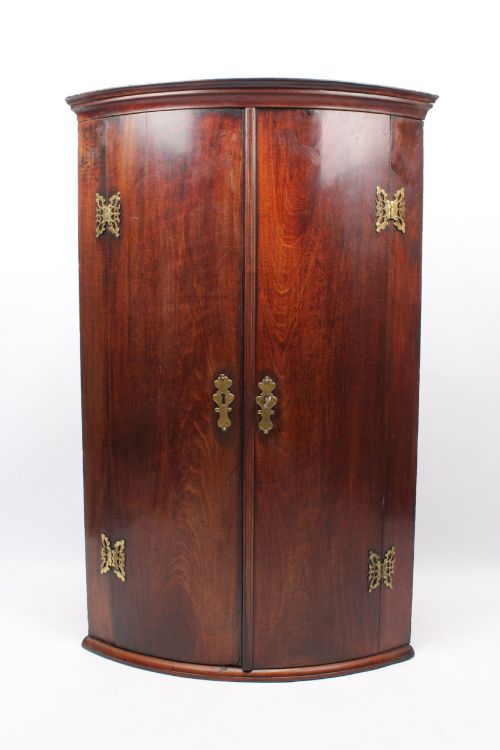
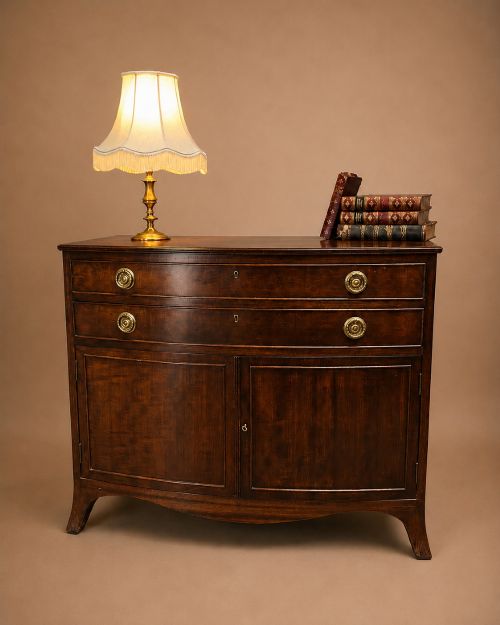
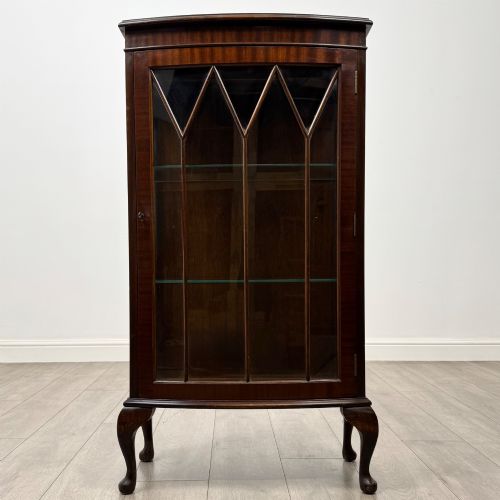
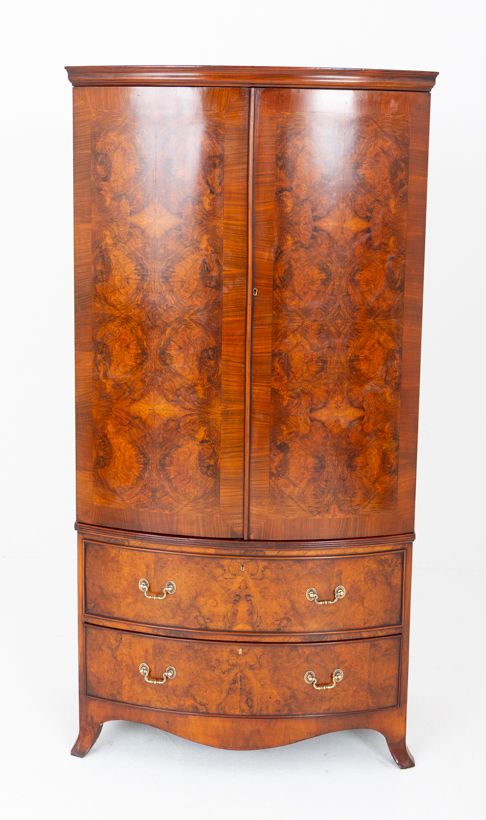
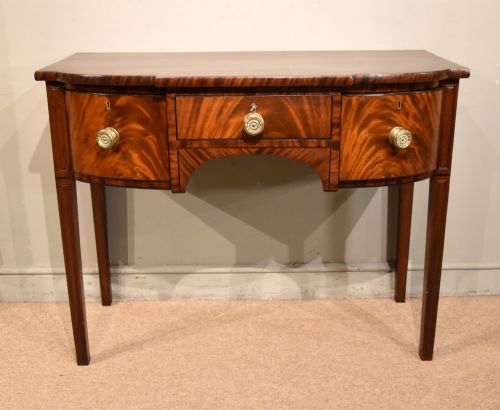
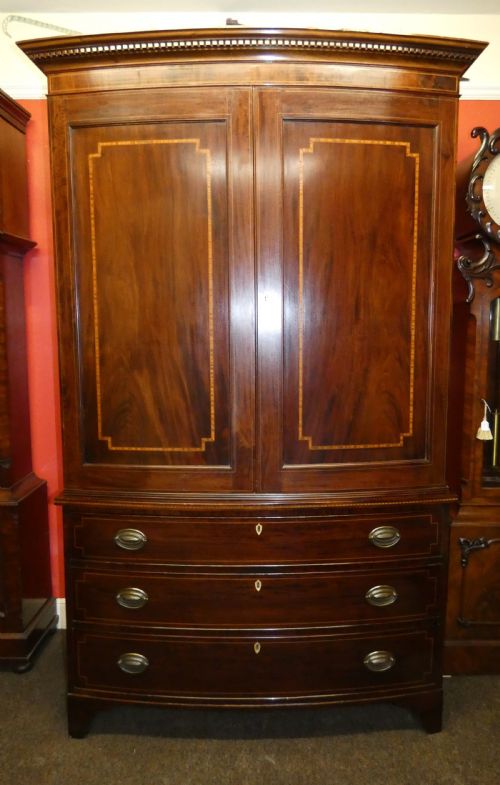
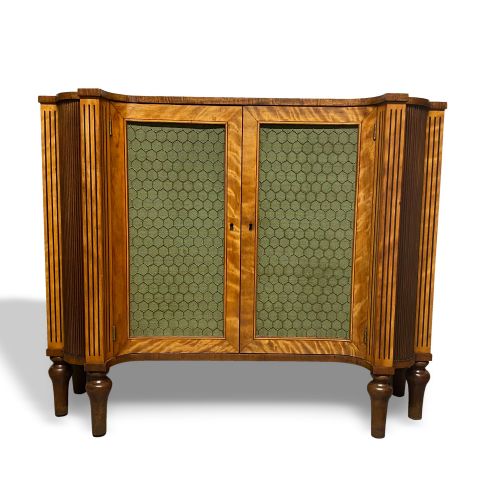
The form encompasses corner cabinets, hanging units, sideboards, linen presses and display cabinets. Corner cupboards dominate the selection, designed to utilise domestic space efficiently while displaying timber grain on the curved doors.
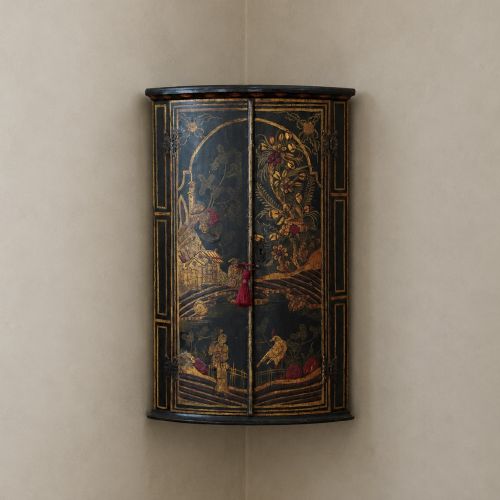
Materials span native oaks and imported mahoganies, often enhanced with satinwood, burr walnut or japanned finishes. Makers applied these timbers to both wall-hanging formats and floor-standing pieces from the eighteenth, nineteenth and twentieth centuries.
How they were made
Cabinetmakers constructed the curved front frames using solid timber or framed panels of mahogany, oak and walnut. Planks were joined and shaped to form the signature bow, requiring precise hand-planing to achieve a smooth, even sweep.
Surface decoration relied on veneers, marquetry inlay, and painted Chinoiserie or japanned motifs. Brass hardware such as hinges, escutcheons and bracket feet completed the construction, paired with glass panes for display variants.
Antique Bowfront Cupboard Retail Price Guide 2026
Typical asking prices for bowfront cupboard among the pieces listed under this phrase on Sellingantiques today, from the lower quarter to the upper quarter. They describe what is for sale here now, not the wider market.
What varies in quality
Quality rests in the choice of timber and the execution of the curved joinery. Figured woods like plum pudding mahogany or burr oak elevate a piece, while straight-grained oak or standard mahogany represents simpler utility.
The refinement of the inlay, the integrity of the curved door joints, and the retention of original brass fittings distinguish superior workshop output from standard commercial production.
The Antique Bowfront Cupboard Glossary
- Bowfront
- A convex curved front profile that projects outward from the frame. This shape distinguishes these cupboards from flat-fronted storage.
- Corner Cupboard
- A cabinet built with a triangular footprint designed to fit snugly into a room angle. Many surviving examples use wall-hanging brackets.
- Japanned
- A European imitation of East Asian lacquerwork using dark varnishes and raised gilt decoration. It appears on eighteenth and nineteenth-century pieces.
- Plum Pudding Mahogany
- A highly figured tropical timber showing mottled, circular grain patterns resembling Christmas pudding. It is prized for cabinet fronts.
- Sheraton Revival
- A late nineteenth and early twentieth-century style reviving the lighter neoclassical designs of the eighteenth century. These pieces often feature satinwood and delicate inlay.
Antique Bowfront Cupboard: Frequently Asked Questions
Where should I place a bowfront corner cupboard?
These cabinets suit unused room angles, turning dead space into an architectural feature while keeping the floor clear.
Wall-hanging versions fix directly to solid masonry or stud work at eye level, while floor-standing variants anchor the corner from the ground up.
How do I date a mahogany bowfront cupboard?
Dating relies on construction methods, timber choice, and decorative styles that align with periods like the Georgian or Edwardian eras.
Hand-cut dovetails, brass H-hinges, and primary secondary wood combinations point to eighteenth-century origins, whereas later revival pieces show twentieth-century machine milling.
Are these cupboards suitable for modern interiors?
The curved profile and warm timber tones integrate easily into contemporary rooms, offering practical storage without heavy rectangular lines.
Display variants house glassware or books, while bedside cabinets and small sideboards serve everyday domestic roles.
What is the difference between a corner cabinet and a linen press?
A corner cabinet is triangular to fit room angles, whereas a linen press is a large rectangular piece designed with internal sliding trays for textiles.
Both utilise bowfront doors, but linen presses stand against flat walls and offer deeper, multi-drawer storage capacity.