


Antique Bowfront Chest Drawers
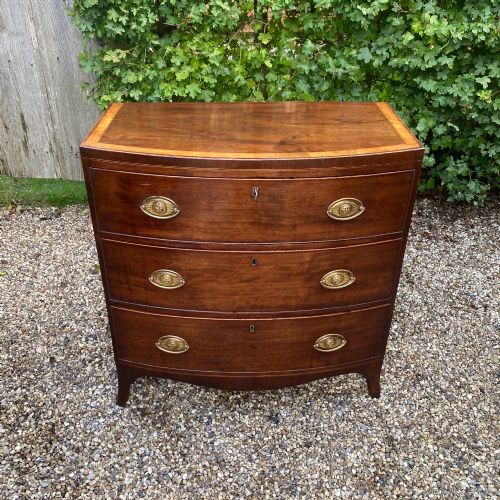
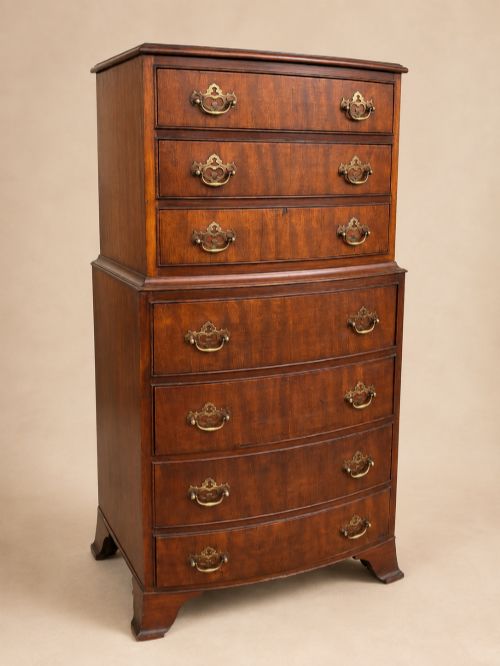
These antique bowfront chest drawers bring architectural curves and deep timber grain to a room, offering practical storage with distinct period character.
Antique Bowfront Chest Drawers
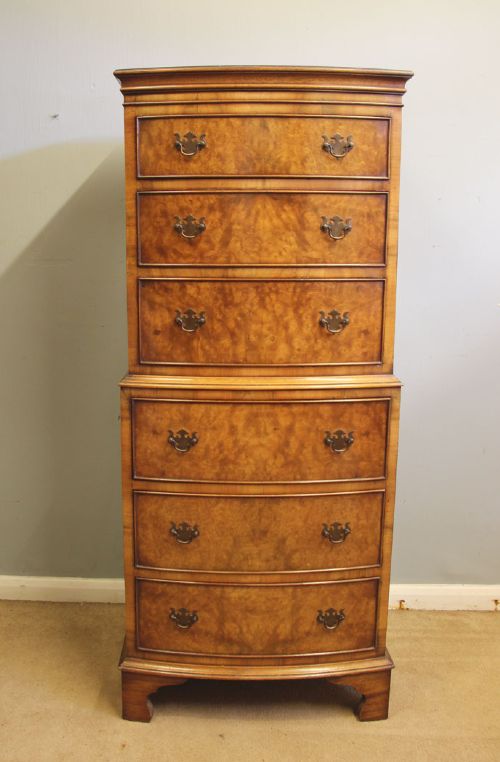
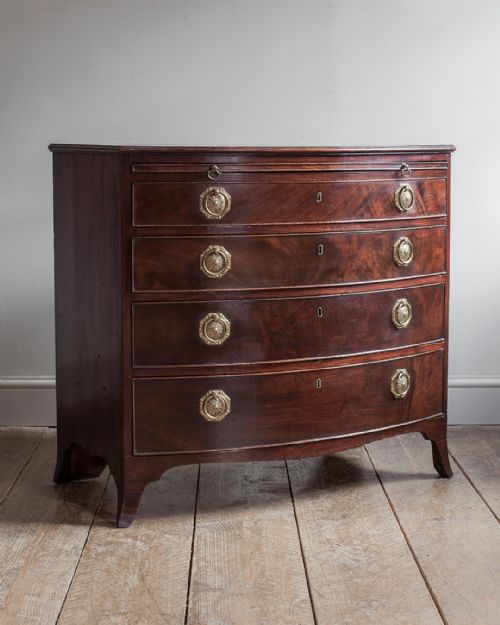
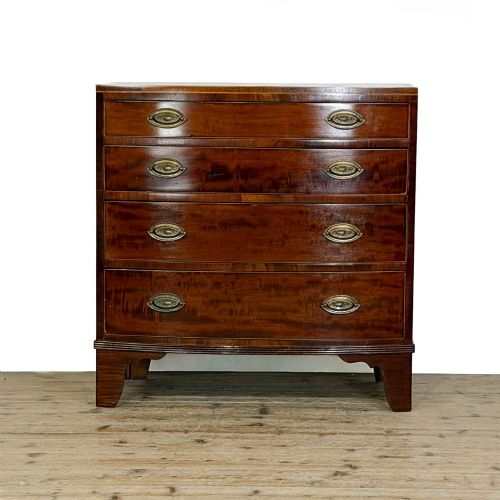
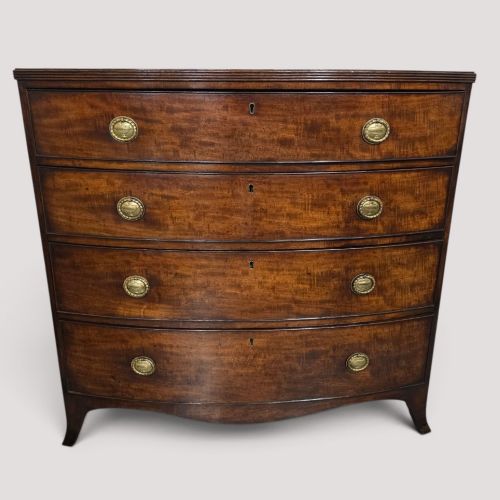
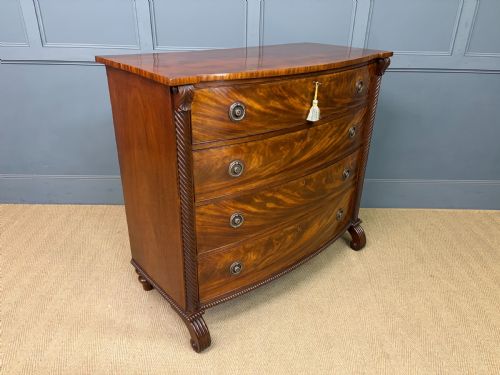
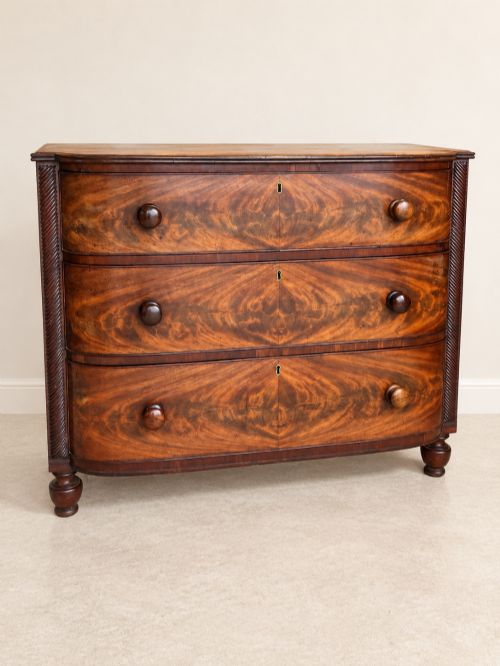
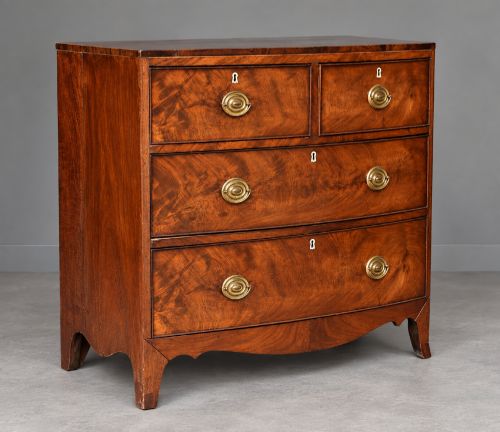
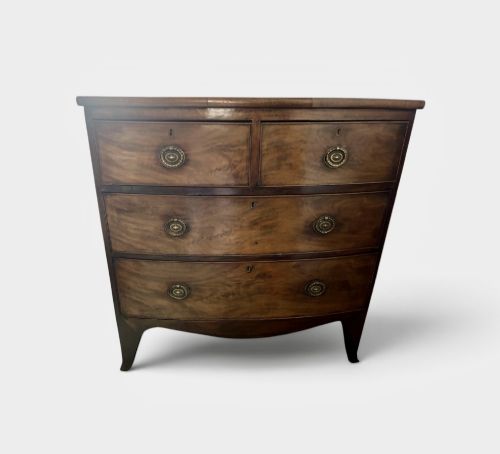
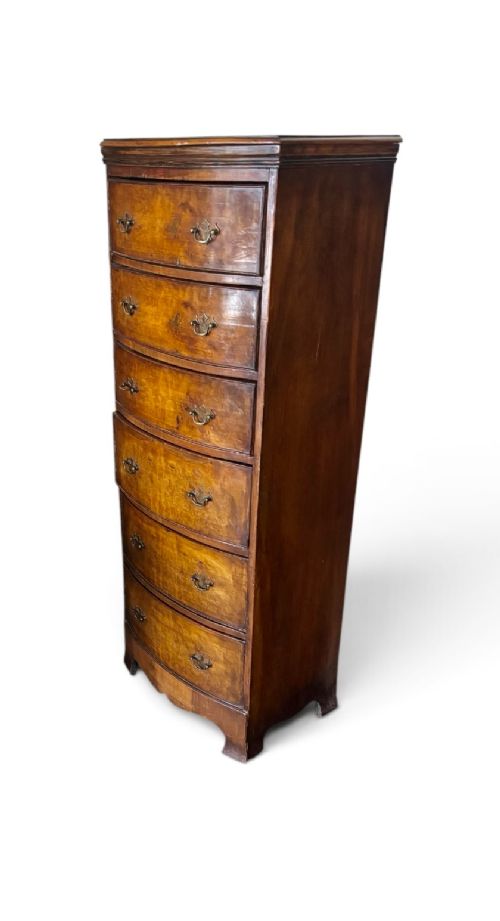
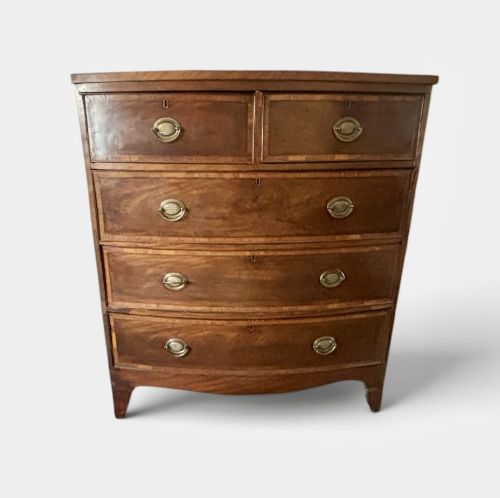
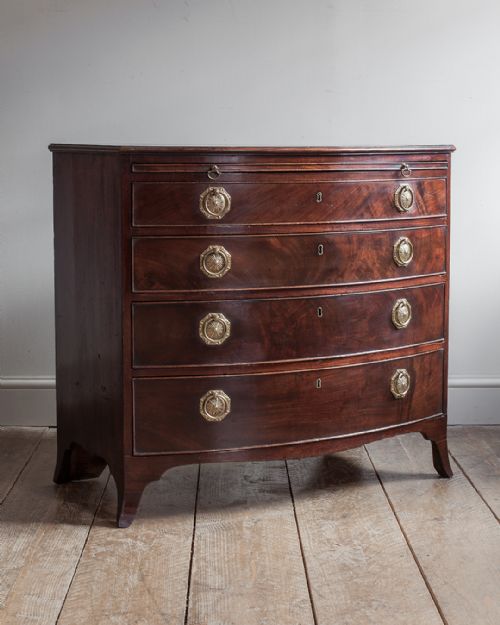
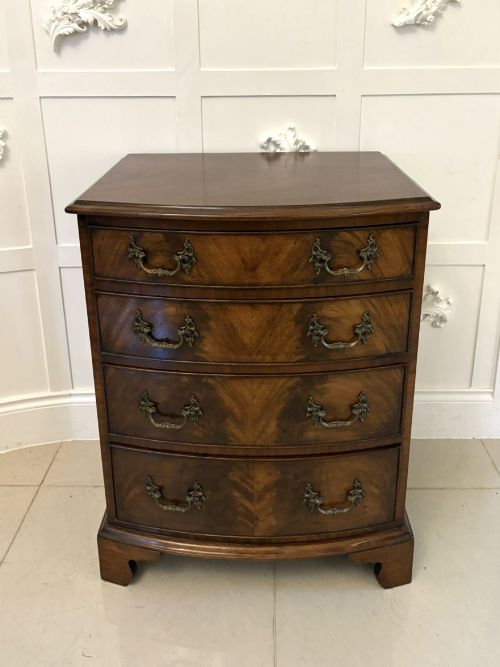
An antique bowfront chest drawers presents a curved projecting front that softens the standard boxy silhouette of bedroom storage. The pieces gathered here belong primarily to the nineteenth century, spanning Georgian, Regency, and Victorian eras.
Most examples rely on rich mahogany timber, occasionally figured as flame mahogany, paired with secondary woods like pine for internal construction. Forms range from large statement items down to compact small chests suited for smaller interiors.
How they were made
Cabinet makers constructed these carcases using solid timbers and decorative veneers applied over pine bases. Brass hardware finishes the drawer fronts, while curved fronts required specialist woodworking skills to shape the timber accurately.
Surfaces frequently show painted wood treatments in certain variants alongside traditional polished mahogany finishes. Drawer linings and internal dividers display period joinery techniques typical of nineteenth century workshops.
Antique Bowfront Chest Drawers Retail Price Guide 2026
Typical asking prices for bowfront chest drawers among the pieces listed under this phrase on Sellingantiques today, from the lower quarter to the upper quarter. They describe what is for sale here now, not the wider market.
Some chests hide clever caddy top mouldings that make dusting an unexpected exercise in architectural appreciation.
What varies in quality
Quality rests upon the selection of timber veneers, where highly figured flame mahogany commands greater visual presence than plain boards. The precision of the curved drawer fronts and the integrity of the secondary pine framing dictate the structural standard.
Original brass fittings and clean internal construction elevate an example above pieces with replaced hardware or altered drawer configurations. The refinement of the Regency or Georgian design proportions marks the upper tier of these chests.
The Antique Bowfront Chest Drawers Glossary
- Bowfront
- A curved cabinet front that swells outward in the centre. This shape defines the primary aesthetic of these chests.
- Flame mahogany
- Timber veneer showing a dramatic, flickering grain pattern resembling flames. Cabinet makers prized this cut for principal drawer fronts.
- Caddy top
- A raised or moulded tabletop profile with stepped edges. This detail frequently appears on Georgian and Regency examples.
- Regency
- An English design period spanning the early nineteenth century. Pieces from this era often feature classical restraint and dark polished mahogany.
Antique Bowfront Chest Drawers: Frequently Asked Questions
How do I date a bowfront chest?
Dating relies on timber choice, construction methods, and overall style cues. Regency and Georgian pieces display distinct proportions and brass hardware.
Later Victorian and Edwardian examples often incorporate different secondary woods and softer internal framing. Comparing these details against known period markers clarifies the timeline.
Where should I place a chest?
These chests function well in bedrooms, hallways, or living spaces as storage units with a strong decorative presence. Their curved fronts make them focal points.
Ensure the room maintains stable humidity to protect nineteenth-century mahogany and pine structures from warping.
Are these chests practical for storage?
The multiple drawer configuration provides deep and accessible space for clothing or linens. Their sturdy construction handles daily use.
Internal drawer depths vary depending on whether the piece is a small compact model or a large proportioned chest.
What wood types are used?
Mahogany serves as the primary visible timber across the majority of these listings. It delivers both dark colour and smooth polishing qualities.
Pine appears as a secondary wood for drawer linings and internal framing, while painted wood finishes occasionally alter the exterior appearance.