

Antique Bow Back Chair
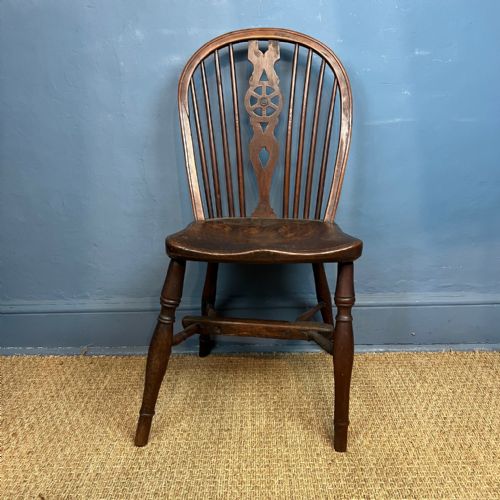
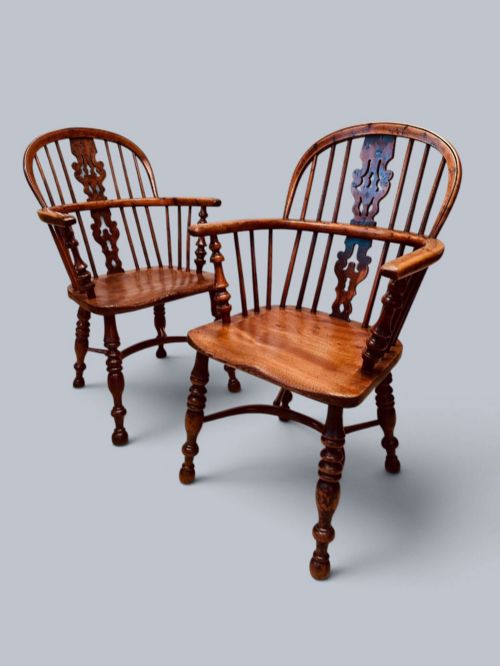
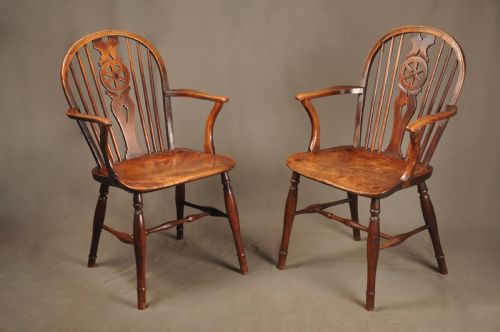
An antique bow back chair brings vernacular warmth and structural integrity into a room through centuries of traditional English country craftsmanship.
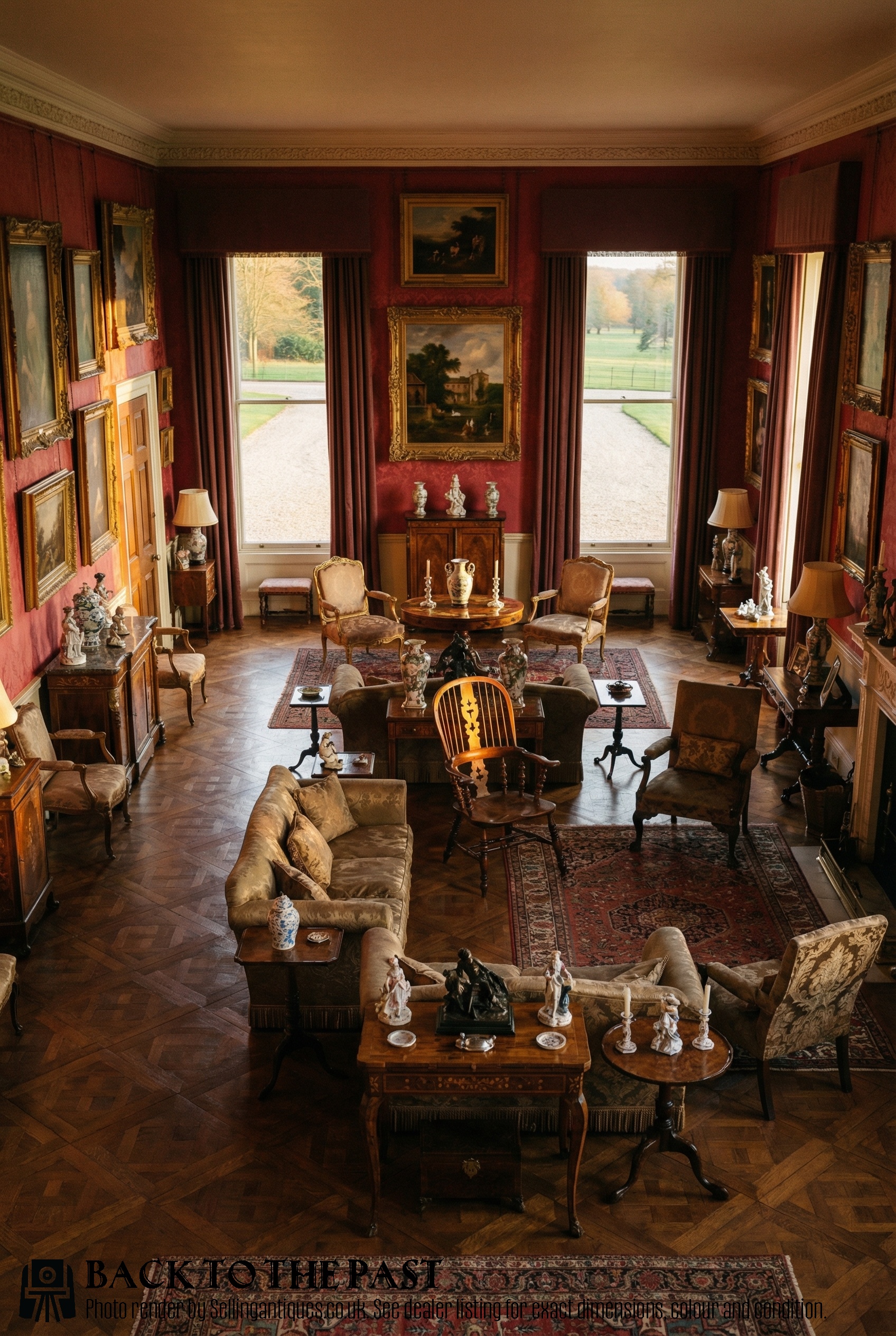
Antique Bow Back Chair
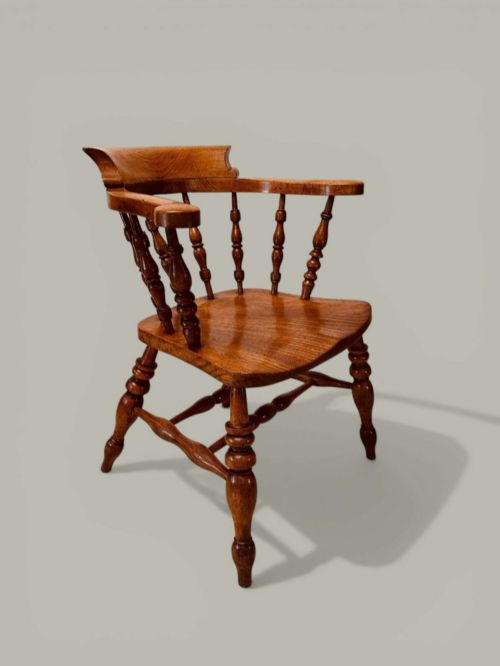
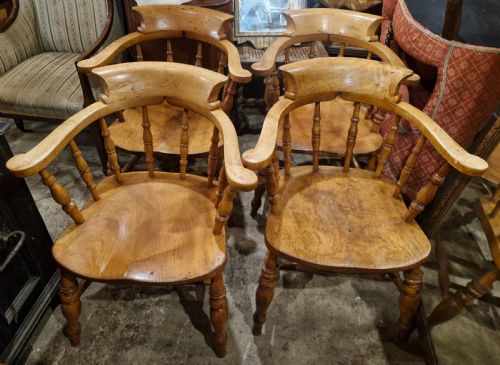
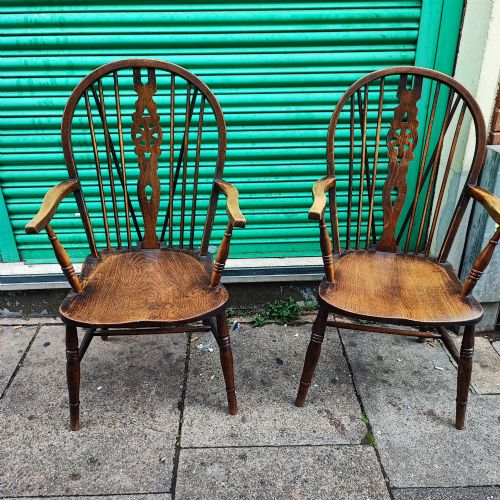
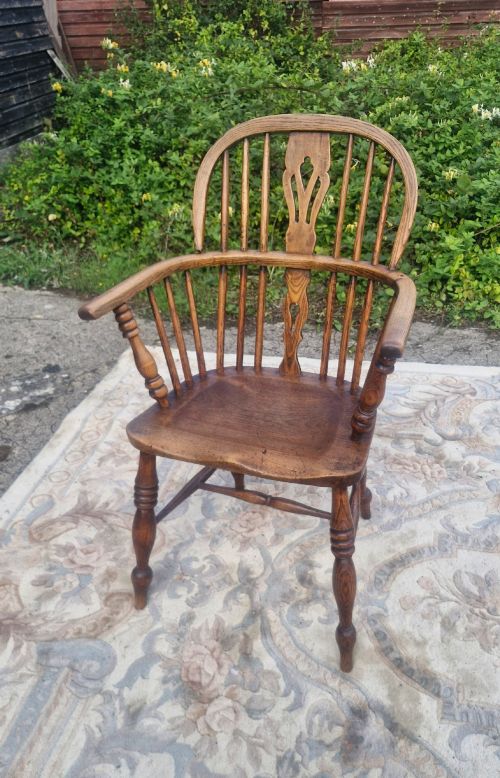
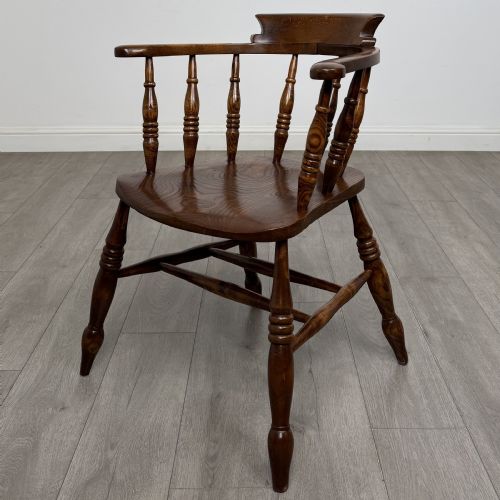
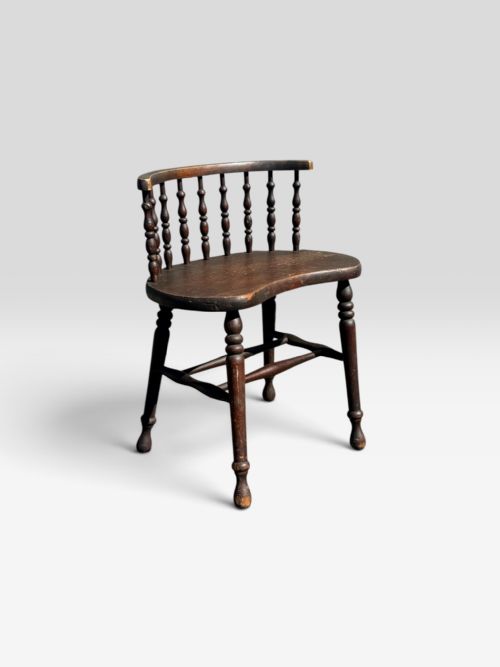
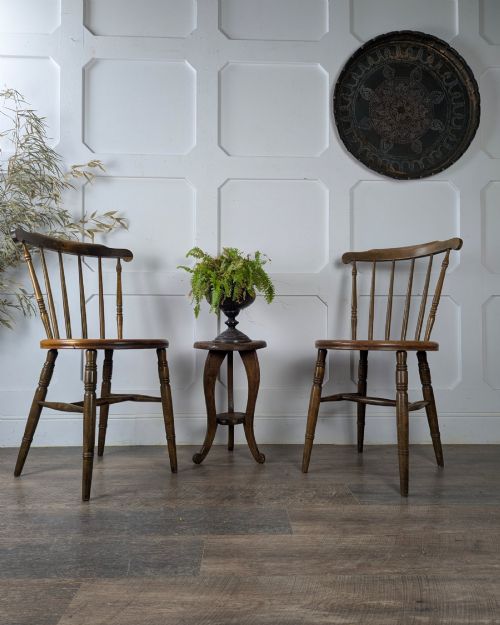
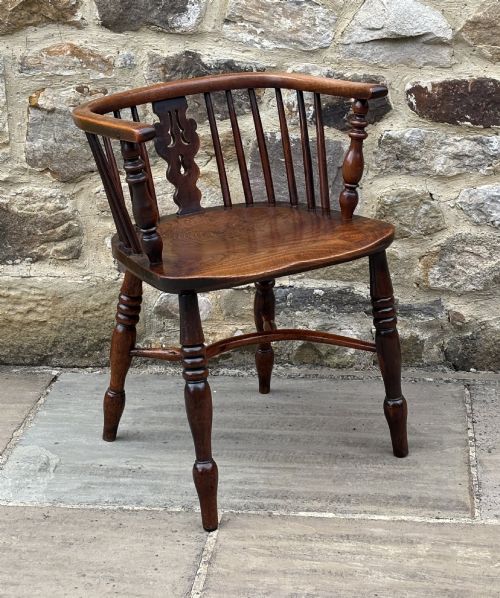
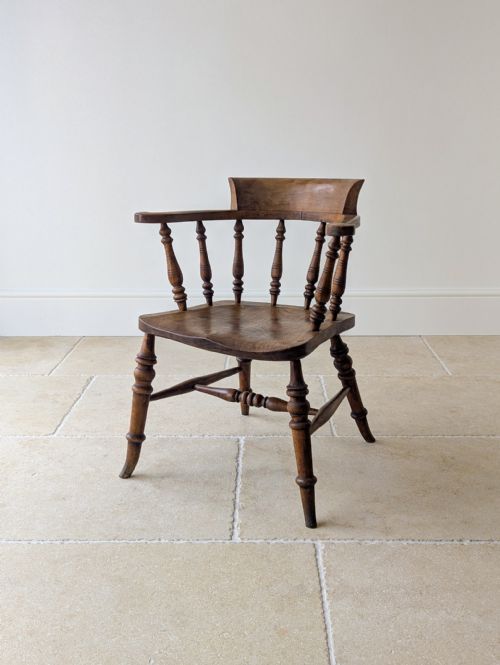
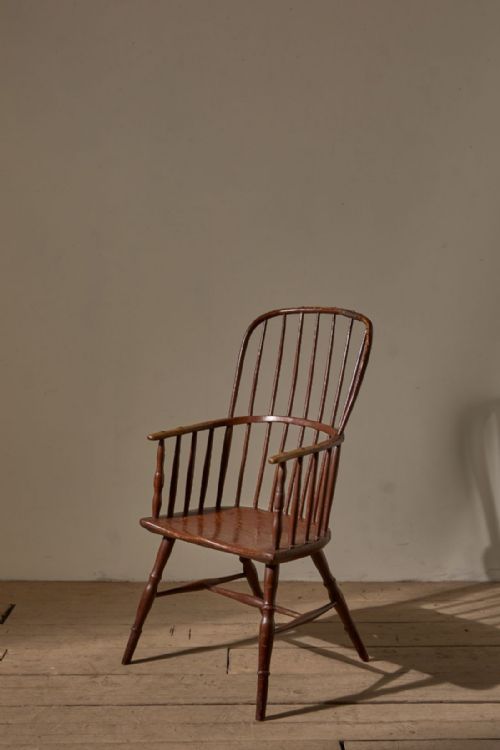
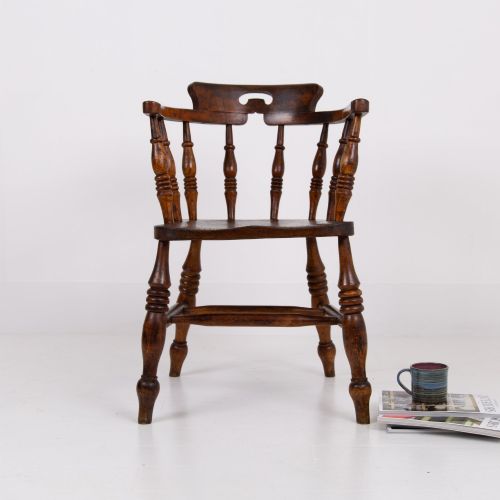
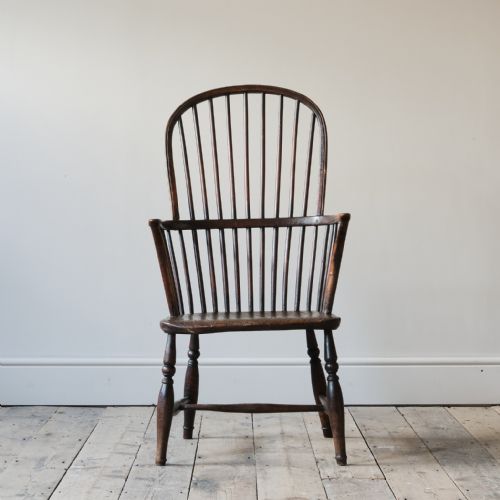
An antique bow back chair typically encompasses robust Windsor designs, low-back library seats, and sturdy smoker's bows intended for domestic, office, or dining use.
The selections available here span from eighteenth-century provincial pieces through Victorian kitchen armchairs to early twentieth-century oak and mahogany desk chairs.
Buyers most frequently encounter vernacular elm and beech seating originating from English country houses, farmhouses, and provincial workshops.
How they were made
Maker-joiners utilised tough native hardwoods such as elm for sculpted seats, ash for flexible steam-bent bows and spindles, and beech for sturdy turned legs.
Traditional construction relied upon pegged mortise-and-tenon joints alongside wedged through-tenons, securing the upright components firmly into solid wooden saddles without metal fasteners.
Antique Bow Back Chair Retail Price Guide 2026
Typical asking prices for bow back chair among the pieces listed under this phrase on Sellingantiques today, from the lower quarter to the upper quarter. They describe what is for sale here now, not the wider market.
Many historic captain's chairs retain the faint scars of nineteenth-century pipe smoke embedded deep within their timeworn elm grain.
What varies in quality
Quality rests in the selection of timbers, where highly figured yew grain or thick, deeply saddled elm seats distinguish superior provincial outputs from standard utility versions.
The crispness of the turning on spindles and legs, combined with the graceful tension of the steam-bent bow, dictates the refined visual balance of the seating.
John Brand of Sleaford·R. Tyzack
The Antique Bow Back Chair Glossary
- Bow back
- A continuous curved wooden rail forming the upper backrest and arm support of a chair. This bentwood member is traditionally pinned directly into the solid wooden seat.
- Smoker's bow
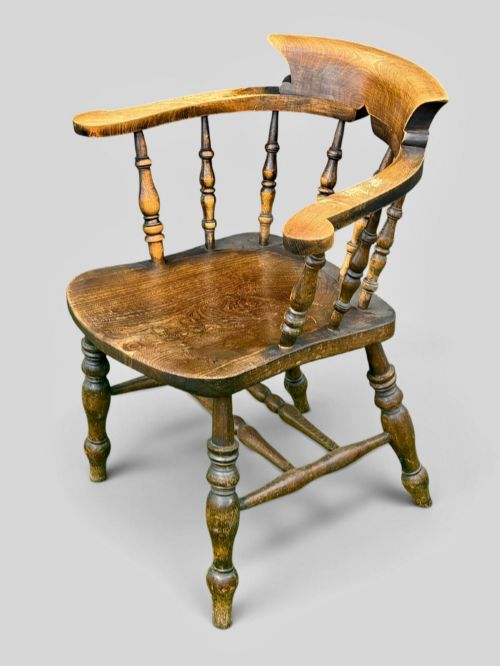
- A low sturdy armchair featuring a rounded spindle back derived from Windsor forms. These were commonly utilised in offices, smoking rooms, and provincial inns.
- Windsor
- A traditional wooden chair constructed with a solid plank seat into which the legs and back spindles are independently tenoned. Regional variations include hoop, comb, and low backs.
- Saddle seat
- A wooden chair base sculpted into a hollowed, ergonomic contour for comfort. Provincial makers often shaped elm planks by hand using adzes and scorps.
Antique Bow Back Chair: Frequently Asked Questions
Where were bow back chairs used?
These chairs served primarily in provincial farmhouses, country estate kitchens, and local inns as general domestic seating. Later Victorian and Edwardian examples moved into offices and studies as sturdy desk chairs.
Their robust timber construction allowed them to withstand heavy daily use across dining rooms, libraries, and commercial workplaces.
How do I identify eighteenth-century examples?
Early pieces often display primitive regional construction methods, deep patination on native elm, and wider saddle seats shaped by hand. The joinery frequently incorporates unrefined wedges and thicker, irregular spindle turnings.
Examining the underside reveals tool marks and timber shrinkage patterns consistent with provincial workshops operating before the industrial era.
Are these chairs comfortable for daily sitting?
The ergonomic saddle-shaped wooden seats and supportive curved backrests provide surprisingly solid comfort without requiring upholstery. Their sturdy proportions make them practical for everyday use at a dining table or desk.
Adding a small loose cushion can soften the wooden base for extended periods of reading or working.
What woods were used in these chairs?
Cabinet makers combined multiple native timbers to harness the distinct properties of each species. Elm provided a tough, non-splitting seat, whilst ash and beech offered flexible strength for steam-bent bows and slender spindles.
Finer examples occasionally showcase figured yew wood or rich mahogany, particularly in pieces commissioned for wealthier country houses.